

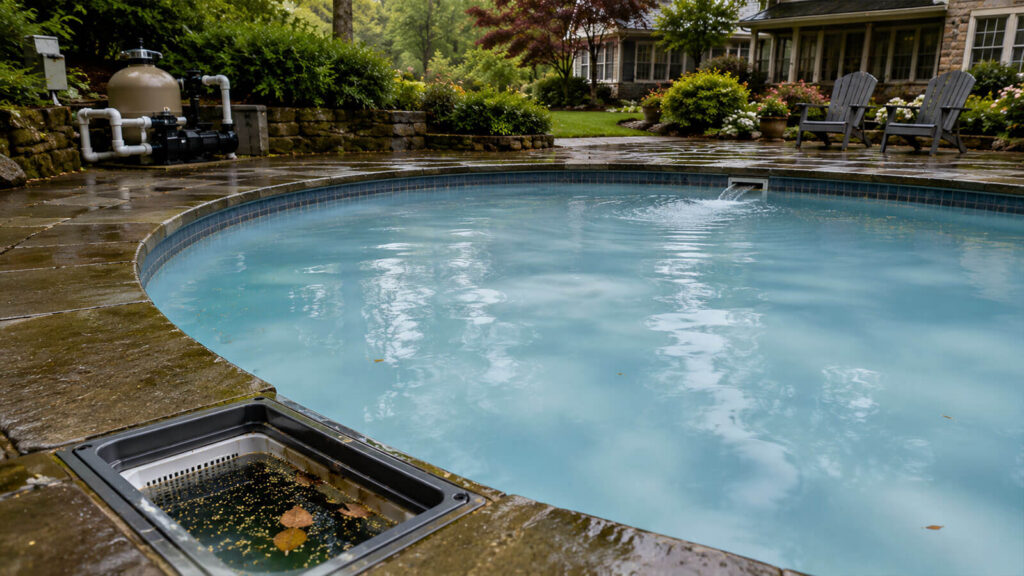
Cloudy pool water has a way of turning a relaxing weekend into a guessing game. Homeowners usually assume the problem is “just the chemicals,” but in practice the cause is often a mix of filtration, circulation, debris, and weather conditions working against each other. In the Hudson Valley, where spring pollen, summer storms, mature trees, and long stretches of humid weather all show up in the same season, that cloudy look can appear fast and get worse before anyone realizes the pool is struggling.
What makes pool clarity frustrating is that the water can look only slightly off at first, then suddenly go milky or dull after a rain event, a heavy swim day, or a filter that has been overdue for service. By the time homeowners start dumping in more chlorine, the real issue may already be hiding in the skimmer basket, the filter media, the pump run time, or the balance between circulation and debris load. If you’re trying to avoid a bigger repair bill, it helps to look at the problem the way a contractor would: start with the system, not just the water color. For some properties, that means getting help from pool services contractors in Dutchess County or a nearby service area before the issue turns into an algae problem or a failing pump.
Why cloudy pool water shows up so often after weather shifts
Cloudiness is often the pool’s way of saying filtration is behind. A storm can wash pollen, grass clippings, soil, and roof debris into the water in a single afternoon. If the pool sits beneath trees or near a sloped yard, runoff can carry far more fine material than homeowners expect. That fine debris is usually what gives the water a hazy, stubborn look even when sanitizer levels seem “close enough.”
One counterintuitive point trips up a lot of people: the pool may not be cloudy because the water is dirty in the simple sense. It may be cloudy because the particles are too small for the filtration system to catch efficiently. That’s why a pool can test “almost fine” on paper and still look uninviting in daylight. The test numbers matter, but circulation and mechanical performance matter just as much.
Rain also changes the chemistry of the water. A heavy storm can dilute sanitizer, shift pH, and introduce contaminants from the surrounding deck or landscaping. If the patio is dusty, the coping has built-up grime, or the walkways are carrying runoff back toward the pool, the water gets the full effect. That’s one reason even adjacent maintenance tasks, like cleaning poolside patios and walkways, can make a measurable difference in how long the water stays clear.
The first things experienced contractors usually check
Before anyone starts adding more chemicals, a good technician usually looks at the basics that keep water moving and filtering properly. That includes whether the pump is running long enough, whether the basket is clogged, whether the filter is clean, and whether the return flow is actually strong enough to move the water across the pool.
If the system is weak, cloudy water tends to linger even when chemistry looks acceptable. That’s especially common on older setups where equipment has been patched over time rather than maintained as a whole system. A filter that technically still works may be undersized, packed with debris, or overdue for replacement. A pump with air in the line can still run without really pushing water effectively. Those are the kinds of problems homeowners often misread because nothing is obviously broken.
Contractors also pay attention to what happened right before the water turned cloudy. Was there a storm? Was the pool shocked and then left uncirculated? Did the backwash schedule get skipped? Did the cover trap debris and then dump it back in when removed? In the real world, cloudiness is rarely random. There is usually a trigger.
Where homeowners get into trouble with quick fixes
The fastest way to make cloudy water more expensive is to keep treating the symptom and ignore the cause. Adding extra chlorine can help in some cases, but if the filter is struggling or the water balance is off, the pool may remain hazy even after repeated treatment. That’s when homeowners often start overcorrecting—more chemicals, more shock, more waiting—without actually improving circulation.
Another common mistake is cleaning only the visible debris and assuming the problem is solved. Skimming helps, but it does not fix fine particulate matter already suspended in the water. Neither does vacuuming if the filter is loaded or the pump is moving too little water. This is where internet advice often oversimplifies the issue. A pool can look like a chemistry problem while really being a maintenance and equipment problem.
Delaying the fix can also make the eventual repair more complicated. Cloudy water that lingers too long often becomes a precursor to algae growth, staining, scaling, or a full water replacement. Once the pool chemistry drifts far enough, the cleanup becomes less about clarification and more about recovery. That usually costs more, takes longer, and requires a much less forgiving process.
What actually causes cloudy pool water in Hudson Valley homes
Local property conditions matter more than many homeowners realize. Mature trees can drop enough pollen and organic debris to keep a pool battling haze all spring. Long private driveways and dusty access roads can send fine grit into the yard. Heavy rainfall and slope-related runoff can wash sediment into the water. In wooded neighborhoods, the pool may simply be collecting more organic material than a suburban maintenance schedule can handle.
Older homes can add another wrinkle. If the pool equipment is tucked into a detached shed, a low basement space, or a cramped mechanical area, small problems often go unnoticed until the water has already changed. A partially clogged skimmer line, a weak seal on the pump lid, or a filter that is past its useful life can all create a slow decline in water quality. Those aren’t dramatic failures, but they are the kind that cause repeat service calls when they are ignored.
And if the pool area is near a drainage issue, the water will keep paying the price. Poor grading, downspouts that discharge too close to the deck, and muddy splash zones all make it harder to maintain clarity. Sometimes the pool is not the root problem at all; it is simply where the drainage mistake becomes visible.
Why some “clear it up fast” fixes fail
Flocculants and clarifiers can help under the right conditions, but they are not magic. If the pool has weak circulation, a damaged filter, or a pump that is not moving enough water, those products may only create temporary improvement. The same goes for relying on shock treatments without correcting the filtration side of the system. It can look better for a day, then slide right back.
There’s also a timing issue homeowners underestimate. If the water turns cloudy after a storm, the filter usually needs time to do the heavy lifting. That doesn’t mean “wait and hope.” It means give the system a fair chance after cleaning the basket, checking pressure, and confirming the pump is running properly. If it still doesn’t improve, the issue is probably not cosmetic.
This is where professional pool services tend to pay off. A trained technician can separate a chemistry correction from a mechanical issue quickly, which saves homeowners from buying the wrong products and guessing through a problem that should have been diagnosed at the start. In a place like the Hudson Valley, where seasonal conditions change fast, that kind of judgment matters more than generic pool advice.
When cloudy water is a warning sign, not an inconvenience
Not every cloudy pool is an emergency, but some are a sign that the system is slipping. If the cloudiness comes back repeatedly, the filter pressure is unusual, the pump is noisy, or the pool water is losing clarity within a day or two after treatment, that points to a deeper maintenance issue. At that stage, it is worth looking beyond chemistry and considering equipment wear, circulation problems, or a filter that is no longer performing as intended.
If the water starts to take on a green tint, the response should be faster. That is usually the point where algae is beginning to take hold, especially if the weather has been warm and the pool has seen a lot of use. Once algae starts, homeowners often spend twice: once on the failed quick fix and again on the actual cleanup.
For households balancing multiple properties or busy schedules, the best approach is often preventive rather than reactive. Keep the skimmer clear, stay ahead of filter maintenance, watch how the pool responds after storms, and pay attention to how long it takes to regain clarity after treatment. Slow recovery is often the first real clue that something mechanical is off.
Practical steps that usually help before the problem gets expensive
If the water has started to look dull or hazy, a sensible first pass usually includes a few basics:
- empty skimmer and pump baskets
- check filter pressure and clean or backwash as needed
- confirm the pump is running long enough each day
- inspect for air leaks around the lid, unions, or fittings
- remove debris from the waterline, steps, and corners
- test sanitizer, pH, and alkalinity before adding more chemicals
Those steps may sound simple, but they often reveal the real issue faster than chemical chasing does. If the pool is still cloudy after that, the problem is probably beyond routine homeowner maintenance.
That’s also a good point to consider whether the surrounding property is contributing to the issue. Heavy leaf drop, roof runoff, or a messy patio can keep feeding debris back into the pool. Seasonal cleanup around the yard and hardscape can reduce repeat problems, especially in neighborhoods with dense trees or older landscaping that sheds heavily.
How to think about repair timing
With cloudy water, waiting too long usually does not save money. It just allows the problem to spread into other parts of the system. A filter that is working too hard will wear faster. A pump that is already marginal will get pushed harder. Water that stays out of balance can cause staining and scaling that take more effort to remove later.
That’s why experienced contractors usually focus on diagnosis first. If the issue is a simple service need, great. If it is a circulation problem, it should be fixed before more chemical adjustments. If the equipment is aging out, it is better to know that early than to keep paying for temporary improvement. Homeowners do not always need a major repair, but they do need a clear answer before the small problem becomes a recurring one.
For homeowners in Putnam, Westchester, and Dutchess counties, that often means working with a local service provider who understands how quickly weather, trees, and seasonal use can change pool conditions. If you’re comparing options, it can help to look at Putnam County pool service help or pool contractors serving Westchester County homeowners depending on where the property is located and how quickly the issue needs attention.
Frequently Asked Questions
Why is my pool cloudy even though the chemical test looks okay?
Because chemistry is only part of the picture. Cloudy water can also come from weak circulation, a dirty filter, poor run time, or a buildup of fine debris that the system is not removing efficiently.
Should I shock the pool if it looks cloudy?
Sometimes, but only after checking the basics first. If the filter is clogged or the pump is not moving water well, shock alone usually gives short-lived results.
How long should it take for cloudy water to clear?
That depends on the cause. If it’s a minor debris or balance issue, improvement may happen within a day or two. If the filter, pump, or circulation is the problem, it can linger much longer until the underlying issue is corrected.
Can rain make a pool cloudy?
Yes. Rain can dilute sanitizer, change pH, and wash debris and sediment into the pool. Heavy storms are especially hard on pools near trees or on properties with slope runoff.
Is cloudy water always a sign of algae?
No. Algae is one possibility, but it is not the only one. Many cloudy pools are just dealing with filtration strain, debris overload, or a chemistry imbalance after weather changes.
When should I call a pool professional?
If the cloudiness keeps returning, the water turns greenish, the pump sounds off, or the filter seems to be working harder without improving clarity, it is worth bringing in a professional before the issue gets more expensive.
If your pool water keeps going cloudy after basic maintenance, the smartest next step is usually a proper diagnosis, not another round of guesswork. A good local contractor can tell you whether you’re dealing with a routine service issue, a worn component, or a bigger circulation problem before it turns into a much more expensive repair.
