

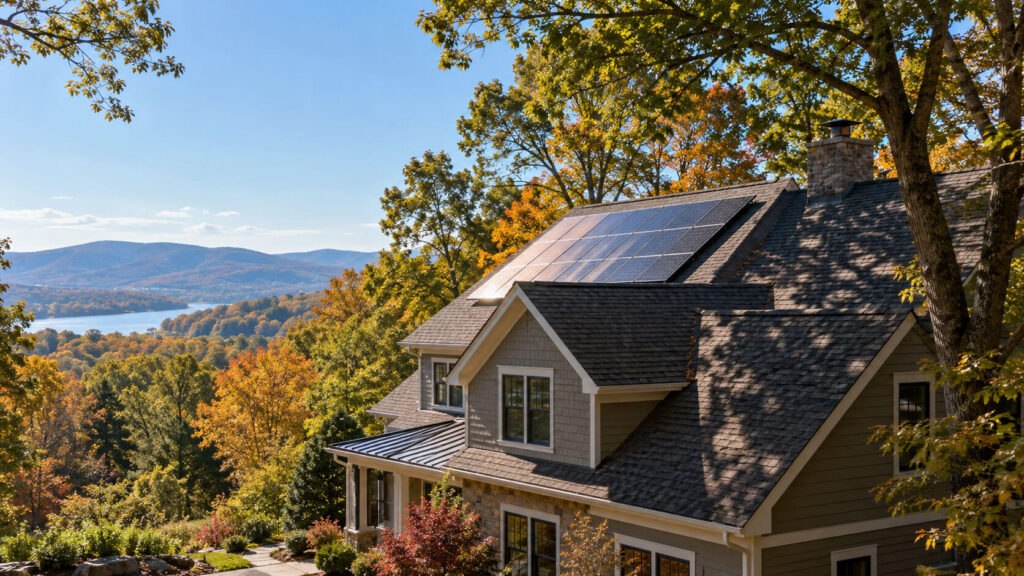
Shaded Roof, Solar Panels, and What Hudson Valley Homeowners Should Check First
A roof that looks fine from the driveway can still become the wrong roof for solar. Shade is part of the equation, but it is not the whole story. In practice, the bigger questions are usually about roof condition, electrical capacity, attic access, and whether the home is ready for a system that has to perform reliably for 20 years or more. That is where a lot of homeowners get tripped up: they focus on the panels and overlook the parts of the house that determine whether the project makes sense at all.
That matters even more in the Hudson Valley, where mature trees, steep rooflines, older wiring, and weathered shingles are common. A shaded roof can still be workable in some cases, but the wrong assumptions can lead to expensive rework later. Before anyone gets serious about design, it helps to understand checking roof condition before a solar project and why that step often saves homeowners from paying twice.
Shade is not just a production issue
Most people think shade only affects how much electricity the panels will generate. That is true, but it is only part of the issue. Shade also tells you something about the property itself. If the roof is shaded by large trees, there is often more debris on the shingles, more moisture retention after rain, and more organic buildup in gutters and valleys. Those factors do not automatically rule out solar, but they do change the long-term maintenance picture.
Contractors usually look at the roof in layers. First comes exposure: how much usable sun does the array really get across the year? Then comes roof health: how old are the shingles, what shape is the flashing in, and is the roof likely to need replacement before the solar system reaches the middle of its lifespan? Finally, they look at the house systems around it. A solar project on a roof that is due for replacement in a few years is a different conversation from a project on a newer roof that simply has some tree shade.
The mistake homeowners often make is treating shade as a yes-or-no answer. In reality, it is usually a design and cost question. A partially shaded roof may still support solar if the array can be placed on the best sections, if the electrical layout is efficient, and if the roof is in good enough condition to justify the investment. If not, the smarter move may be to address roof repairs first or explore a different setup.
What contractors inspect before talking solar
Good solar planning starts with the roof, not the sales pitch. Contractors tend to inspect the surface condition, the age of the shingles, flashing around chimneys and vents, attic ventilation, signs of previous leaks, and whether the roof structure appears stable enough to handle the load and fastening points. On older homes, that last part matters more than many homeowners realize.
In the Hudson Valley, plenty of homes have been patched over the years. A roof may not look old, but it might have multiple layers of repairs, questionable flashing transitions, or softened decking around previous leak areas. Once panels go on, accessing those spots becomes harder and more expensive. That is why a careful contractor will usually ask about roof damage after Hudson Valley storms before recommending solar installation. Storm wear, even if it seems minor, can affect whether the roof is ready.
This is also where older homes can surprise people. A roof may be structurally sound, but if the attic has weak ventilation or inconsistent insulation, heat and moisture can build up under the array. That can shorten roof life and create performance issues around the home. Solar does not solve those problems. Sometimes it makes them more visible.
Why shade and roof age should be considered together
One of the more counterintuitive realities is that a shaded roof with a newer, well-maintained surface may be a better solar candidate than a sunnier roof that is already nearing replacement. Homeowners often assume the best sun exposure wins automatically. Contractors tend to think differently. If the roof is near the end of its life, any solar installation becomes a timing problem, because removing and reinstalling panels later is disruptive and expensive.
That is especially important on homes with asphalt shingles in the Hudson Valley, where freeze-thaw cycles, wind events, and seasonal moisture can wear on the roof faster than people expect. If shingles are brittle, flashing is lifting, or the roof has active leaks, solar should usually wait until those issues are handled. The cost of doing it in the wrong order can be substantial.
This is why some homeowners benefit from speaking with contractors for coordinated home upgrades instead of approaching solar as a standalone project. Roof work, attic improvements, electrical upgrades, and panel installation often affect one another. Coordinating those pieces up front usually produces a cleaner result and fewer surprises.
Electrical capacity is part of the roof conversation
Solar is a roof project, but it is also an electrical project. If the home’s panel is already crowded, outdated, or undersized, the solar installation may require additional electrical work before the system can be safely interconnected. That is where homeowners sometimes get caught off guard: the roof may be ready, but the panel is not.
On many older Hudson Valley properties, especially homes that have seen additions, finished basements, or workshop conversions, the electrical system has evolved in stages. That can mean mixed wiring ages, limited spare breaker spaces, or service capacity that no longer fits modern loads. Before solar moves forward, it is smart to have licensed electrical contractors review the system and explain what has to happen for safe installation.
That review is not just about code compliance. It is about avoiding a situation where the solar project gets delayed because the service equipment, grounding, or main panel needs upgrading after the fact. Those delays are common, and they often cost more than expected because they appear late in the process.
When shade is manageable and when it is a warning sign
Not all shade is equal. A little afternoon shading on part of a roof may be manageable if the array can be split intelligently and the rest of the roof has strong sun exposure. Continuous shade from mature trees, dormers, chimneys, or neighboring structures is more complicated. If the roof is shaded for most of the day, the return on investment may drop enough that the project no longer makes sense unless there are other compelling reasons.
Homeowners also tend to underestimate seasonal shading. A roof that looks usable in winter may be heavily shaded by spring and summer foliage. In wooded parts of Dutchess, Putnam, and Westchester counties, the difference between leaf-off and leaf-on conditions can be dramatic. A project that looks promising in February can behave very differently by June.
That is one reason a quick glance from the yard is never enough. Real design decisions depend on solar exposure over time, roof geometry, tree coverage, and how much maintenance the property already demands. A home with heavy shade and an aging roof may still move forward with solar, but only if the design is realistic about the tradeoffs.
Common homeowner mistakes that drive up cost
The most expensive mistake is usually starting with the panel pitch instead of the property assessment. Homeowners see a solar opportunity and assume the installer will sort out the rest. Sometimes that happens cleanly. More often, the installer discovers roof repairs, tree trimming, or electrical upgrades that should have been addressed first.
Another common mistake is waiting too long to deal with roof issues because the panels are “going to cover it anyway.” That logic is risky. Solar arrays do not fix weakened shingles, compromised flashing, or soft decking. They can hide problems for a while, which is often how small issues become larger and harder to access.
Cheap or rushed repairs are another trap. A roof patch that is only meant to “get through” a solar install can fail early if it was not built to last independently. Contractors usually prefer to solve the underlying issue rather than layer one shortcut on top of another. That approach may cost a little more up front, but it usually avoids the bigger bill later.
What good planning usually looks like
Before solar is installed on a shaded roof, the property should be checked in a practical sequence. First comes roof condition. Then electrical capacity. Then shading analysis and placement. Then, if needed, any related work like tree trimming, flashing repairs, or panel upgrades. That order matters because it prevents the project from being designed around assumptions that later fall apart.
For homeowners who are comparing trades or planning multiple improvements, it can help to review the full range of HV Trades service categories so the project is not treated like an isolated one-day install when it is really part of a larger home systems conversation.
In some cases, the right answer is simple: the roof is ready, the electrical system can support the project, and the shade is manageable. In other cases, the right answer is to pause and address the building first. That is not a setback. It is usually the most cost-effective path.
Why older Hudson Valley homes deserve extra caution
Many homes in the region were built before solar was ever part of the conversation. That does not make them bad candidates, but it does mean they need a more careful review. Stone foundations, older attic framing, prior repairs, and patchwork electrical updates can all affect how a solar system performs and how difficult it is to install.
Homes with detached garages, long private driveways, or rural service layouts can add another layer of complexity. If equipment access is awkward, if the roof pitch is steep, or if the home relies on older infrastructure, those details should be addressed before the project starts. Contractors often discover that the technical challenge is not the solar array itself. It is everything around it.
That is why homeowners should be cautious about anyone who treats a shaded roof like a standard installation. It rarely is. Good recommendations should reflect roof age, tree coverage, ventilation, panel capacity, and the realities of the property, not just the sales goals of the installer.
Frequently Asked Questions
Can solar still work on a roof with a lot of shade?
Sometimes, yes. It depends on how much sun the usable roof areas receive, how the array can be placed, and whether the roof and electrical system are ready for the project. Light or partial shade may be manageable; heavy, all-day shade usually changes the math.
Should I replace my roof before installing solar?
If the roof is nearing the end of its life or already showing wear, replacing it first is often the smarter move. Removing solar later to fix the roof is expensive and disruptive.
Do trees always have to be removed for solar to make sense?
No. Sometimes selective trimming is enough. But if mature trees are causing deep, persistent shade, especially on the south-facing roof areas, the project may need a different layout or a different set of expectations.
What if my electrical panel is old?
That does not automatically rule out solar, but it does mean the electrical system should be reviewed early. Older panels, limited breaker space, or service capacity issues can affect the project timeline and budget.
Why do contractors care so much about attic ventilation?
Because poor ventilation can trap heat and moisture under the roof deck, which shortens roof life and can create problems after the panels are installed. It is one of those details that is easy to ignore and expensive to fix later.
What is the biggest mistake homeowners make with solar planning?
They focus on the panels before they understand the roof, the electrical system, and the long-term maintenance implications. The best solar projects are built on a solid house, not just a good estimate.
If you are weighing solar on a shaded roof, the safest next step is usually a careful, local review of the roof, wiring, and overall property conditions. A well-timed inspection can prevent expensive surprises and help you decide whether the project is truly ready—or whether a few repairs first will protect the home and the investment much better in the long run.
