

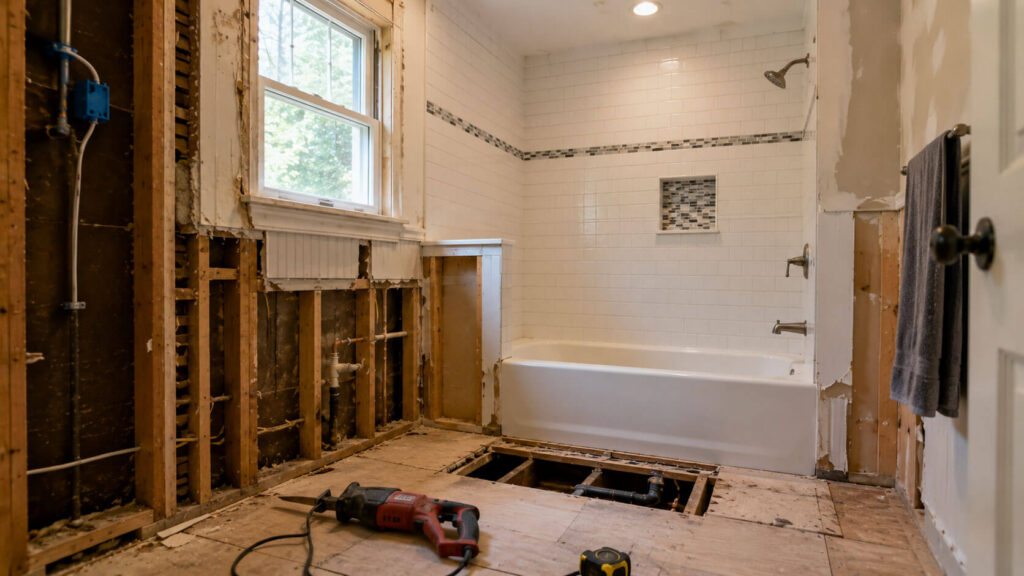
Small bathroom remodels have a way of looking simple right up until the old tile comes off. Then the hidden stuff shows up: soft subfloor, dated wiring, a vent fan that vents nowhere useful, plumbing that was “fine for years,” and walls that were never as square as they seemed. That is why bathroom budgets in the Hudson Valley often drift upward faster than homeowners expect. The room is small, but the number of systems packed into it is not.
If you are planning a bath update and trying to avoid a costly surprise, the smartest place to start is usually not the finishes. It is the structure, the moisture history, and the trade coordination behind the scenes. In many cases, the difference between a manageable project and a budget problem comes down to whether you understand the hidden scope before demolition begins.
Why bathroom remodels often cost more than the first estimate
A bathroom is one of the few rooms where plumbing, electrical, ventilation, waterproofing, framing, flooring, and finish carpentry all collide in a tight space. That alone makes it easy for costs to stack up. In older Hudson Valley homes, the odds of finding something out of date are even higher. A house with original plaster walls, a stone foundation, or a long history of patchwork repairs rarely behaves like a new build.
Contractors usually look for the same pressure points first: water damage around the tub or shower, subfloor rot around the toilet flange, inadequate venting, and wiring that may need to be brought up to code. Even if the room looks cosmetically dated, the real budget change often comes from what is uncovered after the walls are opened. That is why a homeowner comparing surface finishes only is usually comparing the least expensive part of the project.
For bigger or more complicated remodels, it can make sense to speak with general contractors who can coordinate the remodel before committing to a design. Coordination matters more than many people realize, especially when one trade’s delay affects the next trade’s schedule and cost.
The hidden costs homeowners miss most often
Some line items are obvious once you know where to look. Others surprise nearly everyone the first time.
Subfloor repairs
Bathroom flooring problems often start small: a slow leak at the toilet, a loose tub edge, or years of moisture getting into seams. By the time the flooring is removed, the plywood underneath may be delaminated or soft in spots. That is when flooring installation costs tied to subfloor repairs become a real budget issue instead of a line item on paper.
This is also where homeowners sometimes make the wrong call by trying to cover damage instead of fixing it. New tile over a compromised subfloor rarely ends well. It may look finished for a while, but movement underneath usually telegraphs through grout lines, caulk joints, and trim. A patch done cheaply can become a repeat repair.
Electrical updates
Bathroom remodels frequently trigger electrical corrections because the room has special code requirements. GFCI protection, lighting layout, fan wiring, and outlet placement all matter. Older homes may also have undersized circuits or wiring that simply does not suit modern load demands. If the plan includes better lighting, heated flooring, a stronger exhaust fan, or relocated fixtures, there may be electrical work that may need to be brought up to code.
One thing homeowners often miss: the visible electrical change is rarely the expensive part. The more complicated cost usually comes from access, routing, and making the system safe without opening more wall than expected.
Ventilation and moisture control
A new bathroom that still traps humidity is a project that never really got finished. In the Hudson Valley, where basements can be damp and seasonal moisture swings are real, poor ventilation can lead to peeling paint, mildew, swollen trim, and recurring odors. A contractor will usually check whether the fan is sized correctly, whether it vents outdoors, and whether the duct run is practical or just technically present.
That matters because a quiet fan that does not move enough air is not much of a solution. It may even make homeowners feel better while the moisture problem continues behind the walls.
What experienced contractors inspect before work starts
The most useful remodel conversations happen before anyone starts demo. A good contractor is usually trying to answer a few practical questions quickly: Is there hidden water damage? Does the framing need correction? Is the plumbing layout staying put, or is the project really a partial reconfiguration? Are there signs that the tub, shower pan, or toilet area has leaked in the past?
Homeowners sometimes assume a “simple refresh” means the old surfaces can come off and the new ones can go on. In practice, that is only true when the structure underneath is dry, stable, and reasonably square. Older homes, especially those with settled framing or previous DIY work, often need more correction than anyone sees at the start.
The stain on the ceiling often isn’t directly below the actual leak. That is one of those counterintuitive realities that catches homeowners off guard. Water moves along framing members, pipes, and seams before it shows itself. The visible damage is often only the end point.
Where cheap bathroom fixes tend to fail
There is nothing wrong with being budget-conscious. The problem is that bathrooms punish shortcuts faster than many other rooms. A low-cost caulk job can hide a failing tub edge for a few months. A bargain fan can leave the room chronically damp. A cosmetic patch over old water damage can look fine until the next heating season opens up the crack again.
These are not theoretical failures. They are the usual pattern. Homeowners spend to make the room look better, but if the leak path, ventilation issue, or drainage problem remains, the same repair returns later with more damage around it. That is why contractors tend to think in layers: structure first, moisture control second, finishes last.
If you are still mapping out scope and trade involvement, it can help to review the home service categories involved in a remodel. Bathroom work often crosses more disciplines than homeowners expect, and seeing the categories side by side makes budgeting more realistic.
Why older Hudson Valley homes need a different remodel mindset
Homes across Dutchess, Putnam, and Westchester counties often carry the marks of multiple eras: old framing, updated fixtures, patched plumbing, and electrical additions made at different times. That history matters. A bathroom in a newer suburban home may still hide issues, but an older house with plaster walls, uneven floors, or aging supply lines is more likely to reveal surprises once the work begins.
Seasonal weather plays a role too. Freeze/thaw cycles can stress older supply lines and exterior walls. Heavy rain can expose drainage issues. In homes with crawlspaces, basements, or stone foundations, moisture often shows up where homeowners least expect it. A bathroom on an exterior wall may also be dealing with insulation and air leakage issues that add to condensation and mold risk.
That is why a remodel should not be judged only by the final finishes. A properly planned bathroom in this region is doing more than looking good. It is managing water, air, and structural movement in a house that has probably been through a few repairs already.
How to keep the budget from spiraling
The best cost control usually comes from clarifying scope early. Decide what must stay in place, what can be upgraded, and what would be worth correcting while the walls are open. That sounds basic, but it is exactly where many homeowners lose money. They approve a cosmetic remodel, then add electrical changes, plumbing relocation, new flooring, and trim work mid-project without adjusting the schedule or budget.
A more practical approach is to build in a contingency for hidden conditions. In a bathroom, that is not pessimism. It is realism. If the estimate is too tight to absorb moderate subfloor repair or a needed fan upgrade, the project is likely underplanned.
It also helps to get perspective from trusted local contractor help early enough to make decisions before demolition locks everything in. The right guidance can help you separate necessary upgrades from optional wish-list items, which is often the difference between a project that feels controlled and one that keeps expanding.
If you are comparing bids, watch for the details that are missing rather than only the price. Does the estimate mention waterproofing, ventilation, demo protection, trim repair, or disposal? Are code-related items clearly addressed? Is there any allowance for hidden damage, or is the bid written as if nothing behind the walls can go wrong? The cheapest number is not always the cheapest project.
What to ask before you hire
Homeowners do not need to become contractors, but they should ask a few direct questions before work begins:
- What hidden conditions are most likely in a bathroom like mine?
- How will you handle moisture damage if it appears during demo?
- Will the fan vent outdoors, and is the duct run practical?
- Are there any code-related electrical updates likely to be needed?
- What happens if the subfloor or framing is compromised?
- Which parts of the project are fixed price, and which are allowances?
Those questions do not just protect your budget. They tell you a lot about how a contractor thinks. Good remodel planning is less about promising that nothing will go wrong and more about showing that the project can absorb the usual surprises without falling apart.
For broader planning support, homeowners can also use homeowner resources for planning renovation projects to get a better sense of timing, trade sequencing, and budget priorities before making final decisions.
Frequently Asked Questions
What usually causes bathroom remodel costs to increase?
Hidden water damage, subfloor repairs, electrical updates, plumbing changes, and ventilation corrections are the most common reasons. The surface work is often straightforward; the hidden condition is what changes the budget.
Should I replace the fan even if it still works?
Often, yes, if the fan is undersized, noisy, or not venting outdoors properly. A bathroom that holds humidity will eventually create more expensive problems than the fan replacement itself.
Is it worth remodeling a bathroom in an older Hudson Valley home?
Usually, yes, if the project addresses structure and moisture issues along with appearance. In older homes, a bathroom upgrade can also reduce recurring repair costs and help preserve resale value.
How do I know if there is damage under the floor?
Soft spots, loose tile, persistent smells, gaps at the base trim, and discoloration around the toilet or tub are common warning signs. Even then, contractors often confirm the issue only after removing the flooring.
Can I save money by keeping the plumbing layout the same?
Yes. Keeping major fixtures in place usually reduces labor and coordination costs. It is one of the most reliable ways to keep a remodel from ballooning unnecessarily.
When is a bathroom remodel no longer a DIY project?
Once you are dealing with plumbing changes, wiring, waterproofing, subfloor damage, or ventilation problems, it is usually smarter to bring in a professional. Bathrooms leave little room for trial and error.
Bathroom remodels reward careful planning more than flashy design choices. If you want the finished room to hold up, start with the hidden conditions, not the tile sample. And if you need help sorting out what is cosmetic versus what is structural, HV Trades can help connect you with local professionals who understand the realities of renovating homes in the Hudson Valley.