

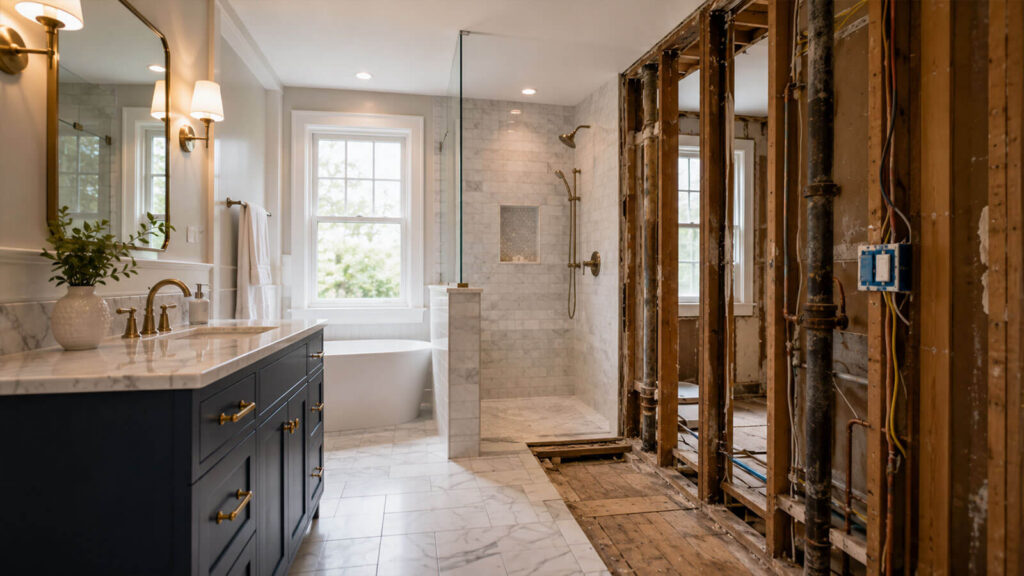
Bathroom Remodel Pricing in the Hudson Valley: What Makes a Low Bid Turn Expensive
A bathroom remodel is one of those projects that looks straightforward until the first hidden issue shows up. A homeowner thinks they are pricing tile, a vanity, and a new tub. A contractor is often looking at plumbing condition, wall damage, subfloor integrity, ventilation, electrical capacity, and whether the room has been patched one too many times already. That gap in expectation is exactly where budget blowups happen.
In older Hudson Valley homes, that gap tends to be wider. A small bathroom in Dutchess, Putnam, or Westchester County may sit on original framing, aging supply lines, tired subflooring, or an electrical setup that was never designed for modern lighting and ventilation loads. A low quote can look attractive right up until the work starts uncovering what was hidden behind the drywall. If you are comparing bids, it helps to understand what is actually driving the price and why one proposal may leave out the most expensive parts of the job.
Why bathroom remodel pricing is so easy to misread
Homeowners usually compare bathroom bids as if they are buying the same product from different stores. In reality, two quotes can look similar on paper and still cover very different scopes of work. One contractor may include demolition, plumbing adjustments, electrical updates, moisture-resistant materials, and finish carpentry. Another may only be pricing visible finishes and leaving the ugly part of the job to become a change order later.
The biggest difference is usually not the tile or vanity. It is what happens behind the walls and under the floor. That is where a contractor is watching for leaks, failed caulk lines, venting problems, rotted framing, poor insulation, or a floor that has been patched enough times to stop telling the truth. When a quote seems unusually low, the first question should be: what did they not include?
What contractors usually inspect first
Before anyone starts talking about fixtures and finishes, a good contractor is usually looking at the room as a system. That means the plumbing, electrical, framing, subfloor, ventilation, and moisture history all matter. The paint color is the easy part.
In many Hudson Valley homes, the first signs of trouble are subtle. A soft bathroom floor near the tub. A discoloration line around the toilet. A fan that moves noise more than air. An outlet that is technically there but not where modern code would like it to be. These are the details that tell a contractor whether the job is a refresh or a deeper correction.
If the remodel involves multiple specialties, it often helps to compare the contractor trades involved before settling on a price that sounds clean but may be incomplete. For larger scopes, homeowners sometimes need qualified general contractors for remodeling projects who can coordinate the moving parts instead of treating the bathroom like a paint-and-tile exercise.
The hidden work that makes a cheap quote expensive later
The most common budget trap is assuming the visible work is the whole job. It rarely is. A bathroom remodel often exposes issues that were never part of the original plan: failing shutoff valves, undersized wiring, water-damaged framing, or a floor that needs leveling before tile can go down properly.
Contractors also have to make judgment calls about what can be left alone and what cannot. A little surface corrosion on a supply line may be manageable. A supply line that is brittle, patched, or inaccessible is a different conversation. The same applies to flooring. If the old floor was installed over questionable underlayment or moisture-damaged plywood, putting new tile over it is usually just a delayed failure with better-looking grout.
This is where cheap bathroom bids often unravel. A contractor may price the cosmetics competitively, then discover that the structure underneath needs correction before any finish work is safe to install. That is not necessarily a bad contractor problem. It is often a scope problem.
Why older Hudson Valley bathrooms cost more to do right
Older homes in the Hudson Valley come with character, but they also come with repair history. Many bathrooms were updated in layers over decades. That means one wall may have modern board, another may have old plaster, and the floor may have been adjusted to hide settling or past leaks. Add in freeze-thaw cycles, seasonal humidity swings, and the occasional heavy storm, and bathrooms can become moisture traps if they were never properly vented.
Contractors working in these homes often pay close attention to bathrooms near exterior walls, especially where insulation and ventilation may be weak. A fan that simply vents into an attic is not a real solution. Neither is fresh paint over recurring mildew. Those are cosmetic fixes that hide the pattern for a while and then let it come back.
One counterintuitive detail catches homeowners off guard: the stain you see on the ceiling below a bathroom is not always directly below the actual source. Water can travel along framing, pipe runs, or subfloor seams before it shows itself. That is why chasing the visible stain without tracing the path usually wastes money.
Where homeowners get into trouble with low bids
Low bids are not automatically bad. Sometimes they reflect a simpler scope, better scheduling, or a contractor who is more efficient than the next guy. The problem is that homeowners often assume all bids are accounting for the same risk.
The most common traps are easy to miss:
- the bid excludes plumbing relocation or fixture replacement allowances
- electrical updates are treated as optional instead of necessary
- waterproofing is described vaguely, with no detail on membranes or prep
- subfloor repair is listed as “if needed,” which often means expensive later
- the finish scope is priced, but not the cleanup and protection around the rest of the house
Bathroom work also tends to be disruptive in a way homeowners underestimate. A project can look modest and still require demolition dust control, access to shutoff valves, coordination around inspection timing, and decisions about when the family can safely use the room again. That practical reality matters more than a polished estimate sheet.
Electrical and flooring are two places where shortcuts get costly
Bathroom remodel budgets often get squeezed by the parts nobody sees once the room is finished. Electrical is a prime example. If a bathroom needs new lighting, a fan, a GFCI outlet, or code corrections, that work should be part of the conversation early. Cutting corners behind the walls usually means the homeowner ends up paying twice, once for the decorative work and again to make the electrical safe and compliant. When that comes up, it is worth asking about licensed electrical work behind the walls rather than assuming the existing wiring is good enough.
Flooring is another area where “close enough” becomes a problem fast. Bathrooms need proper prep, moisture-aware materials, and an installation method that suits the room, not just the catalog photo. If the floor system is not ready, tile and luxury vinyl alike can fail prematurely. That is why proper bathroom flooring installation matters more than most homeowners realize.
When a remodel should be treated like a repair project first
Sometimes the smartest remodel decision is to solve the underlying repair issue before choosing finishes. If there is active moisture, repeated caulk failure, a spongy floor, or a fan that does not actually vent outdoors, the room should not be treated like a cosmetic update. It should be treated like a system that is already under stress.
This is the part many homeowners want to skip because it feels less exciting than picking tile. But repair-first thinking is usually cheaper in the long run. It is also how experienced contractors avoid creating a beautiful bathroom that starts failing six months later. A well-timed correction can prevent a much larger tear-out.
If you are still weighing whether a project should be patched or rebuilt, the logic is similar to other home decisions where scope determines cost. That is often the same reason homeowners benefit from reading about repair-versus-rebuild decisions before they accept the first low estimate that lands in their inbox.
How to compare bathroom bids without getting fooled
The most useful comparison is not total price alone. It is scope clarity. A good bid should tell you what is included, what is excluded, what is allowed for, and what conditions would trigger a change. If the estimate is vague, the final invoice will probably be vague too.
Homeowners should look closely at whether the contractor has described demolition, disposal, plumbing adjustments, electrical work, ventilation, waterproofing, flooring prep, finish carpentry, and permit-related responsibilities. The more specific the estimate, the easier it is to compare apples to apples. If you are still learning how to evaluate proposals, it can help to use homeowner remodeling resources as a reference point while you review the fine print.
It is also smart to ask how the contractor handles hidden conditions. That conversation reveals more than most homeowners expect. A straightforward contractor will explain what happens if rot is found, what gets documented, and how the pricing changes are handled. A vague contractor will often dodge that question until the issue becomes unavoidable.
Signs your bathroom project needs a bigger scope
Some bathrooms are candidates for a simple refresh. Others are already signaling that the work needs to go deeper. The warning signs are usually visible if you know what to look for.
- tile that sounds hollow or loose in multiple areas
- a toilet that has been reset more than once
- persistent mildew despite cleaning and ventilation
- softness around the tub, shower, or vanity base
- peeling paint near the ceiling or exterior wall
- an exhaust fan that does little more than move air around
When several of these appear together, the room is often telling you that the finishes are only part of the problem. That is when a remodel can turn into a structural and moisture-management job whether anyone planned for it or not.
Frequently Asked Questions
Why do bathroom remodel estimates vary so much?
Because some bids only cover visible finishes while others include plumbing, electrical, ventilation, prep, and hidden repair allowances. The scope is usually the real difference.
What hidden problems are most common in older bathrooms?
Contractors often find subfloor damage, outdated wiring, poor ventilation, leaky shutoffs, and moisture-related framing issues. Older Hudson Valley homes are especially prone to layered repair history.
Is it worth fixing the bathroom fan during a remodel?
Yes. A weak or improperly vented fan can undo expensive finish work by letting humidity linger. Moisture control is part of the project, not an optional upgrade.
Should I choose the lowest bathroom bid if the contractor seems capable?
Only if the scope is genuinely complete and clear. A low bid that leaves out essential work usually costs more once change orders and repairs start appearing.
Can I keep my existing plumbing and still remodel the bathroom?
Sometimes, yes. But existing plumbing should be inspected carefully. If valves, drain lines, or fixture connections are aging, keeping them in place can create a weak point in the new bathroom.
What is the most overlooked part of a bathroom remodel?
Preparation. Floor leveling, moisture control, electrical corrections, and ventilation improvements are often what determine whether the finished room holds up.
A bathroom remodel should leave you with more comfort, better function, and fewer surprises after the job is done. The best way to get there is to focus on scope, not just price, and work with local professionals who are clear about what they are actually building behind the finishes. If you want to make a more informed decision before you hire, HV Trades is here to help you understand the work, compare options, and find the right local expertise for the job.