

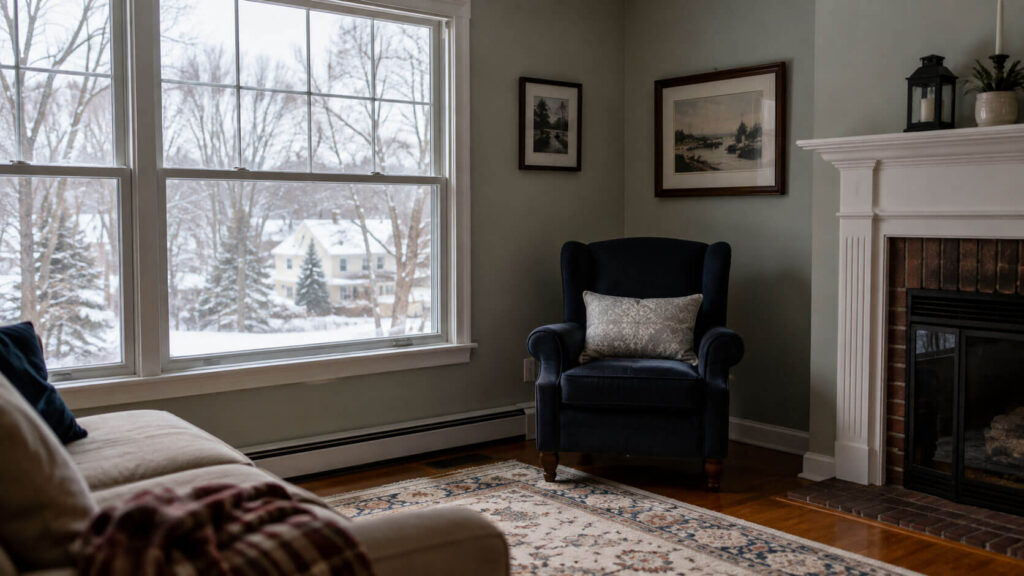
Why one room stays cold while the rest of the house feels fine
A single cold room can turn into a long-running annoyance fast. The space never quite warms up, the baseboard feels weak, the floor stays chilly, and the thermostat seems to be fighting a losing battle. In a lot of Hudson Valley homes, that’s not just bad luck. It’s usually a clue that something in the house envelope, insulation, airflow, or moisture control is underperforming in a way that homeowners don’t notice right away.
The tricky part is that the obvious fix is rarely the real fix. A space heater masks the symptom. So does cranking the thermostat. Contractors usually look for the reason that room is losing heat faster than the others: missing insulation, air leakage, cold floors over a basement, weak duct supply, foundation drafts, or a combination of all of them. If the house is older, the problem can be even more layered than people expect.
Start with the room itself, not the thermostat
Homeowners often assume the heating system is the problem because the room feels cold. That is sometimes true, but not usually the first place to look. A room that never heats evenly often has a heat loss issue, not just a heat output issue. That matters because the repair approach changes completely.
Contractors usually begin by asking a few basic questions: Is the room over a basement, crawl space, garage, or slab? Is it on a corner or under an attic? Are there windows that feel drafty? Is the floor cold even when the heat is running? Those details narrow the cause quickly. A room over an unconditioned garage, for example, behaves very differently from a second-floor bedroom with poor attic insulation above it.
In homes with older construction, especially around stone foundations and additions built at different times, one room can lose heat through several weak points at once. That is why patchwork fixes often disappoint. If you only seal one drafty window but ignore the rim joist or attic bypasses, the room may still stay cold.
The hidden causes homeowners miss most often
Some of the most common culprits are not visible at first glance. That is part of why cold-room complaints get misdiagnosed so often.
One overlooked issue is air leakage at framing joints, recessed lighting, attic access points, and pipe penetrations. Another is insulation that exists on paper but is poorly installed, compressed, or missing in pockets. In older homes, contractors often find thin wall cavities, uneven insulation coverage, or gaps left behind after electrical or plumbing work.
Moisture is another underappreciated factor. A damp basement or crawl space can make the floor above feel dramatically colder, even if the insulation is technically present. That is one reason crawl space moisture and foundation air leaks deserve attention when the room above a basement feels uncomfortable year-round.
And here’s the counterintuitive part: the coldest part of the room is not always where the heat is escaping most. The stain on the ceiling may be directly below a leak, but the source of the problem is often several feet away in the roof assembly, flashing, or attic. Cold-room diagnosis works the same way. The discomfort shows up in one place, but the real failure can be somewhere else entirely.
Why older Hudson Valley homes are harder to “just heat”
Older homes in this region were not built with today’s expectations around air sealing, insulation depth, or balanced HVAC distribution. Add freeze-thaw cycles, heavy rain, windy winter days, and long heating seasons, and weak spots become more noticeable. A room that was merely drafty in October can feel nearly unusable by January.
Homes with oil heat, radiator systems, partial ductwork, additions, and finished attics often have uneven comfort by design. That does not mean the system is broken. It means the building was added onto, altered, or tightened in some places without fully solving the heat-loss pattern. Contractors see this constantly: one section of the home performs well, while a newer or less insulated room becomes the coldest spot in the house.
If the room sits under the roofline, it is worth paying attention to attic conditions as well. Missing insulation, poorly vented roof assemblies, and moisture buildup can all affect room temperature below. A helpful next step is reviewing attic ventilation and moisture checks, especially if the space above the room has ever shown signs of condensation, staining, or ice dam problems.
What contractors usually inspect first
A good contractor does not start by replacing equipment unless the system clearly points that way. The first inspection usually focuses on the building shell and how air is moving through the home.
1. The obvious draft points
Windows, doors, baseboards, outlets on exterior walls, and attic hatches are the usual suspects. But the important part is not just whether they feel cold. It is whether they are allowing enough air movement to affect comfort and heating load.
2. The room’s position in the house
Corner rooms and rooms over garages or unconditioned spaces typically need more attention. The floor system, rim joist, and wall cavities may all need to be checked together.
3. Insulation quality, not just presence
People are often surprised to learn that insulation can be installed and still fail to perform well. Gaps, compression, settling, and bypasses around framing can make a “fully insulated” room feel cold.
This is one reason homeowners often end up talking with insulation contractors in the Hudson Valley after trying smaller fixes that never fully solve the issue.
4. Ductwork and supply balance
If the room is heated by forced air, the problem may be airflow, not heat production. Long duct runs, undersized returns, disconnected joints, and dampers that were never balanced properly can leave one room underheated for years.
When the problem is really below the room
Cold floors are especially common over basements and crawl spaces. The room may not have a major heating failure at all. Instead, the floor assembly is pulling heat away faster than the system can replace it.
In those cases, contractors often look at the rim joist first because it is one of the most common leakage points in the house. Then they check whether insulation is missing around the perimeter of the floor system or whether moisture is making the space feel colder than it should. In a damp basement, even modest air leakage can create a much bigger comfort problem than homeowners expect.
That is also where small problems become expensive if they are ignored. A chilly room over a damp basement can eventually lead to worse indoor humidity control, more stress on the heating system, and sometimes recurring comfort complaints even after other repairs are made. It is not unusual for a homeowner to replace a window or service the furnace and still have the same cold spot because the real issue was underneath the room all along.
Why DIY fixes often make the room feel better for a week and worse after that
There is nothing wrong with trying simple maintenance steps. Weatherstripping, outlet gaskets, and caulking obvious cracks can help. But there is a limit to what surface-level fixes can do.
The problem is that many DIY attempts treat symptoms one by one without understanding the pressure and moisture patterns in the house. Sealing too aggressively in one place can shift drafts to another. Blocking airflow around a heating source can make the room less comfortable. Using the wrong insulation in a damp area can create more trouble than it solves.
That is especially true in older homes where a room may depend on some incidental air movement to stay balanced. Contractors see this often after well-meaning homeowners seal every visible gap but do not address ventilation, return airflow, or a moisture issue in the basement. The result is a room that still feels cold, only now it may also feel stuffy or uneven.
Warning signs the issue is getting worse
A cold room becomes a bigger problem when it starts to show other symptoms. Those signs usually tell you the issue is moving beyond simple comfort and into repair territory.
- The floor stays cold even after the heat has been running for a while.
- Drafts get worse on windy days or after storms.
- There is visible condensation on windows or around trim.
- The room smells damp, musty, or stale.
- Baseboards, drywall, or flooring show signs of staining or minor warping.
- The heating system seems to run longer without improving that one room.
If the cold room appears after storm damage, a roof edge issue, or exterior siding failure, it may be worth checking for storm-related exterior gaps that create drafts. A loose piece of flashing or damaged soffit can create more air movement than people realize.
What to do before the problem becomes a bigger repair
The smartest move is usually to narrow the cause before spending money on the wrong fix. That does not mean waiting indefinitely. It means being deliberate.
Start by identifying whether the room is losing heat through the walls, floor, ceiling, or airflow system. If the room is above an unconditioned space, get that area inspected too. If the room is near an attic, look at insulation depth, ventilation, and any signs of moisture intrusion. If the room has a ducted supply, have the balance and duct connections checked before replacing equipment.
If you are not sure which specialist makes sense, it is often more efficient to find the right contractor for a cold-room problem than to guess and pay for the wrong trade twice.
That kind of sequencing matters. Experienced contractors know that the cheapest visible fix is often not the smartest first step. They usually look for the source of heat loss, the moisture pattern, and the way the room interacts with the rest of the house before recommending materials or equipment.
What a good repair plan usually includes
For most cold-room complaints, the best solution is not one repair but a small set of coordinated improvements. That might mean air sealing the rim joist, tightening attic bypasses, improving insulation in the affected walls or ceiling, correcting duct balance, and addressing moisture in a basement or crawl space.
The exact mix depends on the home. A Cape Cod with knee walls will not be solved the same way as a ranch over a damp basement or a colonial with an addition that never matched the original envelope. The point is not to chase the symptom in isolation. It is to stop the room from fighting the rest of the house.
If the issue is tied to moisture, foundation conditions, or persistent air leakage below the room, a more structural solution may be needed. If the issue is attic-related, the roof and insulation should be evaluated together rather than separately. When the problem sits near the boundary of roofing and home performance, a seasonal review like attic ventilation and moisture checks can be a useful place to start.
Frequently Asked Questions
Why is only one room in my house cold?
Usually because that room loses heat faster than the others. The cause may be insulation gaps, air leakage, weak duct supply, or an unconditioned space below or above it.
Should I replace the windows first?
Not automatically. Windows can be part of the problem, but they are often not the biggest one. Many cold-room issues come from insulation, air sealing, or basement and attic conditions.
Can a cold floor mean I have a foundation problem?
Sometimes, yes. It can also point to crawl space moisture, foundation air leaks, or poor insulation at the rim joist. The floor temperature alone does not tell the whole story.
Is it worth adding more insulation if the room is still drafty?
Only if the air leakage problem is addressed too. Adding insulation without air sealing can leave you with the same comfort issue and a less predictable repair outcome.
When should I stop trying DIY fixes?
If the room still feels cold after basic sealing, or if you see signs of moisture, staining, or recurring drafts, it is time for a professional inspection. Continuing to guess usually costs more in the end.
What kind of contractor should I call first?
That depends on where the problem seems to originate. It might be an insulation specialist, foundation and waterproofing professional, or HVAC contractor. If you are unsure, start by finding a contractor who can assess the room as part of the whole house, not just one visible symptom.
A cold room is rarely just a comfort issue. It is often a sign that part of the house envelope is underperforming in a way that will keep costing you if it is ignored. The best next step is usually a careful diagnosis from someone who understands how the building systems work together, so you can fix the real problem once instead of layering on temporary solutions.