

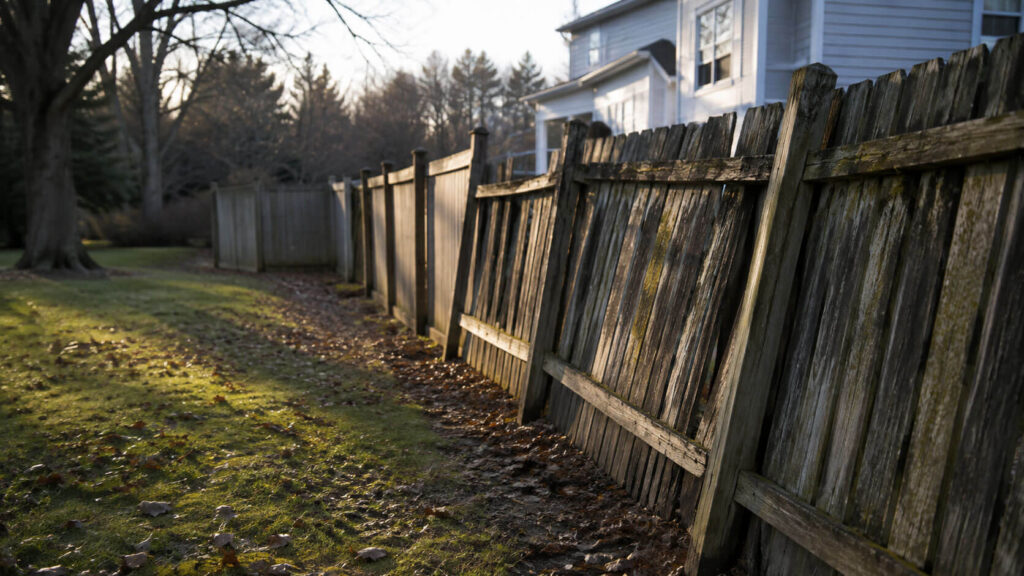
Property-line disputes rarely start with a lawsuit. They usually start with something smaller: a leaning section of fence, a missing corner post, a neighbor saying, “I’m pretty sure that line used to be over here.” In the Hudson Valley, where mature trees, sloped lots, older survey pins, and long-established property lines all seem to coexist uneasily, fence questions can turn messy faster than homeowners expect.
That’s part of why fence issues deserve a careful look before anyone starts replacing panels or moving posts. What seems like a simple boundary problem can turn into a drainage issue, a settlement issue, or a “who actually owns this structure?” question. And once a fence has been repaired in the wrong place, the mistake is expensive to unwind. If you’re already weighing service options, it helps to understand whether whether fence repair or replacement makes more sense before you commit to a fix that won’t solve the real problem.
For homeowners, the tricky part is that a fence can look “off” for several reasons at once. Posts shift after freeze-thaw cycles. Soil moves after heavy rain. Trees push into a line over time. Sometimes the fence is actually fine and the yard around it has changed. Other times the fence is failing and the boundary concern is the first clue that the whole run needs attention. Contractors often spot that distinction early, while homeowners are still focused on the visible tilt or gap.
Why fence boundary issues get complicated so quickly
Most fence disputes are not really about the fence itself. They’re about location, responsibility, and what happens when a physical structure no longer matches the memory of where it was supposed to be. In older Hudson Valley neighborhoods and rural lots alike, it is common to find fences installed years ago without much documentation, or with assumptions passed from one owner to the next. That works until a replacement section goes in a few feet off the original line.
Contractors who work in this space usually start with a very simple question: what is the actual purpose of the work? Is the goal to secure a yard, repair storm damage, restore a damaged boundary, or replace an aging fence that has simply reached the end of its life? That answer changes everything, including whether a survey should be reviewed before any post holes are dug.
The counterintuitive part is this: the section that looks most damaged is not always the section creating the real problem. A fence that appears to be “bowing” near a property line may be reacting to soil movement from a low spot, root pressure from a nearby tree, or water flowing across the yard after storms. In other words, the visible symptom is often a downstream effect, not the cause.
What experienced contractors look at first
Before a fence repair becomes a boundary mess, experienced fencing contractors usually check a few things in order:
- Where the existing posts sit relative to the known or documented property line
- Whether the posts are failing because of rot, corrosion, or soil movement
- Whether one side of the fence has been exposed to more drainage or runoff
- Whether tree roots, frost heave, or poor footing depth are pushing the line out of plumb
- Whether the fence was installed as a boundary fence or simply as a yard enclosure
This is where a lot of DIY assumptions fall apart. Homeowners often assume a fence can be shifted “just a little” to make it straighter or stronger. But once posts are reset without confirming the line, the repair can create a new dispute even if the workmanship is excellent. That is why people looking for experienced fencing contractors usually benefit from a contractor who understands both the physical repair and the boundary questions that come with it.
In Dutchess, Putnam, and Westchester counties, these situations come up most often on older properties where fences were built around trees, grades, patios, septic clearances, or long-settled lot edges. The work may look straightforward from the street. On site, it often isn’t.
Common homeowner mistakes that make fence problems worse
The most common mistake is starting with replacement materials before confirming what is actually wrong. A homeowner sees a leaning panel and assumes the answer is a stronger panel. But if the posts are loose because the footings are undersized or the soil is saturated, a nicer panel will still lean. It just leans more expensively.
Another frequent mistake is using informal landmarks as a boundary reference. The old hedge, the stone, the tree stump, the “line everyone has always used” — these are not reliable ways to place a fence. In the Hudson Valley, where landscaping changes over decades and survey markers can be buried or damaged, that shortcut can backfire.
There’s also the urge to patch a fence one section at a time without looking at the whole run. That can work for very localized damage, but if the fence has widespread post movement or uneven drainage, the repairs start chasing symptoms. Contractors see this often: three small fixes spread out over two seasons, followed by a full replacement anyway.
If a fence is already leaning after a storm or a hard freeze, it may be worth reviewing a fence that starts leaning after storms or freeze-thaw cycles before assuming the issue is only cosmetic. Movement after weather events can signal footing failure, saturated soil, or a hidden alignment problem that will keep returning.
Why drainage matters more than most people realize
Water is behind a surprising number of fence problems. A wet yard softens post support. Poor grading lets runoff collect along fence lines. Snowmelt and spring rain create repeated wet-dry cycles that work posts loose over time. On wooded Hudson Valley lots, this is especially common where leaf litter, shade, and sloped terrain keep soil damp longer than homeowners expect.
That’s why a fence issue can sometimes trace back to the same forces that cause other property headaches. If the soil is shifting, the line may be moving too. In those cases, it helps to pay attention to drainage problems that shift posts and soil before the next storm makes the situation worse.
Drainage issues are often overlooked because the fence failure appears isolated. But contractors know that if one section is unstable and the yard around it stays wet, the repair has a built-in weak point. A post reset in bad soil is still a temporary fix.
When a fence problem becomes a property-line problem
Not every damaged fence is a boundary dispute. But once a repair crosses into the likely property line area, the stakes change. This is where homeowners should slow down, not speed up. If there is any question about where the fence belongs, the best next step is usually to verify the line before discussing layout changes with a contractor.
That matters even more when a replacement fence is planned. A new fence installed in the wrong location can create neighbor tension, resale headaches, and avoidable correction costs. It is much easier to resolve uncertainty before digging than after posts are set in concrete.
In some cases, homeowners discover that the fence line is close to the issue but not the actual issue. Maybe the fence is theirs, but the neighboring tree roots are contributing to movement. Maybe the line is correct, but the fence style no longer suits the terrain. Maybe the repair looks minor, but the underlying condition suggests the entire run is reaching the end of its useful life. Those are the situations where contractor judgment matters more than a quick visual estimate.
Repair, move, or replace?
The right answer depends on how much of the fence is failing and why. A localized repair can make sense if the damage is isolated and the rest of the structure is sound. But if multiple posts are loose, rails are sagging, or the fence has been patched repeatedly, replacement often becomes the more honest option.
Homeowners sometimes resist replacement because it feels like the expensive answer. In reality, repeated repairs often cost more in the long run, especially when the fence sits in wet soil or on a property with active grade changes. The cheaper fix today can become the costlier problem next season.
If you are trying to decide between patching and starting over, a practical comparison of whether fence repair or replacement makes more sense can help frame the decision around long-term value instead of short-term discomfort.
And if the fence is part of a broader property improvement plan, homeowners in western and central parts of the region often look to local service pages like fence services in Dutchess County or Putnam County fence pros when they want to compare options with someone familiar with local terrain and neighborhood constraints.
What to have ready before you call a contractor
A few details make the conversation much easier:
- Any survey documents, plot plans, or closing paperwork showing lot lines
- Photos of the fence from different angles, especially the areas of movement or damage
- Notes about when the problem started and whether it changed after storms or snow
- Any known drainage issues, standing water, or nearby tree activity
- Whether you want repair, replacement, or help understanding the boundary concern first
Good contractors appreciate that information because it cuts through guesswork. It also prevents one of the most frustrating homeowner mistakes: asking for a fence quote before clarifying what exactly needs to be quoted.
In denser parts of Westchester, for example, fence work can involve neighbor expectations, tighter lot spacing, and more visible property-line pressure. That’s one reason homeowners often look for Westchester County fencing contractors when they need someone who understands both the construction side and the practical realities of working close to adjacent properties.
Why delaying fence repairs usually costs more
Fence issues rarely improve on their own. A slightly leaning post becomes a looser one. A sagging gate starts dragging. A damaged section invites more movement around adjacent posts. If water is involved, each season can make the soil conditions worse and the repair less stable.
There’s also the resale angle. Buyers notice fences more than homeowners sometimes expect, especially when the fence appears to cross a line, lean toward a neighbor, or show obvious patchwork. A clean, well-documented repair is much easier to explain than a visibly improvised one.
That is why the best fence decisions are usually the boring ones: verify the line, inspect the structure, understand the drainage, and repair the right problem the first time. It is not the fastest path, but it is usually the least expensive path over the life of the property.
Frequently Asked Questions
Should I check the property line before repairing a fence?
Yes, if there is any chance the repair touches a boundary or shifts the fence location. That is especially important before replacing posts or resetting sections near a lot line.
Can a leaning fence just be straightened without replacing it?
Sometimes. If the posts and footings are still sound, a targeted repair may work. If the lean is caused by rot, saturated soil, or repeated freeze-thaw movement, straightening alone usually does not last.
Why do fences shift more after heavy rain or snowmelt?
Because wet soil loses stability. Water weakens support around posts, and repeated freeze-thaw cycles can move the ground enough to loosen the structure.
Is it ever okay to move a fence a little to make it straighter?
Only after the boundary is clearly verified. “A little” can become a real problem if the new position crosses a property line or changes the fence’s legal placement.
What’s the biggest mistake homeowners make with older fences?
Assuming the visible damage is the whole issue. Older fences often have hidden problems in the posts, drainage, or surrounding soil that are not obvious from the surface.
When does replacement make more sense than repair?
When multiple posts are failing, the structure has been patched repeatedly, or the fence is old enough that the next repair is likely to uncover another weak point nearby.
If you’re dealing with a fence that may be crossing into boundary territory, the safest move is usually the least dramatic one: get the line confirmed, understand the structure, and work with a trusted local fencing professional who can help you avoid a repair that creates a bigger problem later.