

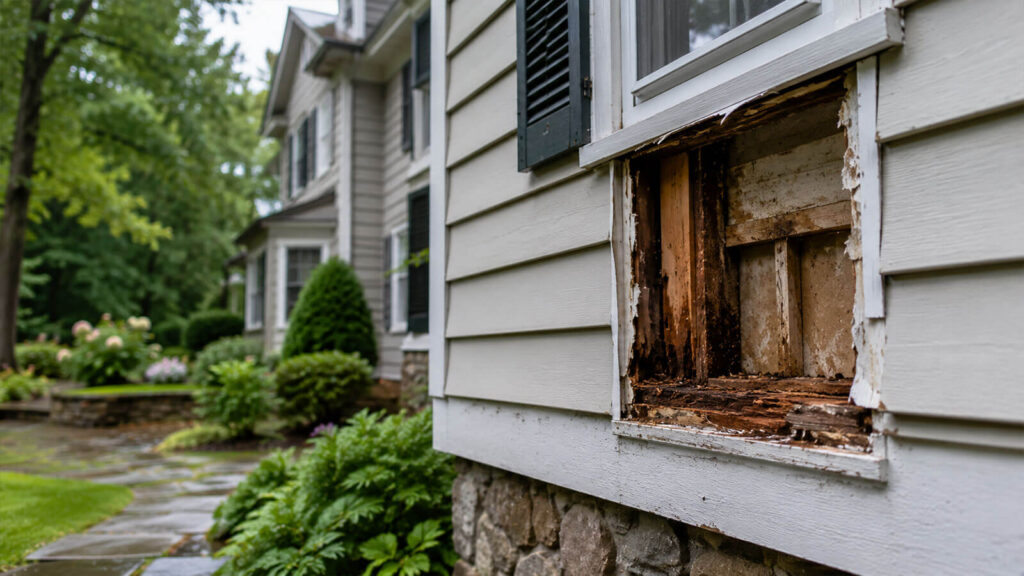
Small home repairs have a way of looking harmless right up until they aren’t. A loose board, a dripping shutoff valve, a stubborn breaker, a peeling patch of paint near a window: none of it feels urgent at first. But in older Hudson Valley homes, the “small” problem is often just the first visible sign of a bigger one hiding behind it.
That’s why the smartest repairs are rarely the fastest ones. Homeowners who slow down long enough to figure out what’s actually causing the issue usually spend less over time, especially when the problem involves moisture, settlement, aging wiring, or exterior wear from freeze-thaw cycles. If you’re deciding whether something is a quick fix or a project that needs trusted local contractor help, the difference usually comes down to what’s behind the surface, not what you can see from the room.
Why “small” repairs get expensive so quickly
Contractors see this pattern all the time: a homeowner notices one symptom, fixes that symptom, and the underlying cause keeps working in the background. Then the same issue returns, or it shows up somewhere else. Water intrusion is the classic example, but it happens with electrical issues, loose decking, foundation cracks, and even bathroom repairs that were supposed to be simple.
The cost jump usually happens because the first repair only addresses the finish layer. A ceiling stain gets painted over, but the roof flashing is still leaking. A draft gets sealed around a window, but the rotted framing around it never gets checked. An outlet gets replaced, but the breaker load or old wiring system was the real concern. That’s where homeowners get caught paying twice.
In older homes throughout Dutchess, Putnam, and Westchester counties, that risk is higher because houses often have a mix of old and newer work. One part of the system may be original, another part may have been patched years later, and the two don’t always cooperate. That patchwork history matters.
What contractors usually inspect first
When a repair looks simple on the outside, experienced contractors tend to start by asking a few basic questions: Where is the failure actually coming from? Is this isolated, or is it part of a larger pattern? Has the same issue happened before? Those questions sound obvious, but they save people from chasing the wrong fix.
For exterior problems, contractors often look at drainage, flashing, siding transitions, fascia, soffits, and nearby rooflines before they touch the visible damage. For interior moisture problems, they’ll often check the attic, basement, or wall cavity before assuming the room itself is the source. For electrical concerns, the panel, circuit load, and age of the system matter just as much as the outlet or switch that stopped working.
That’s also why a good contractor often seems less interested in the symptom than the homeowner expects. It’s not indifference. It’s diagnosis.
The Hudson Valley details that change the repair equation
Local weather and property conditions make a big difference here. Freeze-thaw cycles pull at caulk lines, crack masonry joints, and widen small openings around trim and foundations. Heavy rain finds low spots in grading and pushes water toward basements, especially on properties with slopes, stone foundations, or long driveway runoff paths. Mature trees create beautiful shade, but they also mean more roots, more debris in gutters, and more branches that can hit roofs, siding, or decks.
On rural and semi-rural properties, the repair picture gets more complicated. Detached garages, older workshops, oil heat, well water, septic systems, and older electrical setups all bring their own maintenance issues. A problem that would be straightforward in a newer suburban home can become a multi-trade question when the house is older and the infrastructure hasn’t been modernized all at once.
That’s when homeowners benefit from understanding the right contractor trade for the job. Not every repair belongs with the same person, and guessing wrong is how simple projects turn into slow, expensive ones.
A counterintuitive truth about visible damage
One thing that surprises homeowners again and again: the stain on the ceiling often isn’t directly below the actual roof leak. Water can travel along rafters, framing, or insulation before it finally shows itself. The same idea applies to many other problems. Rust near a fixture may point to ventilation, not the fixture. Cracked paint may point to seasonal movement, not a bad paint job. A loose deck rail may signal a much bigger issue with posts, ledger attachment, or hidden rot.
That’s why quick cosmetic fixes are risky. They make the problem look smaller than it is, which is comforting for a little while and expensive later. A repair that only improves appearance without verifying the structure underneath often fails early.
Where DIY goes from helpful to risky
Some homeowner work is perfectly reasonable. Tightening a hinge, replacing weatherstripping, cleaning gutters, or swapping out a shower head are all normal maintenance tasks. But once a project touches structure, electrical, drainage, gas, or load-bearing components, the risk profile changes fast.
Electrical work is a good example. A homeowner might think a flickering light is just a bad bulb or loose fixture, but it can also indicate a failing switch, an overloaded circuit, loose connections, or aging wiring. That’s not a problem to guess at. It’s the kind of issue that belongs with licensed electrical services, especially in homes with older panels or mixed-age wiring.
The same caution applies to deck repairs. A rotted board is one thing; a failing support system is another. If posts, joists, ledger boards, or fasteners are compromised, the repair can stop being a patch and become a structural decision. In that case, it helps to understand whether a deck repair needs a rebuild before you spend money on a fix that won’t hold up.
Shortcuts that usually fail
There are a few repair habits that look thrifty but end up costing more:
- Painting over water damage before finding the source.
- Re-caulking repeatedly without correcting drainage or flashing problems.
- Replacing a damaged board without checking adjacent rot.
- Resetting breakers without understanding what caused the overload.
- Patching cracked masonry without addressing foundation moisture or grading.
These shortcuts tend to fail because they treat the final symptom, not the mechanism behind it. Contractors see that all the time on older homes: a previous repair may have bought time, but it also obscured the next problem. Once the hidden issue advances, the second repair is always more invasive.
That’s also why many homeowners end up needing larger repair or remodeling work even when the original problem seemed minor. A small opening in a wall can reveal insulation damage, framing rot, or a chain of moisture-related issues that can’t be solved with a one-step patch.
When delaying a repair becomes the expensive part
Not every issue needs immediate panic. But delay has a cost, and that cost is usually highest with anything involving water, structure, or electrical integrity. A slow drip under a sink can lead to cabinet damage, subfloor rot, and mold. A loose exterior board can let water reach framing. A recurring basement damp spot can affect air quality, stored belongings, and eventually the foundation itself.
Even cosmetic delay can be costly. If a minor siding issue allows water into the wall system through one wet season, the repair is no longer about the siding alone. You may now be looking at insulation, trim, drywall, paint, and possibly framing work. That’s the real financial trap: waiting doesn’t freeze the problem. It usually gives it time to spread.
How to make a better hiring decision
Homeowners don’t need to diagnose everything themselves, but they do benefit from asking better questions before hiring. Instead of “Can you fix this?”, ask what else the contractor will check while they’re there. Ask whether the issue looks isolated or part of a larger pattern. Ask what signs would mean the repair needs to grow in scope.
That approach does two things. First, it helps you compare contractors based on judgment, not just price. Second, it reduces the odds of being sold a patch when what you really need is a durable repair plan. If you’re not sure where to begin, the Hudson Valley home improvement resources section can help you think through the issue before you commit to work.
For homeowners who want a clearer path from diagnosis to action, it’s often worth starting with a contractor who can explain the next best step instead of rushing straight to the cheapest fix. Good advice matters almost as much as good workmanship.
Common repair mistakes homeowners make
A few patterns show up repeatedly in home repairs:
- Assuming the visible damage is the cause, not the result.
- Choosing the lowest quote before understanding scope.
- Waiting for “one more season” even when water is involved.
- Mixing DIY and contractor work without a clear plan.
- Ignoring recurring problems because each one seems separate.
These mistakes are understandable. Nobody wants to open up a project unnecessarily. But homeowners who think like this often spend more over time because the repair keeps coming back in a slightly different form. The smarter approach is to treat recurring issues as clues.
Frequently Asked Questions
How do I know if a repair is really minor?
If the issue has no sign of water, structural movement, electrical risk, or repeated failure, it may be minor. But if the same problem keeps returning, it usually isn’t minor anymore.
Why do small leaks become such big repairs?
Because water rarely stays put. It moves into framing, insulation, drywall, and finishes, which means the visible damage is often just a fraction of the full repair.
Should I wait until a problem gets worse before calling a contractor?
No. Waiting usually makes the repair more expensive, especially with moisture, roofing, deck, foundation, or electrical issues.
What’s the biggest mistake homeowners make with DIY repairs?
Fixing the finish before identifying the cause. That’s how a cosmetic patch ends up hiding a bigger problem.
How do older Hudson Valley homes change the repair process?
Older homes often have layered repairs, mixed materials, aging wiring, and drainage challenges. That means contractors need to inspect more than the obvious failure point.
When should I stop treating a repair like a handyman job?
Once the issue touches structure, electrical systems, significant moisture, or anything that seems to be spreading. At that point, the repair needs the right scope, not just a quick patch.
Good home maintenance is less about reacting fast and more about reacting well. If something looks off, take the time to understand what it might be connected to before you pay for a surface fix. That’s usually the difference between a repair that holds and one that comes back. When you’re ready to make a more confident decision, start with the right local guidance and choose the solution that protects the house for the long run.