

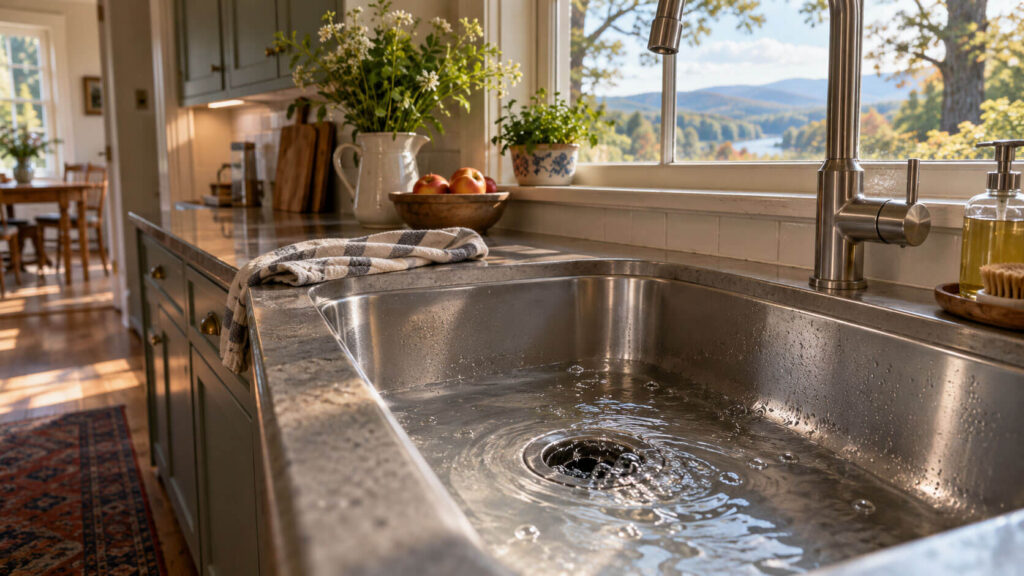
Kitchen sink gurgling is one of those problems homeowners tend to shrug off until it becomes impossible to ignore. At first it sounds minor: a strange burp after the dishwasher runs, a slow drain, a bubble in the trap. But in real homes, especially older Hudson Valley houses, that sound usually means the system is trying to tell you something. Sometimes it is a simple restriction. Sometimes it is a venting issue. And sometimes it is the first visible sign of a bigger drainage problem that has been building quietly for a while.
Why a gurgling sink deserves attention sooner rather than later
A gurgling kitchen sink is not just annoying. It often means air is being pulled through the drain line because wastewater is not moving the way it should. That can happen when grease, food debris, soap residue, or even a partially collapsed pipe creates resistance in the line. In homes with older plumbing, the issue can also point to venting problems, which are more common than people think.
What catches homeowners off guard is that the sound is often worse at the fixture that is not actually the main problem. A sink can gurgle because another branch line is struggling, or because the main drain is restricted farther downstream. That is why a quick plunge or bottle of drain cleaner often seems to “work” for a day or two and then the noise comes right back. If you are trying to sort out whether the issue is local or part of a wider plumbing concern, it can help to compare it with how local drain cleaning contractors typically approach the problem: they usually start by tracing airflow, flow speed, and where the restriction actually sits, not just the visible sink opening.
What contractors usually check first
When a kitchen sink starts gurgling, experienced plumbers do not begin with assumptions. They usually look at three things first: whether the trap is clear, whether the branch line is partially restricted, and whether the vent is doing its job. Those three checks solve a surprising number of calls.
The trap is the easy part. It catches debris and can collect buildup, especially in homes where cooking grease goes down the drain regularly. But if the trap is clear and the sink still gurgles, the next question is what is happening farther down the line. That is where homeowners often miss the real issue. A sink can drain slowly because of a clog, but it can also drain slowly because the line is not venting properly. When the vent is blocked, undersized, or poorly configured, the drain line can struggle to move water and air at the same time.
That distinction matters because the wrong fix can waste money. Pouring chemicals down the sink usually does not solve a venting problem. Snaking the line may temporarily improve flow without addressing why the pressure imbalance is happening. And if the pipe has older buildup inside, a quick fix can buy only a short reprieve before the gurgling returns.
The hidden problems behind a noisy drain
Kitchen sink gurgling often gets blamed on “a clog,” but that is only one possibility. In practice, contractors often find one of a few recurring causes:
- A partial grease restriction in the branch line
- Improper or failed venting
- A sagging section of pipe holding wastewater
- A blocked main line affecting multiple fixtures
- Backpressure caused by a septic or sewer issue
That last point matters more in parts of the Hudson Valley where homes may be on septic systems or have long, older drain runs. If the kitchen sink gurgles when the washing machine empties or when another fixture uses water, the issue may be broader than the kitchen itself. That is usually the moment where homeowners should stop treating it like a one-fixture annoyance and start looking at the system as a whole.
If the problem shows up alongside wet basement smells, exterior drainage trouble, or repeated water intrusion after heavy rain, it is worth thinking beyond the sink entirely. In some cases, drainage issues around the home are part of the same story. That is where it can make sense to review other drainage problems Hudson Valley homeowners should watch for, especially if the house also struggles with grading, groundwater, or foundation moisture.
Why older Hudson Valley homes are especially prone to this
Older houses do not always fail in obvious ways. Their plumbing can still function, but not always gracefully. Many homes in the region have been altered over time, with additions, converted spaces, remodeled kitchens, or patched-together drain runs that do not always match modern expectations. A kitchen sink may have been tied into a line that was never ideal to begin with.
Freeze/thaw cycles can also stress drains and venting. Exterior pipe sections, poorly insulated chases, and aging roof penetrations can all contribute to vent performance problems. In homes with stone foundations, humid basements, or long unheated runs, moisture and temperature swings can make plumbing behave differently from what homeowners read about online. That is why a generic internet fix often disappoints here. The same symptom can have a different cause depending on the age and layout of the house.
Another wrinkle: kitchen sinks in older homes are often tied to broader household patterns. Grease buildup happens more quickly when the household cooks frequently. Long private driveways, detached garages, and accessory spaces can mean utility runs are farther than expected. Even a small restriction can feel bigger when the drain line has more distance to travel.
Quick fixes that usually fail
There is nothing wrong with trying a basic cleaning step if the sink has only just started making noise. But some fixes are more cosmetic than corrective. The usual culprits are chemical drain cleaners, repeated plunging, and relying on hot water to “melt” a grease problem. These may temporarily change the sound, but they rarely solve the root issue.
Chemicals can also make matters harder for the next technician if they sit in the line or damage older piping. That is especially relevant in aging homes where pipe materials may not be consistent. If a homeowner has already poured chemicals into the drain and then calls for service, the contractor has to work around that risk before doing anything else.
One counterintuitive detail worth remembering: the noise you hear at the sink is not always caused by a blockage closest to the sink. The real issue can be farther down the branch line, or even in the main line, where the backup of air and water creates the gurgling at the fixture. That is why a sink that seems “kind of slow but manageable” can sometimes be a warning sign of a larger restriction that has not fully announced itself yet.
When the problem is probably more than the sink
Some signs suggest the issue is moving past a simple kitchen repair:
- Multiple fixtures gurgle at the same time
- The sink bubbles when the toilet flushes
- Water backs up after the dishwasher runs
- There is a sewer odor near the sink or in the basement
- The drain gets worse after heavy rain or groundwater intrusion
Once those symptoms show up together, it is smart to think about the broader water-management picture. In some homes, the kitchen issue is connected to basement moisture or foundation drainage concerns. That is when a homeowner may need to bring in foundation and waterproofing specialists in addition to plumbing help, because the problem may not be isolated to one pipe.
If the symptoms are unclear and you are not sure whether you need plumbing, drainage, or another trade entirely, it can be useful to find the right home service trade before chasing the wrong repair path. That can save time, especially when water-related issues overlap.
What a good repair approach looks like
A proper fix should start with diagnosis, not guesswork. For a gurgling kitchen sink, that often means checking the trap, testing other nearby fixtures, verifying vent function, and seeing whether the line needs cleaning rather than patching. In some cases, a camera inspection is the most efficient way to understand what is happening in the pipe.
If the drain has heavy buildup, professional cleaning can restore flow more reliably than a home remedy. If the vent is the issue, the solution may involve correcting the vent path or addressing a blocked vent opening. If the line is sagging or damaged, a more involved repair may be needed. That is not the news anyone wants, but it is better than paying for repeated temporary fixes.
Homeowners sometimes hesitate when a contractor recommends more than a simple snaking job. But from an experienced standpoint, that is often where real savings happen. A short, cheap service call that does not address the actual cause can turn into multiple repeat visits, and repeated strain on older piping is not harmless. Delays can also expose the kitchen cabinets, floor structure, or adjacent walls to moisture if the restriction progresses into a backup.
How to reduce the odds of repeat problems
Prevention is less glamorous than repair, but it usually costs less. The biggest habits that help are also the least dramatic: keeping grease out of the drain, running plenty of water after sink use, and paying attention to small changes in drain sound or speed.
In homes with repeated drain issues, it is also worth paying attention to what else is happening on the property. Heavy runoff, poor grading, or wet basement conditions can be part of the same maintenance picture. If spring rain tends to expose problems around the house, it may be worth looking into landscaping drainage fixes as part of the broader solution, especially where surface water is stressing the home’s drainage systems.
That broader view is important. Homeowners often treat plumbing, drainage, and basement moisture as separate problems. In older Hudson Valley properties, they can be connected in ways that are not obvious until the issues start repeating.
Frequently Asked Questions
Is a gurgling kitchen sink always a clog?
No. A clog is common, but gurgling can also mean the drain is not venting properly or that there is a restriction farther down the line.
Can I use chemical drain cleaner for this?
It is usually not the best first move. Chemicals rarely fix venting issues and can create problems for older pipes or make professional cleaning harder later.
Why does my sink gurgle when the dishwasher runs?
That often points to a partial restriction or pressure imbalance in the shared drain line. The dishwasher may be pushing the system past what it can comfortably handle.
Should I worry if only one sink is making the noise?
Yes, but not necessarily panic. One fixture can be the first place a broader problem shows up. If other drains begin acting up, the issue is probably not isolated.
Does a gurgling sink mean I need major plumbing work?
Not always. Sometimes it is a cleaning issue. But if the sound keeps returning or other fixtures are affected, it is worth a more complete inspection.
When should I stop troubleshooting and call a pro?
If the sink keeps gurgling after basic cleaning, if water drains slowly in more than one fixture, or if you notice odors or backups, it is time to bring in a professional.
Small drain noises are easy to ignore, but they are often the earliest sign that a home’s plumbing needs attention. If the issue keeps coming back, the safest move is to get a clear diagnosis from a trusted local professional before it turns into a bigger, messier repair.
