

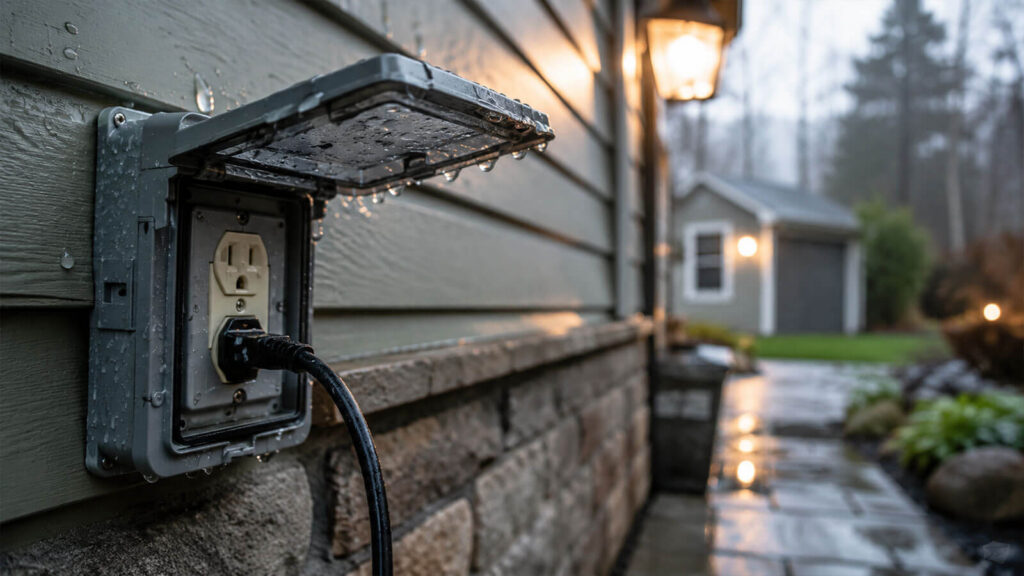
Outdoor electrical problems have a way of looking simple right up until they aren’t. A porch light flickers, an outlet stops working after a hard rain, or a garage circuit trips every time the temperature swings. That kind of issue can feel minor, but with older Hudson Valley homes, moisture, aging wiring, and patchwork additions often turn “small” electrical complaints into bigger safety and repair questions.
The hard part is that homeowners usually notice the symptom first, not the cause. A dead outlet might be blamed on the fixture. A tripping breaker might get chalked up to an appliance. But when exterior wiring, damp basement runs, weather exposure, or an undersized panel are involved, the real problem is often somewhere else entirely. That is why good diagnosis matters more than quick fixes, especially when you are dealing with outdoor circuits, detached garages, sheds, or landscape lighting.
If you are comparing options for exterior upgrades or trying to sort out a recurring issue, it helps to think like a contractor does: start with the source, not the visible failure. That mindset is what separates a lasting repair from a patch that fails again after the next storm. And if you need help evaluating the scope, it is worth speaking with professional electrical contractors who understand both code and real-world home conditions.
Why outdoor electrical problems are often harder to diagnose than they look
Exterior electrical systems take more abuse than most homeowners realize. Rain, snow, freeze-thaw cycles, UV exposure, rodents, shifting soil, and old caulk around boxes all create failure points. In the Hudson Valley, those conditions show up often enough that contractors tend to inspect the entire circuit path, not just the visible device that stopped working.
That matters because the visible symptom is frequently misleading. A ceiling stain may suggest a roof issue, but with outdoor electrical, the outage you notice at the porch may actually trace back to a GFCI in the basement, a loose connection in a weatherproof box, or a breaker that is already carrying too much load. The loud or obvious failure is not always the expensive part of the repair.
Older homes complicate things further. It is common to find a mix of newer fixtures, old cable, improvised junctions, and exterior outlets added over time without a clean plan. That patchwork setup can work for years and then start failing all at once when moisture gets into a box or a corroded connection finally gives up.
What contractors usually inspect first
When an outdoor circuit is acting up, experienced electricians usually start with the basic path of power: panel, breaker, GFCI protection, device, wiring route, and the load on the circuit. That order is not arbitrary. It helps narrow down whether the issue is a protection device tripping as designed, a damaged wire, a bad connection, or a problem with how the circuit was built in the first place.
They will also look for signs homeowners often miss:
- corrosion inside exterior boxes
- loose conduit or exposed cable
- water intrusion around fixtures
- undersized or overloaded circuits
- missing or failing GFCI protection
- improperly sealed penetrations into siding or masonry
- damage from lawn equipment, snow, pests, or tree limbs
In practice, the cause is often a combination of issues rather than one isolated defect. A poorly sealed box may let in moisture. Moisture accelerates corrosion. Corrosion creates heat or resistance. That triggers nuisance trips or intermittent failure. Homeowners usually want one clean answer, but electrical systems do not always fail that neatly.
Common homeowner mistakes that make outdoor issues worse
The most common mistake is treating a tripping breaker like an annoyance instead of a warning. Resetting it over and over may get the lights back on, but it does not solve the cause. If a circuit trips after rain, that is not a coincidence. Water and electricity do not need much help to create a dangerous condition.
Another frequent misstep is swapping fixtures before confirming the wiring is sound. A new light on a compromised line will not fix a compromised line. The same goes for adding a brighter fixture, more outlets, or holiday lighting to a circuit that was already near capacity. More demand on an existing problem usually exposes it faster.
DIY exterior work is where many homeowners get into trouble. Outdoor wiring is not just “interior wiring outside.” It has to handle moisture, correct box ratings, proper sealing, grounding, and protection devices that are matched to the circuit. A weatherproof cover that is installed loosely, or a box that is sealed too tightly in the wrong place, can create its own failure points. That is why exterior work often benefits from outdoor electrical issues being reviewed with the full system in mind, not as one-off fixes.
Why Hudson Valley homes are especially prone to exterior electrical wear
The region’s housing stock makes these problems more common. Many homes have older service equipment, detached garages, long runs to outbuildings, or additions that were wired years apart. Add in steep grading, heavy rainstorms, and yards full of mature trees, and exterior circuits end up dealing with more stress than the original system may have been designed for.
Freeze-thaw cycles are another underrated factor. Water gets into small openings, expands when it freezes, and slowly opens up seams around boxes, conduit fittings, or fixture mounts. By the time a homeowner notices intermittent failures, the issue has often been developing for a while. That is especially true around porches, decks, and driveways where fixtures are exposed but rarely inspected closely.
There is also a quiet problem that shows up in older properties: over time, people keep adding loads without upgrading the circuit capacity. Security lights, landscape lighting, powered gates, outlets for tools, sump pump alarms, heated mats, EV charging equipment, and outdoor entertainment features can all stress a system that was originally sized for something much simpler.
When a “small” fix is not really a small fix
One counterintuitive reality is that the cheapest visible repair is not always the cheapest total repair. Replacing a fixture or outlet may be low-cost on paper, but if the wiring behind it is deteriorated, corroded, or improperly protected, that quick fix just resets the clock until the next failure. Contractors see this pattern all the time: the homeowner keeps paying for the same symptom instead of solving the underlying issue.
That is especially true when water is involved. If an exterior outlet has been repeatedly tripping after storms, the question is not only whether the device itself is bad. It is whether the box is exposed, the seal is compromised, the GFCI is working properly, and the circuit route allows water to travel where it should not. The repair may be a simple replacement, or it may uncover a bigger code and safety issue.
That is also why some shortcuts fail quickly. Silicone slapped around a fixture, a cheap cover that does not close properly, or a replacement part that is not rated for exterior use may look fine for a season. Then the next storm, snow load, or temperature swing reveals the same problem again. Durable repairs usually require more than a cosmetic fix.
What homeowners can safely check before calling for help
There are a few low-risk things worth checking before you bring in help. You can note whether the issue happens during rain, after freezing weather, or only when certain appliances or lights are on. You can see whether multiple exterior devices are affected or just one. You can also check whether a GFCI outlet in the garage, basement, bathroom, or utility room has tripped, because exterior circuits are often tied to protection devices that are not obvious at first glance.
What you should not do is open boxes, probe wiring, or keep resetting breakers that immediately trip again. If a circuit is hot to the touch, buzzing, sparking, or tripping repeatedly, that is a stop-and-call situation. Electrical problems do not usually improve on their own, and exterior conditions make them harder to ignore safely.
Repair decisions that save money over time
When contractors quote outdoor electrical work, the useful question is not only “what is broken?” but “what else should be checked while the system is open?” That might mean confirming grounding, testing GFCI protection, checking for moisture intrusion, inspecting box ratings, or making sure the circuit is not overloaded. A slightly broader repair often prevents a second service call a few months later.
If the issue is tied to an older service panel, a detached garage, or repeated circuit failures, it may be time to discuss whether the repair is really a localized fix or part of a larger upgrade. That is where homeowners benefit from Dutchess County electrical services or similar local expertise, because the right recommendation depends on the age of the home, the condition of the wiring, and how the circuit is actually being used.
In some cases, the best move is not the most dramatic one. A well-sealed exterior box, proper GFCI protection, corrected wiring connections, and a modest circuit upgrade can solve years of nuisance problems. In other cases, especially in older homes with repeated symptoms, the smarter move is to stop patching and address the circuit before it becomes a safety issue.
How to judge whether the job needs a specialist
Outdoor electrical work is not the place to guess. If the problem involves exposed wiring, repeated breaker trips, damp locations, detached structures, or signs of heat or corrosion, you want someone who handles this kind of work regularly. Exterior electrical is not just about getting the light back on; it is about making sure the system is safe in wet conditions and sized correctly for the load.
That is where comparing local pros matters. Homeowners in different parts of the Hudson Valley face different conditions, from wooded lots and long private drives to older homes with limited panel capacity. If you are in Westchester, for example, the mix of older housing stock and high-demand upgrades often makes it worth talking with Westchester County electrical pros who are used to navigating both code compliance and homeowner expectations.
If you are in Putnam County and dealing with a garage, shed, or exterior lighting issue, the same principle applies. The best electrician is usually the one who asks what happened before the failure, not just what stopped working afterward. That is how you get a repair that lasts.
Frequently Asked Questions
Why do my outdoor lights fail after heavy rain?
Rain often exposes an existing weakness like a loose fixture, failing seal, or compromised box. The water is usually not the root cause by itself; it reveals a problem that was already there.
Is a tripping outdoor outlet always a bad sign?
Usually, yes. A GFCI trip can be doing its job, especially if moisture is involved. Repeated trips mean the circuit needs a closer look.
Can I replace an exterior outlet cover myself?
Sometimes, but only if you are comfortable working safely and the wiring behind it is sound. If the outlet has corrosion, heat damage, or water intrusion, replacing the cover alone will not solve the issue.
Why do outdoor electrical repairs seem to keep coming back?
Because the visible failure is often only part of the problem. If the wiring, seal, circuit load, or box placement is not corrected, the same issue tends to return.
Do older homes need more exterior electrical upgrades?
Often they do. Older homes may have outdated grounding, limited panel capacity, or pieced-together exterior circuits that were never designed for today’s loads.
When should I stop troubleshooting and call a pro?
If the circuit trips repeatedly, there is visible corrosion, the issue gets worse in wet weather, or you suspect damaged wiring, it is time to bring in help. That is especially true around detached garages, basements, and outdoor fixtures exposed to the elements.
Outdoor electrical problems are worth taking seriously because they sit at the intersection of convenience, safety, and home value. If something keeps acting up, the smartest next step is usually not another reset or a cheaper cover plate. It is getting a qualified local opinion before a manageable issue turns into a bigger repair. For homeowners who want a steadier path forward, trusted local contractor help can make all the difference.
If you are trying to decide whether an exterior electrical issue is a simple fix or a deeper problem, HV Trades can help you get oriented toward the right local professional before the repair gets more expensive than it needs to be.