

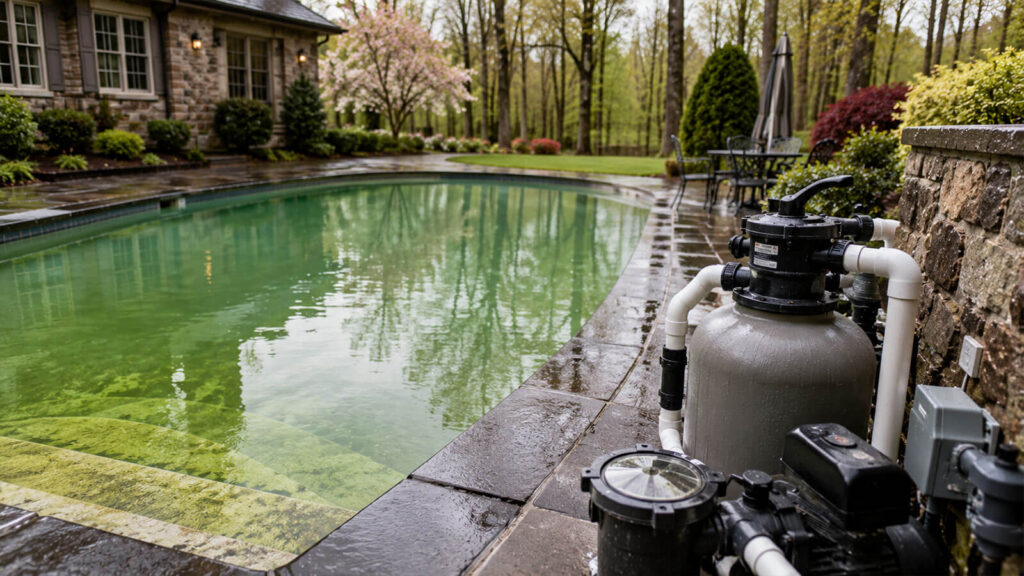
Why a Pool Turns Green After Opening — and What Hudson Valley Homeowners Should Check First
A pool that looked fine last fall can come back in spring looking like it belongs in a pond, not a backyard. That’s frustrating, but it’s also common. In the Hudson Valley, a long winter, repeated freeze-thaw cycles, and a cover that shifted under snow or heavy rain can leave a pool opening with more problems than homeowners expected. The part that catches people off guard is that the water color is often only the symptom. The real issue is usually a mix of circulation problems, chemistry imbalance, debris buildup, and sometimes equipment that never really got a fair chance after sitting idle for months.
What matters most is not panicking and dumping in chemicals blindly. That approach often burns through product, clouds the water, and delays the real fix. A green pool after opening usually tells a story, and contractors tend to read that story in a specific order: cover condition, water level, pump prime, filter performance, circulation, and then water balance. If you skip straight to “shock it and hope,” you can miss a failing pump, a clogged line, or a filter that’s doing almost nothing.
For homeowners trying to avoid wasted time and repeat cleanup, it helps to understand where the trouble usually starts. If you want a broader look at maintenance and repair support, HV Trades connects homeowners with professional pool services that handle opening issues, algae treatment, and seasonal pool care before a small problem becomes a bigger one.
Why Pools Turn Green So Quickly After Opening
Green water is usually algae, but algae itself is rarely the whole problem. It shows up when sanitizer levels dropped for too long, circulation was weak, or organic debris sat in the water under a cover. In spring, that can happen fast. One warm stretch is enough to wake up a pool that was already out of balance.
Contractors usually look first at whether the pump is moving water the way it should. A lot of homeowners assume the issue is chemical, when the real problem is mechanical. If water never circulated properly, chlorine never had a chance to work evenly. The result is a pool that goes green unevenly, often with darker buildup along steps, corners, seams, and returns.
There’s also an overlooked factor in older Hudson Valley properties: trees. Mature maples, oaks, and pines drop a surprising amount of fine debris into covers and pool water. Even if the cover stayed on, decomposing leaves and organic material can create the perfect environment for algae once temperatures rise. That’s why some pools look far worse in spring than they did when closed in fall.
The First Checks That Save the Most Time
Before anyone starts dumping in chemicals, the opening should be treated like a diagnostic job. The order matters.
1. Check water level and the cover situation
If the water is too low, the pump may struggle to prime. If it’s too high, debris may have overflowed into the pool. A ripped or sunken cover can let in everything from leaves to muddy runoff after heavy rain. Around sloped Hudson Valley properties, that runoff can be worse than the pool cover problem itself.
2. Inspect the pump and filter before assuming the water is the main issue
A dirty filter, a cracked basket, an air leak on the suction side, or a pump that won’t hold prime can all make a pool look chemically bad when the real issue is circulation failure. This is where a lot of DIY openings go sideways. Homeowners see green water and assume “more shock.” Contractors see poor turnover and know the chlorine is fighting a losing battle.
3. Test the water before treating it
Guessing at chemistry is expensive. pH, chlorine, alkalinity, and stabilizer levels all matter. If pH is too high, sanitizer works less effectively. If stabilizer is too high, chlorine can become sluggish. If alkalinity is off, balancing the water becomes harder than it should be. The fix should be based on testing, not hope.
Why Quick Fixes Often Fail
The shortcut homeowners most often try is the “shock and run” method: add a big dose of chlorine, let the pump run, and assume the water will clear. Sometimes that helps. More often, it only partly works because the underlying problem was never addressed.
Here’s the counterintuitive part: a pool can be green even when chlorine levels are technically present. That usually means the sanitizer is being used up faster than it can circulate, or the chemistry is out of range enough that chlorine is underperforming. So the issue is not always a lack of chlorine. It is often poor system behavior.
Another shortcut that fails is overcleaning the filter too soon or too aggressively. A filter that is already loaded with spring debris may need a proper clean or backwash, but repeatedly jamming chemicals into the pool before restoring circulation can just move the problem around. Contractors tend to clean the system first, then treat the water in stages. That sequence saves money and usually clears the pool faster.
If your opening is already turning into a bigger issue than expected, it may be worth comparing local options through Westchester County pool services or similar county-based resources so you can get help from someone familiar with seasonal openings and water restoration.
What Contractors Usually Look for When a Pool Stays Green
When a pool doesn’t clear after the first round of treatment, experienced pool pros usually suspect one of a few things: dead spots in circulation, a filter that’s undersized or dirty, a hidden leak, or equipment that was already struggling before closing. Sometimes the pump is running but not moving enough water. Sometimes the return jets are misdirected. Sometimes there’s air in the system and the pump is losing efficiency.
Another common issue is a neglected cover pump or standing water on top of the cover that seeped into the pool during thaw cycles. In spring, that dirty meltwater can introduce fine sediment and organic material that chemicals can’t resolve instantly. A pool may need physical cleaning first, not just treatment.
Older pools can also have plumbing issues that show up only during opening. Cracked fittings, brittle valves, or a weak seal around equipment can become obvious once the system is pressurized again. That’s why contractors don’t just look at water color. They look at the whole system working under load.
When DIY Becomes Risky
A little maintenance is normal. A full-scale chemical guessing game is where trouble begins. Over-chlorinating can damage liners, irritate skin, and make balancing the water harder. Running the pump dry because it won’t prime can damage equipment. Forcing a clogged system can cause leaks that weren’t there before.
The bigger risk is delay. A green pool that sits for weeks can become harder to recover, not easier. Algae spreads, surfaces stain, and sediment settles into corners and steps. What might have been a manageable opening issue can become a water replacement, deep cleaning, or equipment repair job. In practical terms, that means the bill grows because the problem was left to marinate.
Homeowners in Dutchess County, Putnam County, and Westchester County often deal with spring weather that swings from mild afternoons to cold nights. That kind of weather can stretch opening season out longer than expected, which means a pool problem can sit unresolved while the conditions keep changing. If the pool is already struggling, waiting usually works against you.
What to Do Before You Spend More on Chemicals
If the water turns green after opening, the smartest next steps are usually straightforward:
- Remove debris and any material sitting in the cover or skimmer.
- Check whether the pump is priming and circulating properly.
- Clean or inspect the filter before adding more treatment.
- Test the water instead of relying on guesswork.
- Look for air leaks, clogged lines, or return flow that seems weak.
- Treat staining or algae growth in stages rather than all at once.
That approach is slower than the “dump chemicals in and hope” method, but it usually costs less. It also gives you a better chance of spotting a mechanical issue before it turns into a repair.
Homeowners in Putnam County who are dealing with a stubborn opening often search for pool help in Putnam County because the fastest way to fix a green pool is usually to have someone diagnose the system, not just treat the water.
How to Avoid the Same Problem Next Spring
The best pool openings rarely start in spring. They start in fall. A proper closing, a clean cover, balanced water, and equipment protected from freeze damage make a real difference. In the Hudson Valley, where winter can be rough on outdoor systems, even a small closing mistake can show up months later as a spring cleanup problem.
It also helps to remember that water balance before closing matters more than many homeowners think. A pool that goes into winter already off balance can come out of it in rough shape, even if the cover stayed on. That’s one reason some pools open green year after year while neighboring pools recover quickly. The difference is often routine, not luck.
If you have a pool that keeps turning green no matter how carefully it’s opened, that can point to a deeper issue with circulation, filtration, or seasonal maintenance. In that case, a look from a local pro may save you from repeating the same cleanup every spring.
Frequently Asked Questions
Why does my pool turn green so fast after opening?
Usually because algae had time to grow under the cover or the water was already out of balance before opening. Weak circulation and dirty filters make it worse.
Can I just shock the pool and be done with it?
Sometimes, but not always. If the pump, filter, or circulation system is the real problem, shock alone will not clear the water properly.
How do I know if it’s a chemical problem or an equipment problem?
If chemicals do not improve the pool after a proper test and treatment, look at circulation, pump prime, filter condition, and possible air leaks.
Is green pool water dangerous?
It can be unsanitary and unpleasant, and it often signals water that is not properly balanced. It is best to avoid swimming until the pool is restored.
Why does the problem keep coming back every spring?
That usually means something in the closing process, water balance, or equipment condition is being missed. A recurring problem often points to the same underlying issue each year.
Should I call a professional if the pool stays green after a few days?
Yes, especially if the pump is acting up, the filter is loaded, or you suspect a leak or circulation issue. Waiting usually makes the recovery harder.
If your pool opening is turning into a bigger project than expected, the safest move is to get informed help early. A good local pool contractor can tell you whether you are looking at a chemistry reset, an equipment issue, or a deeper maintenance problem before you spend money in the wrong place.