

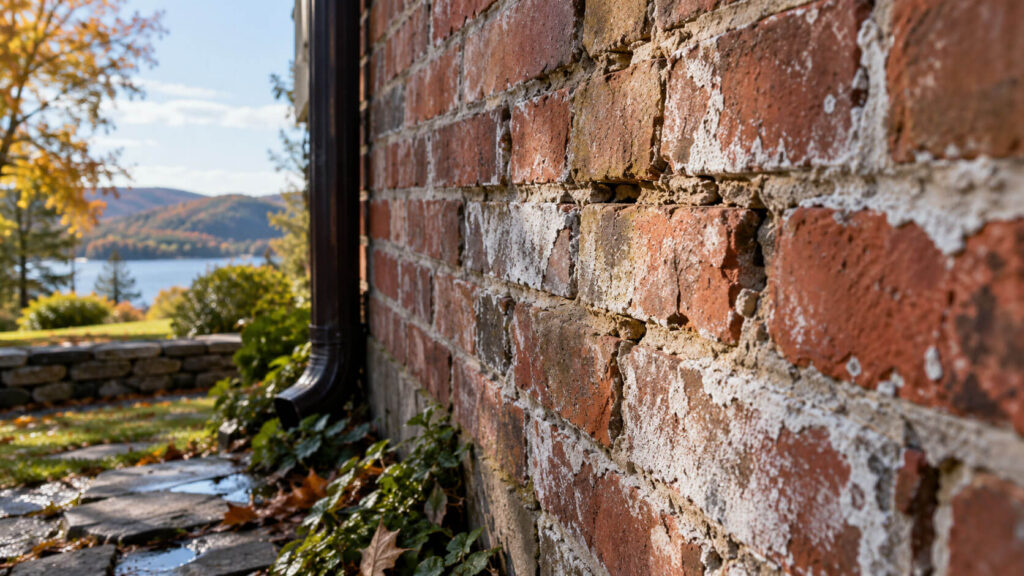
Why Old Brick in the Hudson Valley Gets Damaged Faster Than Homeowners Expect
Old brick has a reputation for being indestructible, but that reputation causes a lot of expensive overconfidence. In the Hudson Valley, especially around homes with older masonry, stone foundations, and mixed exterior materials, brick usually fails in slow, easy-to-miss ways before it ever looks “bad.” By the time a homeowner notices crumbling mortar, a damp basement corner, or a patch of spalling after winter, the real issue has often been building for months.
One of the biggest mistakes is assuming every exterior stain or flaky surface problem is just cosmetic. It usually isn’t. Moisture, runoff, freeze-thaw cycling, gutter overflow, and even aggressive cleaning can all stress brick and mortar in ways that are easy to overlook at first. That is why homeowners who are already dealing with water intrusion or suspect deterioration often end up needing more than a simple patch job. In some cases, it starts with something as basic as poor roof drainage and ends with foundation and waterproofing contractors getting involved once moisture has found a path into the structure.
If your home has older brick, the real question is not whether it looks dirty or weathered. The question is whether the brick is actually shedding moisture the way it should, or whether it is absorbing water and breaking down layer by layer.
What Makes Old Brick Vulnerable
Brick itself lasts a long time. The mortar, flashing, surrounding trim, and drainage details are what usually give out first. That matters because homeowners often blame the visible brick face when the problem is actually happening somewhere adjacent to it.
Contractors usually start by looking at the entire moisture path: roof edges, gutters, downspouts, fascia, soffits, chimney flashing, grading, and any areas where water is being thrown onto the wall instead of away from it. On older Hudson Valley homes, that path is often imperfect from the start. Add mature trees, heavy spring rain, and winter freeze-thaw cycles, and the masonry gets worked over season after season.
The common hidden problem is mortar. Once mortar starts to soften or erode, brick becomes more exposed to water infiltration and pressure changes. If the wall has already been pressure washed too aggressively, that can make the deterioration show up faster. In those cases, the issue is less about dirt and more about how much of the protective surface has already been weakened.
Homeowners looking at old brick often focus on the stain or discoloration, but the more useful clue is texture. If the mortar can be scraped out with little resistance, if the brick face is flaking, or if you see white powdery residue known as efflorescence, the wall is telling you it has a moisture problem.
Why Pressure Washing Can Make Things Worse
Pressure washing sounds harmless because it seems like a cleaning task, not a repair issue. That is where a lot of people get into trouble. Brick that is already aging, soft, or repointed with the wrong mortar can be damaged by too much pressure, especially if the operator is trying to make the surface look brand new.
In practice, a bad wash job can do more than strip dirt. It can drive water into weak mortar joints, knock loose already fragile material, and make hidden deterioration show up after the first hard rain. Homeowners are often surprised that the “cleaner” the wall looks, the more likely it is that problems will show up later. That is why it helps to understand realistic exterior power washing costs and what a careful cleaning process should actually include before hiring anyone to blast masonry.
A nuance that surprises a lot of homeowners: the stain or damage you notice on the wall is not always the source of the problem. With brick, the visible symptom may be several feet away from the real entry point. Water can travel along flashing, behind trim, or through mortar joints before it finally shows up as dampness or staining.
That is why a contractor who understands older exteriors will not just ask, “Can it be cleaned?” They will ask, “What is the wall made of, how old is the mortar, and where is the water coming from?”
Warning Signs Homeowners Should Not Brush Off
Some symptoms look minor until they start adding up. A small patch of missing mortar may not seem urgent, but if it is in a wall section that gets hit with runoff, snow melt, or splashback, the damage can accelerate fast.
- Cracked or crumbling mortar joints
- Brick faces that are flaking or peeling
- White mineral deposits on the surface
- Persistent damp spots after rain
- Brown staining below windows, roof edges, or ledges
- Loose or separated trim near the masonry
- Interior signs like musty odors or basement moisture near the same wall
What often gets missed is the connection between the wall and the water management around it. If gutters overflow, downspouts dump too close to the foundation, or grading sends runoff back toward the house, old brick will absorb the fallout. A lot of exterior brick problems are really drainage problems in disguise, which is why smart homeowners often pair masonry concerns with spring drainage problems around the home rather than treating them as separate issues.
If you already see deterioration near the base of the wall, in a chimney, or around a basement entry, do not assume a cosmetic wash will solve it. That is usually the point where moisture has been working on the structure long enough to create a repair conversation, not just a maintenance one.
What Contractors Usually Inspect First
Experienced contractors rarely begin with the most visible damage. They start with the places that explain why the damage happened.
1. Roof edge and flashing details
Failed flashing, poor step flashing around chimneys, and clogged gutters can all push water where it should never go. Brick deterioration near the top of a wall is often linked to these upper-edge problems.
2. Mortar condition and previous repairs
Older homes in the Hudson Valley often have patchwork repointing from different eras, and not all mortar is compatible. Hard modern mortar on soft historic brick is a classic problem. It can trap moisture and force damage into the brick instead of the joint.
3. Drainage patterns
Water should move away from the house quickly and predictably. If it doesn’t, the wall becomes part of the drainage system whether you intended it or not. This is where gutter extensions, slope corrections, and downspout routing matter more than many homeowners realize.
4. Foundation transitions
Where brick meets stone, block, or poured concrete, movement and moisture usually show up first. These transitions are common trouble spots in older homes, especially on properties with uneven grading, basement moisture, or long-term settling.
When the issue extends beyond brick cleaning into broader exterior repair coordination, it may be time to speak with a general contractor for older exterior repairs who can help sort out masonry, trim, and water-management work together instead of in pieces.
Why Quick Fixes Fail So Often
There is a pattern homeowners see all the time: something looks better for a season, then the problem comes back. That usually means the underlying moisture source was never addressed.
Painting over brick is one of the most common short-term mistakes. So is sealing the wrong surface with the wrong product. Brick needs to breathe. If water gets trapped inside a wall that cannot dry out, the freeze-thaw cycle does the rest. That is especially true in shaded areas, on north-facing elevations, or on homes with heavy tree cover that keeps surfaces damp longer.
Another common mistake is assuming the worst area is the only area. Contractors often find that a visible failure on one wall is tied to a different side of the house entirely. A gutter issue on the rear elevation can show up as brick trouble at the front if the water has been migrating through the structure or saturating the soil around the foundation.
That is why homeowners who are already seeing wall staining, basement dampness, or recurring runoff issues should look at the larger moisture picture, including checking exterior surfaces for damage after storms or heavy weather. A clean-looking wall is not always a healthy one.
When Exterior Cleaning Is Reasonable—and When It Is Not
Cleaning old brick is not automatically a bad idea. In fact, a careful wash can help reveal whether the masonry is sound, especially if dirt and biological growth are hiding deterioration. The key is knowing when cleaning is maintenance and when it becomes a risk.
If the brick is firm, the mortar is stable, and the surface dirt is mostly organic buildup or light staining, a thoughtful cleaning approach may make sense. But if the wall is already powdery, spalling, or patched with failing mortar, aggressive cleaning can accelerate the damage.
Homeowners sometimes chase the lowest bid and end up with the most aggressive cleaning method. That is backwards. With older masonry, the cheapest option is often the one most likely to create another repair bill later.
If runoff is contributing to the problem, don’t overlook supporting exterior systems. Proper gutter services that manage runoff near brick can do more to protect masonry long term than repeated surface cleaning ever will.
Practical Next Steps for Homeowners
If your brick is showing wear, start with the basics before you spend money on cosmetic work.
- Check gutters and downspouts for overflow, leaks, or poor discharge points.
- Look for mortar deterioration, especially along the lower courses and near rooflines.
- Inspect for white residue, soft brick faces, or recurring dampness after storms.
- Walk the grading around the house and note where water naturally collects.
- Pay attention to basement smells, wall dampness, and peeling interior paint near the same areas.
If the problem seems tied to broader drainage, foundation moisture, or repeated water intrusion, it may be worth reviewing foundation and waterproofing contractors before the issue spreads into interior damage. That is especially important in homes with older basements, stone foundations, or long driveways that funnel runoff toward the house.
And if the brick is simply too compromised for a basic wash or patch, the best move may be to step back and get a full repair plan instead of trying to preserve appearances on a failing surface.
Why Hudson Valley Homes Need a More Careful Eye
Older homes in this region tend to have a mix of materials, add-ons, and repair eras. That means the brick may be original, while the flashing, gutters, mortar, or adjacent trim are not. It also means the home may have been repaired in a way that solved one problem while quietly creating another.
That is especially common on properties with mature trees, shaded walls, stone foundations, detached garages, and older additions. Moisture behaves differently on those homes. It lingers longer, drains less predictably, and often finds the weakest transition rather than the most obvious opening.
So when a homeowner says, “It just needs cleaning,” a contractor who knows older exteriors will usually slow that conversation down. Cleaning may be part of the answer, but it is rarely the whole answer.
Frequently Asked Questions
Can old brick be safely pressure washed?
Sometimes, but only if the brick and mortar are in decent condition and the method is appropriate for the wall. Older, soft, or damaged masonry is more vulnerable, and too much pressure can make deterioration worse.
What does crumbling mortar usually mean?
It usually means moisture and age have started breaking down the joint. In older homes, it can also point to incompatible past repairs or drainage problems that keep the wall wet.
Is white powder on brick always a serious problem?
Not always, but it is a sign that moisture is moving through the wall. If it keeps coming back, the source of the moisture should be checked.
Should I seal old brick to protect it?
Not automatically. The wrong sealer can trap moisture inside the wall and cause more damage, especially on older brick that needs to breathe.
Why does damage show up after winter?
Freeze-thaw cycles expand water inside tiny cracks and weak joints. That is why a wall can look fine in fall and then start spalling, flaking, or cracking after winter.
When should I stop treating it as a cleaning issue?
If the brick is soft, the mortar is failing, or the same stains keep returning after rain, it is time to think in terms of repair and moisture control rather than cleaning alone.
Old brick can last for generations, but only if the water around it is managed correctly and the repairs fit the age of the home. If you are unsure whether you are looking at a simple cleaning issue or a deeper masonry problem, it is worth getting local guidance before the next season makes it more expensive.