

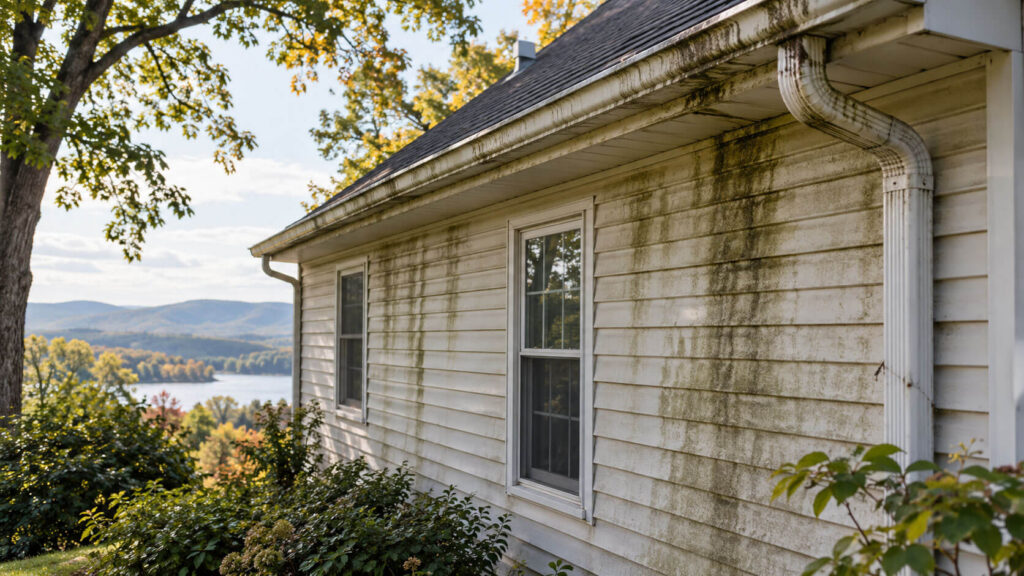
Why Old Vinyl Siding Starts Looking Bad Faster in the Hudson Valley
Old vinyl siding rarely fails all at once. It usually starts with a little dullness, then a few streaks, then mildew that seems to come back no matter how carefully the house is washed. By the time a homeowner notices the full pattern, the real issue is often not the siding itself. It’s the moisture, runoff, and weather exposure around it.
That’s where a lot of well-meaning cleaning projects go sideways. Homeowners assume the siding just needs a stronger wash. Contractors usually look at the bigger picture first: gutters, roof edges, downspouts, trim, shaded walls, and whether the siding is already brittle from age and sun exposure. On older homes with mature trees, stone foundations, and heavy seasonal moisture, exterior staining is rarely just a cosmetic issue.
Before reaching for the strongest cleaner or the biggest pressure washer, it helps to understand what is actually causing the buildup. In many cases, the more useful question is whether the siding can be cleaned safely at all or whether the wall assembly is telling you something else. That’s why homeowner resources for exterior maintenance can be so valuable when a house starts showing repeated staining, soft trim, or runoff marks.
If you’re also seeing gutter overflow, fascia staining, or water marks below the roofline, it may be worth taking a look at how to prepare your gutters for heavy rain before cleaning becomes a temporary fix that doesn’t solve the source of the mess.
What Makes Old Vinyl Siding Look Dirty So Quickly
Vinyl siding is durable, but it is not maintenance-free. In the Hudson Valley, the combination of freeze-thaw cycles, humid summers, spring pollen, and tree cover creates the kind of residue that sticks. North-facing walls stay damp longer. Shaded elevations grow mildew faster. And homes with poor drainage often show the same staining pattern year after year.
The most common buildup is not dramatic. It’s usually a film of dirt, algae, mildew, and runoff residue that settles into the textured surface or seams. If gutters are overflowing, that staining often becomes concentrated in vertical streaks below the roofline. If downspouts discharge too close to the house, the lower siding tends to take the punishment. Contractors see this constantly: the siding gets blamed, but the drainage issue is the thing feeding the problem.
Another overlooked factor is age. Older vinyl becomes more brittle, especially after years of sun, cold, and expansion. Once that happens, aggressive cleaning can expose cracks, loose panels, or warped sections that were already compromised. A house that looks like it just needs a wash may actually be showing early signs that the exterior materials are no longer holding up the way they used to.
Why Pressure Washing Can Create More Problems Than It Solves
Pressure washing sounds like the obvious answer, but old vinyl siding is one of those surfaces where technique matters more than force. Too much pressure can drive water behind the siding, loosen panels, or push moisture into seams and around windows. That’s especially risky on older homes with vulnerable trim, aging flashing, or hidden gaps around penetrations.
Contractors who clean exteriors responsibly usually look at water direction first. They’re not just thinking about how to remove the stain. They’re thinking about where the water goes afterward. If water gets behind the siding and can’t dry out properly, the homeowner may trade a dirty wall for a moisture problem. That is a bad bargain, especially in a damp season when walls dry slowly.
There’s also the issue of false confidence. A strong wash can make the house look dramatically better for a short time, which is why so many homeowners assume the job is done. But if the stain came from recurring gutter overflow, a failed caulk joint, or missing flashing, the marks usually return. That’s why cleaning alone is often not the final answer.
If the exterior looks more worn than dirty, it may be worth reading about when exterior materials need repair instead of cleaning. The same basic judgment applies to siding: not everything should be washed back into shape.
What Contractors Usually Inspect First
Before recommending any cleaning method, experienced contractors tend to inspect the areas that explain why the siding got dirty in the first place:
- Gutters and downspouts for overflow, clogs, or poor discharge placement
- Roof edges, fascia, and soffits for staining or rot
- Trim joints and caulk lines around windows and doors
- North-facing and heavily shaded walls where mildew builds up fastest
- Cracked, loose, or brittle vinyl sections
- Evidence of splashback from grading or hardscape near the foundation
That inspection order matters. Homeowners often notice the stain first. Contractors notice the source first. Those are not the same thing. A wall that looks dirty may be getting hit by repeated roof runoff or trap moisture from a drainage problem at grade. If the source is ignored, the cleaning just resets the cycle.
One counterintuitive detail: the stain on the siding is not always directly below the actual leak or runoff source. Water travels. It can run along trim, follow a warped panel edge, or trace behind a fascia line before it shows up on the wall surface. That’s why guessing from the stain location alone can lead to the wrong repair.
Common Homeowner Mistakes That Make the Problem Worse
The biggest mistake is trying to erase the evidence before understanding the cause. A homeowner sees streaking and assumes dirt. The house may actually be signaling a gutter issue, a failing seal, or moisture intrusion behind the siding. Cleaning first and asking questions later can waste time and hide the pattern for another season.
Another frequent mistake is using harsh chemicals too aggressively. Strong cleaners can discolor older vinyl, kill nearby landscaping, and strip the protective finish off surrounding materials. They can also leave behind streaking if they are not rinsed properly. On homes with older trim, mismatched repairs, or patchwork maintenance history, this can make the exterior look worse even after “cleaning.”
Then there is the DIY pressure-washing problem. A consumer-grade machine can still do damage if the nozzle is too close or the angle is wrong. Once water gets behind siding, it may not show up right away. The real trouble often appears later as bubbling paint on adjacent trim, damp sheathing, or odors in the wall cavity. That is the kind of repair homeowners usually don’t connect back to the cleaning.
When the issue starts involving loose trim, hidden rot, or damaged wall materials, it can be worth talking to general contracting services for exterior repairs before assuming a cleaning-only solution will hold.
How to Decide Whether Cleaning Is Still the Right Move
Not every stained exterior needs repair work. A lot of homes just need a careful wash, some gutter maintenance, and better runoff control. The trick is knowing when the siding is simply dirty and when it is already compromised.
Cleaning may still make sense if the siding is structurally sound, the staining is mostly surface-level, and the related systems are in decent shape. That includes gutters that are functioning properly, trim that is intact, and caulk that has not completely failed. In those cases, a soft wash approach is usually safer than high pressure, especially on older vinyl.
Repair becomes the smarter option when the siding has started to crack, warp, buckle, or separate at the seams. It also becomes more urgent when the staining is paired with softness in the trim, peeling paint on nearby wood, or repeat water marks after every heavy rain. At that point, cleaning is only treating the surface symptom.
For homeowners who are trying to make that call, it helps to think in terms of risk, not appearance. If the exterior is stable, cleaning may be enough. If the materials are already deteriorating, washing can delay a repair that is going to have to happen anyway.
Why Gutters Matter More Than People Think
Gutter performance has a direct effect on how siding ages. Overflow pushes dirty water down the wall. Misaligned downspouts can keep one section of siding damp for hours after a storm. In the Hudson Valley, where heavy rain can arrive fast and leaf debris is a seasonal reality, this becomes a recurring problem rather than a one-time nuisance.
That is why gutter maintenance belongs in the same conversation as siding cleaning. A homeowner may spend money on washing the walls while the actual culprit is a clogged elbow, a sagging run, or a downspout that dumps water too close to the foundation. Once that water splashes back up, the lower siding, trim, and even basement moisture conditions can all get worse.
If the home has a history of runoff problems, it may help to work with gutter service contractors before or alongside any exterior cleaning plan. It’s one of the simplest ways to avoid a repeat stain cycle.
What Older Hudson Valley Homes Need More Often Than Newer Ones
Older homes in the region tend to have more complicated exterior conditions. They may have layered additions, older trim details, uneven settlement, mixed materials, or previous repairs that were done fast instead of well. Those houses can absolutely be cleaned, but they usually need a more careful assessment first.
Homes with stone foundations, deep shade, and mature trees often stay wetter than homeowners expect. That extra moisture can keep the siding damp long enough for mildew to keep returning. Add in aging caulk, old flashing, or a few weak points around windows, and the wall assembly starts aging unevenly. The stain you see is often the least interesting problem on the wall.
That’s also why a quick cosmetic fix can be misleading. A fresh-looking exterior may still be feeding moisture into the wrong places. The real value comes from understanding whether the house needs cleaning, drainage correction, or a broader exterior repair strategy. Homeowner resources for exterior maintenance can help people think through those decisions before the next storm makes the issue more obvious.
Frequently Asked Questions
Can old vinyl siding be cleaned safely?
Usually, yes, if it’s still structurally sound and cleaned with the right technique. Soft washing is generally safer than high pressure. If the siding is brittle, cracked, or loose, cleaning may do more harm than good.
Why does the siding get dirty faster on one side of the house?
Shade, wind exposure, gutter overflow, and nearby trees all matter. North-facing walls and areas under heavy canopy usually stay damp longer, which makes mildew and staining build up faster.
Is mildew on vinyl siding just a cosmetic issue?
Not always. Mild surface mildew may be cosmetic, but recurring mildew can point to drainage problems, poor drying conditions, or hidden moisture around trim and flashing.
Should I clean the siding before checking the gutters?
It’s usually smarter to check the gutters first. If overflow is causing the staining, cleaning the siding alone won’t solve the problem and the marks will likely come back.
When should I stop trying to clean and start thinking about repairs?
If the siding is cracked, warped, loose, or showing signs of water intrusion around windows, trim, or soffits, repairs should move ahead of cleaning. At that point, the issue is probably bigger than surface dirt.
What’s the biggest mistake homeowners make with exterior cleaning?
Assuming every stain is just dirt. In practice, the stain is often the symptom, not the cause. That’s where unnecessary re-cleaning and delayed repairs tend to get expensive.
Protecting the Exterior Without Creating a Bigger Project
The best approach to old vinyl siding is usually the least dramatic one: inspect the source, clean carefully if the materials can handle it, and fix the runoff or moisture problem that caused the staining in the first place. That keeps the house looking better for longer and reduces the odds of turning a cosmetic issue into a repair bill.
If you’re not sure whether your siding just needs a wash or whether the wall system is showing early failure, it’s worth getting guidance from people who understand how exterior problems actually escalate. Finding the right local help now can save a lot of guessing later, especially when weather, age, and drainage all start working against the house at the same time. A good place to begin is to find the right local exterior contractor and compare it with other homeowner resources for exterior maintenance before the next round of rain makes the issue harder to ignore.
