

How to Power Wash Siding Without Turning a Small Cleaning Job Into an Expensive Repair
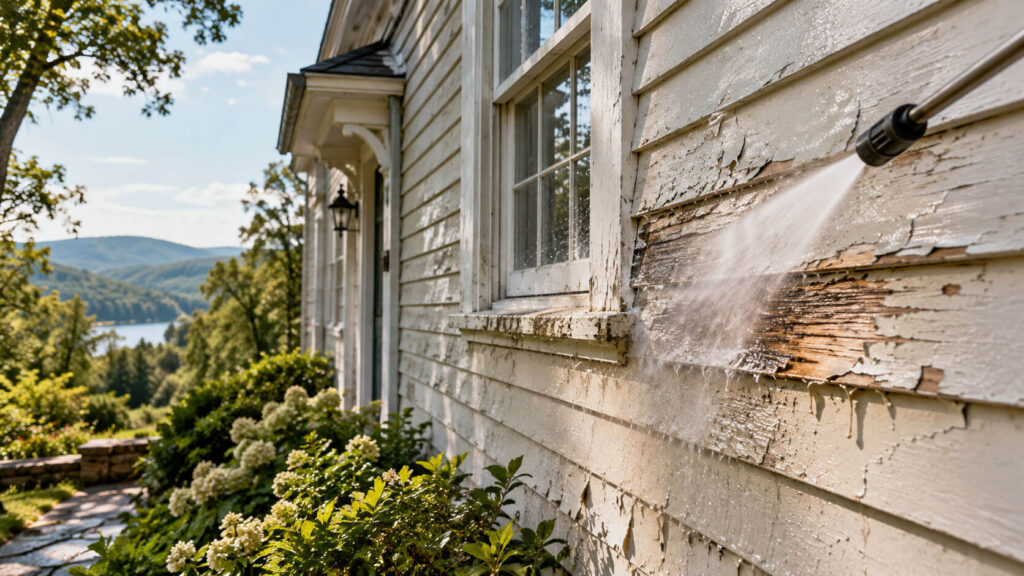
A siding wash is supposed to make a house look better. The trouble starts when homeowners treat it like a pressure problem instead of a condition check. On older Hudson Valley homes especially, the wrong amount of pressure can push water behind trim, lift loose paint, expose soft wood, and turn a “simple cleaning” into a repair list you did not budget for. That is why the most important part of power washing is not the washer itself. It is knowing what the siding can actually tolerate before you spray.
That matters more in this region than people realize. Between freeze-thaw cycles, mature trees, shaded north sides, and long stretches of moisture on clapboard, cedar, vinyl, and fiber cement, siding here often carries a mix of grime and hidden wear. A house can look dirty when the real issue is failing caulk, brittle paint, or a drainage problem that keeps one wall damp for half the season. If you are trying to understand where cleaning ends and maintenance begins, it helps to think about both the wash and the building envelope.
Why siding cleaning is not just cosmetic
Most homeowners start with the appearance issue: green streaks, mildew, pollen, spider webs, or the gray film that builds up after a wet spring. But contractors usually look at a house differently. Dirt is one layer. Underneath it may be failing paint, open joints, loose flashing, or water intrusion around windows and door trim. A strong wash can strip away the visual cover and reveal the real condition of the exterior fast.
That is why a siding cleaning is often most valuable when it is treated as a light inspection, not just a rinse. If a section has been stained for a while, it is worth checking siding for exterior damage before assuming the fix is only about appearance. A lot of homeowners miss the early signs because grime makes the wall look uniform. Once it is cleaned, the trouble spots become obvious.
There is also a cost angle that gets overlooked. When a homeowner waits too long, stains bond harder, mildew spreads into shaded areas, and the cleaning method becomes more aggressive than it should be. That is when pressure starts to do damage. A cheaper maintenance wash earlier in the season usually beats a heavy corrective wash later.
What contractors inspect before they decide how to clean
A good exterior cleaner or contractor does not start by turning up the pressure. They usually check the siding material, age, brittleness, prior paint condition, caulk lines, flashing, window trim, and any signs of rot. On older homes, they also look closely at the bottom courses of siding, which often take the most splashback from gutters, roof runoff, and landscaping.
In practical terms, they are asking a few questions:
- Is the siding flexible enough to handle low-pressure washing, or is it already failing?
- Are there open joints where water could get behind the wall assembly?
- Are the gutters and downspouts directing water where they should?
- Is the discoloration surface grime, or is it biological growth that needs a different treatment?
- Are there visible cracks, soft spots, or peeling edges that suggest hidden repair work?
The answer to those questions changes the cleaning method. Vinyl can usually tolerate a gentler soft-wash approach. Painted wood is more delicate. Fiber cement is tougher, but the coating and caulk still matter. Brick and stone bring their own issues, especially if mortar is already weak. In other words, the siding material is only part of the decision. The age and condition of the exterior matter just as much.
One counterintuitive point homeowners often miss: the dirtiest-looking wall is not always the one that needs the most pressure. Sometimes the worst-looking surface just needs the right detergent and dwell time. The wall that seems only slightly dirty may actually be the one with the bigger problem underneath.
The mistake that causes most siding damage
The most common problem is not washing the house at all. It is washing it like concrete. High pressure has its place on certain hard surfaces, but siding is not one of them. Once water gets forced behind lap joints, around nail holes, or under trim, it can sit inside the wall assembly long after the surface looks dry. That creates the kind of slow, hidden damage homeowners hate because it rarely shows up right away.
The other mistake is aiming upward. When water is sprayed up into laps, soffits, or window trim, it behaves nothing like rain. Rain sheds off the exterior. Pressure can drive water where gravity would never take it. That is one reason contractors get cautious around older homes with questionable flashing or aging sealant. What looks like a surface cleaning can turn into a moisture problem inside the wall.
DIY machines make this easier to get wrong because the homeowner often assumes the job is about brute force. It is not. It is about choosing the lowest effective pressure, the right nozzle, and a cleaning process that respects the material. If the siding has peeling paint, soft spots, or loose boards, cleaning should probably stop and shift into repair planning. In that case, it may be better to look into general contracting services for exterior repairs before forcing the issue.
Where Hudson Valley homes need extra caution
Local housing stock changes the equation. A lot of Hudson Valley homes have older wood siding, stone foundations, detached garages, older additions, and patchwork repairs from different eras. That mix makes exterior washing less predictable. One section of the house may be relatively sound while an adjacent section has brittle paint, old caulk, or a flashing detail that was never perfect to begin with.
Wooded lots add their own headache. Shade and tree cover slow drying, which encourages mildew and algae. North-facing walls can stay damp longer than homeowners expect. In towns with heavier wind and rain exposure, debris packs into corners, gutters, and lower siding courses. If downspouts dump too close to the foundation, the bottom of the wall may stay wet long enough to create rot risk.
Basement moisture and drainage issues also show up in exterior cleaning decisions more often than people realize. If a house already has grading trouble, hydrostatic pressure around the foundation, or an overflow problem with the gutters, a wash may expose what has been happening for months. The siding is not always the root problem. Sometimes it is the first place the evidence appears.
That is also why professional exterior cleaning quotes can vary so much. A straightforward vinyl wash is not the same as a careful soft wash around aged trim, second-story dormers, and finicky window casings. If you are comparing cleanup costs, looking at exterior power washing prices can help you understand why one house is priced very differently from another.
What usually gets worse if the job is rushed
A rushed siding wash tends to create three expensive problems: water intrusion, surface damage, and missed repair clues.
Water intrusion happens when the spray gets behind the siding or trim. Surface damage shows up as etched paint, loosened caulk, or a roughened finish that shortens the life of the coating. Missed repair clues are the most frustrating because the wash may “go fine,” but the house has already told you something useful and no one noticed it.
For example, black streaking around windows can point to failed sealant. A persistent band of algae near the base of the wall can point to splashback or poor drainage. Rust-colored marks under a roof edge can suggest flashing problems or gutter overflow. A wash might make all of that more visible, which is exactly why a careful inspection matters before and after the cleaning.
When a project is handled well, the siding comes away cleaner and the homeowner knows what to watch next. When it is handled poorly, the house looks nice for a week and then the hidden damage becomes the next expensive conversation.
Soft washing, pressure washing, and what the difference really means
The terms get thrown around loosely, but they are not interchangeable. Pressure washing uses force. Soft washing relies more on cleaning solution, dwell time, and low-pressure application. For many siding materials, soft washing is the safer choice because the goal is to clean the surface without driving water into the envelope.
That does not mean every soft wash is harmless. The chemistry matters. So does the rinse pattern. So does the amount of runoff landing near shrubs, foundation plantings, and walkway surfaces. A contractor who understands exterior cleaning will pay attention to overspray, not just the wall itself.
There is also a practical reason experienced contractors avoid one-size-fits-all approaches: the same house may need different methods in different places. A vinyl section on one side may tolerate a standard wash, while an older wood gable needs a much lighter touch. Around dormers, soffits, and window trim, less is usually more.
Signs your siding needs more than cleaning
Sometimes homeowners want reassurance that a dirty wall is just dirty. Fair enough. But certain signs suggest the wash is only the first step:
- Peeling or bubbling paint
- Soft or spongy wood at the lower siding edges
- Open gaps at trim joints or around windows
- Recurring mildew in the same spots after cleaning
- Warped, bowed, or loose siding panels
- Rust stains near fasteners or flashing
- Water marks that track below gutters or roof edges
If those show up, a cleaning appointment should probably turn into a repair conversation. Not a panic, just a realistic one. Cleaning will not fix failed flashing. It will not stop a leak behind a window. And it definitely will not make rotted trim structurally sound.
How to think about repairs without overreacting
One of the hardest parts for homeowners is separating cosmetic wear from active failure. Not every crack is an emergency. Not every streak means rot. But ignoring small failures is how siding jobs get more expensive than they needed to be.
A practical approach is to ask three questions: Is water getting in? Is the material losing integrity? Is the problem repeating after normal maintenance? If the answer to any of those is yes, it deserves attention. If the answer is no, the issue may be maintenance-level rather than repair-level.
That is where a trustworthy contractor or local specialist matters. The right person will not oversell the issue, but they also will not brush off a problem just because the wall still looks mostly fine from the driveway. Exterior systems often fail gradually. By the time the damage is obvious, the cheap fix window has usually closed.
For homeowners who want a better sense of what to do next, starting with trusted local contractor help is often the least stressful way to sort out whether the job is cleaning, maintenance, or actual exterior repair.
Practical ways to protect siding before and after a wash
A little planning goes a long way. Before washing, clear away furniture, cover delicate plants, and make sure gutters and downspouts are functioning. If the house has obvious problem areas, point them out before anyone starts spraying. Afterward, walk the perimeter and look for wet spots that linger, fresh peeling, or areas that suddenly show damage that was hidden by buildup.
If your home has a history of damp basement walls, overflowing gutters, or downspouts that end near the foundation, fix those issues too. A clean wall with bad water management is still a problem waiting to happen.
And if the exterior is already showing broader wear, sometimes the smartest move is to combine cleaning with minor repair work while everything is visible. That can include resealing joints, replacing damaged trim, correcting a gutter issue, or addressing minor siding failure before it spreads.
Frequently Asked Questions
How often should siding be cleaned?
Most homes benefit from cleaning every one to three years, but shaded lots, trees, and damp exposures can shorten that timeline. The condition of the siding matters more than a strict schedule.
Can high pressure damage vinyl siding?
Yes. High pressure can force water behind the panels, loosen trim, or leave visible damage. Vinyl usually does better with a low-pressure soft wash.
Should I clean siding before or after minor repairs?
Usually before. Cleaning helps reveal cracks, failed caulk, rot, and loose panels. Once the siding is clean, it is easier to see what actually needs attention.
What if cleaning exposes old paint or wood damage?
That usually means the damage was already there and the buildup was hiding it. At that point, repair planning is more important than repeating the wash.
Is it worth washing a house that will need painting soon?
Yes. Paint lasts better on a clean surface, and washing before repainting also helps identify any repairs that should be made first.
When should a homeowner stop DIY and bring in a pro?
If the siding is aging, the house has visible damage, or you are unsure about water intrusion risk, it is smarter to get help before using more pressure. The cost of fixing a water-related mistake can be far higher than the original cleaning.
Exterior cleaning should leave you with a cleaner house and a clearer understanding of its condition. If you are unsure whether your siding needs a wash, a repair, or both, the safest next step is to get advice from a local pro who understands how Hudson Valley homes actually age. That kind of guidance helps you avoid expensive mistakes and keeps small problems from becoming the next big project.
