

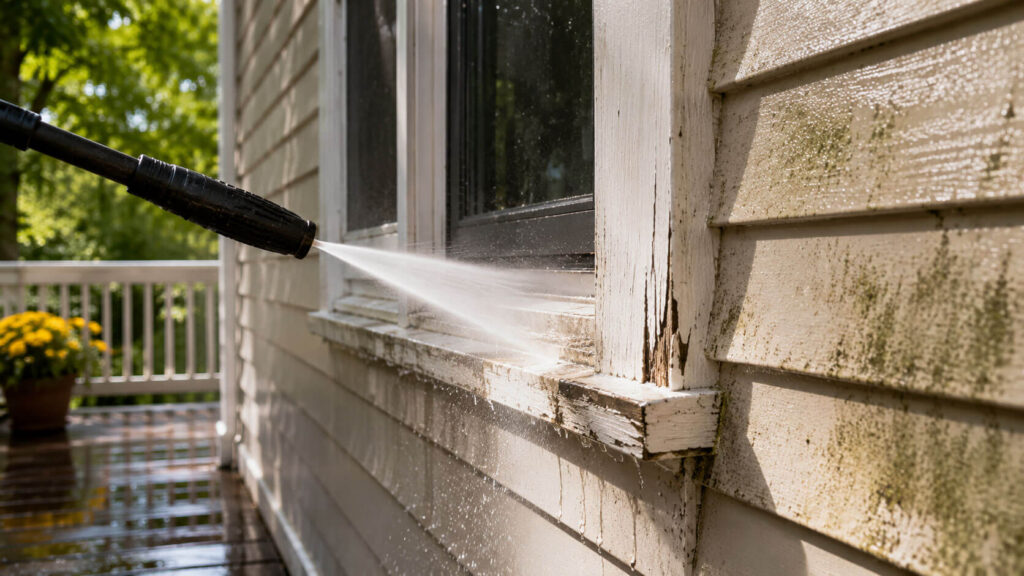
Pressure washing sounds harmless until you see the damage a strong stream can leave behind. A little too much pressure, the wrong nozzle, or a shaky hand around trim and window seals can turn a routine cleanup into peeling paint, gouged siding, water intrusion, or a deck that ages years overnight. The frustrating part is that the problems often don’t show up right away. By the time homeowners notice swollen wood, a soft spot, or a stain indoors, the real issue has usually moved beyond “just cleaning.”
That’s why a smart power washing job is less about blasting away dirt and more about understanding what a home can actually handle. On older Hudson Valley houses, especially those with layered paint, aging caulk, wood trim, cedar shingles, or settling around windows and doors, the margin for error is smaller than people expect. And once water gets forced behind siding or into openings around flashing, it can quietly create a repair problem that costs far more than the wash itself.
Why power washing goes wrong more often than homeowners expect
The most common mistake is assuming pressure is the main tool. In reality, technique matters more than force. Contractors who do this work carefully are watching distance, spray angle, nozzle type, and the condition of the surface before they ever turn the machine up. A house with brittle caulking, lifted paint, loose fascia, or soft wood trim can be damaged quickly even if the siding itself looks fine from the driveway.
What homeowners often miss is that the visible dirt is not the risk. The risk is where the water goes after the dirt comes off. That is why a proper exterior walkthrough matters before any cleaning starts. If a home already has staining around windows, cracked sealant, or water marks near the roofline, it is worth it to inspect siding and exterior damage before a wash makes a small weakness harder to spot.
There’s also a counterintuitive piece of this: the cleanest-looking homes sometimes suffer the worst wash damage because older paint and caulking can fail without warning. Fresh curb appeal can hide a lot of brittleness.
The hidden areas that usually fail first
Most pressure washing damage shows up in the same places contractors check first: around windows, along trim boards, under soffits, at joints in siding, and where different materials meet. Those transition points are where water is most likely to get behind the surface. On homes with wood clapboard, cedar shake, or older vinyl installation, those seams are often less forgiving than homeowners realize.
Decks and porches deserve special caution. Softwood decking can be scarred badly by aggressive cleaning, leaving raised grain that traps moisture and makes the surface wear faster. Railings and stair treads are especially vulnerable because they get hit from odd angles. Once the wood is roughened, sanding and refinishing become part of the bill. In some cases, homeowners end up needing help from deck and patio construction contractors just to correct the surface damage that the wash created.
Then there are the parts nobody looks at until later: exterior outlets, light fixtures, vent openings, attic vents, hose bibs, and the gaps around utility penetrations. If those areas were already compromised, water intrusion can turn into insulation damage, staining, or even hidden rot inside the wall cavity.
What contractors usually look for before they start
A careful contractor is not just checking whether the siding is dirty. They are looking for signs the home is already vulnerable. Loose caulking, cracked trim, failing flashing, weak mortar at stone or masonry transitions, peeling paint, and soft wood all change the way a house should be washed.
That pre-check is especially important on older Hudson Valley homes, where layered repairs may have been patched over several times. A house in this region may have original wood windows, newer vinyl siding, old trim details, and roofline transitions that were never designed for high-pressure water. Add freeze-thaw cycles, heavy spring rain, and long periods of winter moisture, and even minor openings can become active trouble spots.
If a contractor is worth hiring, they should be thinking about the home as a system, not just a surface. That means watching for gutter overflow, checking downspouts, noticing where runoff collects, and being cautious around areas that already show moisture stress. Exterior cleaning should support the envelope, not test it.
Common homeowner mistakes that lead to expensive repairs
One of the biggest missteps is using the strongest setting available because it feels more effective. It often is effective in the wrong way. High pressure can strip paint from trim, force water under siding, and leave visible streaking that actually makes the home look worse. Another common issue is spraying upward into lap siding or under shingle edges, which invites water where it should not go.
People also underestimate how quickly a “small” cosmetic problem turns into a materials problem. A bit of lifted caulk around a window may not seem urgent until pressure washing drives water through that opening and into the framing. At that point, the repair is no longer about resealing a joint. It may involve rot repair, trim replacement, or moisture remediation.
Delay can be expensive in a very ordinary way: the first sign is usually easy to dismiss, but the repair bill arrives after the damage has had time to spread. That is especially true on homes with wood siding, older paint systems, or poorly vented soffits.
When DIY is fine, and when it is not
Light cleaning of a relatively new, well-maintained surface is one thing. Attempting to clean aged siding, delicate trim, or a weathered deck with rental equipment is something else entirely. The line gets crossed when the homeowner is trying to compensate for dirt, mildew, or moss with more pressure instead of the right cleaner and the right rinse pattern.
If the surface has peeling paint, separated joints, obvious soft spots, or prior water damage, DIY becomes risky fast. The problem is not just the wash. It is what the wash reveals and worsens. If a rinse exposes open seams, damaged caulking, or loose material, it usually means the exterior needs real repair, not just cleaning. In those situations, it is often smarter to repair damaged trim, siding, or caulking before the next storm season creates a bigger issue.
Homeowners also tend to overlook the importance of water direction after cleaning. Where does runoff go? Does it pool near the foundation? Does it splash onto a basement window well? Does it run toward a bulkhead door or stone foundation joint? Those details matter in the Hudson Valley, where drainage and moisture are part of everyday maintenance, not edge cases.
How to avoid turning cleaning into a repair project
The safest approach is usually the least aggressive one. That means starting with the minimum amount of pressure needed, using cleaners that break down mildew and dirt instead of relying on force, and staying alert around vulnerable materials. The goal is to remove buildup without disturbing the surface.
It also helps to walk the property first. Look closely at caulking, windows, door trim, roof edges, gutters, and any area where water already has a history of causing trouble. If a home has known leak points, pairing cleaning with an inspection of sealants and flashing that prevent leaks can save a homeowner from assuming the wash caused a problem that was already developing.
For homes with detached garages, workshops, or older sheds, the same logic applies. These structures often have simpler construction and less robust waterproofing than the main house. A little too much pressure can uncover loose siding, exposed framing, or gaps that have been quietly admitting moisture for years.
Why Hudson Valley homes need a more cautious approach
Local conditions make exterior cleaning more complicated than it sounds. Mature trees drop debris and hold moisture against siding. Freeze-thaw cycles can open small cracks in caulk and paint. Heavy spring storms push water into spots that already have weak drainage. On wooded properties and homes with long driveways or uneven grading, water management is already a challenge before any cleaning begins.
Stone foundations and older basements add another layer. If a wash pushes water toward the wrong side of the house, moisture can collect where it is least welcome. The issue may not show up as a dramatic leak. It may show up as damp basement air, a musty smell, or staining that keeps returning after every rain.
That is why the best exterior maintenance decisions tend to be the unglamorous ones: smaller pressure, better prep, smarter sequencing, and fixing weak points before they become active failures.
When homeowners are unsure whether they need cleaning, minor repairs, or a broader exterior fix, it helps to compare Hudson Valley contractor service categories before choosing the wrong trade for the job.
What a good contractor should tell you after the wash
A reputable pro should not disappear after the job is done. If they notice cracked trim, failing caulk, opened seams, loose flashing, or areas where water appears to be getting behind the surface, that information matters. A good contractor is not just cleaning what you see. They are helping you understand what is likely to fail next.
That kind of judgment is what protects a homeowner from repeat work. If the same stain, peeling area, or soft spot keeps returning, the real problem was probably never the dirt. It was the underlying exterior failure. And once those weak points are identified, the repair path becomes much clearer.
For a homeowner, the best outcome is not just a cleaner house. It is a cleaner house that still sheds water properly, stays sealed, and does not create a hidden maintenance bill a month later.
Frequently Asked Questions
Can pressure washing damage vinyl siding?
Yes, especially if the pressure is too high or the spray is directed upward into seams. It can force water behind the siding and expose weak caulking or loose panels.
Is soft washing always safer than pressure washing?
Usually, but it still depends on the condition of the home and the person doing the work. Even a low-pressure approach can cause issues if water is pushed into openings or surfaces are already failing.
Should I wash my deck myself?
Light cleaning is fine if the wood is in good shape, but aggressive washing can scar the grain and shorten the life of the surface. If the deck is aged, soft, or already peeling, caution matters more than speed.
What signs suggest my home should be inspected before washing?
Look for peeling paint, cracked caulk, soft trim, gaps around windows, water stains, or prior leaks. Those are the places most likely to fail under pressure.
Can washing cause roof leaks?
It can if water is forced under vulnerable flashing, roof edges, or aging sealants. The leak may not appear in the same spot where the water entered.
What should I do if washing exposes damage?
Stop and assess the issue before it spreads. In many cases, the next step is not more cleaning but actual repair work to trim, siding, caulking, or flashing.
If you are weighing whether a cleanup job is really just cosmetic or a sign of larger exterior wear, it is worth getting a local perspective before the next storm season makes the problem harder to ignore.