

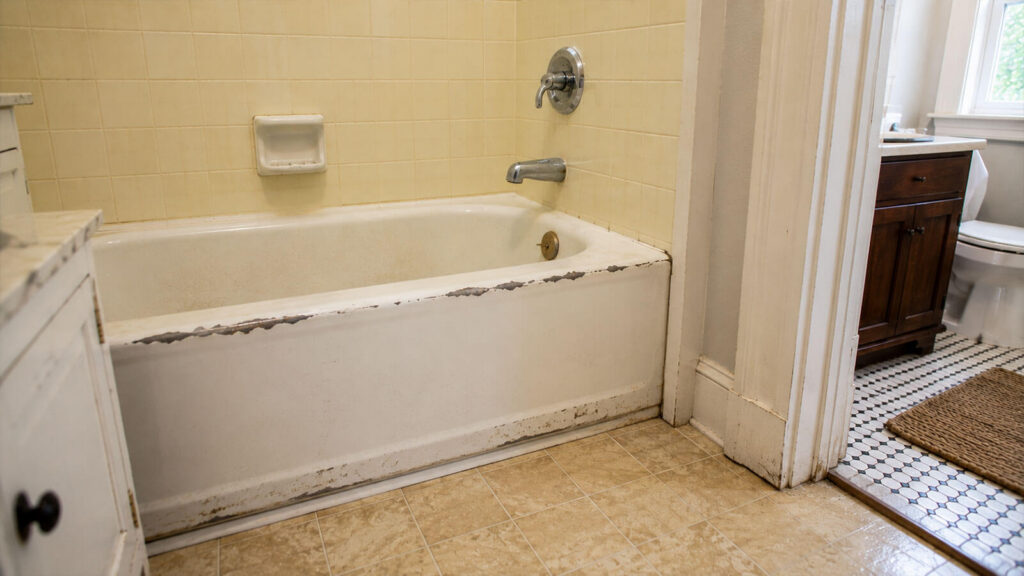
Should You Replace That Old Tub or Work Around It? A Hudson Valley Homeowner’s Guide
Old tubs have a way of looking “good enough” right up until they’re not. The porcelain chips spread, the caulk keeps failing, the floor feels soft nearby, and suddenly a simple bathroom annoyance starts pointing to a bigger question: is this a repair job, or is it time to replace the whole thing?
That decision matters more than a lot of homeowners realize. In older homes around the Hudson Valley, a tub issue is rarely just about the tub. It can involve the subfloor, plumbing access, wall finish, moisture damage, and the kind of hidden deterioration that stays quiet until the next remodel exposes it. If you’re weighing whether to patch, reglaze, re-caulk, or start fresh with bathroom remodeling contractors, the right answer usually depends on what’s going on underneath the surface, not just how the tub looks from the hallway.
When a tub can still be saved
Not every ugly tub needs to be torn out. If the issue is mostly cosmetic, there’s often still some life left in it. Surface staining, dull finish, minor chips, or old caulk lines can sometimes be managed without a full replacement.
Contractors usually look first at whether the tub is structurally sound and whether the surrounding area is dry. If the tub is solid, level, and not flexing under normal use, that’s a very different situation from a tub that squeaks, shifts, or seems to be pulling away from the wall. A lot of homeowners assume visible wear means the tub itself is failing. Often it’s the installation around it that’s tired.
That distinction matters because a quick cosmetic fix can make sense on a house that is otherwise in decent shape. But if the surrounding tile, grout, and waterproofing are already breaking down, refinishing the tub may only buy time.
Signs the tub is no longer the main problem
There are a few warning signs that usually tell a more complicated story:
- soft or spongy flooring near the tub
- staining on the ceiling below the bathroom
- persistent mildew in the same corner even after cleaning
- caulk that fails repeatedly in the same spot
- hairline cracks in tile or grout around the surround
- a tub that creaks, moves, or sounds hollow when stepped into
Those symptoms often point to water intrusion, loose framing, or age-related wear in the subfloor or wall assembly. And here’s the counterintuitive part: the stain on the ceiling often isn’t directly below the actual leak. Water travels along framing, joists, or plumbing runs before it drops somewhere visible, which is why homeowners sometimes chase the wrong area and keep missing the source.
That’s also why patching one visible problem can become expensive if it ignores what’s underneath. A contractor will usually want to inspect the tub flange, wall backing, drain connections, and the floor around the tub before recommending any cosmetic fix.
What usually pushes a tub from repair into replacement
Some tubs are simply at the end of their useful life. In older Hudson Valley homes, this is especially common when the bathroom has been renovated piecemeal over the years. A tub may have outlasted several rounds of caulk, tile repair, and plumbing work, and at some point the system around it stops being worth nursing along.
Replacement usually becomes the smarter move when:
- the tub is cracked or leaking
- the subfloor beneath it has started to deteriorate
- the surrounding walls need waterproofing anyway
- the drain, supply lines, or valves are due for work
- you’re already planning a larger bathroom update
At that point, trying to preserve the old tub often creates duplicate labor. Contractors have to work around tight openings, protect old finishes, and make compromise repairs that may not last as long as the homeowner expects. That’s one reason a project that starts as a “simple tub fix” often becomes a broader conversation about the bathroom as a whole.
Why older Hudson Valley bathrooms are rarely simple
Older homes in the region bring a few recurring issues to the table: settling, layered repairs, aging plumbing, and materials that were installed long before today’s waterproofing standards. Add seasonal humidity, winter freeze-thaw cycles, and the occasional basement moisture problem, and bathrooms can age unevenly.
It’s also common to find a tub surrounded by work from different eras. One wall may have been patched twenty years ago, the floor may have been replaced at some point, and the drain assembly may be newer than the tub itself. That kind of mixed history is where homeowners get surprised. What looks like one isolated issue may really be a collection of small repairs that no longer work together.
When that happens, a contractor often has to decide whether the project is still a repair or whether it has become a coordination job. If plumbing, framing, flooring, and finish work all need attention, it can make sense to involve a general contractor for a larger remodel rather than trying to piece the work together one trade at a time.
The shortcuts that tend to fail first
There’s nothing wrong with wanting to avoid a major bathroom project. The problem is that some shortcuts look better on day one than they perform over time.
Cheap caulk jobs are the classic example. If the backer material is compromised or the joint is moving, fresh caulk just hides the issue for a little while. Reglazing can help an otherwise solid tub, but it won’t solve a bad slope, a loose drain, or moisture behind the wall. And patch kits for chips and cracks tend to be best for minor surface damage, not active leaks or structural wear.
Another common misread is assuming that a new tub alone will solve the bathroom’s problems. It won’t, if the flooring is already soft or the surrounding finishes are failing. In those cases, homeowners often end up circling back later for new flooring around the tub area after the original “small repair” revealed a much bigger scope.
This is where the practical cost of delay shows up. The longer moisture is allowed to sit, the more likely it is that subfloor repairs, wall reconstruction, and trim replacement will be part of the final bill.
What contractors usually inspect first
If a homeowner is trying to decide between keeping the old tub and replacing it, the first inspection usually tells most of the story.
Good contractors tend to check:
- the condition of the tub itself
- movement at the base and around the apron
- the drain, overflow, and trap connections
- signs of moisture around the surround and trim
- floor firmness near the tub
- whether the wall system is still properly sealed
That inspection is less about selling a bigger project and more about avoiding a bad recommendation. Reusing a tub that’s hiding damage can be false economy. Replacing a tub that only needs targeted repair can be unnecessary expense. The right answer depends on what the inspection turns up.
If you’re unsure how to sort the options, it can help to compare the right contractor type before moving forward. Some situations call for a bathroom remodeler, others for a plumber first, and some for broader coordination across multiple trades.
When a full remodel is the smarter financial move
People often think of replacement as the expensive choice and repair as the budget-friendly one. That’s not always true. If the tub sits inside a bathroom that already needs flooring, wall repair, better ventilation, or updated plumbing fixtures, replacing the tub can actually be the cleaner long-term decision.
A full remodel becomes more sensible when the bathroom is already showing its age in more than one place. Old tile, recurring moisture, outdated plumbing, and poor layout all add friction to small repairs. At that point, the tub is often just the most visible symptom.
That doesn’t mean every bathroom needs to be stripped to the studs. It does mean homeowners should be honest about whether they’re trying to solve one problem or postpone five others. Those are very different projects.
For readers comparing options, it’s worth reviewing homeowner remodeling resources before committing to a repair path that may not age well.
How to avoid getting stuck with repeated repairs
The biggest mistake is treating a bathroom issue as isolated when the real problem is systemic. Repeated caulk failure, persistent dampness, and soft flooring are usually clues that the room needs a more complete look.
Another mistake is waiting until visible damage spreads. Once water reaches framing or subfloor materials, the repair usually stops being neat and cheap. That’s especially true in homes with older materials that absorb moisture rather than resisting it.
A sensible approach is to ask three questions:
- Is the tub itself structurally sound?
- Is the surrounding area dry and stable?
- Am I repairing one issue or covering up a bigger one?
If the answer to the last question is unclear, that’s usually a sign to slow down and get a proper evaluation. In bathroom work, certainty is usually cheaper than guessing.
Frequently Asked Questions
Can an old tub be reglazed instead of replaced?
Yes, if the tub is structurally sound and the damage is mostly cosmetic. Reglazing is not a fix for leaks, movement, or hidden water damage.
How do I know if the tub is causing floor damage?
Soft spots, squeaks, movement, or staining near the base are common clues. A contractor will usually check the subfloor and plumbing around the tub before recommending a solution.
Is it worth replacing just the tub and keeping the rest of the bathroom?
Sometimes. It makes the most sense when the surrounding walls, flooring, and plumbing are in decent shape. If several parts of the room are aging together, a larger remodel may be smarter.
Why does mold keep coming back around the tub?
Recurring mold usually means moisture is still getting into the area. Cleaning the surface doesn’t solve the underlying issue if the caulk, grout, or waterproofing has failed.
Should I replace the tub before selling the house?
Only if the tub or surrounding area is visibly worn, leaking, or making the bathroom look poorly maintained. Cosmetic repairs can help, but active water issues should be handled first.
What’s the risk of leaving a questionable tub alone?
Small leaks and moisture problems tend to get more expensive over time. What starts as a surface issue can turn into subfloor, framing, or finish damage if it’s ignored.
If you’re weighing whether to repair, replace, or remodel, the safest move is usually to get advice from a local pro who understands how older Hudson Valley bathrooms actually age. A careful inspection now can prevent a much larger surprise later.