

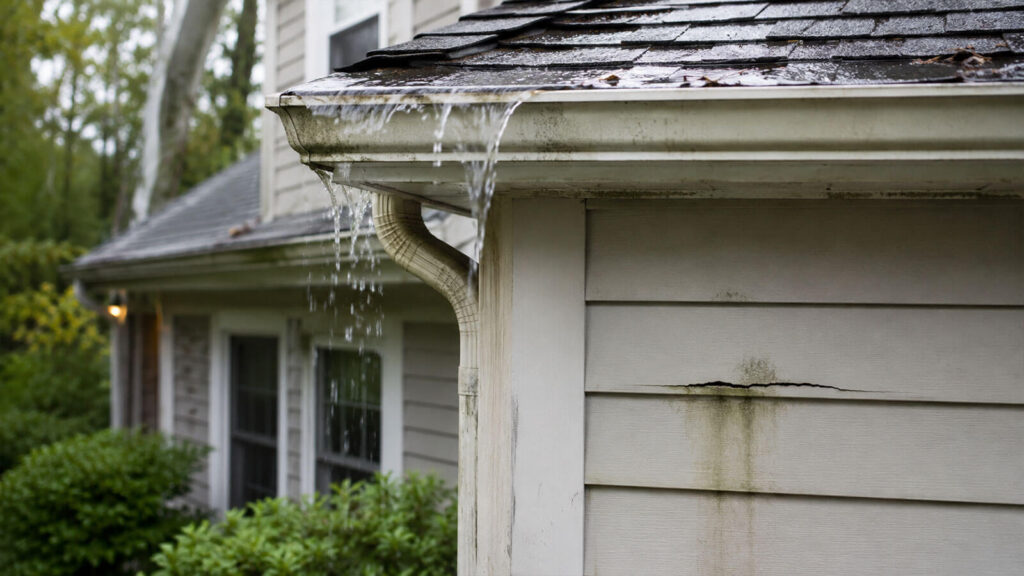
Hairline cracks in siding are easy to shrug off until the next hard rain exposes what they were really doing all along. In the Hudson Valley, where wind, freeze-thaw cycles, and heavy spring runoff all take turns stressing a house, a small split in a siding panel or trim board can be less of a cosmetic issue than a clue. The problem is that homeowners often notice it late, then treat it like a surface repair when the real issue may be water management around the exterior.
What a Small Siding Crack Is Really Telling You
A crack in siding does not always mean the siding itself has “failed.” Sometimes it starts with impact from storm debris. Sometimes it’s movement from expansion and contraction. And sometimes the siding is just the first visible place where a larger problem shows up, especially around corners, window trim, or areas that get hammered by runoff from a roofline above.
That’s why good contractors rarely look at the crack alone. They look for staining, soft spots, loose fasteners, lifted flashing, warped trim, and nearby gutter overflow. They also check whether the issue is isolated or showing up in a pattern. One crack may be damage. A cluster of them often points to drainage, aging materials, or installation problems that were hiding in plain sight.
It’s also worth noting that the stain on the wall below a cracked section is not always the source of the leak. Water can travel behind siding, along sheathing, or from a different edge entirely before it shows up where the homeowner happens to notice it. That’s one reason exterior problems get misdiagnosed so often.
What Contractors Usually Inspect First
When a homeowner calls about a cracked siding panel, experienced pros usually start with the obvious and then work outward. They’ll look at the panel itself, but they’ll also inspect nearby roof edges, gutters, downspouts, trim joints, and any place where water might be concentrating.
In practical terms, this usually means checking:
- Whether the crack is clean, jagged, or flex-related
- Whether the siding has been struck by branches, ladders, or lawn equipment
- Whether caulk has dried out or separated at joints
- Whether gutters are overflowing and wetting the wall repeatedly
- Whether the crack is near a window, roof intersection, or corner board
- Whether the underlying house wrap or sheathing may already be compromised
That last point matters more than most homeowners expect. A cracked panel can be cheap to replace. Damaged sheathing or hidden moisture in the wall cavity is where the cost starts moving fast. This is why it makes sense to think about the whole building envelope, not just the visible surface.
Why Hudson Valley Homes Are Especially Prone to This
Older homes in Dutchess, Putnam, and Westchester counties often have a mix of materials, additions, and patchwork repairs done over decades. That doesn’t make them fragile, but it does make them more complicated. A siding section repaired ten years ago may not match the rest of the wall in how it expands, drains, or holds fasteners.
Steep grading, mature trees, and long rooflines also create trouble. One section of wall may stay damp longer than another. A gutter that dumps water too close to the house can keep a lower siding run wet through repeated storms. And in winter, that moisture can freeze, expand, and open up small flaws that were already there.
If you’re also seeing roof-edge staining or overflowing gutters, it’s smart to look at the issue as part of a broader exterior system. A storm damage roof inspection can help determine whether the siding crack is really just one piece of a larger weather-related problem.
Common Mistakes Homeowners Make With Siding Cracks
The most common mistake is waiting too long because the damage looks “minor.” That’s understandable. No one wants to turn a small cosmetic issue into a project. But exterior materials rarely improve on their own.
Another frequent mistake is using caulk as a permanent fix. Caulk has its place, but it is not a structural repair, and it won’t solve movement, hidden moisture, or warped material. In some cases, heavy caulk actually delays a proper diagnosis because it hides the crack long enough for damage to continue underneath.
Pressure washing can also create trouble if the siding is already weak. A homeowner trying to clean up before listing the house or after a storm may unknowingly force water behind the panels. If you’re considering exterior power washing in Westchester County, it’s worth checking for loose edges, fragile trim, and existing damage first.
And then there’s the “patch and forget” approach. That works only when the crack is isolated and the material is still sound. If the panel is brittle, warped, or repeatedly getting wet, a quick patch usually fails because it ignores the cause.
When a Simple Repair Is Enough, and When It Isn’t
Not every cracked siding panel means a major job. If the damage is small, the surrounding wall is dry, and there’s no sign of broader movement or water intrusion, a targeted repair may be all that’s needed.
But the repair gets less simple when one or more of these show up:
- Soft or swollen trim nearby
- Repeated cracking in the same area
- Visible staining under roof intersections
- Loose or missing flashing
- Rot near windows, corners, or the bottom edge of the wall
- Damage after a recent storm or high wind event
If the crack appeared after a storm, it’s smart to treat it like a potential envelope issue, not just a siding issue. Homeowners often focus on the crack because it’s visible, but contractors are usually more concerned with how water got there in the first place. That’s why a careful siding and gutter damage after a storm review can prevent a lot of guessing.
Why Gutters and Drainage Matter More Than People Think
A lot of siding damage is really drainage damage in disguise. Overflowing gutters, undersized downspouts, clogged elbows, and bad grading all push water toward the wall. Once the lower sections of siding keep getting splashed or saturated, they start to age faster than the rest of the exterior.
This is where homeowners can save themselves trouble by looking at the whole water path. Where does the roof runoff go? Does it hit a driveway and bounce back toward the wall? Does a downspout dump near a foundation crack or a basement stairwell? Is the landscaping holding moisture against the house?
If any of that sounds familiar, a resource on spring drainage problems around the home is worth reviewing before the next heavy rain. Poor drainage is one of the quiet reasons small exterior defects become expensive repairs.
In many cases, the best next move isn’t replacing siding immediately. It’s fixing the water management issues first so the new repair doesn’t fail the same way.
The Hidden Cost of Waiting
One reason siding cracks deserve attention is that they often start a slow chain reaction. Water gets behind the panel. The sheathing absorbs moisture. Fasteners corrode. Trim softens. Paint fails sooner than expected. What began as a visible crack becomes a repeated maintenance problem.
That chain reaction is especially frustrating because it tends to show up in stages. The first stage is easy to ignore. The second stage looks like a paint problem. By the third stage, there may be actual rot, and the repair becomes more invasive.
That is why local homeowners often get better results when they deal with the issue early, even if the fix feels small. A modest repair done at the right time is usually cheaper than a larger repair done after the wall has been wet through multiple seasons.
What to Do Before You Hire Anyone
Before calling for repair work, take a few photos in daylight from several angles. Look at the area after rain if you can safely do so. Note whether the crack appeared after wind, freezing weather, ladder work, or gutter overflow. Those details help a contractor separate impact damage from water-related deterioration.
If you can, check the attic or interior wall nearby for staining, humidity issues, or soft spots. Not every exterior problem shows up inside, but when it does, that changes the scope quickly. And if the siding damage is near a roof edge, gutter line, or second-story wall, don’t assume the panel itself is the only concern.
In situations where you’re not sure whether the issue is cosmetic or part of a larger exterior problem, it can help to find the right exterior home contractor rather than trying to sort it out with a generic handyman fix.
Why Cheap Fixes Often Fail Early
The cheapest repair is not always the best value. That’s especially true with exterior damage, where labor, access, and underlying conditions matter more than the patch itself. A quick caulk-and-paint job may look fine for a season, then fail once the wall flexes or another storm hits.
Contractors know this because they see the same pattern over and over: a homeowner wants the least disruptive fix, the wall gets dressed up, and the underlying moisture issue keeps working. The second repair is then more expensive because the first one delayed the real diagnosis.
If the siding is brittle, the fasteners are loose, or the area keeps getting wet, a smarter repair may involve replacing a section and correcting the cause around it. That’s not overbuilding. It’s just avoiding a repeat call.
Frequently Asked Questions
Can a cracked siding panel really lead to water damage?
Yes. Even a small opening can let water behind the siding, especially during wind-driven rain. If the wall stays wet repeatedly, damage can spread to sheathing, trim, and insulation.
Should I caulk a crack in siding?
Only if it’s part of a proper short-term repair and the surrounding material is still sound. Caulk alone is not a fix if the panel is loose, warped, or already absorbing moisture.
How do I know if the crack is storm damage?
If it appeared after high winds, hail, or falling branches, storm impact is possible. Look for nearby roof, gutter, or trim damage too, because exterior damage often happens in more than one place at once.
Is it safe to pressure wash cracked siding?
Usually not without checking the condition first. Pressure washing can force water into gaps and make existing weaknesses worse.
What’s the biggest mistake homeowners make with this problem?
Waiting too long because the crack looks small. Exterior damage rarely stays small if water is involved.
When should I bring in a contractor?
If the crack is near a roofline, window, corner, or gutter runoff area, or if you see staining, soft trim, or repeated damage, it’s time for a professional look.
When siding starts cracking, the right response is usually calm, not alarmed—but it should not be casual. A careful inspection can tell you whether you’re dealing with a simple exterior repair or an early warning sign of a bigger moisture problem. For Hudson Valley homeowners, that distinction can save a lot of money and frustration down the road.