

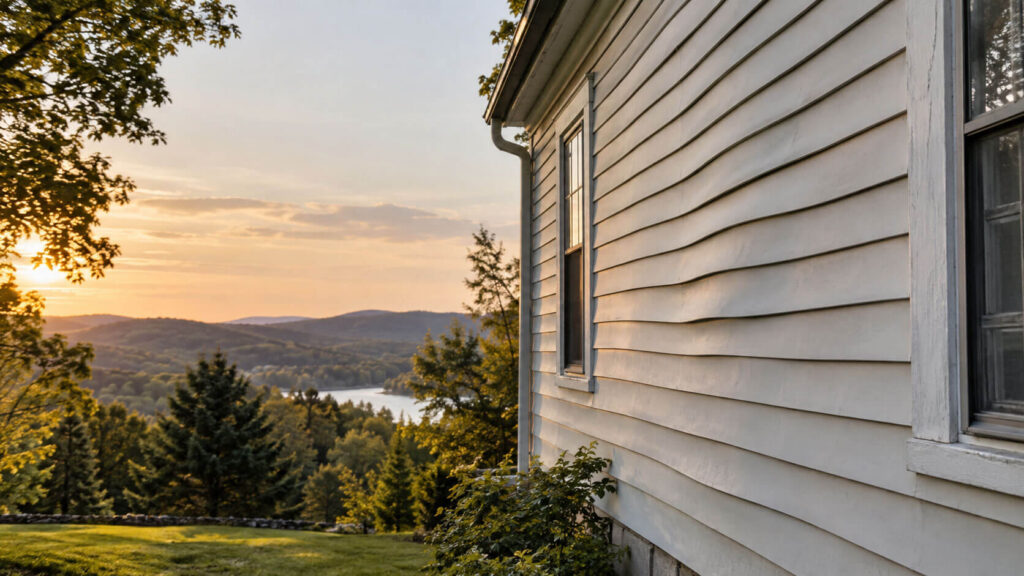
Why Rippling Siding Usually Means More Than a Cosmetic Problem
A section of siding that starts to ripple or bow is easy to dismiss at first. From the curb, it can look like a minor cosmetic issue, the kind of thing you notice once and then ignore until spring. But in practice, siding rarely deforms for no reason. If one wall looks wavy, something behind it is usually moving, holding moisture, or failing to shed water the way it should.
That is why experienced contractors tend to look past the siding itself. They start asking about drainage, flashing, sheathing, fastening, and whether the wall has been taking on moisture for a while. In the Hudson Valley, that matters even more because older homes, freeze/thaw cycles, heavy rain, and mature trees all put extra stress on exterior walls. What looks like surface damage can be the visible symptom of a bigger problem.
If you are already noticing water staining, loose trim, or soft spots near the affected wall, it may be smart to check for siding and gutter damage after a spring storm before the issue spreads into the wall assembly.
What usually causes siding to ripple
Rippling siding is often blamed on age alone, but age is only part of the story. The more common causes are installation problems, trapped moisture, or movement in the wall below the siding. Vinyl siding can buckle if it was fastened too tightly. Wood siding can warp when repeated wetting and drying cycles go unchecked. Fiber cement may show movement if the wall underneath is uneven or damaged.
The important thing to understand is that the visible ripple is often not the root issue. Contractors usually want to know whether the wall behind the siding is flat, dry, and properly flashed. If the sheathing has softened, if a window detail is leaking, or if water is getting behind a gutter edge, the siding may be the first place the problem shows itself.
That is why a wall issue often traces back to exterior water management. Good drainage matters more than most homeowners realize, and it is worth reviewing drainage problems around the home when siding starts to fail on one side of the house.
The counterintuitive part homeowners miss
The rippled section is not always located right where the leak is happening. That surprises people. Water can enter near a roof edge, flashing joint, or window trim and travel before it shows up as siding distortion. The stain, bulge, or waviness you see may be several feet away from the actual entry point.
That is one reason quick patch jobs often fail. Replacing a few boards or panels without checking the surrounding wall can make the problem look solved while the moisture source keeps working behind the scenes. In older Hudson Valley homes, especially, there may be overlapping issues: aging gutters, poorly pitched trim, gaps in caulking, and wall assemblies that were never designed for today’s heavier storm cycles.
When contractors inspect this kind of problem, they usually do not start with the obvious defect. They look at the whole water path. Roof runoff, gutter overflow, window flashing, fascia condition, and grading all matter. If you are comparing repair options, it can also make sense to ask about local gutter services when overflow or downspout discharge is part of the picture.
What contractors inspect first
A good inspection is usually more methodical than homeowners expect. The siding itself may be the last thing checked, not the first. Most experienced crews look for clues in this order:
- Whether the ripple changes after rain or during dry weather
- Signs of staining, swelling, or rot near windows, corners, and trim
- Improper nailing or fastening that allows the siding to move
- Failed flashing around penetrations and openings
- Soft sheathing or signs of moisture behind the wall
- Gutter overflow, downspout discharge, or splashback at the foundation
That sequence matters because it separates cosmetic movement from real wall damage. A panel that was installed too tightly can ripple without any moisture intrusion. But a wall that ripples after storms, especially near a gutter run or roof edge, often points to a drainage or flashing issue that needs attention sooner rather than later.
Why the problem is more common in older Hudson Valley homes
Older homes in the region have a few traits that make siding issues more complicated. Many were built before modern moisture-management details were standard. Some have settled unevenly over time. Others have stone foundations, older trim assemblies, or additions layered onto the original structure. That combination can create small gaps and movement points that do not show up until weather puts pressure on the wall.
Freeze/thaw cycles make the situation worse. Water works into tiny openings, expands when it freezes, then widens the gap. A wall that looked fine in late fall can start to show distortion by spring. Heavy rainstorms add another layer of pressure, especially on homes with steep grading, poor gutter extension, or mature trees dropping debris into the drainage system.
If the problem seems tied to persistent water at the base of the house, it may not be a siding-only repair at all. In some cases, homeowners need help from foundation and waterproofing contractors because chronic moisture is driving the wall damage from below.
Repairs that sound small but often turn expensive
This is where people get caught. A homeowner sees a few ripples and assumes a simple siding patch will solve it. Sometimes that is true. But if the wall has been taking on moisture, the visible repair can be the smallest part of the job.
Contractors often discover that the damaged section needs more than replacement siding. They may need to open the wall, replace sheathing, repair flashing, address trim rot, or correct a gutter and drainage problem that caused the damage in the first place. That is why the cheapest quote is not always the least expensive outcome. A surface-only fix can be fine for a true installation issue. It is a poor choice when the wall itself is compromised.
Another thing homeowners underestimate: delaying this kind of repair can increase the scope quickly. Moisture does not stay polite. Once sheathing softens or trim begins to rot, the area around the siding becomes more vulnerable, and repairs tend to widen from “one section” to “the whole elevation.”
When DIY makes sense, and when it does not
There is nothing wrong with inspecting the area yourself. In fact, it is smart to look closely after a storm or after a long wet season. But there is a line between useful observation and risky repair. If the siding is simply loose at a fastening point and the wall underneath is dry, a pro may be able to correct it without major demolition. If the ripple is paired with softness, staining, or recurring movement, DIY fixes usually do more harm than good.
Caulk is the classic overused fix. It is helpful in the right place, but it cannot solve a failed flashing detail, warped sheathing, or a drainage issue. Neither can paint, patch compound, or a replacement panel slapped over a compromised wall. Those shortcuts may make the exterior look tidy for a season, then fail again after the next storm cycle.
If the symptom seems broader than one panel or one seam, it may be time for a contractor inspection for hidden wall damage instead of trying to mask the issue with another temporary repair.
What to pay attention to before the next heavy rain
Homeowners often notice siding problems when weather shifts, which is useful. If the rippling gets worse after rain, that is a clue. If it dries out and relaxes in a warm spell, that is another clue. If the problem stays the same all the time, the issue may be more structural or installation-related than moisture-related.
Before the next storm, it helps to check a few practical points:
- Are gutters overflowing or dumping water near the problem wall?
- Do downspouts extend far enough away from the foundation?
- Is there visible trim rot near the top of the wall or around windows?
- Is the siding loose, brittle, or separating at seams?
- Does the basement wall below the area show dampness or staining?
Those details can help narrow down whether you are dealing with a siding defect, a roof edge issue, or a broader water-management problem. On some homes, the real fix starts with the roof. A failing drip edge or flashing detail above the siding can send water into the wall system even when the siding itself looks like the problem. That is why it is worth thinking about roof and flashing issues above the siding before replacing exterior materials unnecessarily.
How to think about the repair decision
With siding ripple, the right decision is less about the appearance of the damage and more about what is happening behind it. If the wall is dry and the problem is isolated, a targeted repair may be enough. If there are multiple warning signs, the smarter move is to investigate before covering anything up.
That approach protects both the home and the budget. It reduces the odds of paying twice for the same area, and it helps preserve resale value by dealing with the underlying condition instead of hiding it. In a market where buyers pay close attention to maintenance history, that matters.
For Hudson Valley homeowners, the real takeaway is simple: rippling siding is often a weather-and-water story, not just an exterior finish problem. When a wall starts to move, it is worth asking why the wall is moving before you ask how to make it look normal again.
Frequently Asked Questions
Is rippling siding always a sign of water damage?
No. Sometimes siding ripples because it was installed too tightly or because the wall underneath has uneven movement. But if the problem changes after rain or shows up near trim, windows, or gutters, moisture should be investigated.
Can I just replace the damaged siding section?
Only if you are confident the wall behind it is dry and structurally sound. If the sheathing, flashing, or framing is compromised, replacing the outer layer alone usually leads to repeat repairs.
Why does the ripple get worse after storms?
That often points to water intrusion or wind-driven moisture. Overflowing gutters, failed flashing, and splashback from poor drainage are common reasons the problem becomes more visible after heavy rain.
What should a contractor check first?
They usually start with gutters, roof edges, flashing, trim, and the condition of the sheathing behind the siding. The visible ripple is important, but it is not always the source of the problem.
Is this something I can ignore until next season?
That depends on whether the wall is dry and stable. If the siding is moving, soft, staining, or growing worse, waiting can allow rot and moisture damage to spread. Small exterior problems often get expensive when they are left through another winter.
When is a general contractor the right call?
If the issue may involve hidden wall damage, rot, multiple exterior systems, or structural movement, a general contractor is often the right starting point. They can help determine whether the fix belongs with siding, roofing, drainage, or a broader wall repair.
If your siding is starting to ripple, the safest next step is usually not a cosmetic patch. It is a closer look at where water is coming from and how far the damage may have spread. Working with a trusted local professional can help you avoid short-term fixes that turn into larger repairs later.