

Soft Deck Boards in the Hudson Valley: What They Usually Mean and When to Take Them Seriously
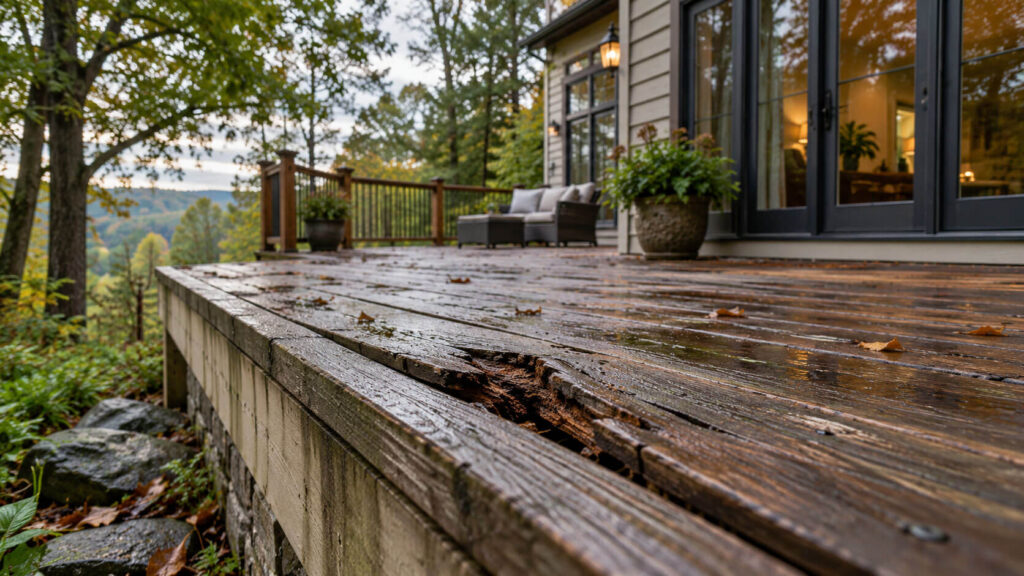
That slightly spongy step on the deck is easy to ignore until the board gives way under someone’s foot. By then, the issue is usually bigger than a single bad plank. Soft decking often points to trapped moisture, hidden rot, or framing that has been slowly breaking down under the surface.
In the Hudson Valley, that matters more than many homeowners realize. Between freeze/thaw cycles, heavy rain, shaded yards, mature trees, and older decks that have already lived through a few rounds of patchwork repair, a “small soft spot” can be the first visible sign of a broader problem. Sometimes the board is the symptom, not the problem.
If you’re already noticing moisture-related wear around the property, it’s worth thinking beyond the deck itself and looking at drainage problems around the home. A deck that stays damp at the base or along one edge rarely ages well.
Why Deck Boards Go Soft in the First Place
Soft boards usually come from water exposure, but that’s only the starting point. The actual cause is often a combination of poor drainage, failed sealing, trapped debris, and wood that has never fully dried out between storms. On older decks, especially the kind attached to older Hudson Valley homes, the problem can be accelerated by undersized flashing, aging fasteners, or framing that has started to hold moisture instead of shedding it.
What homeowners often miss is that the board they can feel may not be the worst part. Contractors usually inspect the ledger connection, the joist ends, the beam area, and any spot where water has nowhere to go. If the board is soft near the house, the concern rises quickly because that can signal hidden rot where the deck meets the structure.
Another common pattern: the damage is worse in shaded areas or spots under planters, grill covers, outdoor rugs, or stair landings. Those items trap moisture and slow drying. A deck can look fine from six feet away and still be failing underneath.
The Counterintuitive Part Homeowners Miss
The softest board is not always the most urgent one. That sounds backward, but it’s true. A visibly damaged top board may be an isolated surface issue, while the firmer-looking area nearby could be hiding a failing joist or a section of framing that is only holding shape because the decking is still bridging over it.
That’s why contractors don’t just replace the obvious bad boards and move on. They probe adjacent material, check the underside if accessible, and look for signs that the wood has been repeatedly wet and dried. Replacing one soft board can be a sensible repair. Replacing one soft board without finding out why it failed is how homeowners end up doing the same work again next season.
What Usually Gets Inspected First
When a contractor evaluates soft decking, the first pass is rarely complicated. They’re usually checking for:
- surface softness and depth of rot
- nail or screw failure around the affected area
- water pooling, splash-back, or poor runoff nearby
- signs of decay at the ledger board or joist ends
- staining, mildew, or long-term moisture exposure
- movement in stairs, railings, or landing transitions
The important thing is that contractors are looking for pattern, not just damage. One board may be replaceable. Multiple soft boards in the same bay usually mean the problem is traveling through the assembly.
That’s also why exterior issues are often better assessed as part of a broader post-storm exterior check. Rain, snow melt, and wind-driven moisture rarely affect only one piece of a deck.
When a Soft Board Is a Small Repair and When It Is Not
If the damage is isolated, the framing below is sound, and the surrounding boards are dry and stable, a targeted board replacement may be all that’s needed. That’s the best-case scenario.
But if the deck is older, the boards are cupping or splitting, the rail posts feel loose, or the soft area is near stairs or the ledger, the repair can expand quickly. Contractors often find that the “bad board” is simply the visible failure point of a broader moisture problem. At that stage, patching one spot is usually a short-term fix, not a solution.
This is where a lot of homeowners get caught off guard. They budget for lumber and labor on a single board and then discover hidden rot, corrosion around fasteners, or deteriorated framing that changes the scope. That doesn’t mean the project is hopeless. It just means the deck needs a more honest inspection before money gets spent in the wrong place.
Why Quick Fixes Often Fail
Some repairs look neat for a month and then start failing again because the underlying conditions were never addressed. Caulking over rot, painting over damp wood, or replacing a top board while leaving a wet substructure untouched usually buys very little time. In fact, those quick fixes can hide the problem long enough to make it more expensive later.
Another issue is mismatched repairs. A homeowner may replace a couple of surface boards with pressure-treated lumber but leave old fasteners, saturated framing, or drainage problems in place. The new boards may survive, but the rest of the deck keeps deteriorating around them.
If the deck is showing structural concerns beyond the surface, it may be time to look beyond a simple patch and toward general contracting services that can assess framing, stairs, ledger connections, and the broader repair scope.
The Hudson Valley Factors That Make Deck Problems Worse
Regional conditions matter. In this part of New York, decks deal with a tough cycle: winter moisture, spring thaw, heavy rain, humid summers, and leaves that hold dampness against the surface in fall. Wood doesn’t just get wet here. It stays wet longer than homeowners expect.
Older homes add another layer. Many have decks built onto stone foundations, irregular additions, or older framing layouts that were not designed with today’s drainage expectations. If the yard slopes toward the house, or if downspouts dump near the deck footings, the structure can spend years absorbing water that never really leaves.
Detached garages, basement walkouts, and side-yard decks can also trap moisture in ways that aren’t obvious until the boards start softening. The failure often starts where airflow is poorest.
What Homeowners Can Check Before Calling Someone
A careful homeowner can spot a few warning signs before a contractor ever arrives. You don’t need to start prying boards up. Just look for the patterns that usually point to trouble.
- boards that flex more than the surrounding area
- dark staining, mold, or a musty smell near the deck surface
- softness around fasteners, especially near the house side
- visible gaps where boards have cupped or shifted
- rusting screws, loose railings, or sinking stair treads
- wet soil, poor grading, or splash-back below the deck
If the deck feels soft in more than one spot, or if the railing moves when pressure is applied, that’s not a cosmetic issue. It’s a warning sign that the assembly is losing strength somewhere underneath.
Repair, Replace, or Rebuild?
This is the question homeowners want answered quickly, but the honest answer depends on how widespread the decay is. A deck with one or two failed boards may be a repair job. A deck with recurring soft spots, widespread fastener corrosion, and aging framing may be better served by partial reconstruction or full replacement.
Contractors usually weigh a few things: the age of the deck, the condition of the ledger and footings, the amount of hidden rot, and whether the current layout still makes sense for the home. Sometimes the right move is not to keep patching a structure that has simply reached the end of its useful life.
That can sound expensive, but repeated spot repairs on a failing deck often cost more over time than addressing the underlying issue once. Homeowners usually feel the pain in smaller increments, which makes the total harder to track. The deck never gets better. It just gets less obvious for a while.
Why Timing Matters More Than Most People Think
Waiting on a soft deck board is risky because moisture problems rarely stay put. Once rot starts, it tends to move into adjacent material, especially after another rainy season or a hard winter. Fasteners loosen. Boards shift. Water finds new paths. What was a manageable repair in spring can become a structural concern by fall.
Delaying also raises safety concerns. Decks are often used for gatherings, grilling, and daily traffic, which means failures don’t always happen in a controlled way. A soft step at a stair landing or a failing board near a railing is the kind of issue that creates real injury risk fast.
Frequently Asked Questions
Can one soft deck board really mean a bigger problem?
Yes. One soft board can be isolated, but it can also be the first visible sign of rot in the framing below. The location of the soft spot matters just as much as the softness itself.
Is it safe to keep using a deck with a few soft spots?
It depends on where the damage is. Soft boards near stairs, railings, or the ledger area deserve quicker attention because those spots handle more load and carry more risk.
Can I just replace the bad board myself?
Sometimes, yes, but only if the framing underneath is sound and dry. If you don’t know why the board failed, a simple replacement may not last.
Why do deck boards soften faster in shaded areas?
Shaded sections dry more slowly, especially in yards with mature trees, limited airflow, or poor drainage. Add leaves, snow melt, or runoff, and the wood stays damp long enough to break down.
Should a contractor inspect the underside too?
Absolutely, if it’s accessible. The underside often tells the real story: rot at joist ends, corroded fasteners, water staining, and hidden decay near the ledger or beam.
When does a deck move beyond repair?
When the damage is widespread, the framing is failing, or the structure has recurring moisture problems that would keep causing new failures. At that point, replacement can be the more practical long-term decision.
If your deck is starting to feel soft, it’s worth getting a clear opinion before the repair gets larger than it needs to be. A good local pro can tell the difference between a straightforward board replacement and a deeper structural issue, which is often the difference between a manageable project and an expensive surprise.
