

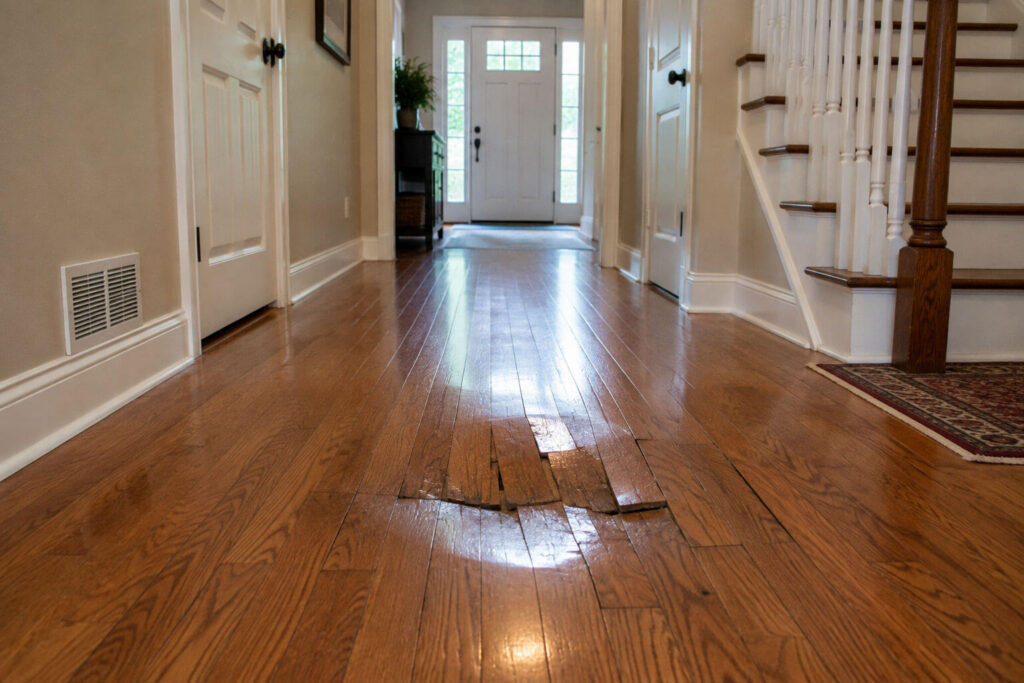
Soft spots in a floor rarely stay “just a soft spot.” What starts as a slightly spongy area near a bathroom, kitchen sink, or basement stair landing often turns out to be a moisture problem, a failed subfloor, or damage that has been quietly building for a while. The tricky part is that homeowners usually notice the finish layer first, not the cause underneath it. By the time the floor gives a little underfoot, the real issue may already be reaching joists, underlayment, or framing.
That’s why it pays to look at a soft floor spot as a clue, not a cosmetic problem. In older Hudson Valley homes, especially the ones with damp basements, stone foundations, or long plumbing runs through unfinished spaces, the cause is often somewhere other than the exact spot that feels bad. A soft section in the hallway may trace back to a slow leak near a bathroom wall, a failed wax ring, a dishwasher seep, or even water intrusion from outside that has been working its way in for months. If you want to understand why these problems spread, it helps to think in terms of systems, not just flooring.
Why a soft floor spot is usually more than a floor problem
Contractors tend to inspect soft flooring in layers. First comes the visible surface: hardwood, laminate, vinyl plank, tile, or carpet. Then the underlayment and subfloor. Then the framing below if the damage is advanced. The reason for that sequence is simple: the floor covering is often the last thing to fail, not the first thing to get damaged.
The counterintuitive part is that the softest area is not always where the water entered. Water can travel along framing, subfloor seams, or even insulation before it shows up as a dip or mushy patch. That’s one reason people sometimes replace the wrong section and end up doing the job twice.
If the room below is unfinished, the inspection is easier. But in finished spaces, a contractor usually has to read the surrounding clues: staining, cupping, baseboard swelling, loose trim, musty odor, or changes in floor height near walls and transitions. If there has been recent roof leakage, storm runoff, or basement seepage, it’s worth considering the bigger picture, including storm damage roof inspection if the moisture source could be above the room.
Common causes homeowners overlook
Homeowners often assume a soft floor means the flooring itself has simply worn out. Sometimes that’s true, but not often enough to stop there. What contractors commonly find is a hidden moisture path that never got addressed.
Slow plumbing leaks
Supply lines, drains, toilets, dishwashers, washing machines, and tub/shower plumbing all create risk points. The leak may be small enough that it never creates a dramatic ceiling stain or standing water. It just keeps the subfloor damp enough to weaken over time.
Basement humidity and bulk moisture
In homes with chronically damp basements, moisture can move upward. It doesn’t always require an obvious flood. Persistent humidity, condensation, or seepage through the foundation can be enough to degrade materials from below. That’s where foundation and waterproofing issues become relevant, even when the symptom first shows up upstairs on the finished floor.
Roof or exterior water intrusion
Not every floor issue starts at floor level. A small roof leak, a failed flashing detail, clogged gutters, or poor grading can allow water into wall cavities or ceiling spaces, where it eventually migrates down. Homeowners are often surprised when the damage point and the leak point do not line up neatly. They usually don’t.
Failed previous patch work
Cheap repairs can hide the real issue for a while, which makes the eventual repair worse. A floor patch that only addresses the top layer may look fine for a season, then feel soft again once the moisture reaches the same weak section underneath. That’s why experienced contractors are cautious about “just replacing the surface.” If the structure below is compromised, the fix is incomplete.
What contractors usually check first
Good contractors do not start by guessing at material replacement. They start by trying to figure out whether the issue is active, historic, or structural. That order matters because each one changes the repair approach.
First, they’ll look for signs of ongoing water entry. That can mean checking plumbing lines, nearby fixtures, appliance connections, exterior drainage, crawlspace conditions, or attic and wall moisture paths. Then they’ll assess whether the soft section is isolated or part of a larger area. A small spot in one room can sometimes be a localized repair. A broad section that flexes in multiple directions is more likely to require tear-out and structural attention.
They’ll also look at whether the subfloor has delaminated, whether fasteners have loosened, and whether the joists below have been compromised. If the problem extends beyond finished flooring into framing or subfloor replacement, the work may become broader subfloor or structural repair work rather than a simple flooring patch.
Why waiting usually makes the repair more expensive
Soft spots tend to worsen gradually, which makes them easy to ignore. People adapt to the feel of the floor. They step around it. They tell themselves they’ll deal with it after the busy season. The problem is that moisture does not pause while schedules get busy.
Once subfloor layers start breaking down, the damage spreads faster than most homeowners expect. Fasteners loosen, seams separate, and surrounding material loses its stiffness. If the affected area sits near a bathroom, kitchen, exterior door, or basement stair, the failure can migrate into adjacent rooms or below-wall sections before anyone opens anything up.
That is also where timing affects labor cost. A contained repair may involve limited demolition, drying, and replacement. A delayed repair can require more tear-out, drying time, isolation of surrounding materials, and sometimes matching new flooring to old flooring that is no longer available. The longer the issue sits, the less likely it is to be a neat repair.
DIY mistakes that often make soft floor damage worse
Some repairs look simple from above, which is why homeowners get into trouble. The temptation is to pull up a board, add screws, patch over a spot, or cover the area with a rug until “the real project” happens. That usually delays the diagnosis and can trap moisture where it continues to do damage.
Another common mistake is using too little information to decide it’s only a flooring problem. If a floor feels soft near a tub, toilet, sink, exterior wall, or a basement stair landing, there is usually a reason. Pulling up finish flooring without checking the source can reveal a damaged subfloor, but it can also miss the plumbing or water-intrusion issue that created it.
And then there’s the oversimplified internet advice to “dry it out and move on.” Drying matters, but drying alone is not a repair if the material has already lost strength or if the source is still active. In a climate with freeze/thaw cycles, heavy rain, and damp basements, that advice is often too optimistic for older homes.
How Hudson Valley homes make this issue harder to read
Older houses in Dutchess, Putnam, and Westchester counties often have a mix of old framing, layered renovations, and different flooring materials installed over time. A kitchen may sit over a partially finished basement. A bathroom may have been updated without improving the subfloor. A mudroom may carry years of tracked-in moisture from snow, wet boots, and long driveways that never fully dry out.
Stone foundations and older drainage patterns can also complicate the picture. Water may enter through one side of the house, travel through the basement environment, and show up later in a room that seems unrelated. Mature trees, shaded lots, and heavy rainfall only add to the moisture load. In other words, a soft floor spot in this region is often part of a broader water-management story, not a one-room defect.
That’s why looking at exterior conditions matters. If runoff is pooling near the foundation or spring melt is pushing water toward the house, the floor damage may just be the indoor symptom. Homeowners dealing with recurring wet conditions should also think about spring drainage problems around Hudson Valley homes before the next storm season makes the situation worse.
When the repair can stay local, and when it usually cannot
A limited repair is more realistic when the soft spot is small, the source has been corrected, and the framing below is still sound. In those cases, a flooring contractor may be able to remove and replace the damaged section, check the subfloor, and restore the finish without disturbing the entire room.
Once the damage includes sagging, visible mold, widespread staining, or movement in more than one area, the job often expands. If the joists are affected, if the subfloor has lost structural integrity, or if there is evidence of ongoing moisture from below, the project may require a more coordinated approach with a flooring contractor and, in some cases, a general contractor who can handle tear-out, framing repairs, and rebuild work.
If the floor also sits above a damp basement or crawlspace, it is smart to solve the moisture source first. Repairing the finish without addressing water intrusion is one of the quickest ways to create repeat problems and unnecessary expense.
What to look for before you hire anyone
Homeowners do themselves a favor by asking a few practical questions up front. Not every contractor will approach a soft floor the same way, and the cheapest estimate is not always the safest one.
- Will the contractor inspect the subfloor and framing, not just the surface material?
- Do they want to identify the moisture source before repair begins?
- Will they tell you if the issue may involve structural repair rather than flooring alone?
- Can they explain whether the damage looks active or old?
- Do they include drying, tear-out, and disposal in the scope if needed?
Those questions quickly separate thoughtful tradespeople from patch-and-go operators. The best answer is not always the simplest one. If a contractor says the floor needs to come up so they can see what is actually happening underneath, that is usually a sign of good judgment, not overreach.
Why matching the old repair matters more than most people think
Once flooring is damaged, the visible repair is only part of the issue. Homeowners often focus on getting the room looking normal again, which is understandable. But if the replacement material, thickness, fastening method, or underlayment does not match the surrounding system, the repaired area can feel different, wear unevenly, or telegraph movement later.
This is especially true with hardwood, engineered flooring, and older subfloors. The repair needs to respect the structure underneath, not just the finish above it. That’s why experienced contractors pay attention to transitions, moisture conditions, and whether surrounding sections have already started to fail in subtle ways.
In some homes, a soft floor spot is the first visible warning that the room has been dealing with moisture for years. In others, it is a localized problem that can be fixed cleanly. The difference is in the diagnosis.
Frequently Asked Questions
Can a soft floor spot dry out on its own?
Sometimes the surface feels firmer after drying, but that does not mean the material recovered fully. If the subfloor delaminated or the framing was affected, the weakness can return. Drying is only part of the solution.
Is it safe to keep walking on a soft spot?
If the area is small and only slightly flexible, it may not fail immediately, but it should not be ignored. A worsening soft spot can become a trip hazard or open up further damage beneath the floor.
How do I know if the problem is plumbing or something outside the house?
Look at location and history. A soft spot near a bathroom or appliance often points to plumbing, while one near an exterior wall, basement stair, or older entry may be tied to drainage or water intrusion. Contractors usually inspect both possibilities early on.
Do I need to replace the whole floor if one section feels soft?
Not always. If the damage is isolated and the source is fixed, a partial repair may be possible. If the problem has spread into the subfloor or framing, larger replacement work is more likely.
Why does a soft floor come back after a patch?
Because the repair addressed the symptom, not the cause. If moisture is still present, or if the underlying structure was never repaired, the problem usually returns.
Should I check the basement if the soft spot is upstairs?
Yes. Moisture below the room can weaken flooring from underneath, especially in older homes with damp basements or crawlspaces. The source is not always where the damage appears.
A practical next step for homeowners
If a floor feels soft, the safest move is usually to treat it as a diagnostic problem first and a repair second. Find out whether the issue is active, where the moisture is coming from, and how far the damage has spread before choosing materials or planning cosmetic work. That approach saves money, prevents repeat repairs, and helps protect the structure that sits under the flooring you see every day.
If you need help sorting out whether the problem is limited to flooring or tied to something deeper, working with experienced local professionals can make the decision much clearer. The right inspection now is usually cheaper than opening the same area twice later.