

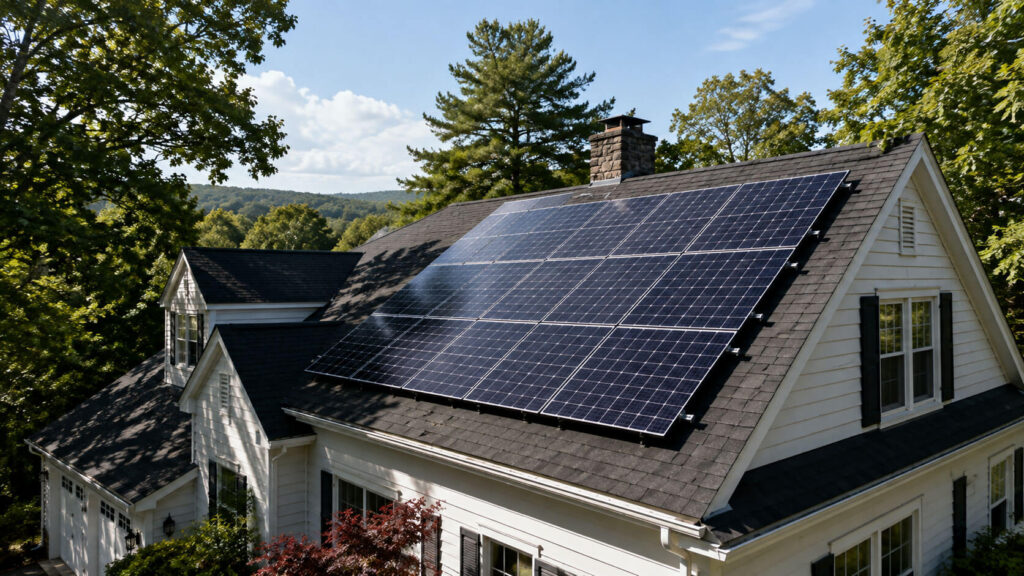
Why Homeowners in the Hudson Valley Notice Solar Output Drops Before They Notice the Real Problem
When a solar system starts producing less power, the instinct is usually to blame the panels. That’s understandable, but it’s often the wrong place to start. In practice, reduced output is just as likely to come from an electrical issue, a roof problem, a monitoring glitch, or something simple like shading that has gotten worse over time. On older Hudson Valley homes, especially the ones with mature trees, aging roofs, and complicated electrical setups, the cause is rarely as neat as homeowners expect.
That’s why a drop in production deserves a closer look instead of a guess. What seems like a panel issue may actually be a wiring fault, an inverter problem, a breaker nuisance trip, or roof damage that has started interfering with the array. In some cases, a homeowner only notices the lower bill after the system has been underperforming for weeks. By then, the small issue has already had time to become the expensive one.
If the drop happened after a wind event, hail, or heavy snow, it is worth considering whether the issue belongs in the same category as a storm damage roof inspection rather than assuming the solar equipment itself is failing.
Start with the simplest question: did production actually change, or did the monitoring just make it obvious?
One of the most common homeowner mistakes is trusting the app without comparing it to the system’s actual performance history. Monitoring software can make a minor decline look dramatic, and sometimes it flags a communication problem instead of a production problem. That distinction matters. A dead inverter, a loose CT clamp, a faulty breaker, or a comms issue can all make a system look worse than it really is.
Contractors usually begin by checking whether the drop is broad or isolated. If every panel string is down, the issue often points toward the inverter, service equipment, or utility-side interruption. If just one section is underperforming, the fault may be in the wiring, a connector, a module, or accumulated shading from a tree that grew a little too far over the roofline.
What homeowners often miss is that solar output problems can be partly electrical and partly structural. A system mounted on a roof with failing flashing or compromised penetrations can develop issues that don’t show up as obvious leaks right away. That is why it often helps to think in systems, not in isolated parts.
What contractors usually inspect first
The first pass is usually less dramatic than people expect. Good diagnostic work starts with the basics:
- inverter status lights and error codes
- breaker position and panel condition
- visible damage to conduit, wiring, or junction boxes
- signs of shading from branches, debris, or new roofline obstructions
- roof flashing and mounting points around the array
- monitoring data to see whether the drop is recent or gradual
That sequence exists for a reason. Contractors know that the loudest symptom is not always the true failure point. A system may look like it has a panel problem when the real issue is a failing connection somewhere else in the circuit. Likewise, an inverter warning can sometimes be caused by a roof leak or moisture intrusion around a penetration, not by the inverter itself.
This is also where many DIY repairs go sideways. Homeowners may reset equipment, clean panels, or tighten something visible, but if the underlying issue is heat damage, a loose rooftop connection, or a service-panel problem, the temporary fix only delays the real repair.
Why Hudson Valley homes create more complicated solar problems
Regional conditions matter more than most national advice admits. The Hudson Valley has a lot of older homes, steep roof pitches, shaded lots, snow load, freeze-thaw cycles, and plenty of mature trees. Those conditions are not neutral. They stress solar systems in very specific ways.
Tree cover can reduce output gradually, which makes the problem easy to ignore until production drops enough to be noticed on the bill. Snow and ice can temporarily suppress output, but they can also expose weak mounting hardware, loose flashing, or water intrusion around roof attachments. And on homes with older electrical service, the solar system may be doing exactly what it was designed to do while the service equipment quietly becomes the weak link.
That’s why a homeowner in a newer suburban development and a homeowner with a stone foundation, detached garage, and old oil heat system are not dealing with the same risk profile. The panels may be the visible part, but the real issue often lives underneath them or behind the electrical panel.
After a major weather event, a broader post-storm exterior damage check can be a smart next step, especially if the lower solar output appeared at the same time as roof debris, gutter overflow, or other exterior changes.
The counterintuitive part: the ceiling stain is not always under the leak, and the solar problem is not always on the roof
This is where homeowner assumptions tend to be misleading. The place where a symptom shows up is not always where the problem began. Water can travel along rafters or framing before it appears inside, and electrical faults can present as poor output long before any visible hardware failure shows up at the array.
That matters because solar underperformance is often treated like a panel issue when it’s really a chain-of-custody issue. A small roof flashing defect, a failed conduit seal, a breaker problem, or a utility-side fluctuation can create the same basic homeowner complaint: “The system isn’t making what it used to.”
The most experienced contractors don’t get locked onto the obvious component too early. They work backward from the symptom, then test each part of the system until the pattern makes sense. That approach saves time and avoids the kind of patchwork repairs that look fine for a season and then fail again at the first stretch of wet weather.
When the problem is likely electrical
If the production loss is sudden, repeated, or accompanied by inverter alerts, the electrical side deserves attention early. Loose terminals, degraded wiring, failed connectors, breaker wear, grounding issues, and inverter faults can all cut output. Sometimes the issue is simple. Sometimes it isn’t.
Homeowners can spot a few warning signs without opening equipment:
- the inverter is showing an error code or not fully coming online
- the system resets itself after power outages
- one section of the array consistently underperforms
- the breaker trips more than once
- the monitoring app shows erratic output rather than a steady decline
At that point, it usually makes sense to speak with electrical contractors who can evaluate system performance issues before assuming the equipment needs to be replaced wholesale. A proper electrical diagnosis can save a homeowner from paying for panels, inverters, or other components that were never the actual problem.
That said, solar-related electrical work is not a place to improvise. If there is any sign of heat damage, scorch marks, repeated breaker trips, or moisture near service equipment, the safe move is to stop treating it as a quick homeowner fix.
When the roof becomes part of the conversation
Solar systems depend on roof integrity more than many homeowners realize. The mounts, flashings, penetrations, and surrounding shingles all matter. On aging roofs, the array can sometimes hide deterioration until a contractor is already on site looking for the source of the output drop.
That is especially relevant in the Hudson Valley, where roofs may already be under pressure from ice dams, wind, heavy rain, and occasional storm damage. A system that still looks solid from the driveway can have failed sealant, compromised flashing, or subtle movement in the mounting points. Those are not cosmetic problems. They can lead to roof leaks, reduced production, and more expensive repair coordination later.
If the system is on a roof approaching the end of its useful life, homeowners should think carefully before making isolated solar repairs. Sometimes the more cost-effective decision is to resolve the roof issue first, then address the array with the roof already stabilized. Piecemeal work on a failing roof often costs more in the long run.
What not to do when production drops
There are a few common moves that sound sensible but usually create more confusion than clarity.
- Do not assume the panels are dirty just because output is down.
- Do not keep resetting equipment if the same fault keeps returning.
- Do not ignore a decline because the bill still looks manageable for now.
- Do not let a quick online answer replace an actual inspection if the change is persistent.
- Do not treat roof work and solar work as unrelated if the system is roof-mounted.
The biggest delay usually comes from waiting for the problem to become obvious. By the time a solar system’s decline is unmistakable, the underlying issue may have been present for weeks or months. That delay matters because it allows smaller defects to create secondary damage. A wiring fault can become a heating problem. A roof penetration issue can become a leak. A shaded array can hide a maintenance issue until the seasonal weather shifts and the system is suddenly under more load.
How to approach a repair without overpaying
The best homeowner move is not to guess; it is to narrow the problem. Start with the production data, then compare it against the weather, recent storms, roof changes, and any electrical events in the home. If the system has a monitoring alert, capture it. If there was hail, wind, or heavy snow, note the date. If trees were trimmed or a new roof feature was added nearby, that matters too.
From there, a contractor can usually tell whether the path runs through the inverter, wiring, roof attachment points, or broader electrical service. The point is to avoid paying for repeat visits that only chase symptoms. Good troubleshooting is part diagnosis, part sequencing. A homeowner who understands that is much less likely to buy the wrong repair first.
When the cause isn’t obvious, it can help to find the right Hudson Valley contractor category and compare the service path before committing to a repair. Sometimes that means electrical help first. Sometimes it means roof evaluation. Sometimes it means both.
Frequently Asked Questions
Why did my solar output drop suddenly?
A sudden drop usually points to an electrical issue, inverter problem, breaker trip, monitoring fault, or storm-related damage. A gradual decline is more often tied to shading, dirt buildup, or a developing system issue.
Can dirty panels really cause a big drop in production?
Yes, but usually not as much as homeowners think unless there is heavy debris, pollen, sap, or a steep buildup of grime. In many cases, dirt is blamed first because it’s easy to see, even when the real problem is elsewhere.
Should I clean the panels before calling anyone?
Not if the drop was sudden or tied to a storm, inverter alert, or breaker issue. Cleaning won’t fix electrical faults or roof damage, and it can waste time if the real issue is more serious.
How do I know if the roof is part of the problem?
Look for missing shingles, flashing issues, stains in the attic, water near penetrations, or signs of storm exposure. If the roof is aging or has already had repairs, it deserves a closer look whenever solar output changes unexpectedly.
Is it worth repairing an older solar system?
Often yes, but only after a proper diagnosis. If the issue is a replaceable electrical component or a roof-related problem, repair can make sense. If multiple parts are failing at once, replacement or a larger update may be the better long-term move.
When should I stop troubleshooting on my own?
If the system keeps tripping, shows error codes, smells hot, has visible damage, or the output decline continues after a reset, it’s time to bring in a professional. Electrical and roof-related issues can become expensive fast if they are left to guesswork.
When solar production changes, the safest path is usually the most ordinary one: gather the facts, inspect the likely weak points, and let the problem be diagnosed before it gets expensive. If you want help sorting through the issue the right way, HV Trades can help connect you with the local contractor category that makes sense for the job.