

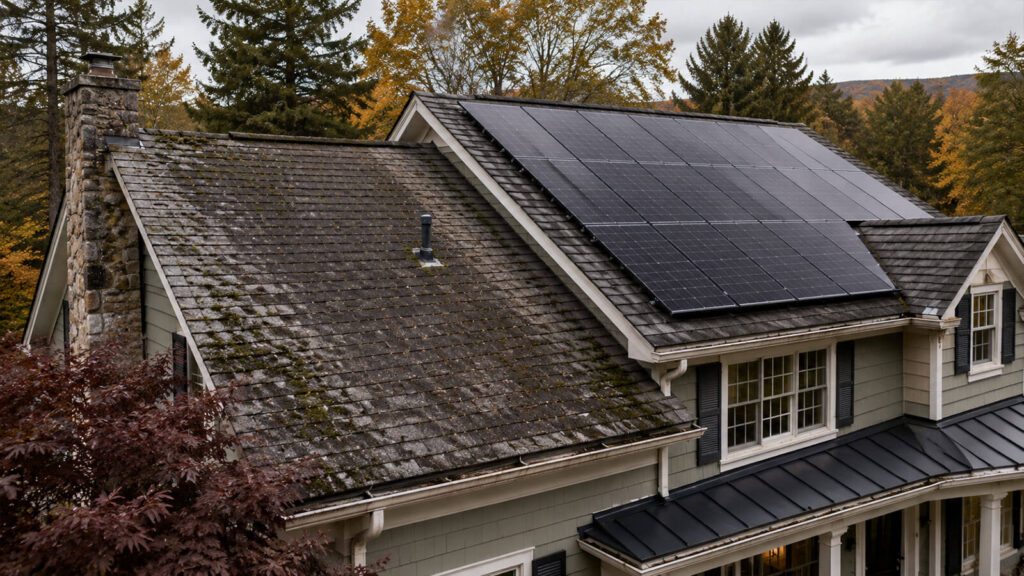
Solar panels can be a smart upgrade, but the timing matters more than most homeowners expect. The mistake is usually not choosing solar itself; it’s putting panels on a roof that was already near the end of its life, or skipping the electrical review until the project is halfway booked. Once that happens, the “energy savings” conversation can turn into roof removal, extra labor, and a much bigger budget than planned.
Should You Put Solar Panels on Your Roof Right Now?
That question sounds simple, but in practice it comes down to the roof, the wiring, and the home’s overall condition. If the roof is in good shape and the electrical system can support the project, solar can be a practical long-term investment. If not, homeowners can end up paying to undo work they just installed.
In the Hudson Valley, the decision is especially important because older roofs, freeze/thaw cycles, heavy rain, and tree debris all shorten the margin for error. A home in Dutchess or Westchester with a shaded, aging roof does not behave the same way as a newer suburban house with easy attic access and a modern service panel. That’s why it helps to check the roof for hidden storm damage before anyone starts talking panels and production estimates.
The Roof Comes First, Even If the Solar Quote Comes First
Solar sales conversations often start with projected savings. Contractors usually start by looking at the roof surface, flashing, penetrations, and remaining lifespan. That order matters.
If a roof has only a few years left, installing solar can create a timing problem. The panels may outlast the shingles beneath them, which means a future roof replacement becomes more expensive because the array has to come off and go back on. That extra handling is not a minor detail. It adds labor, scheduling complexity, and sometimes surprises when old underlayment or rotten decking is finally exposed.
What contractors usually inspect first
- Roof age and visible wear
- Shingle condition around valleys, ridges, and penetrations
- Flashing quality around vents, chimneys, and skylights
- Attic signs of moisture, staining, or ventilation problems
- Structural framing and any sagging or soft spots
One counterintuitive thing homeowners often miss: the stain on the ceiling is not always directly below the leak. Water can travel along rafters, sheathing, or even a wire run before it shows up inside. That is one reason a solar installer who ignores roof conditions can miss the real issue entirely. If the roof already has a weak point, panel mounting can make diagnosing future leaks harder, not easier.
Roof Age Can Change the Whole Solar Equation
A roof that looks “fine from the driveway” may still be a poor candidate for solar. Asphalt shingles can be brittle long before they fail dramatically. In the Hudson Valley, repeated temperature swings often age roofing faster than homeowners realize, especially on houses with mature trees, north-facing slopes, or poor attic ventilation.
This is where homeowners get into trouble: they compare the roof to the panels instead of comparing the roof to the panel timeline. Solar is usually a 20-plus-year decision. If the roof may need replacement in the next 5 to 10 years, the smarter move is often to address roofing first, or at least get a clear answer from a roofing contractor before installation begins.
If you are not sure where your roof stands, a spring roof inspection checklist can help you spot the kinds of wear that matter before the project gets locked in.
Electrical Capacity Is Often the Quiet Dealbreaker
Roof condition gets the attention, but electrical capacity can quietly derail a solar plan. Many older homes in the region still have panels that were not designed for today’s electrical loads. Add heat pumps, EV charging, finished basements, or modern appliance circuits, and the service can get tight quickly.
That does not always mean a full panel upgrade is required, but it does mean the electrical system needs a real review. Contractors often check breaker space, service size, grounding, and the path for the inverter or related equipment. In some homes, the solar design is straightforward; in others, the electrical work becomes a significant part of the project.
If that’s the case, it can help to speak with electrical contractors early rather than treating the wiring as an afterthought. It is much easier to plan for service upgrades before panels are mounted than to discover limitations after permits are underway.
Why Solar Projects Get More Expensive Than Expected
The initial quote usually covers the visible part of the job. The surprises tend to show up in the details homeowners never think about:
- roof decking that needs repair once shingles are removed
- flashings that must be upgraded around old penetrations
- electrical panel issues that need correction before approval
- obstructions like chimneys, skylights, or dormers that reduce usable roof area
- tree shade that cuts output more than expected
- permits, inspections, or utility requirements that slow the schedule
On older Hudson Valley homes, a simple-looking solar project can turn into a coordination job between roofing, electrical, and sometimes broader construction work. That is not unusual. It is just the reality of putting modern systems on older houses. In some cases, homeowners benefit from general contracting services because the roof, structure, and electrical work overlap enough that one trade alone cannot manage the whole sequence cleanly.
When It Makes Sense to Replace the Roof Before Solar
The honest answer: more often than homeowners think.
If the roof is near the end of its life, if there are recurring leak concerns, or if the attic already shows moisture issues, replacing the roof first is usually the cleaner long-term choice. It may feel like delaying solar, but in practice it often prevents doing the same work twice. Removing and reinstalling panels for a roof replacement is expensive, and it can disrupt warranties or create avoidable damage if the process is rushed.
There is also a value issue. Buyers notice a roof. They do not always know how to evaluate a solar array bonded to an aging roof system. For resale, a solid roof beneath the panels is much easier to explain than a project that looks finished but hides deferred maintenance underneath.
Where Homeowners Often Misread the Signs
One of the most common mistakes is assuming a newer-looking roof is automatically ready for solar. Fresh shingles can hide poor decking, bad ventilation, or existing moisture problems. Another mistake is assuming a solar company will catch everything. Some will, some won’t, and many are focused on the system they are installing, not the full condition of the home.
That’s why it helps to compare local contractor trades instead of assuming one quote tells the whole story. A homeowner trying to decide between roof work, electrical updates, and solar planning may want to compare local contractor trades before committing to the order of operations.
A second misread is shadowing. Homeowners sometimes notice a few trees and assume the issue is minor. In reality, partial shade can reduce performance more than expected, especially in morning and late afternoon. Tall maples, pines, and neighboring structures can create seasonal shading that changes as leaves come in or snow reflects light differently. What looks acceptable in March may perform very differently in July.
Contractor Guidance That Saves Homeowners Trouble
Before solar installation, the best contractors tend to focus on three things: roof condition, electrical readiness, and future maintenance access. That third point gets overlooked a lot. Panels should not make routine roof service impossible. If flashing needs to be repaired later, or if a vent stack develops an issue, the home still needs to be maintainable.
That is why a thorough pre-installation review matters more than a glossy savings estimate. A good plan should answer:
- How many years of roof life remain?
- Does the attic show signs of moisture or ventilation problems?
- Is the service panel sized appropriately?
- Will shading reduce output enough to matter?
- Who handles roof work, electrical work, and permitting?
If the project is broader than a single trade, homeowners may need more than a solar installer alone. Coordinating with general contracting services can help keep the sequence logical, especially when structural repairs or roof replacement need to happen before panels go on.
Hudson Valley Homes Need a Little Extra Caution
Regional housing realities matter. Many homes here have aging asphalt roofs, steep grades, older electrical systems, stone foundations, detached garages, and long rooflines complicated by dormers and additions. Add heavy rain, snow load, and debris from mature trees, and the margin for error gets smaller.
Homes with oil heat, well equipment, or older service entrances may also have electrical layouts that deserve closer review. The project is still absolutely doable in many cases. It just should not be approached like a brand-new suburban build. The house has a history, and the solar plan has to respect it.
If you want a broader place to start while you sort through project options, the homeowner resources section is a useful place to compare maintenance and upgrade decisions before booking any major work.
Frequently Asked Questions
Can solar panels go on an older roof?
Sometimes, yes. But if the roof is nearing replacement, it is usually smarter to handle the roof first or get a roofing inspection before signing a solar contract.
How do I know if my roof is too old for solar?
If you are already thinking about replacing shingles in the next several years, that is a strong sign to pause and evaluate the roof before adding panels.
Does solar installation always require an electrical upgrade?
No, but older homes often need some level of electrical review. Panel capacity, breaker space, and grounding all need to be checked before installation.
Will solar panels make future roof repairs harder?
They can. Repairs are still possible, but removing and reinstalling panels adds labor and coordination, which is why roof condition matters so much upfront.
Is tree shade a big deal?
It can be. Even partial shade may reduce system performance more than homeowners expect, especially on roofs with limited usable space.
What is the safest first step if I’m undecided?
Start with a roof evaluation and an electrical review. Those two things usually tell you whether the home is ready for solar or whether other work should happen first.
If you are trying to avoid expensive rework, the best move is simple: get the roof, structure, and electrical system looked at before the panels go up. A careful local contractor can help you make the right order-of-operations decision and keep the project from becoming more expensive than it needs to be.