

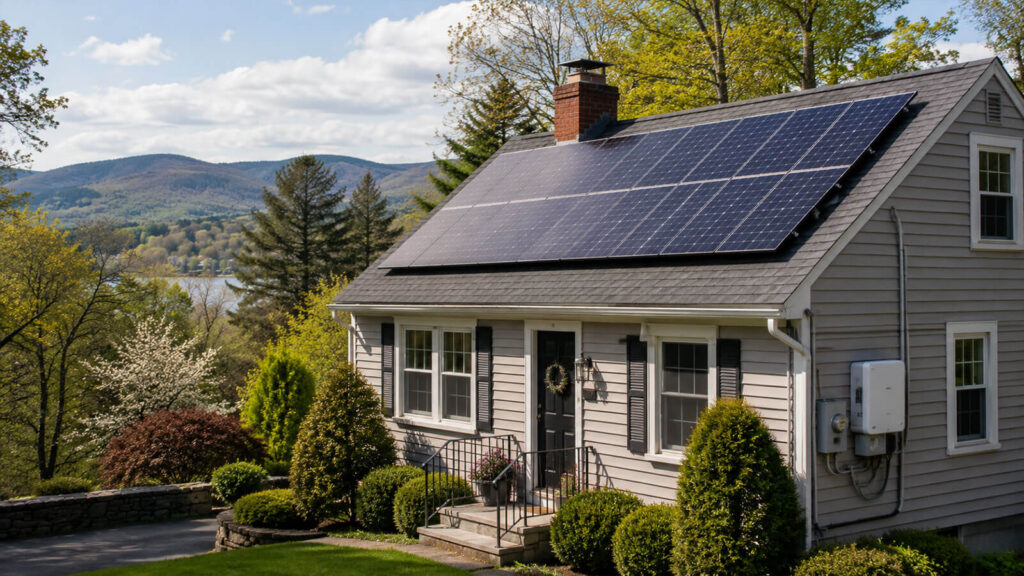
Solar panels can be a smart upgrade on a Hudson Valley home, but the part that frustrates people is rarely the panels themselves. The delays usually start before anyone gets on the roof: permit questions, electrical review, utility requirements, and the small surprises that show up once an older house is inspected closely. On paper, it looks like a straightforward efficiency project. In practice, it can turn into a coordination problem if the home’s electrical system, roof condition, or documentation is not ready.
That’s why solar permit delays are worth understanding before a project begins. A lot of the avoidable holdups come from issues that homeowners do not think of as “solar problems” at all. A tired electrical panel, a roof with aging flashing, or an attic that has already been patched together a few times can slow the process down fast. If you are comparing upgrade options and want to avoid that kind of drift, it helps to think beyond equipment and look at the house as a whole. In many cases, homeowners start with electrical contractors in Westchester County because the panel and service details are what stall the review first.
Why solar permits take longer than homeowners expect
Solar projects usually involve more than one checkpoint. The installer may need local building approval, electrical sign-off, and utility interconnection approval before the system can be energized. Each step can trigger questions if the home has older wiring, insufficient panel capacity, or incomplete records. That is especially common in Westchester, where many homes were built long before today’s electrical loads were part of the picture.
What catches people off guard is that permit delays are often about documentation, not workmanship. A municipality may want clearer site plans. An inspector may want panel labels, load calculations, or proof that the service equipment is adequate. The utility may ask for revisions to the interconnection paperwork. None of that means the project is doomed, but each missing piece adds days or weeks.
Homeowners sometimes assume the installer will handle everything without much input. Usually, the contractor can manage the process, but the house still has to cooperate. If a property has known issues with the panel, the service entrance, roof age, or grounding, it is better to surface those early than to discover them midway through review.
The electrical system is usually the first place delays show up
If a solar permit gets bogged down, the electrical side is often where the review turns more detailed. Contractors and inspectors typically look at panel capacity, breaker space, service size, grounding, and whether the existing equipment can handle the added system safely. Homes with older panels are especially likely to need upgrades, even if the rest of the house seems fine.
There is a common homeowner assumption that “if the lights work, the panel is fine.” That is not how solar reviewers think. They are looking at capacity and code compliance, not just whether the house is functioning day to day. A panel that has been working for decades may still be too small, too crowded, or too outdated to support a new array without modifications.
Sometimes the delay is not a full replacement but a service correction, a subpanel addition, or labeling work that brings the system up to current standards. Those are not glamorous fixes, but they often clear the way faster than trying to push through with a marginal setup. For bigger projects that involve multiple trades, Westchester County project coordination help can also make a difference because sequencing matters more than most people realize.
What electricians and inspectors usually check first
- Main service size and available capacity
- Condition of the electrical panel and breaker arrangement
- Grounding and bonding details
- Existing code issues that may be triggered by the new work
- Whether the utility interconnection requirements can be satisfied
If the panel is cramped, mislabeled, or already carrying signs of age, expect questions. In older Hudson Valley homes, especially those with prior remodels, it is not unusual to find a mix of original wiring and later additions that were never fully standardized. That kind of patchwork can slow a solar review even when the house otherwise looks well maintained.
Roof condition can quietly derail a project
Roof issues do not always stop a solar project outright, but they often create delays because nobody wants to mount a new system over a roof that may need repairs soon. Once panels are installed, fixing flashing, replacing sections of roofing, or correcting underlayment problems becomes more expensive and disruptive. That is why many experienced contractors want the roof evaluated before the permit is finalized.
Here is the counterintuitive part: the leak stain you see in the ceiling is often not directly under the actual roof problem. Water can travel along rafters, insulation, or framing before it shows up inside. That matters for solar because an area that looks “fine enough” from the ground may still have a flashing issue, soft decking, or a history of ice damming that needs attention first.
Homeowners in the Hudson Valley deal with freeze-thaw cycles, heavy rain, tree debris, and roof age that all work against long-term watertightness. If a home has older shingles, questionable flashing around vents, or gutters that routinely overflow, solar equipment can turn a manageable roof problem into a more complicated one. It is smarter to address those weak points before the install than to ask for roof work after the array is in place.
A useful companion resource is the roof inspection checklist for homeowners, especially if you are trying to decide whether the roof is ready for a solar timeline or needs another season of maintenance first.
Paperwork problems cause more frustration than most people expect
Permit delays are not always technical. Sometimes they are bureaucratic, and that is where homeowners get impatient because the house itself may be ready while the paperwork is not. Missing site plans, incomplete product spec sheets, unclear equipment layouts, or a mismatch between what was quoted and what was submitted can all stall the process.
This is one of those places where a cheap quote can become expensive in a sneaky way. If the installer has not done enough front-end planning, the permit package may need revisions after the municipality or utility pushes back. That is often when the project starts to feel slow and repetitive. Contractors who handle these projects well usually know which details reviewers care about and which shortcuts only create another round of questions.
The best-time-to-fix-this moment is before the package goes in. Once a permit is under review, every correction can add another queue, another email, or another site visit. That is especially true when the home has unusual roof lines, detached structures, or older utility service equipment that does not match the clean assumptions on a template drawing.
What usually happens when homeowners wait too long
Delays become expensive when small issues sit unresolved. A solar project that is paused for electrical upgrades may expose other needs the homeowner had planned to handle “later,” such as service panel replacement, grounding corrections, or roof repairs. The longer those items wait, the more likely the project gets reworked instead of simply approved.
In older houses, the real cost is often not the repair itself but the sequencing. If the roof needs attention after solar design has already started, or if the electrical panel needs an upgrade after permit submission, the schedule starts to stack up. That is when homeowners feel stuck in a cycle of revisions instead of progress.
Another hidden risk: some quick fixes are only good enough to get past the first review. A temporary labeling change or a minimum-panel patch may satisfy the paperwork, but it can also create a future bottleneck when the utility or inspector asks for something more substantial. Experienced contractors usually try to solve the underlying issue once, rather than make the system look ready on paper while leaving the weak point in place.
How to reduce the chance of permit delays
The goal is not to make the project perfect. It is to remove the obvious friction before it starts. A few practical steps can make a real difference:
- Have the electrical system reviewed early, especially if the panel is older.
- Check roof age, flashing, and visible wear before solar design is finalized.
- Make sure property records, permits, and previous upgrades are easy to document.
- Ask how the installer handles municipal corrections and utility back-and-forth.
- Do not ignore detached garages, workshops, or outbuildings if they affect the electrical layout.
That last point matters more than homeowners think. In the Hudson Valley, lots of properties have detached garages, sheds with power, long private drives, or older additions that were wired separately over time. Those features can complicate the review even when the main house seems simple. Reviewers and contractors notice them quickly because they affect load calculations and site planning.
If the project involves multiple moving parts, homeowners often benefit from looking at trusted contractors in Westchester County who are used to coordinating electrical, roofing, and permitting issues instead of treating each one in isolation.
When a delay is a warning sign, not just an inconvenience
Some delays are normal. Others point to a house that needs work before it is ready for solar. If the permit keeps getting kicked back for the same reason, or if the electrical review keeps uncovering old issues, that is usually the house telling you something. The same goes for roof concerns that keep resurfacing during design or inspection. A project that keeps circling the same weak spot is often not a paperwork problem anymore; it is a scope problem.
That is where homeowners can save money by pausing and reassessing instead of forcing the timeline. The temptation is to keep moving because the system is already designed, but a rushed install on an unprepared home tends to produce extra costs later. And later is usually worse: harder access, more labor, more coordination, and more frustration.
Good contractors tend to focus first on the items that protect the system long term: electrical safety, roof integrity, and clean approval path. That is not overcautious. It is how you keep a solar upgrade from turning into a patchwork of minor corrections after the fact.
Frequently Asked Questions
What usually causes solar permit delays in Westchester County?
The most common causes are electrical panel issues, incomplete permit documents, roof condition concerns, and utility interconnection requirements. Older homes can also trigger extra review if the existing service equipment is outdated.
Does every solar project require an electrical upgrade?
No, but many homes need some kind of electrical correction before approval. That might be a full panel replacement, added capacity, better labeling, or service work to meet current code requirements.
Should I replace the roof before installing solar?
If the roof is near the end of its useful life or already showing flashing or shingle problems, it is usually smarter to address it first. Removing panels later is costly and inconvenient.
Why does the utility review slow things down?
Utilities check interconnection paperwork, system sizing, and compliance details before allowing the system to operate. If anything in the paperwork is unclear or incomplete, the review can go back and forth for a while.
Can a homeowner speed up the permit process?
Yes. Having records ready, identifying roof or electrical issues early, and working with a contractor who understands the local process can remove a lot of avoidable delay.
What should I do if my solar project keeps getting delayed?
Ask which issue is actually holding the permit up. If the same electrical, roof, or documentation problem keeps appearing, it may need to be fixed before the project can move forward cleanly.
Solar can be a strong investment, but the smoothest projects usually start with an honest look at the house, not just the equipment. If you want to make a confident decision and avoid expensive rework, it helps to work with local professionals who understand how Hudson Valley homes, permits, and weather conditions really affect the job. For more homeowner guidance, explore the HV Trades home improvement resources or connect with the right local experts before the project gets too far down the road.