

By early spring, a lot of Hudson Valley decks and patios start showing the same telltale signs: popped nails, tired stain, slick algae on shaded boards, a stair tread that suddenly feels a little soft underfoot. After a winter of snow loads, freeze-thaw cycles, and plenty of meltwater, outdoor spaces rarely come through untouched. In Dutchess County, Putnam County, and Westchester County, that tends to show up fastest on older wood decks, stone patios, and the masonry steps that connect everything together.
That is why spring deck prep Hudson Valley homeowners do now matters. A little attention before the first real warm stretch can save you from bigger repairs later, and it can also make the space feel usable again instead of half-finished and frustrating. Many homeowners assume the deck is fine if it “looked okay in February.” Usually, that is not the standard you want.
What winter usually does to Hudson Valley decks and patios
Winter does not damage every outdoor surface in the same way, but the pattern is familiar. Water gets into small cracks. It freezes. It expands. Then it thaws, settles, and does it again. That cycle is rough on boards, railings, fasteners, mortar joints, patio pavers, and concrete edges.
In a lot of Hudson Valley homes, especially older colonials, split-levels, and ranches with long-used backyard spaces, the wear is cumulative. One season rarely ruins a deck. Several seasons without maintenance often do the real work.
One thing that catches people off guard is how much shade and tree cover changes the picture. A deck under heavy maples or oaks may stay damp longer in spring, which means mildew, slick surfaces, and faster finish failure. If your property tends to hold moisture, the prep list gets a little longer.
Start with a slow visual inspection
Before you clean anything, walk the deck and patio the way a contractor would. Not fast. Not just from the back door. Go board by board, step by step, and look at the surfaces where wear actually happens.
What to look for on the deck
- Loose or raised boards
- Splitting at board ends
- Fasteners that have backed out
- Railings that wobble or flex more than they should
- Stairs that feel uneven or soft
- Dark staining around post bases, ledger boards, or corners
- Flaking stain or finish that no longer beads water
If you see a few loose boards or minor surface issues, that may be a case for help with small deck repairs before outdoor season. But if the structure itself feels questionable, that is a different conversation.
What to look for on patios and walkways
- Cracked or shifting pavers
- Settled edges near steps or transitions
- Open mortar joints
- Spalling concrete
- Standing water after a storm
- Weeds or moss trapped between stones
For patios with stone, brick, or poured concrete, spring is the time to catch problems before they turn into trip hazards or drainage headaches. Homeowners in areas with older hardscaping often end up calling masonry pros for cracked patios, steps, and walkways once the freeze-thaw damage becomes obvious.
Clean first, repair second
It is tempting to jump straight to staining, sealing, or decorating. That usually backfires. Spring cleaning should come before any cosmetic work, because dirt and debris hide the very problems you need to find.
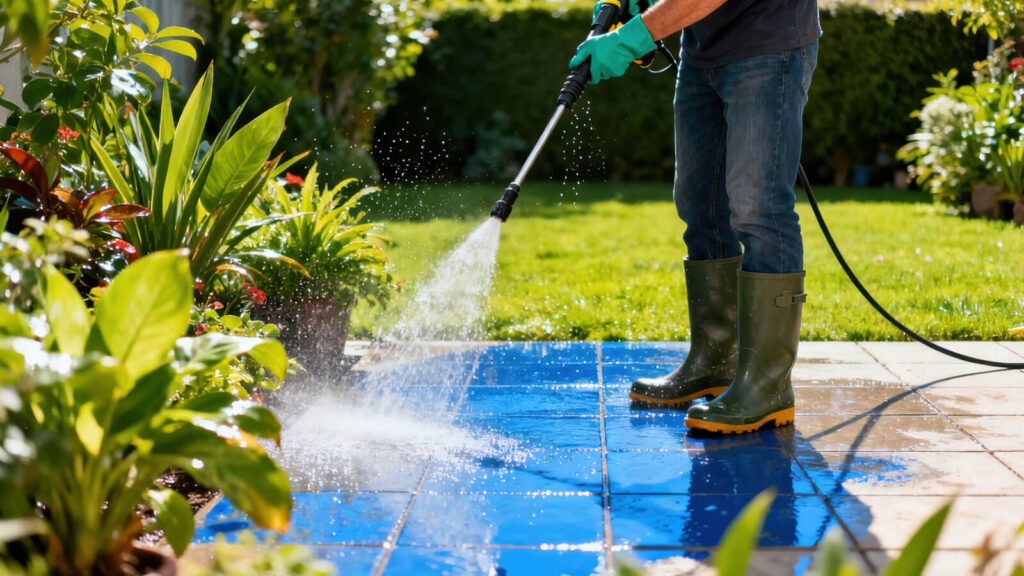
Clear off leaves, acorns, twigs, and the layer of grit that collects near railings and corners. Sweep between boards if possible. Wash off mildew and pollen buildup, but do it gently. High pressure can scar wood, open up older finishes, and even push water where it does not belong. That matters on older Hudson Valley decks that already have years of weathering behind them.
For patios, clean out joints and edges as well. If pavers have shifted, cleaning them first makes the movement easier to see. If a section keeps washing out or settling, there is usually a drainage or base issue under the surface, not just a surface problem.
Check drainage before you spend money on finishes
This is one of the easier things to overlook. A deck can be structurally sound and still fail early if water is constantly sitting near it. The same is true for patios, especially where downspouts, grading, and spring runoff all meet in one spot.
In Hudson Valley yards, roof runoff often becomes a spring issue before anyone notices. Meltwater from higher rooflines, clogged gutters, or short downspout extensions can send water toward deck posts, patio edges, and walkways. If water pools after a light rain, the surface is telling you something.
It helps to look beyond the deck itself. Many homeowners pair outdoor prep with gutter services to manage spring runoff because roof drainage and deck damage often show up together. If the yard slopes toward the patio or the soil stays wet for too long, surrounding landscaping services that improve outdoor living areas can make a real difference too.
Small drainage fixes now are usually cheaper than replacing a rotted post, a heaved paver section, or a washed-out stair landing later.
Wood decks need a different kind of spring prep
Wood decking in the Hudson Valley takes a beating from snow shoveling, salt tracked in from nearby walkways, UV exposure once the weather breaks, and the lingering dampness that comes with spring. If the deck is stained or sealed, this is the time to see whether the finish still has life left in it.
A simple water test helps. Sprinkle a little water on the boards. If it beads up, the seal is still doing something. If it soaks in quickly, the surface may need attention soon.
Before refinishing, check for:
- Dry rot around rail posts and stair edges
- Splintering boards
- Areas where the stain has worn away unevenly
- Rusty or corroded fasteners
- Board movement near the house ledger
If the deck is older, the biggest issue is not always appearance. It is hidden wear around connections. A board can look fine from above and still be compromised where it meets framing or trim. That is where a local trade pro earns their keep.
Patios, pavers, and masonry: spring damage is usually subtle at first
Patios often fail in small ways before they fail in obvious ones. A paver settles a half-inch. A step edge opens up. Mortar begins to crumble at the corners. Then one wet weekend later, somebody notices the slab seems to hold water in a new spot.
That is why spring inspection matters more than cosmetic cleanup. In the Hudson Valley, where many homes have older hardscape work and additions built over several decades, patios are often a patchwork of materials. You may have original concrete steps, later-installed pavers, and a walkway that was repaired once already. That is normal. It just means you have to inspect each piece separately.
Watch for transitions between surfaces. Deck to patio. Patio to step. Walkway to driveway apron. Those junctions are where movement starts.
If you are planning to host often this season, it is worth addressing the parts that affect daily use first. A slightly uneven landing or a cracked front edge might seem minor until guests start noticing it every time they walk out the back door.
Safety checks homeowners should not skip
Spring prep is not only about looks. It is also about using the space without worrying about it.
Pay extra attention to:
- Rail height and stability. Wobbly railings are not something to put off.
- Stair tread condition. Soft, slippery, or uneven steps are a real fall risk.
- Surface traction. Shaded decks and patios can stay slick long after they dry.
- Lighting. Burned-out step lights and dark corners matter more than people think.
- Emergency exits. Back doors and deck stairs should open freely and stay clear.
Homeowners sometimes focus on staining and furniture before they fix the things people actually step on. That order tends to create avoidable problems. Safety first is not a slogan here. It is practical.
What can wait, and what should be fixed now
Not every spring issue needs a full rebuild. Some problems can wait a season or two if they are being monitored. Others should be handled before you start using the space regularly.
Usually worth fixing now
- Loose railing sections
- Soft or damaged stair treads
- Boards with visible rot
- Cracked or sinking patio edges
- Trip hazards at transitions
- Drainage that sends water toward the structure
May be able to wait briefly
- Cosmetic stain fading
- Minor surface discoloration
- A few isolated paver joints that need refill
- Small areas of mildew after cleaning
The hard part is knowing which category you are actually looking at. A surface problem can hide a deeper one, especially on older decks where repairs have happened in stages. That is why a homeowner-friendly inspection is useful, but not always enough.
Budget-conscious prep that still makes a difference
Not every Hudson Valley homeowner wants a full rebuild before May. That is fair. Outdoor maintenance has a way of competing with roof work, boiler issues, tree cleanup, and the rest of the house.
If you are trying to stay cost-conscious, focus on the fixes that protect the structure first:
- Replace damaged boards, not the whole deck
- Re-seat loose pavers before they shift further
- Re-caulk or patch problem joints where appropriate
- Clean and clear drainage paths
- Handle small repairs before the season gets busy
A modest repair in April is usually easier to schedule and less expensive than an urgent fix in June, when everyone wants their outdoor space finished yesterday. That timing difference matters more than people expect.
Why Hudson Valley homes need a slightly different approach
Hudson Valley housing stock is a mix of eras and building styles, and that shows up outdoors. Some homes have newer composite decks with older masonry patios. Others have wood decks built onto homes with aging siding, older flashing details, or drainage patterns that were never ideal to begin with.
In Dutchess County, you see plenty of long-used backyard decks that have been repaired in stages. In Putnam County, tight lots and wooded properties often mean heavy shade and slower drying. In Westchester County, many homes deal with mature landscaping, older additions, and hardscape transitions that have seen a lot of freeze-thaw cycles over the years. The regional pattern is not complicated. It is just familiar.
That familiarity is useful. It tells you where to look first.
When to call a local pro
If you are seeing movement, rot, or anything structural, it is time to bring in someone who works with decks and outdoor living spaces regularly. A good local contractor can tell the difference between a maintenance fix and the start of a larger problem.
Call a pro if you notice:
- Soft spots near the house or support posts
- Railings that shift under pressure
- Stairs that feel uneven or unstable
- Water intrusion near the ledger board
- Patio settling that keeps getting worse
- Cracks or heaving that affect safe use
This is also the point where many homeowners start looking for deck and patio construction contractors in Dutchess County because the project has moved beyond simple maintenance. If the issues are smaller, you may only need help with small deck repairs before outdoor season. The right call depends on what is actually happening underfoot, not just how the space looks from the back door.
For homeowners who are already planning broader yard improvements, it can make sense to coordinate outdoor repairs with adjacent work such as fencing, drainage, or planting changes. That kind of planning keeps the finished space from feeling pieced together.
HV Trades takeaway
Spring deck prep in the Hudson Valley is less about making outdoor spaces look perfect and more about getting ahead of the damage winter leaves behind. A careful inspection, basic cleaning, drainage checks, and a realistic look at safety issues go a long way. If you catch problems early, you usually have more options, better timing, and fewer surprises.
For many homeowners, the biggest mistake is waiting until the first cookout to discover the deck is not really ready. By then, contractor schedules are tighter, repairs are more rushed, and the cheap fix you might have made in March has turned into a bigger one.
If your deck or patio needs more than a quick cleanup, that is normal. Hudson Valley homes have a lot of character, and sometimes that character comes with a little weathered honesty.
FAQ
How do I know if my deck needs more than a basic spring cleaning?
If you find soft spots, loose railings, popped fasteners, or boards that move underfoot, cleaning is only part of the job. Cosmetic wear is one thing. Structural movement is another.
Should I power wash my deck in spring?
Sometimes, but lightly. Too much pressure can damage wood fibers and open up older finishes. A gentler wash is often better, especially on aging decks common in older Hudson Valley homes.
What is the biggest patio problem after winter freeze-thaw cycles?
Settling and shifting. Pavers, steps, and concrete edges often move before they crack dramatically. Once water gets into weak joints, the damage tends to spread.
Is it worth repairing small issues before outdoor season starts?
Usually yes. Small repairs are often less expensive and easier to schedule in spring. Left alone, they can turn into safety issues or larger structural work later in the season.
How often should a Hudson Valley deck be inspected?
At least once each spring, and again after any major storm or severe winter. If the deck is older, shaded, or already showing wear, a midseason check is smart too.
Need Help With a Home Project?
HV Trades connects homeowners across Dutchess, Putnam, and Westchester Counties with trusted local contractors.