

Why Ants Keep Coming Back in Hudson Valley Homes — and What Usually Fixes the Problem for Good
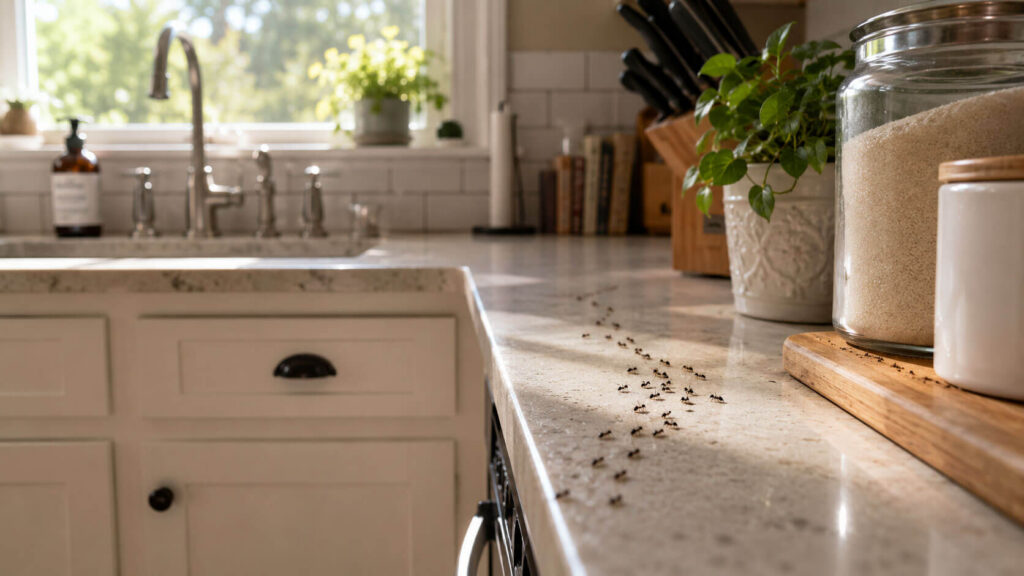
That line of ants crossing the kitchen counter in April is rarely a random annoyance. In older Hudson Valley homes, it usually means something in the house is giving them a reason to keep showing up: moisture, hidden wood damage, easy entry points, or all three. The frustrating part is that the visible ants are often the smallest part of the problem.
A lot of homeowners reach for spray first, which makes sense if you just want the trail gone. But if ants are returning every spring, the real issue is usually somewhere contractors would look immediately: around the foundation, under sinks, near sill plates, in damp trim, or where exterior drainage is allowing moisture to linger. If you’ve also been dealing with damp basement conditions or runoff near the foundation, it may be worth checking spring drainage problems around older homes before treating the symptom and missing the cause.
Why spring ant problems are so common here
Spring is when colonies get active again after winter, but Hudson Valley homes also tend to create ideal conditions for ants without anyone realizing it. Freeze/thaw cycles open tiny cracks in mortar, trim, and siding. Heavy rain pushes moisture into basements and crawlspaces. Mature trees and mulch beds keep exterior areas damp longer than many homeowners expect. And older homes, especially the ones with stone foundations or aging framing, often have more small access points than they appear to from the street.
Ants are opportunistic. They do not need a dramatic opening. A hairline gap around a pipe penetration, loose flashing, rotted window trim, or a tired utility entry point is often enough. That is one reason the “just spray the ants” approach fails so often. The trail disappears for a few days, then another line appears from the same hidden entry path.
What homeowners often misread as a simple ant problem
Not every ant issue is the same, and this is where people get into trouble. Sugar ants in the kitchen are one thing. Carpenter ants are another. Carpenter ants do not eat wood the way termites do, but they often nest in damp or softened wood, which means the ant problem may actually be pointing to a moisture problem or hidden decay.
That is the part many homeowners miss. The ants are not always the core issue. They can be a symptom.
A contractor or pest professional will usually try to answer a few questions right away:
- Where is the moisture coming from?
- Is there soft wood, staining, or swelling around trim, sills, or subfloor areas?
- Is there an exterior gap near the foundation, siding, or roofline?
- Are the ants trailing from one repeat area or popping up in multiple rooms?
- Is the basement, crawlspace, or attic giving them a hidden path?
That first inspection matters because the wrong treatment can waste time and money. If there is damaged wood or a persistent moisture source, baiting and spraying alone usually buys only a short break.
The hidden conditions that keep ants coming back
In the Hudson Valley, recurring spring ant activity often comes down to the same handful of issues. Some are obvious once pointed out. Others are easy to overlook because they sit outside the daily line of sight.
Moisture around the foundation
Damp soil, poor grading, clogged gutters, and short downspouts can all keep the perimeter of the house wet. That moisture does not just invite pests. It can soften wood, stress foundation materials, and create a slow cycle where minor openings become more attractive every season. This is one reason pest issues and water issues often overlap in the same houses.
Rotten or weathered exterior wood
Window trim, fascia, sill plates, porch framing, and deck connections are all common trouble spots. Once wood starts to soften, ants are far more likely to establish activity nearby. The repair is not always major, but it does need to be specific. Painting over decay or sealing around it without correcting the damaged material usually fails.
Gaps around utility lines and mechanical penetrations
HVAC lines, plumbing penetrations, hose bibs, and cable entries often get sealed poorly over time. On older homes, those little gaps add up. Contractors often find that ants are entering through places homeowners would never suspect because the trail shows up in the kitchen or bathroom, not at the exterior opening.
Basement and crawlspace moisture
High humidity, condensation, and poor ventilation can support both pest activity and wood deterioration. If the lower level of the home smells damp or shows recurring staining, pest control alone may be treating the wrong layer of the problem.
What a good contractor or pest technician checks first
The best professionals do not just ask where the ants are seen. They follow the path. That usually means checking exterior entry points, the foundation line, landscaping contact points, drainage patterns, and the most likely moisture sources first.
In practical terms, that might include inspecting:
- foundation cracks and mortar joints
- trim and sill areas around windows and doors
- gutter discharge and downspout placement
- mulch touching siding or framing
- leaky hose bibs or spigots
- wet basement corners or crawlspace edges
- attic or roofline conditions if ants are appearing upstairs
One counterintuitive thing to keep in mind: the stain on the wall or ceiling often is not directly below the real problem, and the same idea applies to pests. The spot where ants appear is not always the spot where they are entering. They may be nesting in a damp wall cavity, then traveling through framing or utility chases before you ever see them.
That is why repeated DIY spraying can become a cycle. You eliminate the visible trail, but not the nesting site or the moisture source feeding it.
Why quick fixes often fail
There is nothing wrong with trying to reduce visible ant activity quickly. The problem is when a quick fix gets mistaken for a real fix. Caulk alone rarely solves a spring ant issue if the wood behind it is already compromised. Spray alone rarely solves it if the colony is nesting nearby. And store-bought ant traps can be ineffective when the colony is larger, the species is misidentified, or the real entry point is outside the home.
In older homes, patching over the symptom without understanding the surrounding conditions often leads to repeat work. Contractors see this constantly: the same kitchen corner gets treated every spring because no one addressed the outside grade, the leaking gutter, the bad trim joint, or the hidden water damage behind the wall.
If you are dealing with repeat activity in different parts of the house, that is usually a sign the issue is broader than one ant trail. For homeowners in counties with a lot of older housing stock, this is where local expertise matters. The pattern may look simple, but the repair path is often not.
If the issue keeps resurfacing, it may be time to compare Dutchess County pest control services or look into local pest control contractors who understand the difference between a nuisance trail and a structural entry problem.
When the problem may be bigger than pest control
Sometimes ants are the first visible warning that a home has a moisture or wood issue that has been quietly developing. That does not mean every ant sighting is serious. But repeated spring activity in the same area, especially near soft trim, basement corners, or window framing, deserves a closer look.
Contractors often get concerned when homeowners mention any of the following:
- wood that feels soft or sounds hollow
- bubbling paint or swollen trim
- musty basement odors
- water staining near the foundation or sill
- ant activity that returns after treatment
- mud, moisture, or dark staining around exterior openings
Those signs do not prove a major repair is needed, but they do suggest the problem is not just about pests. In some houses, a pest issue is the first clue that drainage, sealing, or carpentry work needs attention before damage spreads.
What homeowners can do before calling someone in
There are a few practical steps that can help you avoid paying twice for the same problem.
- Check whether gutters are overflowing or dumping water close to the foundation.
- Look for damp mulch or soil packed against siding.
- Inspect around sinks, dishwashers, and laundry areas for slow leaks.
- Watch for ant trails after rain, especially near basement windows and utility penetrations.
- Take note of where the ants return each spring, not just where they were first seen.
Do not aggressively seal everything before you know where the ants are coming from. Sealing can trap activity inside wall cavities or make the trail harder to trace. That is one reason experienced technicians often want to inspect first, treat second, and recommend repairs third.
If you are in the northern part of the region and the problem keeps showing up despite treatment, it may help to compare pest control contractors in Putnam County. And if your home is in a more densely built area with older framing and repeat seasonal pest pressure, Westchester homeowners dealing with repeat ant problems often face the same pattern: the visible ants are the tip of a much more local, much more annoying issue.
How to think about prevention without overdoing it
Good prevention is not about sealing every crack in a panic. It is about reducing the conditions ants use to get in and stay comfortable. That means keeping moisture under control, keeping exterior wood in decent shape, and making sure the home’s drainage is doing its job.
In practical terms, that usually means:
- extending downspouts farther from the house
- repairing loose gutters and fascia before rot spreads
- keeping mulch away from siding
- replacing damaged trim instead of painting over it
- addressing basement dampness instead of ignoring it season after season
- trimming vegetation that touches the house
These are not dramatic upgrades, but they do change the conditions that let ants keep returning. That is the part homeowners tend to underestimate. A house does not need to be visibly damaged to be attractive to pests. It only needs to be slightly damp, slightly open, and slightly neglected in the wrong places.
Frequently Asked Questions
Are spring ants always a sign of a serious problem?
Not always. Sometimes it is just seasonal activity. But if ants keep returning in the same area, especially near damp wood or basement spaces, there is usually a reason worth finding.
Do carpenter ants mean I have termites?
No. Carpenter ants and termites are different. Carpenter ants do not eat wood, but they often nest in damp or damaged wood, which can point to rot or moisture problems that need attention.
Why do ants keep coming back after I spray them?
Spraying usually handles the visible trail, not the nest, entry point, or moisture source. If those conditions stay in place, the ants often return.
Should I seal cracks before treating for ants?
Not blindly. Sealing is useful, but if you seal too early you can make it harder to find the source. It is usually smarter to identify the entry path first.
Can gutter or drainage problems really affect pest activity?
Yes. Water near the foundation can soften wood, raise humidity, and create the kind of damp conditions ants prefer. Drainage and pest problems often overlap.
When should I stop handling it myself?
If the ants keep returning after treatment, if you see wood damage, or if the issue seems tied to moisture or a basement area, it is time to bring in a professional who can look at the whole picture.
Spring ant problems are easy to dismiss until they turn into repeated repairs, damaged trim, or a bigger moisture issue hiding in plain sight. The smartest next step is usually not the fastest one. It is the one that identifies why the ants are there in the first place and helps you avoid paying for the same problem again next season.