

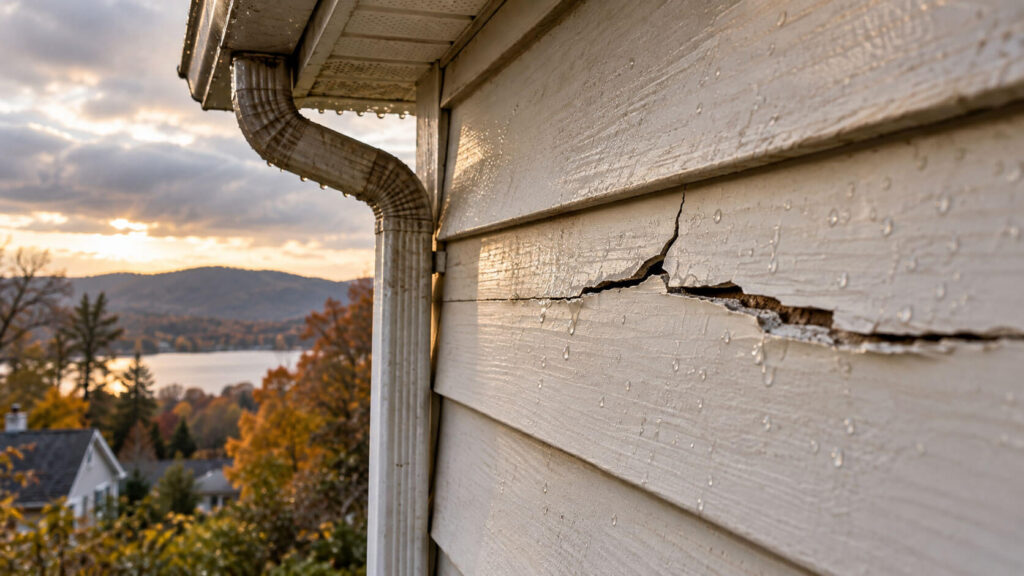
Why Small Siding Cracks Turn Into Bigger Water Problems on Hudson Valley Homes
A hairline crack in siding rarely looks urgent. It is easy to shrug off, especially when the house still looks fine from the street. But once water starts getting behind the exterior skin of a home, the repair conversation changes fast. What looked cosmetic can turn into rot, insulation damage, stained sheathing, or a basement moisture problem that seems unrelated until the bills start coming in.
That’s one reason experienced contractors do not look at siding cracks in isolation. They check the roof edge, flashing, gutters, grading, and the wall assembly as a system. On older homes especially, one weak point usually points to another. If your house also has overflow issues or poor runoff, the problem may be bigger than the siding itself. It is often worth looking at siding and gutter damage after a storm before a minor repair becomes a recurring one.
Why siding cracks deserve more attention than most homeowners give them
Not every crack means structural trouble. Vinyl can expand and contract, wood can dry out and split, and even fiber cement can show damage after a hard freeze or wind-driven storm. The issue is not just the crack itself. It is what that opening allows: wind-driven rain, pest entry, hidden moisture, and repeated wetting and drying behind the wall.
In the Hudson Valley, that matters more than many people realize. Freeze-thaw cycles widen weak points. Mature trees can trap moisture and shorten the drying time of exterior walls. Older houses with layered additions often have mixed materials, which means different siding sections move differently over time. The result is a small defect that keeps reopening even after a quick patch.
One counterintuitive thing contractors notice all the time: the visible crack is often not the real problem. The water may be entering at a failed corner trim, a poorly integrated window detail, or a gutter overflow point higher up. The siding is just where the damage becomes obvious.
What usually causes siding cracks in local homes
In this region, siding damage is often a mix of age, weather, and water management. The most common causes are not mysterious, but they are easy to misread.
- Seasonal expansion and contraction in vinyl or composite materials
- Impact from wind, branches, or flying debris during storms
- Failed caulking at trim, joints, or penetrations
- Water intrusion that weakens the substrate behind the siding
- Improper installation around windows, doors, or transitions
- Movement in older framing or settlement in aging homes
Homeowners often assume the crack appeared because the material is bad. Sometimes that is true. But just as often, the material is reacting to a bigger issue. If siding keeps cracking in the same area, the real clue is usually underneath the surface, not on it.
What contractors usually inspect first
A solid exterior assessment starts with the roofline and drainage, not the visible crack. That may sound backward, but it saves time and prevents bad repairs. If water is coming from above, patching the siding alone is a temporary fix at best.
Contractors often begin with the roof edge, gutters, soffit, and fascia because those details affect how water moves off the house. A gutter that is sagging, undersized, or dumping water behind the wall can damage siding quickly. If runoff is poor, it is worth looking at gutter services that help keep water off your siding before damage spreads into framing or trim.
They will also check flashing around windows, doors, and roof intersections. That is where a lot of homeowners get tripped up. A crack near a window is not always a siding problem. It may actually be a flashing failure that has already soaked the wall cavity.
How a “small” crack can become an expensive repair
The real cost is usually not the patch itself. It is the delay.
Once water enters behind siding, it can sit against the sheathing long enough to start softening wood, rusting fasteners, or feeding mold in enclosed wall spaces. In a humid summer, trapped moisture can linger. In winter, that wet material freezes, expands, and breaks down further. By the time the interior shows a stain, the damage may already be beyond a cosmetic repair.
That is why experienced contractors take recurring cracks seriously. If the same section keeps opening up, they usually want to know whether there is a drainage issue nearby. On many homes, especially those with grading that slopes toward the house, the root cause is not just exterior wear. It is water pressure and runoff. For that reason, homeowners dealing with repeated dampness should also consider drainage problems around the exterior of the home before investing in another surface-level fix.
Where homeowners usually go wrong
The most common mistake is treating siding damage like a patch-and-forget problem. Sealant, caulk, and filler can buy time, but they are not a substitute for finding the source. In fact, overcaulking can trap water where it needs to escape, which makes hidden damage harder to see.
Another common issue is replacing only the visibly damaged board or panel and assuming the wall is cured. If the flashing detail is wrong or the gutter is overflowing, the new piece may fail the same way. That is especially frustrating for homeowners because it creates the impression that the repair was done poorly when the real issue is upstream.
DIY repairs also get risky when the home has layered materials, height limitations, or signs of hidden moisture. If a crack is near a roofline, window head, chimney area, or second-story wall, the stakes go up. At that point, a simple ladder-and-caulk approach can miss the true path of water.
Signs the damage is more than cosmetic
There are a few warning signs that usually tell a contractor the problem is deeper than a surface crack:
- Soft or spongy areas around the crack
- Interior staining that keeps returning after rain
- Peeling paint or bubbling finish nearby
- Warped trim, swollen boards, or loose fasteners
- Visible gaps at corners, window trim, or roof-to-wall transitions
- Mildew smell or dampness on the interior side of the wall
If those signs show up, the next step is not a cosmetic touch-up. It is a closer inspection of the wall assembly. Sometimes contractors will find damage from a problem nowhere near the crack itself, including roof damage after a Hudson Valley storm that sent water down into the wall cavity.
Why Hudson Valley homes are especially vulnerable
Older homes across Dutchess, Putnam, and Westchester often have a mix of original construction and decades of piecemeal updates. That means the siding may be newer than the trim, or the windows may have been replaced without fully integrating the surrounding flashing. It works fine for a while, then one storm exposes the weak spot.
Wooded lots add another layer of stress. Branch contact, debris buildup, and slow-drying shaded walls make siding more likely to fail earlier. Long driveways and rural settings can also delay how quickly homeowners notice issues, because problems are not always visible from the street. By the time someone walks around the back corner of the house, the damage may already be active.
Basement moisture changes the picture too. If the house already has seepage, efflorescence, or recurring dampness below grade, exterior siding problems may be part of the same water-management failure. In those cases, contractors often widen the conversation to include foundation and waterproofing services because the wall and foundation systems are usually connected by runoff, grading, and drainage patterns.
What a practical repair plan usually looks like
A good repair plan does not start with replacement materials. It starts with source control.
First, the contractor identifies where water is getting in or where the siding is being stressed. Then they decide whether the fix is local, such as replacing a damaged section and correcting a trim detail, or broader, such as adjusting gutter flow, improving flashing, or addressing a drainage problem.
That sequence matters. Cheap repairs often fail because they address the symptom, not the cause. A patch on a cracked panel may look clean for a season or two, but if the wall keeps taking water, the hidden damage keeps growing.
In many cases, a proper fix will involve some combination of:
- Replacing damaged siding or trim sections
- Inspecting and repairing flashing at openings
- Correcting gutter overflow or downspout discharge
- Improving grading or drainage near the foundation
- Checking for rot in sheathing or framing
- Sealing only the joints that are meant to be sealed
When to stop guessing and bring in a contractor
If the crack is isolated and clearly cosmetic, you may only need a minor repair. But if the area is recurring, wet after storms, or tied to a window, roof edge, or basement moisture issue, it is worth getting a professional opinion. The goal is not to sell more work. The goal is to avoid paying for the same repair twice.
A contractor who understands exterior systems will usually look at the whole path of water, not just the damaged board. That perspective matters because the most expensive problem is often the one homeowners never see until it spreads behind the siding or into the framing.
Frequently Asked Questions
Can a small siding crack really let in enough water to matter?
Yes. A small opening can admit repeated wind-driven rain, especially during storms. The damage adds up over time, even if the crack looks minor from the outside.
Should I just seal the crack myself?
Sometimes a short-term seal makes sense, but only if you are sure the crack is cosmetic. If there is nearby staining, swelling, or recurring moisture, caulk alone usually just hides the problem.
How do I know if the problem is siding or something above it?
Look for clues near the roof edge, windows, trim joints, and gutters. Water often enters higher than where it shows up. That is one of the most common misreads homeowners make.
Are older homes more likely to have recurring siding issues?
Usually, yes. Older homes often have mixed materials, aging flashing, and layers of past repairs. Those combinations can create weak points that keep reopening.
Do gutters really affect siding that much?
Absolutely. Overflowing or poorly aimed gutters can dump water onto siding, trim, and the wall below. In a wet season, that can turn a minor exterior flaw into a bigger repair.
When does siding damage become a structural concern?
Once there is rot in sheathing, framing, or a sustained moisture problem behind the wall, it stops being cosmetic. That is when a professional inspection becomes important.
If you are trying to decide whether a siding crack is just wear and tear or the start of a bigger water issue, the safest move is to get a local contractor’s perspective early. A careful inspection now is usually easier, cleaner, and far less expensive than sorting out hidden damage later.
