

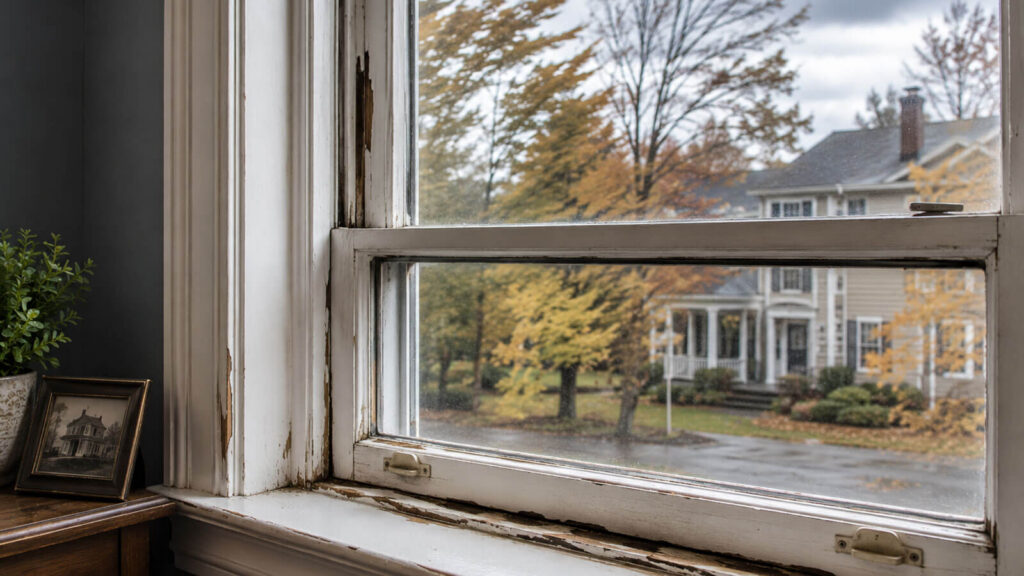
Why Your Windows Rattle in the Hudson Valley—and What It Usually Means
A window that rattles every time the wind picks up is easy to brush off as a nuisance. But in a lot of homes, especially older ones, that noise is the first clue that something is loose, worn, or no longer sealing the way it should. The trouble is that homeowners often assume the glass itself is the problem. More often, it’s the sash, the stops, the trim, or even the framing around the opening that’s moved just enough to let vibration in.
That matters because a noisy window is rarely just a noisy window for long. Once movement starts, air leaks usually follow. Then moisture starts finding its way in around the edges. In a region with freeze-thaw cycles, heavy wind, and older houses that have settled over time, that can turn a small annoyance into a recurring repair.
What rattling windows are usually telling you
Rattling is usually a sign that the window assembly has too much play in it. Sometimes that’s from worn weatherstripping or a loose latch. Sometimes the sash isn’t seating tightly in the frame anymore. And sometimes the real issue is outside the window unit entirely: loose trim, deteriorated casing, failed caulk, or shifting around the opening.
Contractors usually start by checking whether the problem is isolated to one window or showing up across several openings. If only one window rattles, the fix may be fairly straightforward. If a whole side of the house is affected, that often points to an exterior exposure issue, aging construction, or a framing problem that deserves a closer look. In storm-prone weather, it also helps to think beyond the window itself and look at the surrounding envelope, much like checking your exterior after wind-driven storms.
The counterintuitive part: the loudest window is not always the worst one. A window that rattles dramatically in a gust may simply have a loose stop or worn weatherseal. Meanwhile, a quieter window can be leaking air steadily and costing more in comfort and energy. Noise gets your attention; hidden leakage is usually what hurts over time.
The parts contractors inspect first
When a homeowner calls about a rattling window, the first inspection is usually practical and specific. A good contractor will not start with assumptions. They’ll check the latch, the sash fit, the condition of the weatherstripping, the condition of the caulk line, the trim around the opening, and any visible signs of water intrusion or rot.
On older Hudson Valley homes, the next thing to look for is movement. Houses that have settled over decades can leave windows slightly out of square. That does not always mean a major structural issue, but it does mean the opening may no longer hold the window as tightly as it once did. In some cases, what looks like a window problem is actually a surrounding wall or trim issue, which is why homeowners sometimes end up needing a general contractor for frame or trim repairs instead of just a window adjustment.
If the window is double-hung, contractors often check the balance system as well. When balances wear out, the sash can sit improperly or move more than it should. For casement windows, hardware alignment and operator wear are common culprits. On older units, broken seals and deteriorated glazing compounds can also contribute to vibration.
Why Hudson Valley homes are especially prone to this
Rattling windows are not rare in this region for a reason. Many homes are dealing with a mix of older wood windows, mixed-age replacements, and decades of seasonal movement. Add in mature trees, gusty winter storms, and houses with original framing that has seen a lot of temperature swings, and you get openings that rarely behave perfectly year-round.
Freeze-thaw cycles are a big part of the story. Wood expands and contracts. Caulk splits. Paint cracks. Fasteners loosen over time. Even a small gap around the frame can become more noticeable when winter wind pushes against the house. On homes with stone foundations or older framing, the movement can be subtle but persistent.
Another local reality: windows exposed to open fields, ridge lines, or long private driveways often take more wind load than homeowners expect. The side of the house that faces prevailing winds may show wear first, especially if the exterior trim or gutters are already in rough shape. In storm season, it is worth keeping an eye on roof and exterior damage after a storm too, because the same weather event that rattles windows can loosen fascia, flashing, or siding.
Common homeowner mistakes that make the problem worse
One of the biggest mistakes is treating rattling like a comfort issue instead of a maintenance warning. A bead of caulk or a strip of tape might quiet the sound for a while, but that does not address loose components, air leakage, or water entry points. Temporary fixes have their place, but they become a problem when they hide the real issue long enough for rot to develop.
Another common misstep is over-tightening hardware. Homeowners sometimes assume if the window is rattling, they should crank down the latch or add force somewhere. That can stress old sashes, warp hardware, or make the window harder to operate without actually improving the seal.
And then there is the classic assumption that replacing the glass will solve it. Often it won’t. The glass may be perfectly fine. The movement is usually coming from the frame, the sash fit, or worn perimeter materials. That is why window problems are so often misdiagnosed by people trying to solve them from the inside only.
When the fix is simple, and when it is not
If the issue is limited to worn weatherstripping, a loose latch, or minor hardware adjustment, the repair may be straightforward. That is the good-news scenario. But if the window frame is out of square, the surrounding trim is soft, or there is evidence of moisture damage, the repair becomes more involved.
Contractors generally get cautious when they see recurring caulk failure or paint bubbling around the opening. Those are not just cosmetic issues. They can indicate air and water movement that has been happening for a while. Once water gets behind trim or into framing, repairs are no longer about a quick adjustment. You may be dealing with rot remediation, structural repair, or eventually replacement of the unit and surrounding materials.
That is why delay is expensive with window issues. The longer loose components rattle, the more likely the opening is to let in water during storms. And once moisture gets trapped in wall assemblies, the repair bill can jump quickly.
What a smart repair approach usually looks like
A proper fix starts with identifying whether the problem is mechanical, structural, or environmental. That means checking the window operation, the seal, the trim, and the condition of the surrounding materials. In many cases, the best repair is not the most dramatic one. It may be a combination of hardware adjustment, weatherstripping replacement, new sealant, and minor trim work.
If the window is older and the opening is no longer square, a repair can still be worthwhile, but homeowners should go in with realistic expectations. Not every rattling window needs replacement. At the same time, not every noisy window should be “patched” indefinitely. If the unit is drafty, hard to operate, and repeatedly needing attention, replacement may be more cost-effective over the long run, especially before a second round of water damage starts.
This is where working with the right window and door contractors matters. A contractor who understands both repair and replacement can tell the difference between a window that needs tuning and one that is simply aging out of useful service.
Signs the issue is bigger than the window
If you notice more than one of these, the problem may extend beyond a simple adjustment:
- Visible gaps between trim and wall surfaces
- Paint cracking around the frame
- Soft wood or dark staining near the sill
- Drafts that you can feel even when the window is shut
- Condensation that keeps returning near the opening
- Difficulty locking or latching the window consistently
- Rattling that gets worse in multiple seasons, not just during storms
Those symptoms often point to a larger envelope problem. Sometimes the issue is isolated to the opening. Sometimes it is part of a broader exterior maintenance need involving siding, flashing, or nearby roof runoff patterns. Either way, it is the kind of thing homeowners are better off catching early.
Why cheap fixes often fail twice
There is a reason some window repairs seem to “work” and then fail again within a season or two. The underlying movement never got addressed. If the sash is loose, the frame is out of square, or water is deteriorating the trim, cosmetic fixes are only buying time.
That is especially true on older homes where prior work was done quickly or piecemeal. A window might have been replaced years ago, but if the surrounding opening was not properly prepped, insulated, or sealed, the unit can still perform poorly. Homeowners often blame the new window when the real issue is the installation around it.
Good contractors pay attention to those details because they know repeat calls are usually caused by something left unresolved the first time.
When to act before winter or storm season
If a window is already rattling before a Hudson Valley cold snap, it is worth addressing sooner rather than later. Wind does not create the problem, but it exposes it. Once temperatures drop, gaps become more obvious, condensation risk goes up, and any moisture already inside the assembly has a harder time drying out.
Before winter, the smartest move is usually a quick inspection of the most exposed windows first: north-facing openings, upper-story windows, and any window near roof edges, decks, or open exposures. Those are the ones most likely to show wear first. If the house has older aluminum storm windows, original wood sashes, or layered repairs, it is even more important not to assume the noise is harmless.
Frequently Asked Questions
Is a rattling window always a sign of damage?
Not always. Sometimes it is just worn weatherstripping or a loose latch. But if the rattling keeps coming back, or if you also see drafts, stains, or difficulty closing the window, there is usually a deeper issue.
Can I fix a rattling window myself?
Basic tightening or replacing weatherstripping may be manageable. But if the frame is out of square, the trim is soft, or the opening looks damaged, DIY repairs can miss the real cause and sometimes make it harder to diagnose later.
Why does the window only rattle in strong wind?
That usually means the window has too much play in the frame or the seal is no longer tight enough to hold against pressure changes. Wind is exposing a fit problem that already exists.
Should I replace the window or repair it?
It depends on age, condition, and how much of the surrounding opening is affected. If the hardware and seal are the only issues, repair may be enough. If the frame, trim, or wall materials are deteriorating, replacement may be the better long-term move.
What hidden problem do homeowners miss most often?
They miss the surrounding trim and framing. Many people focus on the sash or glass, but the opening around the window is often where the real trouble starts.
Do rattling windows affect energy bills?
Yes, especially if the rattling comes with air leakage. Even a small gap can make heating systems work harder in winter and reduce comfort near the window.
If a window is rattling, it is usually worth treating it as more than a noise issue. The best next step is a careful inspection from someone who can tell the difference between a loose part and a larger opening problem. That kind of judgment can save homeowners from repeated repairs, hidden moisture damage, and the kind of surprise expense that tends to show up at the worst possible time.