

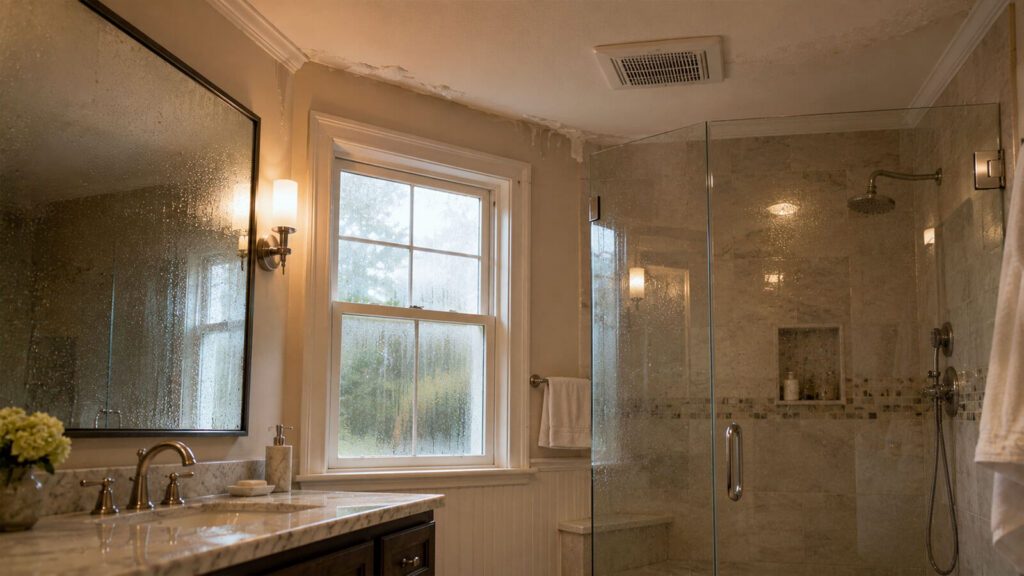
Bathroom exhaust fans are one of those home features people barely think about until the paint starts peeling, the mirror stays fogged for hours, or a faint mildew smell settles into the room. By then, the problem is usually bigger than the fan itself. In a lot of Hudson Valley homes, the issue is really about moisture management, and that means venting, wiring, insulation, roof penetration details, and sometimes even the way the bathroom was finished in the first place.
What catches homeowners off guard is that a noisy fan is often not the real problem. A loud motor might be annoying, but the bigger issue is usually poor airflow, a blocked duct, or a vent that terminates somewhere it should never have terminated. Contractors see this a lot: a fan that technically runs, but barely moves air. The bathroom looks “finished,” yet moisture is still getting trapped in drywall, trim, and attic spaces. That is where repairs start getting expensive.
Why bathroom fan problems become expensive faster than people expect
Bathroom moisture is sneaky. It does not always show up as an obvious leak. Sometimes it shows up as peeling ceiling paint, black spotting around trim, swollen window casings, or discoloration near a ceiling corner. In older Hudson Valley homes, especially those with less attic insulation or older framing details, the symptoms can look minor while the underlying damage keeps spreading.
Contractors usually inspect the fan itself first, but they do not stop there. They want to know where the duct runs, whether the duct is crushed or disconnected, whether it vents outdoors or into an attic, and whether the exterior termination is actually sealed. If the fan dumps moist air into the attic, the bathroom may seem fine for a while, but the roof deck, insulation, and framing can slowly absorb that moisture. That is exactly how a small comfort issue turns into a mold, rot, or insulation problem.
It is also worth remembering that the stain on the ceiling is not always directly below the real source of the issue. Water and humid air travel. That detail matters when a homeowner assumes the visible damage tells the whole story.
What homeowners usually misread first
Most people assume a fan either works or it does not. In reality, there is a wide middle ground where the fan turns on, sounds normal, and still fails to do the job. Common warning signs include:
- the mirror stays fogged long after a shower
- the bathroom feels damp even with the fan running
- paint bubbles or softens near the ceiling
- there is a lingering musty smell
- the fan cover collects more dust than expected
- condensation appears on windows or cold surfaces
Those symptoms do not automatically mean the fan motor is failing. Sometimes the unit is undersized for the room. Sometimes the grille and housing are clogged with dust and lint. Sometimes the duct is too long, has too many bends, or was installed with flexible duct that sags and traps moisture. In a number of cases, contractors find that the fan was never properly vented to the exterior at all.
That last one surprises homeowners because the fan appears to be doing its job. It is not. It is just moving humid air to a place where the problem is harder to see.
The hidden causes contractors check before replacing the fan
Before anyone recommends a replacement, a good contractor or electrician will usually look at the whole system. That is where a lot of the value is. Replacing the visible fan unit without addressing the vent path can create a brand-new problem in a few months.
1. The duct run
The duct should move air out of the home efficiently, with as few bends as possible. Long runs, pinched sections, and sagging flexible duct reduce performance. In some older homes, the duct may route through a cold attic space, which can create condensation inside the duct during winter.
2. The exterior termination
If the fan vents through the roof or side wall, the exterior cap, flashing, and sealant need to be intact. This is where roof-related issues can overlap with bathroom ventilation problems. After storms, it is smart to pay attention to roof vent areas after Hudson Valley storms, because wind, ice, and debris can loosen a termination cap or expose a weak seal.
3. Electrical controls
Sometimes the issue is less about airflow and more about how the fan is powered. Timers, switches, humidity sensors, and wiring connections all affect performance. If the fan short-cycles or never runs long enough, moisture stays in the room. In those cases, licensed electrical contractors are often part of the fix, especially when the problem involves wiring upgrades or a better control setup.
4. Insulation and air sealing
If warm bathroom air leaks into a cold attic, condensation can form where it should not. That is especially common in homes with older insulation levels, recessed fixtures, or gaps around ceiling penetrations. The fan may be fine, but the surrounding assembly is not.
That is why shortcuts tend to fail. Swapping the fan without checking the duct, exterior vent, and attic conditions often just delays the same complaint.
When a DIY fix makes the problem worse
A lot of bathroom fan issues look simple from the room side. That is what tempts homeowners into quick fixes. A new grille, a stronger bulb, a can of paint, or a replacement fan from a big-box store can feel like enough. Sometimes it is not even close.
The most common DIY mistake is installing a more powerful fan without checking the duct size or vent path. A stronger fan on a poorly designed vent system can actually increase noise, strain the unit, and still move humid air inefficiently. Another common issue is replacing the fan cover and calling it done, even though the real problem is condensation in the attic or a disconnected duct above the ceiling.
If the bathroom has recurring moisture problems, it is often smarter to slow down and confirm the cause before buying parts. That approach usually saves money, not the other way around.
Hudson Valley homes have a few extra complications
Older homes in the Hudson Valley tend to create a specific kind of ventilation headache. Many have mixed ages of construction, patchwork renovations, or additions that were completed without a full system upgrade. That matters. A bathroom added to an older house may have a fan that was installed to satisfy a code requirement, but not necessarily designed for the room size or the home’s actual layout.
Freeze-thaw cycles, heavy rain, and long heating seasons make moisture control even more important. In homes with stone foundations, older framing, or unconditioned attic spaces, small ventilation problems do not stay small for long. If the home already has basement humidity issues, attic condensation, or poor whole-house ventilation, a bathroom fan can become part of a larger home moisture control problems conversation rather than a single-room repair.
That broader view matters because homeowners often fix the obvious symptom and miss the system behind it. The bathroom fogs up, but the real stress may be happening above the ceiling line or inside the roof assembly.
What good repair work usually looks like
A solid repair starts with diagnosis, not parts replacement. Depending on what is found, the fix may involve cleaning the fan housing, replacing a tired motor, rerouting the duct, insulating the vent line, adding a better exterior cap, or updating the switch control. In some cases, the right answer is actually to involve a general contractor for bathroom ventilation fixes, especially if there is drywall damage, framing repair, or a broader bathroom update tied to the moisture problem.
That is where contractor judgment matters. A low-cost fan swap may be enough in a newer, well-vented bathroom. In an older home with attic moisture, roof penetration concerns, or a poorly designed bath layout, the repair usually needs to be more thoughtful. The cheapest bid is not always the least expensive outcome.
Homeowners also benefit from thinking in terms of prevention. If the bathroom vent routes through the roof, it is worth checking roof and flashing conditions during broader maintenance cycles, much like checking roof penetrations during a seasonal inspection. Vent issues and roof issues tend to overlap more often than people expect.
Signs it is time to stop troubleshooting and bring in a pro
If the fan is more than a decade old, if the bathroom has repeated paint failure, if there is attic moisture, or if the exterior vent is hard to access safely, this is usually not a “wait and see” problem. Delaying can turn a relatively modest repair into drywall replacement, insulation work, or roof patching.
It is also time to bring in help if the fan is tied to old wiring, a broken switch, or a circuit that already feels overloaded. Bathrooms are not a good place for guesswork. If the work touches wiring, roof penetrations, or structural materials, homeowners are usually better off finding the right Hudson Valley contractor trade before the issue gets layered into a larger repair.
The real goal is simple: keep moisture where it belongs. Once that is handled correctly, the bathroom lasts longer, smells better, and causes fewer headaches elsewhere in the home.
Frequently Asked Questions
How do I know if my bathroom fan is actually venting outside?
The easiest clue is airflow at the exterior vent cap while the fan is running. If you are not sure, a contractor can trace the duct path and confirm whether it truly exits the home.
Why does my bathroom still feel damp after the fan runs?
The fan may be undersized, the duct may be restricted, or the run may be too long. Humid air can also linger if the fan does not run long enough after showers.
Is a noisy bathroom fan always a sign it needs replacement?
Not always. Noise can come from dust buildup, a loose housing, worn bearings, or vibration in the duct. Sometimes the motor is failing, but often the full system needs inspection first.
Can a bathroom fan leak cause roof damage?
Yes, especially if the fan vents through the roof and the termination or flashing is failing. Moist air in the attic can also create condensation that affects insulation and roof decking.
Should I replace an old fan or repair the ducting first?
In many cases, the ducting and termination deserve attention before the fan itself. A new fan will not fix a bad vent path.
What kind of contractor should I call for bathroom fan problems?
It depends on the cause. Electrical issues call for an electrician, vent rerouting may involve a general contractor, and roof termination problems may overlap with roofing work.
If your bathroom fan is showing signs of trouble, the smartest next step is usually a proper diagnosis, not a quick swap. A little inspection now can prevent a much larger moisture repair later, and that is almost always the better tradeoff for a Hudson Valley homeowner.