

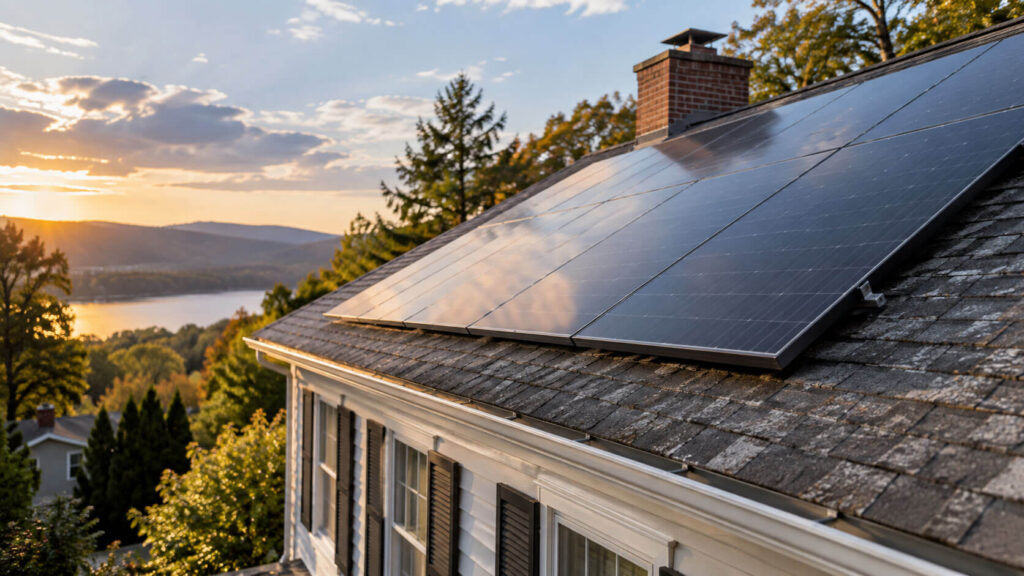
Should you put solar panels on an older roof? Sometimes yes. Sometimes it’s exactly the wrong time.
The mistake most homeowners make is treating solar like a standalone project. It isn’t. On an older Hudson Valley home, solar touches the roof surface, flashing, attic condition, electrical capacity, and sometimes even structural concerns that have been quietly ignored for years. If the roof is already near the end of its useful life, adding panels can lock you into a costly sequence of removals, repairs, and reinstallations that could have been avoided with a better plan.
That’s why the first question is rarely “Can the roof physically hold solar?” The better question is whether the roof is in the kind of condition that will still make sense after the panels are up for 20 to 30 years. In many cases, the answer depends on hidden wear, not the obvious surface look.
Why older roofs need a different solar conversation
Hudson Valley homes often come with a few built-in complications: layered roofing history, steep pitches, heavy tree cover, ice dams, aging flashing, and drainage patterns that don’t show themselves until a hard rain or freeze/thaw stretch. A roof can look serviceable from the driveway and still be a poor candidate for solar if the decking, underlayment, or ventilation is already compromised.
Contractors usually start by asking how old the roof is, when it was last replaced, and whether there have been leaks, repairs, or storm impacts. That’s not busywork. It tells them whether the roof is a clean installation surface or a future headache waiting to happen. If there’s recent storm-related wear, it’s worth understanding roof damage after a storm before anyone starts planning panel layouts.
The counterintuitive part is that the visible shingles are often not the main issue. The weak points tend to be flashing, penetrations, soft decking around valleys, and areas where water has been sneaking in slowly. Those are the details that can turn a solar project into a return visit no one wanted.
What contractors inspect first
A serious solar-ready roof review usually begins with the basics, but the order matters. Experienced roofers and contractors tend to look at the roof in layers, because one problem often points to another.
- Roof age and material condition: Asphalt shingles, architectural shingles, metal roofing, and older three-tab roofs age very differently.
- Flashing and roof penetrations: Chimneys, plumbing vents, skylights, and valleys are common leak points.
- Decking condition: Soft or uneven sheathing can signal past water intrusion.
- Attic ventilation: Heat buildup can shorten roof life and make solar mounting decisions more complicated.
- Existing moisture issues: Staining, mold smell, or warped materials often suggest a problem that is bigger than the visible leak.
- Electrical readiness: Solar is not just a roofing decision; the service panel and wiring path matter too.
If the home has already had patchwork roof repairs, that history matters. Multiple repairs can mean the roof has been living on borrowed time. In those cases, a homeowner may be better off getting a roof inspection checklist for homeowners style review before committing to panels.
Signs the roof may not be the right solar candidate yet
Some warning signs are obvious. Others are the kind homeowners tend to rationalize away because the roof “still looks fine.” That’s where expensive decisions get made.
Watch for:
- curling, brittle, or missing shingles
- granules collecting heavily in gutters
- soft spots near valleys or roof edges
- staining in the attic after rain or snowmelt
- ice dam history along the eaves
- old flashing around chimneys or skylights
- visible sagging or uneven roof planes
- multiple roof layers already in place
One of the most common homeowner assumptions is that a roof without active dripping is “good enough.” That’s not how solar installers or roofers think about it. Solar panels make roof access harder later. If a leak appears under the array, even a small one, repair work becomes more disruptive and more expensive because panels may have to come off to find and fix the actual source.
The stain on the ceiling also often isn’t directly below the actual leak. Water can travel along rafters, decking seams, or insulation before it shows itself. That’s a big reason contractor diagnostics matter more than guesswork.
When a repair makes sense, and when replacement is the smarter move
There’s a real difference between a roof that needs a targeted repair and a roof that’s already in the “don’t build around this” category. A few missing shingles or a localized flashing problem can often be addressed without derailing a solar project. But if the roof is nearing the end of its service life, patching becomes a false economy.
Homeowners sometimes try to stretch an aging roof because they want to avoid replacing it before solar. That can backfire. Once the panels are installed, even basic future roof work becomes more involved. If the roof is likely to need replacement within the next few years anyway, replacing it first is usually the cleaner financial move.
This is where a contractor with broader project experience helps. A good team may recommend general contracting services when the job involves roof structure, roofing, and exterior coordination rather than just one isolated trade. That kind of planning can prevent the “fix it twice” problem that homeowners hate.
Why the electrical side matters earlier than people expect
Solar is often sold as a roof upgrade, but the electrical side can be the hidden gatekeeper. Older Hudson Valley homes may have service panels that are already tight on capacity, especially if the house has an older HVAC setup, oil heat components, well equipment, or a workshop load on the property.
Before the roofing work even starts, homeowners should know whether the electrical system can support the planned installation. That may involve panel upgrades, new disconnects, grounding improvements, or code-compliant routing. It’s a good reason to consult electrical contractors early instead of discovering the issue halfway through the project.
In older homes, the problem is not always the panel itself. Sometimes the real issue is outdated wiring paths, limited capacity for future loads, or a layout that makes clean solar integration harder than expected. These are the kinds of details that can change the project cost more than the panels do.
Hudson Valley conditions that can shorten roof life
Local weather and property conditions matter more than many solar brochures admit. The Hudson Valley sees enough freeze/thaw cycling to punish marginal flashing. Mature trees can shade panels, but they also drop debris that clogs gutters and traps moisture on roof edges. Long winters and sudden spring melt can expose weaknesses that were invisible in August.
Older stone foundations, damp basements, and attic humidity are also part of the larger picture. A roof that is struggling with ventilation or moisture management will often show the effects elsewhere in the house. Contractors notice those connections quickly because they often point to a system problem, not a single bad shingle.
If a property has steep grading, a long driveway, or a detached garage with separate electrical needs, the project can become more complicated than expected. That doesn’t mean solar is off the table. It just means the homeowner should think in terms of the whole property, not only the roof plane.
What makes a solar-ready roof more likely to succeed
A roof doesn’t have to be brand new to be a good solar candidate. But it does need to be stable enough to outlast the array without frequent interruptions.
In practical terms, that usually means:
- the roof has a meaningful amount of service life left
- there are no active leaks
- flashing and penetrations are in good shape
- the attic is dry and ventilated properly
- the deck is solid, not patchy or soft
- the electrical system can support the installation path
For many homeowners, the best next step is not choosing between solar and no solar. It’s choosing between solar now and roof-first planning. That is why many property owners benefit from browsing HV Trades service categories to understand which professionals need to be involved before a final decision is made.
Why cheap roof fixes often fail under solar
There’s a temptation to do the least expensive repair that makes the project “move forward.” That can work for cosmetic projects. It usually fails on roofs.
A quick patch around a flashing area may hold for a while, but if the surrounding shingles are already brittle or the decking has started to deteriorate, the patch is only buying time. Solar panels tend to expose weak roof decisions because once they’re on, access gets harder. A shortcut that seems smart during planning often becomes an expensive removal later.
Contractors know this pattern well. The issue is rarely that the original repair was impossible. It’s that the repair was chosen to avoid a bigger decision the homeowner already knew was there.
When the roof is only one part of a larger exterior or renovation sequence, it can help to start with broader homeowner resources so the project is approached with the right order of operations instead of guesswork.
How to think about timing
Timing matters more than most people expect. Solar should not be planned in a vacuum, and roof work should not be scheduled just because a panel installer is ready to move quickly.
If the roof needs replacement within a few years, doing the roof first usually saves money and frustration. If the roof has plenty of life left and the electrical system is ready, solar may make sense sooner. The main point is that both sides of the project need to be looked at honestly.
Delaying a necessary roof replacement can become expensive in a way that is hard to reverse. Once panels are installed, roof repairs are no longer simple roof repairs. They become coordinated work involving removal, protection, reinstallation, and possible reinspection. That overhead adds up fast.
Frequently Asked Questions
Can solar be installed on an older roof?
Yes, but only if the roof has enough life left and doesn’t already have hidden problems. Age alone is not the only factor.
Should I replace the roof before adding solar?
If the roof is near the end of its life, replacement first is usually the smarter move. It is much easier than removing panels later for roof work.
What roof problems are biggest red flags for solar?
Active leaks, soft decking, failing flashing, sagging roof lines, and multiple layers of old roofing are common reasons to slow down and inspect more closely.
Do I need an electrical upgrade for solar?
Sometimes. Older panels, limited capacity, or outdated wiring can require upgrades before installation can move forward safely.
Will a roof inspection tell me enough?
A good inspection helps, but solar planning should also include electrical review and a look at attic ventilation and moisture conditions.
Is it worth getting multiple opinions?
Yes, especially if the roof is older or the project involves both roofing and electrical work. Coordinated advice can prevent expensive mistakes.
If you are weighing solar against roof replacement, the safest move is usually to get the roof evaluated first and make the decision from there. A little planning now can save a lot of disruption later, especially on older Hudson Valley homes where the roof, structure, and electrical system are often more connected than they look.