

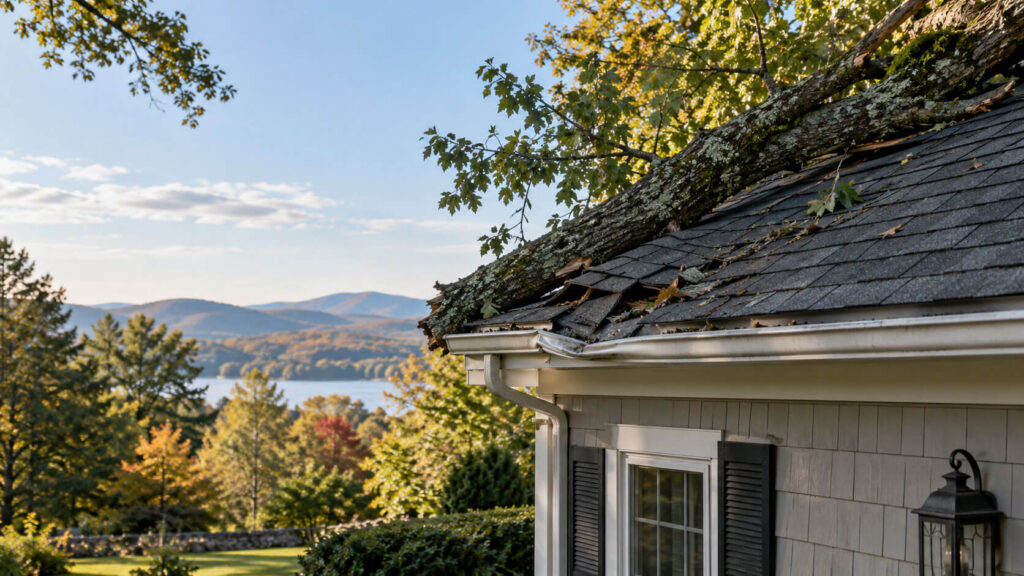
The branch that “just scraped the roof” is often the kind of problem that turns into a much bigger repair two weeks later. A lot of homeowners look up, see a few missing shingles or a bent gutter, and assume the damage is cosmetic. In practice, fallen limbs and rubbing branches can compromise flashing, lift edges of shingles, dent fascia, and create slow leaks that don’t show themselves right away. That delay is where the real cost starts to creep in.
What a tree limb can actually do to a roof
When a neighbor’s tree lands on, drags across, or repeatedly hits a roof, the visible damage is only part of the story. Contractors usually look beyond the obvious impact point first. They’re checking for compromised underlayment, shifted shingles, damaged ridge caps, loosened flashing around chimneys or vents, and hidden punctures that may not leak until the next heavy rain.
One thing homeowners often miss: the stain on the ceiling is not always directly below the actual roof damage. Water can run along rafters, trusses, or framing members before it finally finds a place to show up indoors. That’s why a small-looking exterior impact can end up requiring roof leak repair before water spreads indoors.
In older Hudson Valley homes, this gets even trickier. Settling, older framing, patched roof sections, and multiple layers of past repairs can make a tree hit behave differently than it would on a newer roof. What looks like a clean break on the surface may have stressed several weak points at once.
Why tree-related roof damage is easy to underestimate
Homeowners usually underestimate tree damage for one of three reasons: the roof still looks mostly intact, the leak hasn’t started yet, or the issue happened during a storm and the property already feels overwhelmed. That’s understandable, but it’s also how repair costs grow.
In the Hudson Valley, heavy rain, snow load, and freeze-thaw cycles make even minor roof trauma more vulnerable. A branch can lift shingles just enough to let moisture in, and then winter temperatures finish the job by expanding trapped water and opening the seam wider. By the time spring arrives, the repair is no longer just about shingles. Contractors may be dealing with wet sheathing, stained insulation, and softened decking.
That’s why the first inspection matters so much. Good local roofing contractors usually start by mapping the impact area, checking the attic if it’s accessible, and looking for signs of moisture intrusion before they talk about replacement decisions. The roof surface alone does not tell the full story.
What contractors usually inspect first after a tree hit
After a branch lands on a roof, experienced roofers tend to move in a specific order because the visible damage can be misleading.
- Impact points: crushed shingles, punctures, lifted edges, and broken roofing granules.
- Flashing: chimney flashing, step flashing, valley metal, and vent boots are common failure points after impact.
- Attic conditions: damp insulation, daylight through decking, or streaking on rafters can confirm hidden entry points.
- Gutters and fascia: branches often bend or detach gutter runs, which can send runoff behind the system instead of away from the house.
- Nearby roof sections: impact rarely stops at one square of roofing. Nearby shingles may be loosened even if they were not directly struck.
This is also where rushed patch jobs fail. A homeowner might seal a puncture from the outside and feel relieved, but if flashing was bent or the roof deck was cracked underneath, the leak path is still open. A quick caulk fix can buy time in a dry spell and fail completely in the next nor’easter.
Neighbor trees, property lines, and the repair question
Once a tree from an adjacent property damages a roof, homeowners often focus on blame before the roof is stabilized. That’s understandable, but from a practical standpoint, the roof comes first. Insurance, documentation, and neighbor communication can all happen after the property is protected from further water intrusion.
If the issue is storm-related, it may also overlap with broader roof damage after a storm, which is worth considering because insurance adjusters and contractors often want to separate pre-existing wear from fresh impact damage. In other words, the branch may have triggered the problem, but a worn roof can make the claim and the repair more complicated than expected.
For homeowners in denser areas like Westchester, tree cover and proximity to neighboring structures mean roof damage from limbs is more common than people think. If the home is in a more wooded part of Putnam or Dutchess County, the risk often shifts toward overhanging limbs, deadwood, and long-term abrasion from branches that never seem dramatic until a storm finally snaps them.
When a repair is enough and when replacement starts making sense
Not every tree strike means a full roof replacement. Sometimes the damage is limited to a small area, and a targeted repair is the right answer. But contractors tend to look at age, roof condition, and the extent of the impact together. If the roof was already near the end of its service life, a tree hit can expose the weak points that were already waiting to fail.
Here’s the practical rule: if the damaged area is isolated, the decking is sound, and the surrounding roof is in good shape, a repair may be perfectly reasonable. If there are multiple soft spots, widespread curling shingles, repeated leaks, or old patchwork in the area, a broader solution may save money in the long run.
That tradeoff is especially important on older homes where roofing layers have been patched over time. A branch can crack the top layer while exposing a half-dozen pre-existing problems beneath it. Homeowners sometimes feel they’re being “upsold” at that point, but what often looks like a large recommendation is really a contractor refusing to do a short-term patch on a roof that already needs more than that.
Hidden problems that show up after the obvious repair
The roof surface may be fixed and still not be truly resolved. That’s where homeowners get surprised. Water that entered during the event may already be affecting insulation, drywall, trim, or framing. In some cases, the real issue is not a dramatic leak but slow moisture intrusion that keeps the attic damp and encourages mold, odors, or insulation damage.
Gutter alignment is another overlooked issue. If the branch hit the roof edge or fascia, the gutter may look attached but no longer drain properly. On homes with long rooflines or steep runoff, a slightly out-of-position gutter can create concentrated water flow that wears out another section of roof or overflows into the siding.
On properties with mature trees and heavy shade, this is also where moss, debris buildup, and clogged valleys can become part of the picture. The damage may start with one limb, but the underlying problem is often that the roof already had poor drying conditions.
What homeowners should do right away
After the roof is hit, the goal is not to become a roofing expert overnight. The goal is to limit damage, document the issue, and avoid making it worse.
- Take photos from the ground and from safe vantage points.
- Avoid walking on the roof unless it is clearly safe and you know what you’re doing.
- Move valuables away from any active interior leak.
- Check the attic for damp spots only if it can be done safely.
- Arrange an inspection before the next hard rain if possible.
If water is already coming in, prioritize stopping the spread inside the home and getting professional help quickly. The faster the roof is stabilized, the less likely the damage will move into ceilings, walls, and insulation. For homeowners comparing service areas, the right fit may be as specific as roofing contractors in Dutchess County or Putnam County roofing services, depending on where the home is located and how quickly the issue needs attention.
Why delaying tree damage repairs gets expensive fast
A roof hit in November can become a framing or interior repair by January. That’s the part homeowners resent most, because the original damage often looked manageable. But moisture does not stay polite. It finds the weakest point, and once it gets into a roof system, the damage tends to spread quietly.
Delays also create a bad timing problem. Contractors can usually repair a localized issue faster when the damage is fresh, the decking is still solid, and the leak path is easy to trace. Wait too long, and the job becomes more invasive. Matching materials can be harder, interior repairs may be needed, and the roof area may require more tear-off than originally expected.
That is one reason tree-related roof damage is treated differently from a simple shingle replacement. The repair window matters. What looks minor in the first 24 hours can become much more expensive after one good storm cycle.
Choosing the right help without overreacting
The best roof repair advice after a tree impact is usually calm, not dramatic. You need someone who can tell the difference between a surface hit and structural compromise, and who understands when a repair will hold versus when it will only delay a larger problem.
That’s where local experience matters. Roofs in the Hudson Valley deal with mature trees, windy shoulder seasons, ice, and older construction details that don’t always show up in generic repair advice. A contractor familiar with local conditions is more likely to notice the small things that determine whether the fix lasts through the next storm.
If you’re weighing next steps, it helps to work with Westchester County roof repair help or another local specialist who can inspect the roof system as a whole, not just the obvious damage spot. The goal is a repair that actually holds up, not one that simply makes the problem look smaller for a while.
Frequently Asked Questions
How soon should a roof be inspected after a tree hits it?
As soon as practical, ideally before the next heavy rain. Even if the damage looks minor, hidden openings can let water in quickly.
Can a tree damage a roof without making a visible hole?
Yes. Shingles can be lifted, flashing can bend, and roof decking can crack without an obvious puncture. Those hidden issues are common.
Is interior water damage always directly under the roof damage?
No. Water often travels along framing or roof decking before it appears inside, which is why the visible stain can be misleading.
Should I fix the roof first or call my insurance company first?
Stabilize the roof first if there is active exposure, then document everything for the claim. Preventing more damage matters more than waiting to file paperwork.
Can I patch the damage myself?
Only if the issue is very minor and you can do it safely. Many DIY patches miss damaged flashing, hidden decking cracks, or loose surrounding shingles.
What if the neighbor’s tree caused the damage?
That may matter for insurance or property discussions, but it does not change the immediate repair priority. The roof still needs to be protected from further water intrusion.
If a tree has damaged your roof, the smartest next step is usually a careful inspection from a trusted local pro who can separate real structural concern from surface-level damage. That helps you avoid short-term fixes that fail later and gives you a clearer path to protecting the home long term.
