

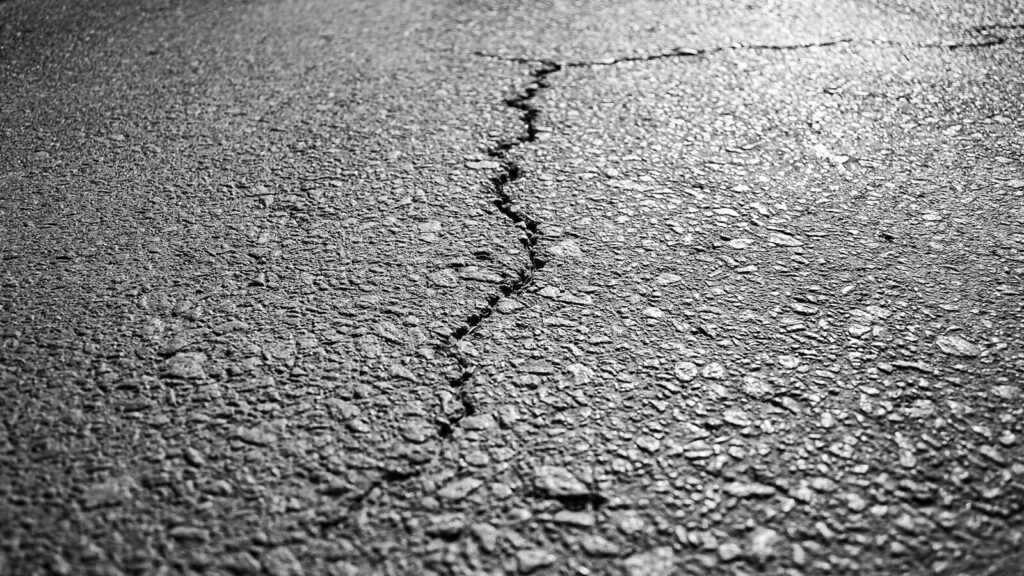
Why a Driveway Patch Fails Fast in the Hudson Valley and What to Do Instead
A driveway patch can look like a smart, low-cost fix until the first hard rain, the first freeze, or the first plow scrape exposes what was underneath all along. That’s the frustrating part for homeowners: the repair may look finished on day one, then start cracking, peeling, or sinking before the season is over. Around the Hudson Valley, that pattern is especially common because water, freeze/thaw cycles, and older site grading tend to work against quick surface repairs.
The biggest mistake is assuming a failed patch means the product was bad. Sometimes it was. But more often, the patch failed because the driveway itself had a drainage issue, a base issue, or an edge problem that never got addressed. If runoff is pooling near the slab or shoulder, the patch is fighting a losing battle. That’s why it helps to think beyond the pavement and look at the whole site, including drainage problems that can undermine pavement before another repair cycle starts.
What usually causes a patch to break down
Most driveway patch failures come down to one of a few things: water getting under the repair, loose material at the edges, a weak or crumbling base, or the wrong repair method for the type of damage. Hairline cracking can often be managed differently than alligator cracking, and a shallow surface blemish is not the same thing as a section that has settled or heaved.
Homeowners often focus on the crack they can see. Contractors usually look first at what’s making that crack move. If the surrounding pavement is flexing, the edges are breaking apart, or the repair area sits in a low spot, the patch may never stay bonded for long. The surface issue is usually the symptom, not the root cause.
That’s especially true on older properties with long driveways, detached garages, or uneven grading. In places with mature trees and seasonal runoff, the ground underneath a driveway can shift more than people realize. A patch may look neat for a while, but if the base keeps settling, the repair has no stable platform to hold on to.
The clue most homeowners miss: water rarely behaves where you expect it to
One counterintuitive thing contractors notice all the time is that the damaged spot is not always the real problem spot. The crack in the driveway might be where the failure shows up, but the actual issue could be uphill, at the gutter discharge, along a soft shoulder, or where water has been saturating the edge for years. The visible damage often appears downstream from the real cause.
That’s why a patch-and-forget approach is risky. If roof runoff is dumping close to the drive, or if the property drains toward the pavement after a storm, even a good patch can get undermined. In some cases, the better fix is to control the water first, then repair the pavement. That may mean improving grading, extending downspouts, or looking at foundation & waterproofing services when runoff is part of a broader moisture issue around the home.
Why cheap repairs often fail faster than expected
The least expensive patch is usually the one that gets applied over a dirty, loose, or damp surface with no real prep. That’s why these repairs can fail quickly even if they look fine at first. Good adhesion depends on prep work more than most homeowners realize. If debris, oil residue, crumbling edges, or hidden moisture are left in place, the patch is only grabbing onto the problem.
Another common shortcut is treating every crack the same way. A simple filler may help a narrow, stable crack. It will not solve a section that has moved, separated, or started raveling. Once the pavement edges are breaking down, the repair has to account for the deterioration around the crack, not just the line itself.
Contractors also pay attention to whether the driveway is asphalt, concrete, or a layered patchwork of both. Each behaves differently in cold weather and under heavy vehicle use. A repair method that works for one surface can fail quickly on another, especially when plows, road salt, or frequent thawing are part of the picture.
When a patch makes sense, and when it is just delaying the inevitable
A patch makes sense when the surrounding driveway is still structurally sound, the damage is localized, and water is not actively getting under the repair. In that case, the goal is to seal out moisture and slow down further deterioration. But if the driveway is already breaking apart in multiple areas, patching every problem one at a time can become a false economy.
That’s the point where a paving contractor will often start talking about whether the driveway needs patching, resurfacing, or section replacement. A homeowner may want the smallest possible repair, but if the base is failing or the pavement is too oxidized and brittle, a patch can become a recurring expense instead of a solution. If you’re weighing whether the problem is still patchable, it helps to talk with asphalt & paving contractors who can judge the condition of the pavement and not just the visible crack.
The hard truth is that delaying a larger repair can cost more in the end. Water keeps entering the opening. Freeze/thaw keeps widening it. Vehicle traffic keeps stressing the weak area. By the time a homeowner finally calls, what started as a small repair often needs more labor, more material, and more disruption than it would have earlier.
Hudson Valley conditions that make driveway damage worse
Driveways in the Hudson Valley face a few predictable stresses that don’t get enough attention. Freeze/thaw cycles push water in and out of cracks. Heavy spring rains can wash out weak edges. Snow removal equipment can chip already fragile pavement. And on wooded properties, roots and constant shade can slow drying and encourage moisture retention.
Steep drives and sloped lots are another problem. When water moves quickly across a driveway, it can carry fine material with it and slowly hollow out the edge. Once that edge loses support, cracking spreads faster. This is one reason some homeowners see the same repair fail every few years even though they keep “fixing the crack.” The issue is often the site, not the patch material.
For homes with older oil stains, aging asphalt, or surfaces that have been repaired repeatedly, the driveway can become a patchwork of different layers and ages. Those transitions create weak points. A surface that’s already oxidized and brittle does not behave like a newer driveway, and it will not respond well to a one-size-fits-all solution.
What contractors usually inspect first
Before recommending a repair, a good contractor usually checks the condition of the base, the direction of runoff, the edge support, and the size and movement of the damaged area. They’ll also look for signs that the driveway is settling, not just cracking. A patch alone does not fix settlement.
If the surrounding soil is soft, saturated, or washed out, the real problem may be hidden underneath the surface. That’s why experienced contractors tend to ask about recent storms, drainage patterns, downspout locations, and any past repairs in the same spot. They’re trying to figure out whether the damage is isolated or part of a bigger moisture-management issue.
When a driveway problem seems tied to repeated water intrusion near the house, it’s worth looking at the broader exterior system, not just the pavement. In some cases, the fastest way to stop recurring damage is to improve water control around the property and prepare gutters before heavy rain so runoff isn’t hammering the same areas after every storm.
How to know when the repair risk is getting expensive
The repair risk gets expensive when the damage starts spreading, the driveway begins to hold water, or the crack opens enough that debris and moisture keep collecting inside it. Once that happens, the driveway is no longer just cosmetically damaged. It is actively deteriorating.
Watch for these signs:
- Repeated cracking in the same location
- Edges that crumble when touched
- Depressions that collect water after rain
- Sections that shift or rock slightly under vehicle weight
- Patches that peel, lift, or separate at the seams
- Nearby gutters or downspouts that discharge toward the driveway
If you’re seeing more than one of those signs, the issue is probably bigger than a surface repair. That doesn’t automatically mean full replacement, but it does mean the next step should be a real assessment, not another round of product from a hardware store aisle.
What homeowners can do before calling for help
There are a few practical steps that can help you make a better decision before spending money. Clean the area so you can see the true extent of the damage. Check whether the crack changes after rain. Look for standing water, soft edges, or runoff coming from the house. And pay attention to whether the damage is isolated or showing up in multiple places.
If you can tell the issue is tied to grading, runoff, or drainage, that’s valuable information. It helps a contractor recommend the right repair instead of just treating the symptom. If you’re still trying to sort out whether the driveway problem is part of a larger exterior maintenance issue, it can also help to review the broader HV Trades service categories and see what kind of contractor is best suited to the job.
One thing worth avoiding: sealing over active damage just to make it look better for the season. That can trap moisture, hide movement, and make future repairs more complicated. A quick cosmetic fix may feel satisfying, but it often shortens the time before a more expensive repair is needed.
Frequently Asked Questions
How long should a driveway patch last?
It depends on the condition of the driveway and the cause of the damage. A patch on a stable, well-prepared surface may hold up for years. A patch over poor drainage or a failing base may fail within a season.
Is it worth patching an old asphalt driveway?
Sometimes, but only if the rest of the surface is still in decent shape. If the driveway has widespread cracking, soft edges, or repeated failures, patching may just delay a larger repair.
Why does my driveway crack in the same place every year?
That usually points to an underlying issue like drainage, settlement, or edge failure. The crack is the symptom. The real cause is often water movement or a weak base.
Can I repair a driveway crack myself?
Small, stable cracks can sometimes be managed by a homeowner. But if the area is moving, holding water, or breaking apart at the edges, DIY repair is usually temporary at best.
Does winter make driveway damage worse?
Yes. Freeze/thaw cycles force cracks wider, and plow blades or snow shovels can chip weak edges. Once water gets into the opening, winter tends to accelerate the problem.
When should I stop patching and consider replacement?
When cracks keep returning, multiple sections are failing, or the surface is so oxidized and brittle that repairs no longer bond well. At that point, a contractor should evaluate whether resurfacing or replacement is the more cost-effective option.
If a driveway patch keeps failing, the smartest next step is usually not another patch. It is getting a local contractor’s read on what is actually moving, holding water, or breaking down underneath. A careful assessment can save you from spending twice on the same problem and help you protect the value of the home over the long run.