

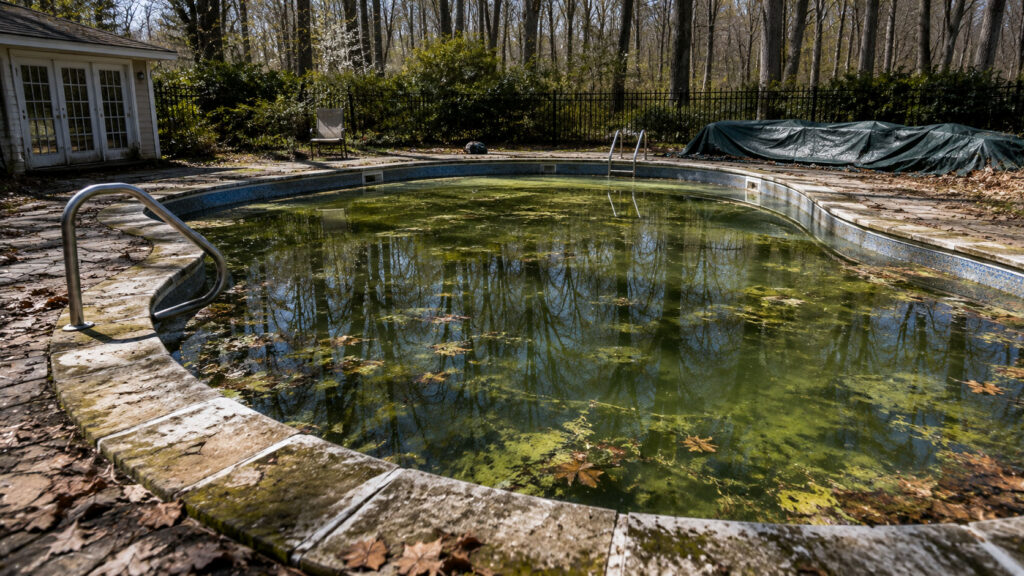
Why a Closed Pool Can Turn Into a Bigger Repair Than You Expect
It’s easy to look at a pool that sat untouched through the off-season and assume the problems will be minor: a little debris, some cloudy water, maybe a chemical reset. That’s often not how it plays out. Once a pool has been left closed too long, the real damage usually shows up in the parts homeowners don’t see first — the circulation system, the liner, the coping, the cover, or the plumbing that froze and split during a cold snap.
That’s the part many homeowners miss. The visible mess is rarely the expensive part. The costly part is what happened quietly while the pool sat through Hudson Valley weather: freeze/thaw movement, water intrusion, leaf buildup, failing seals, and equipment that never got properly winterized. If you’re trying to avoid a surprise opening bill, the best time to think about it is before the water has turned into a project. In some cases, it makes sense to start with professional pool services contractors who can tell you whether you’re dealing with routine cleanup or a much larger problem.
What Usually Goes Wrong When a Pool Has Been Left Closed
A pool that sits closed for too long doesn’t usually fail in one dramatic moment. It tends to degrade in layers. First comes stagnant water, then algae, then staining, then equipment issues, and eventually the kind of damage that turns a normal opening into a repair job.
Contractors often look first at the basics: whether the cover held, whether water got underneath it, whether the water level changed over winter, and whether there are visible signs of freeze damage around fittings, return lines, skimmers, and the pump area. In a lot of Hudson Valley properties, especially those with older outdoor setups, the bigger concern is not the water itself but what freezing temperatures did to plumbing and accessories while the pool was dormant.
Wooded lots, heavy leaf drop, and slow spring melt can make things worse. A cover that looked mostly intact in October may have pooled water, sagged, or torn by February. Once that happens, debris and meltwater can collect in ways that accelerate staining and make the water harder to recover.
The Problems Homeowners Commonly Misread
One of the most common mistakes is assuming every pool problem is a chemistry problem. Sometimes it is. But not always. Cloudy water, green water, and a strong chlorine smell can all suggest chemistry imbalance, but they can also point to circulation issues, clogged filters, dead spots in the pool, or equipment that’s not moving water the way it should.
If the pool water has gone green after a late opening or a neglected close, that’s usually a sign the issue has been building for a while, not just overnight. A useful next step is reading up on green pool water after opening so you can separate normal cleanup from a situation that may need more than chemicals.
Another misread: homeowners often focus on the stain or discoloration they can see and ignore the waterline or perimeter damage. But cracking around coping, pulled sealant, and shifted pavers can tell you more about the pool’s condition than the water color does. On older pools, especially those near mature trees or sloped grading, the surrounding hardscape may reveal drainage problems long before the pool interior does.
Why Delay Makes Pool Damage More Expensive
Pool problems tend to compound. A small leak becomes a water loss problem. A water loss problem can stress the pump. A stressed pump can lead to circulation failure. Once circulation drops, algae and debris build faster, and the cleaning job turns heavier. That’s how a “we’ll deal with it later” pool becomes a repair sequence instead of a maintenance task.
In the Hudson Valley, freeze/thaw cycles make this even less forgiving. A tiny crack that looks harmless in early spring can widen once water works into it and temperatures swing again. The same goes for plumbing lines, skimmer throats, and fittings that were never fully drained. If the ground around the pool has shifted or settled, that can also point to drainage and backfill issues that need attention before they affect the shell or equipment pad.
This is where cheap fixes often fail. Adding chemicals can improve the appearance, but it won’t solve a split line, a compromised seal, or a cover that let too much organic material in over the winter. Contractors usually want to determine whether the problem is cosmetic, mechanical, or structural before anyone spends money chasing the wrong solution.
What Contractors Usually Inspect First
When a pool has been closed too long, a good assessment usually starts with the parts that can fail quietly. That means the cover, water level, pump, filter, skimmer, return lines, visible plumbing, and any signs of winter damage around fittings and the pool edge. If the pool sits in a low area or has drainage running toward it, contractors will often pay attention to the surrounding grade too.
They’ll also look for clues that homeowners tend to overlook:
- Rust or staining near metal components
- Cracks at the waterline or around steps and corners
- Soft or shifting pavers around the perimeter
- Air in the system that suggests suction-side issues
- Water loss that seems too fast to be evaporation
- Algae returning quickly after cleaning, which can point to circulation trouble
If you’re in a county where pool ownership is more seasonal and openings happen later than ideal, it can be smart to work with pool services contractors in Dutchess County or comparable local pros who understand what winter exposure tends to do to older pool systems. The same logic applies for homeowners who need Westchester County pool service help when a closed pool has clearly gone beyond basic maintenance.
Why the Water May Look Worse Than the Actual Damage
Here’s a counterintuitive point that catches a lot of homeowners off guard: the worst-looking water does not always mean the worst structural problem. A pool can look terrible and still be recoverable without major repairs. On the other hand, a pool that only looks “a little off” may have hidden plumbing damage or a leak that quietly drained water for weeks.
That’s why experienced contractors don’t rely on appearance alone. They look at circulation patterns, pump performance, water retention, and the pool’s overall condition. If the system has gone stagnant, the water chemistry may be the easiest issue to solve. If the pool was closed poorly or left untouched for too long, the real challenge may be damage behind the scenes.
Cloudy water can be especially misleading. It often gets blamed on chlorine levels, but the real culprit is sometimes suspended debris, poor filtration, or water that has gone through repeated freeze and thaw without proper circulation. If that sounds like your situation, it’s worth understanding why pool water turns cloudy before assuming the solution is just “shock it and wait.”
When DIY Makes Sense and When It Doesn’t
There’s nothing wrong with basic homeowner maintenance. Skimming debris, checking water level, clearing the filter basket, and testing water can all be reasonable first steps. But once a pool has been closed too long and there are signs of damage, DIY can get expensive fast if it masks the real issue.
It usually makes sense to stop and get help if you notice any of the following:
- Water level has dropped more than expected
- The pump won’t prime or keeps losing prime
- There are cracks around fittings, skimmers, or the pool shell
- You smell something off near the equipment pad, especially after startup
- The cover failed and debris sat in the pool for months
- Water stays cloudy no matter how much you clean or treat it
The reason is simple: once a homeowner starts guessing at chemistry, circulation, and leak issues all at once, the repair often drags on. A methodical inspection costs less than replacing parts that were never broken in the first place.
What a Smart Repair Plan Looks Like
Good pool repair work is usually sequenced, not rushed. First comes inspection. Then the contractor separates cleanup from mechanical failure. Only after that does it make sense to talk about equipment replacement, liner repair, leak detection, or structural fixes.
That approach matters because the wrong repair order wastes money. Replacing a pump before confirming there isn’t a blocked line or hidden leak can solve nothing. Dumping more chemistry into water that’s already being lost won’t stabilize the pool. And trying to patch symptoms without understanding how winter weather affected the system is how homeowners end up paying twice.
For properties in Putnam County, where some pools sit on tree-lined lots or in areas with tricky drainage, it can help to work with local pool contractors in Putnam County who understand the seasonal patterns that affect openings, covers, and equipment. Local judgment matters more than people think when a pool has been neglected through a long Hudson Valley winter.
How to Protect the Pool Before the Next Closing
If the pool is recoverable this season, the real win is making sure it doesn’t happen again. A proper closing, clean cover, drained plumbing, winterized equipment, and a realistic spring opening plan can save a lot of stress later. For older pools, it also helps to keep an eye on the surrounding site: grading, drainage, loose pavers, and areas where runoff tends to pool.
Some of the most expensive spring problems start as fall oversights. A skipped drain plug, a weak cover, or a line that wasn’t fully protected from freezing can create a chain reaction by March. That’s why preventative work is usually cheaper than the version of the job homeowners end up doing after things sit too long.
Frequently Asked Questions
Can a pool be reopened if it was closed too long?
Often, yes. But the condition of the water, cover, equipment, and plumbing determines how much work is involved. Some pools need cleanup only; others need repair before they can be safely used again.
Is green water always a sign of major damage?
No. Green water usually means algae growth and poor water balance, but it does not automatically mean the pool shell or plumbing is damaged. The concern is whether the problem was allowed to sit long enough to affect equipment or surfaces.
What’s the first thing to check after a long closure?
Start with water level, cover condition, visible cracks, and the equipment pad. Those basics often tell you more than testing chemicals right away.
Why does the pool look worse after winter than it did in the fall?
Cold weather, standing water, debris, and freeze/thaw cycles can make minor issues more visible. Damage around the edges or in the plumbing may not show itself until spring startup.
Can I fix cloudy water myself?
Sometimes. If the issue is mostly chemistry, basic treatment may help. If the cloudiness keeps returning, the problem is usually filtration, circulation, or hidden contamination.
When should I bring in a professional?
If you suspect a leak, see cracks, have pump problems, or the pool has been neglected long enough that you’re not sure where to start, professional inspection is the safer move. It can prevent small issues from turning into repeated repairs.
If your pool sat closed longer than it should have, the goal is not to panic — it’s to assess it correctly before small damage turns into a bigger project. A good local pool professional can help you separate routine cleanup from real repair concerns and make the next step clearer.