

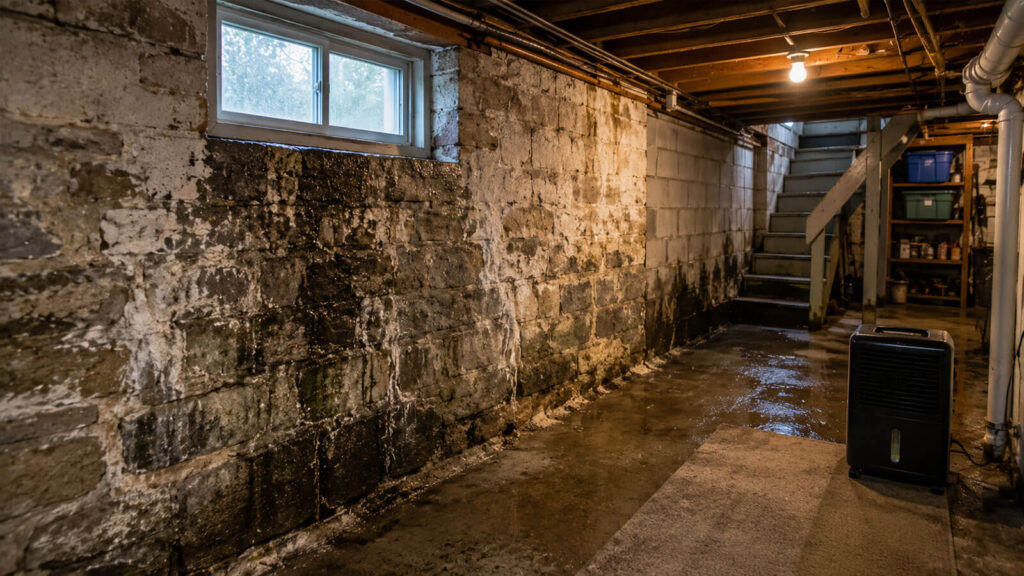
Why does a basement that looked “fine” all summer suddenly start smelling musty the first week of steady rain? In a lot of Hudson Valley homes, the odor is not coming from one obvious puddle. It’s usually the slow combination of moisture, porous masonry, poor airflow, and a foundation system that was never designed for today’s weather patterns.
That’s why basement smell complaints often turn into bigger conversations than homeowners expect. A deodorizer can mask the problem for a few days. It won’t fix seepage, capillary action, or water tracking through stone and block walls. And if the odor is showing up after rain, the real issue is often somewhere outside the basement, not inside it.
What a musty basement smell is actually telling you
Mustiness is usually a moisture warning, not just an odor problem. In older Hudson Valley homes, especially those with stone foundations, fieldstone walls, or aging block, the basement air often picks up dampness long before you see standing water. That matters because homeowners tend to wait for a visible leak. Contractors usually don’t. They look for the conditions that create the smell in the first place.
The first things worth paying attention to are simple: wet walls after rain, condensation on cold surfaces, rust on metal supports, efflorescence on masonry, mold on stored items, and a basement that never really feels dry. If the smell gets worse during humid stretches or after freeze-thaw swings, that usually points to moisture moving in through the foundation or condensing on cooler surfaces.
For homeowners who are already seeing visible wall dampness, it helps to understand the difference between odor and source. damp basement walls after rain often point to a drainage problem or foundation seepage that has been building quietly for a while.
Why older Hudson Valley basements are especially prone to this problem
Older homes in the Hudson Valley tend to have a few things working against them at once: masonry that was never fully sealed, grading that has changed over time, mature trees that interfere with runoff, and gutters or downspouts that dump water too close to the house. Add in spring snowmelt, summer humidity, and sudden heavy rain, and a basement can go from “a little earthy” to noticeably damp very quickly.
Stone and brick foundations also behave differently than newer poured concrete walls. They can absorb moisture, release it slowly, and let water migrate through joints and mortar. That’s why a basement smell in an older home is often less about one dramatic failure and more about an accumulation of small weaknesses.
One counterintuitive thing contractors see all the time: the smell often shows up in the basement even when the actual water entry point is outside the basement, sometimes several feet away from the wall that smells the worst. Drainage, soil slope, gutter discharge, and foundation settling can all direct water into the wrong place without creating an obvious leak line.
What contractors usually inspect first
When an odor complaint turns into a real troubleshooting job, the first inspection is rarely about air fresheners or dehumidifiers. It starts with the building envelope. Contractors typically look at the roof runoff, gutters, downspouts, grading, visible cracks, mortar joints, window wells, bulkhead doors, and any signs of trapped moisture around the foundation perimeter.
Inside the basement, they’re looking for where the dampness is concentrated. Is the smell strongest near a particular wall? Is there a cold corner where mold keeps returning? Is there rust on the bottom of a steel column or flaking mortar near the floor line? Is the sill plate showing staining? These details matter because they help separate condensation problems from true seepage problems.
It’s also common to check ventilation and humidity levels, especially in basements used for storage, laundry, or a finished room. A basement that stays closed up all summer can hold onto damp air longer than homeowners realize, especially if the HVAC system doesn’t circulate much conditioned air downstairs.
Common homeowner mistakes that make basement odors harder to solve
The most common mistake is trying to treat the smell before treating the moisture. That usually means candles, plug-ins, chlorine bleach, or a big box-store dehumidifier set too low and left in the wrong spot. Those things may temporarily improve the air, but they rarely solve a recurring problem.
Another mistake is sealing over symptoms too early. Painting over a basement wall before understanding why it’s damp can trap moisture and make masonry deterioration worse. The same goes for carpet, drywall, and finished storage built against a wall that still absorbs water after storms. Once those materials are in place, the odor becomes harder to trace and more expensive to correct.
Homeowners also underestimate how often the real cause starts outside the house. If the downspouts still end near the foundation, or the grade slopes back toward the basement, the odor may keep returning no matter how many times the interior is cleaned. That’s why exterior water management is so often the better investment than a cosmetic interior fix.
If you’re trying to figure out the bigger pattern around water entry, this is also where drainage problems around the foundation become relevant. Basement odors and foundation drainage are usually part of the same story.
When the smell points to a bigger repair issue
A musty odor is worth taking seriously when it comes with peeling paint, visible efflorescence, repeated mold growth, crumbling mortar, warped wood framing, or water marks that return after storms. Those signs suggest the basement is not just humid; it’s actively taking on moisture.
That’s where delays start to get expensive. A small seepage issue can turn into damaged insulation, rusted mechanical equipment, stained framing, and mold remediation if the space stays damp long enough. In finished basements, the cost climbs faster because drywall, flooring, and trim are often the first things to fail.
If the foundation is older and the mortar is soft or missing in spots, the problem may be less about one crack and more about a masonry system that has lost its ability to resist water movement. In those cases, Dutchess County masonry services may be the right place to start if you’re dealing with an older basement wall that needs a closer look.
Why quick fixes often fail
One reason basement odor keeps coming back is that quick fixes usually target air instead of moisture. A dehumidifier can help manage humidity, but it won’t stop water entering through a foundation wall. A sump pump can be useful, but it doesn’t solve grading problems, failed gutters, or cracked masonry above the slab line.
Another common failure point is patching the inside wall without addressing the pressure on the outside. Water follows the path of least resistance. If hydrostatic pressure is pushing against the foundation, an inside sealant may reduce visible seepage for a while, but the pressure is still there. Eventually, it shows up again somewhere else.
That’s why good contractors tend to think in layers: roof runoff first, surface drainage second, foundation condition third, and interior moisture control last. When that order gets reversed, homeowners often end up paying twice.
Practical steps that actually help
If your basement smells musty after rain, start with the simple checks that expose bigger issues quickly:
- Make sure gutters are clear and downspouts discharge well away from the foundation.
- Look for negative grading or low spots where water pools near the house.
- Check basement walls after a storm, not just on dry days.
- Inspect for efflorescence, staining, and peeling paint on masonry surfaces.
- Watch for recurring dampness around window wells, bulkhead doors, and rim joists.
- Use a dehumidifier as support, not as the main repair plan.
If you’re seeing moisture around the foundation during heavy rain, it may also help to compare what’s happening outside the house with what’s happening indoors. A contractor will usually want to see the exterior slope, gutter discharge, and any spots where roof water is being concentrated near the foundation.
Homeowners in Putnam and Westchester see the same pattern in older homes that sit on sloped lots or tree-heavy properties. If that sounds familiar, it may be worth reviewing masonry contractors in Putnam County or Westchester County masonry services when the basement walls themselves are part of the problem.
How to tell whether this is a maintenance issue or a repair issue
If the smell only appears during unusually humid weather and disappears once the basement is dehumidified, the problem may be mostly environmental. But if the odor returns after every storm, or if it gets worse over time, that’s usually a repair issue. The recurring pattern is the clue.
Maintenance issues tend to be things like clogged gutters, short downspouts, dirty dehumidifier filters, or poor airflow. Repair issues usually involve masonry cracks, deteriorated mortar, foundation seepage, failed window wells, or drainage that directs water toward the house instead of away from it.
That distinction matters because a homeowner can waste a lot of money on repeated cleanup if the actual source isn’t addressed. A good inspection should separate what can be improved with routine upkeep from what needs a structural or masonry repair plan.
Frequently Asked Questions
Why does my basement smell worse after rain?
Rain usually increases groundwater pressure, surface runoff, and humidity. If your basement walls or foundation are already vulnerable, the odor gets stronger because more moisture is entering or lingering in the space.
Is a musty smell always mold?
Not always, but mold is a common part of the problem. Mustiness can also come from damp masonry, wet storage, or high humidity. If the smell keeps returning, assume moisture is involved even if you can’t see mold right away.
Will a dehumidifier fix the issue?
It may help control the air, but it won’t fix water coming through the foundation or poor drainage outside. If the basement smells worse after storms, a dehumidifier is usually only part of the answer.
What’s the first thing a contractor will check?
Usually the drainage outside: gutters, downspouts, grading, and any signs of water pooling near the foundation. Then they’ll look at the basement walls, mortar, cracks, and moisture patterns inside.
Can sealing the basement wall solve the smell?
Sometimes, but only if the moisture source is understood first. Sealing the wrong problem can trap moisture inside masonry or hide a drainage issue that keeps getting worse.
When should I stop treating this as a minor nuisance?
When the smell returns after rain, leaves visible stains, causes mold growth, or starts affecting finished spaces and stored items. At that point, the issue is usually more than a simple air-quality problem.
If your basement odor keeps coming back, the safest move is to get a real diagnostic view before you invest in another temporary fix. A local contractor who understands older Hudson Valley foundations can help you sort out whether you’re dealing with drainage, masonry, or a moisture pattern that needs a more durable repair plan.