

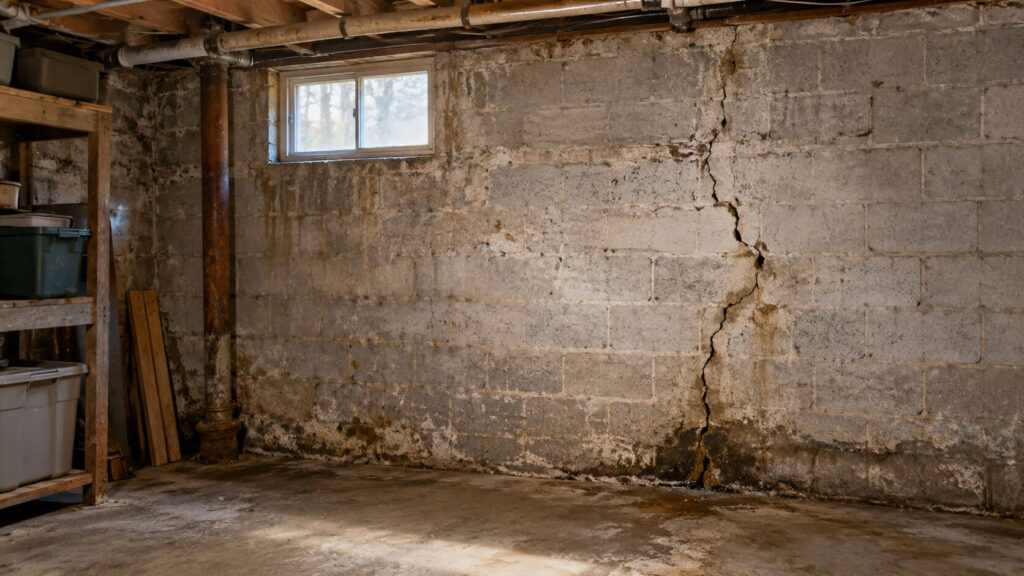
Basement Wall Cracks in the Hudson Valley: What’s Normal, What’s Serious, and When to Call a Masonry Pro
A hairline crack in a basement wall is easy to ignore until the next heavy rain, the next freeze-thaw cycle, or the next time you notice a damp line at the floor joint. That’s usually when homeowners realize the problem was never just cosmetic. In older Hudson Valley homes, basement cracking can be tied to settlement, moisture pressure, aging mortar, poor drainage, or a combination of all four. And once water gets involved, the repair conversation changes fast.
The tricky part is that the obvious crack is often not the whole story. A visible split in a foundation wall might be pointing to drainage problems outside, mortar deterioration in the wall itself, or movement from soil pressure that has been building for years. In homes with stone foundations, older block walls, or patched repairs that were done quickly, the real issue is often hidden behind a simple-looking surface crack. That’s why contractors tend to look beyond the crack first and ask what the wall has been dealing with season after season.
Why basement wall cracks deserve attention sooner rather than later
Some basement cracks stay stable for years. Others widen slowly and quietly, then start telegraphing moisture, musty odor, or visible bowing once the surrounding conditions get worse. The common homeowner mistake is assuming all cracks behave the same way. They don’t. A shrinkage crack in newer concrete is a different conversation from a stair-step crack in block, and both are different from a horizontal crack that suggests pressure on the wall.
What makes Hudson Valley homes more vulnerable is the weather pattern. Heavy rain, snowmelt, saturated soil, and freeze-thaw cycles all push and pull on foundation materials. If downspouts dump water too close to the house, or grading slopes back toward the foundation, the wall sees more moisture than it was meant to handle. That’s when basement cracking starts turning into a drainage problem, not just a masonry issue. If you’re already noticing runoff near the foundation, it’s worth looking into drainage problems that can affect basement walls before the next storm makes the damage more obvious.
The crack pattern tells you a lot
Contractors usually start by looking at the shape, direction, and location of the crack. That matters more than most people realize.
Vertical cracks
These are sometimes tied to shrinkage, minor settlement, or age-related movement. A vertical crack that stays narrow and dry is often less urgent than a crack that is actively widening or letting in water. Still, even a “small” vertical crack can become a leak path when hydrostatic pressure increases around the foundation.
Horizontal cracks
These are the ones homeowners should take seriously. A horizontal crack can suggest soil pressure pushing against the wall, especially if there’s also bowing, displacement, or seepage. This is where DIY patching can become a bad idea. Covering the crack without addressing pressure outside the wall just hides the symptom.
Stair-step cracks
These are common in block foundations and can indicate movement through mortar joints, settlement, or masonry deterioration. When stair-step cracking is paired with crumbling mortar, loose blocks, or dampness, contractors often start thinking about broader masonry damage from water rather than a single isolated crack.
What contractors usually inspect first
When a homeowner calls about a basement wall crack, the first inspection usually has less to do with the crack itself and more to do with the forces around it. That’s because a patch is not a diagnosis.
Experienced masonry contractors typically look at:
- Exterior grading and whether soil slopes toward the house
- Gutters, downspouts, and where runoff is discharged
- Evidence of standing water near the foundation
- Signs of wall bowing or inward movement
- Moisture stains, efflorescence, and old patching
- Condition of mortar joints and surrounding masonry
- Whether the basement wall crack aligns with settlement or drainage patterns
That last point matters. The stain on the wall is not always directly below the actual source of water entry. In fact, one of the more counterintuitive realities in basement repair is that the problem showing up inside the house is often caused by exterior water behavior several feet away from the wall. A crack near a window well, a failed downspout extension, or a low spot in the yard can create symptoms that seem unrelated at first.
Why quick fixes often fail
Hardware-store sealants and surface coatings have their place, but they are often treated like a cure when they’re really a temporary delay. If the wall is under active moisture pressure, sealing the inside face can trap water in the masonry, which may move the problem to another spot or worsen long-term deterioration. That’s especially true in older homes with stone foundations or older block walls that already have weakened joints.
Another common misstep is assuming the crack only needs attention if water is actively pouring in. By the time a basement crack starts dripping, the wall may have been under stress for a while. Delaying the fix can mean more than cosmetic damage. It can lead to recurring seepage, mold concerns, damaged stored items, and eventually more involved structural or masonry work. For homeowners trying to understand how much surrounding deterioration can matter, it helps to compare the crack with neighboring conditions such as masonry contractors would during a full wall assessment, not just a patch estimate.
How drainage and masonry problems overlap
Basement wall cracking is rarely just “inside the basement.” The exterior conditions around the home often set the stage long before the crack becomes visible. Poor grading, short downspout runs, clogged gutters, and saturated planting beds all keep water near the foundation. Over time, that moisture contributes to hydrostatic pressure and repeated freeze-thaw stress on masonry.
That’s why a wall crack can be the symptom that finally gets noticed, while the actual cause is an exterior water-management issue that has been ignored for years. In some homes, especially on sloped lots or properties with long driveways and uneven runoff patterns, homeowners need to think in terms of the whole site, not just the basement. That’s where landscaping drainage fixes near the foundation can make a meaningful difference before more expensive wall repair becomes necessary.
If the masonry itself is deteriorating, drainage correction alone may not be enough. Conversely, if the wall is repaired but the site still sends water toward the foundation, the same crack can come back. That’s one reason local pros often recommend thinking in layers: first control the water, then address the wall, then confirm the repair is tied to the cause rather than just the visible damage.
When DIY stops being the smart move
It makes sense to want to monitor a small crack yourself. Not every basement wall crack requires an emergency repair. But there are a few situations where homeowner patching tends to create false confidence:
- The crack is horizontal or widening
- There is visible bowing or inward movement
- Water appears after rain or snowmelt
- There is crumbling mortar, loose block, or spalling
- The crack keeps reopening after prior repair attempts
- You smell persistent dampness or see efflorescence
At that point, the question is not whether to seal it. It’s what is causing the wall to move or leak in the first place. That’s when homeowners should be talking with masonry contractors in Dutchess County or, depending on location, looking into Putnam County masonry services or masonry help in Westchester County if the house sits in one of those service areas. The right contractor will usually care less about selling a patch and more about figuring out whether the wall needs reinforcement, repointing, drainage correction, or a more involved structural fix.
What makes older Hudson Valley homes different
Older homes in the Hudson Valley often behave differently than newer construction because the materials and construction methods vary so much. Many basements were built before modern drainage standards, and some were never designed to stay perfectly dry by today’s expectations. Stone foundations may have irregular movement. Older block walls may have been patched several times with mixed materials. Some homes also have oil heat, older electrical systems, or utility penetrations that complicate basement moisture issues.
That doesn’t mean the home is failing. It means the repair strategy has to match the building. A generic waterproofing pitch may overlook the fact that the wall itself needs masonry repair, mortar replacement, or drainage correction first. In these houses, the cheapest-looking repair is often the one most likely to fail early.
How to judge urgency without overreacting
Not every crack means imminent structural trouble, but some do deserve prompt attention. A few practical signs usually move the issue into the “don’t wait” category:
- The crack changes in width over time
- Water comes through during storms or snowmelt
- The wall is bowing, leaning, or bulging
- The floor near the wall is damp or settling
- Doors above the basement start sticking or gaps appear
- Efflorescence keeps returning after cleaning
If the crack is stable, dry, and clearly hairline, it may still be worth documenting and watching through a few weather cycles. But if the house has already shown drainage stress, basement humidity, or repeated wet spots, the better approach is to inspect sooner. Repair timing matters because small changes are easier to control before they become wall movement or interior damage.
Questions homeowners should ask before hiring
A good masonry contractor should be able to explain not just how they would repair the crack, but why the crack happened. That distinction matters. If the answer is vague, the proposal may be focused on the symptom instead of the cause.
Useful questions include:
- What do you think caused the crack?
- Do you see signs of active movement or pressure?
- Is this a masonry issue, a drainage issue, or both?
- Will the repair address water entry as well as the wall itself?
- What would make this worse if we wait?
Those questions tend to separate contractors who are diagnosing from contractors who are simply quoting a patch. For homeowners, that difference can save a lot of money later.
Frequently Asked Questions
Are basement wall cracks always a structural problem?
No. Some cracks are minor and related to shrinkage or settling. The real concern is whether the crack is growing, leaking, or paired with bowing, displacement, or deteriorating masonry.
Can I seal a basement crack from the inside?
You can, but that’s not always the right first move. If water pressure or drainage problems are still active, an inside seal may only hide the issue temporarily.
What’s the biggest mistake homeowners make with basement cracks?
Waiting for obvious water damage before taking the problem seriously. By the time a crack starts leaking during storms, the wall may have been under pressure for a while.
Do horizontal cracks mean the wall is failing?
Not always, but they are more concerning than a simple vertical hairline crack. Horizontal cracking often points to outside pressure and should be evaluated promptly.
Should I fix the crack or the drainage first?
Ideally, both get addressed in the right order. If water is still being sent to the foundation, a wall repair may not hold for long.
How do I know if the crack is getting worse?
Watch for widening, new moisture, recurring staining, or changes after storms and freeze-thaw cycles. Photos taken over time can help reveal movement you might miss day to day.
If a basement crack is making you uneasy, the safest next step is usually not to rush into the cheapest patch. It’s to get a clear read on what’s causing the wall to move or leak in the first place. A careful local masonry assessment can help you avoid repeat repairs, protect the home’s value, and decide whether the fix is simple, urgent, or somewhere in between.
