

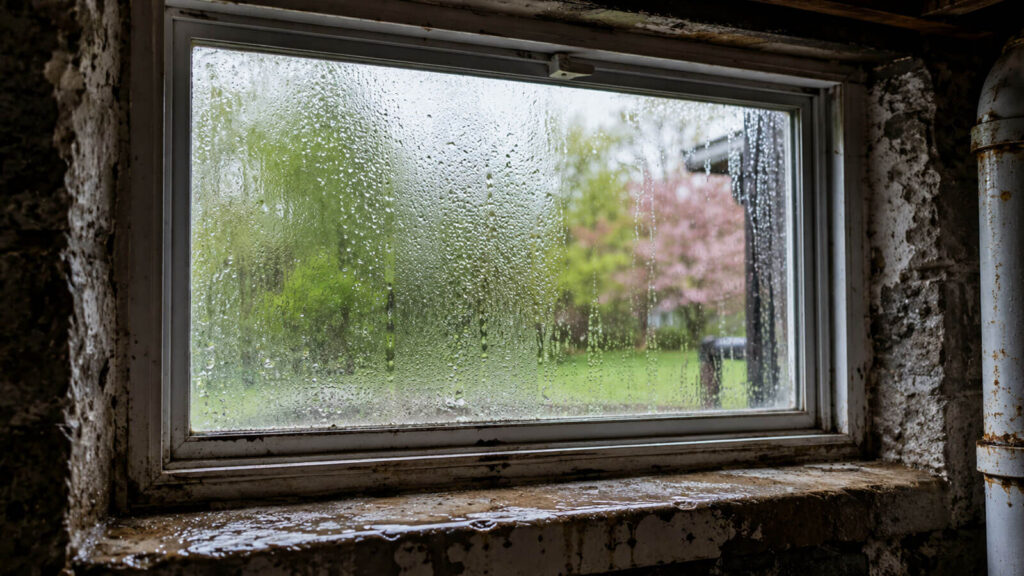
Why Old Basement Windows Sweat in Spring — and What Hudson Valley Homeowners Should Check First
That foggy film on a basement window in April is easy to dismiss. A little condensation after a cold night and a warm afternoon doesn’t sound like much. But in older homes, especially across the Hudson Valley, sweating basement windows are often a small visible clue that something else is going on: trapped moisture, weak air sealing, drainage problems, or a basement that’s staying colder and damper than it should.
The part homeowners miss most often is this: the window itself is not always the real problem. Sometimes the glass is simply the coldest surface in the room, which means it reveals humidity issues before anything else does. And in a basement, that humidity can come from a few directions at once — spring ground moisture, foundation seepage, poor ventilation, or even gutters that are dumping water near the house.
If you have older basement windows, especially in a stone foundation or a partially finished lower level, the difference between “seasonal condensation” and a real moisture issue can be expensive. The wrong assumption can lead homeowners to replace windows that weren’t the root cause in the first place.
Why basement windows sweat so easily in spring
Spring creates a very specific set of conditions that basement windows don’t handle well. Cold surfaces are still lingering from winter, but outdoor temperatures are rising, soil around the foundation is thawing, and the home may start trapping more humidity as doors and windows stay closed on damp or windy days.
In plain terms, warm moist air hits a cold basement window and the water in that air turns into droplets. That part is normal. What is not normal is repeated condensation that leaves sills wet, paint peeling, wood frames swelling, or mold appearing around trim.
Contractors usually start by asking where the moisture is coming from, not just where it shows up. That matters because the stain on the window frame is not always the source of the problem. Sometimes the actual issue is a drainage slope outside, a failing sill pan, or foundation dampness that is making the whole basement environment wetter than it should be. If that’s the case, the right fix may involve basement moisture and waterproofing help, not just a window replacement.
The clues that point to a moisture problem, not just an old window
A little condensation on a cold morning is one thing. A pattern of dampness tells a more useful story.
- Water beads on the glass most mornings, not just during unusual weather
- Window sills feel soft, stained, or swollen
- There’s a musty smell that gets worse after rain
- Paint is bubbling near the trim or lower wall
- Rust appears on metal fasteners, hinges, or nearby tools
- The basement floor or lower wall feels damp even when there’s no obvious leak
When contractors inspect this kind of issue, they usually look at the whole moisture chain. That means checking the exterior grading, gutters, downspouts, window wells if there are any, cracks in the foundation, and whether the basement is actually getting enough air exchange. In older Hudson Valley homes, especially those with stone foundations or long renovation histories, it’s common to find several small issues adding up to one visible symptom.
A useful companion check is to understand what foggy windows can reveal about indoor moisture, because the same humidity problem that shows up in a basement window can also show up elsewhere in the house.
What contractors usually inspect first
Good contractors rarely jump straight to “replace the window.” They start with the easier and more revealing questions first.
1. Exterior water management
Gutters, downspouts, splash blocks, grading, and the path water takes after a rainstorm matter more than most homeowners realize. If water is being pushed back toward the foundation, the basement will often stay damp enough to create recurring condensation. In spring, that problem tends to get worse because the ground is saturated for longer periods.
If the home has a steep driveway, a long private approach, or mature trees that shed debris into gutters, drainage can become inconsistent without anyone noticing. That’s why a window issue sometimes turns out to be an exterior water-control issue first.
2. Air sealing around the window
Old basement windows are often loose enough to leak cold air. That makes the glass colder, which increases condensation. Sometimes the frame is fine structurally, but the sash no longer closes tightly or the seals have failed.
This is where homeowners get tripped up. A window can look “old” but still be repairable, while a newer-looking unit may already have failed seals or poor installation. Replacing it blindly does not solve the underlying humidity if the basement itself is still wet.
3. Humidity levels inside the basement
If the basement feels clammy, the windows are just the first thing to show it. Dehumidifiers can help, but they are not a cure for water intrusion. They only manage the symptom. If the house has chronic moisture, the source has to be addressed or the issue keeps coming back every spring.
The mistake homeowners make most often
The most common mistake is trying to treat a condensation problem as if it were only a window problem. People replace a single basement window, add a little caulk, or buy a cheap plastic insert, then wonder why the same wetness returns the next season.
That happens because the home is still producing or retaining too much moisture. If the basement is damp from poor drainage, the new window will still collect condensation. If the room is poorly insulated, the cold surface problem remains. If the foundation is bringing in moisture through cracks or porous masonry, the lower level stays vulnerable no matter what the window frame looks like.
There’s also a counterintuitive detail homeowners often overlook: the cheapest-looking symptom is not always the cheapest fix. A little fog on the glass can sometimes point to a much larger envelope issue, while a visibly damaged window might only need air sealing, a sash repair, or improved drainage outside.
When a window replacement makes sense — and when it doesn’t
Some basement windows truly are past the point of repair. Rotting wood, broken locks, failed insulated glass, or frames that no longer close properly can all justify replacement. But a smart contractor will still want to understand the moisture conditions before recommending new units.
Replacement tends to make sense when:
- The frame is damaged by rot or corrosion
- The sash no longer seals tightly
- There is persistent water intrusion at the window opening
- The unit is so inefficient that it is worsening basement comfort
- The windows are part of a larger basement finishing or remodeling project
Replacement may be premature when the real issue is outside the window. If water is still rolling toward the foundation, or if the basement has chronic humidity from drainage and ventilation problems, a new window can become an expensive bandage.
That’s where it helps to speak with window and door contractors in the Hudson Valley who are used to diagnosing older homes, not just selling units. The good ones will want to know what the rest of the basement is doing before they talk product.
Why spring moisture problems can get expensive fast
Spring is a dangerous season for letting this kind of issue sit. Moisture has a way of spreading quietly. Wood trim starts to swell. Drywall near the basement ceiling can stain if humidity stays high. Musty smells settle into carpeting, storage, and finished rooms. Then a homeowner waits until summer, when the problem seems less obvious, only to find mold growth after the fact.
The other cost issue is that moisture often damages more than one system at a time. A damp basement can affect flooring, framing, insulation, and stored belongings. It can also attract pests and make mechanical equipment work in a harsher environment. In homes with oil heat, older electrical systems, or utility rooms in the basement, that matters more than people think.
Once materials start degrading, repair costs rise quickly because the job stops being simple window work and becomes carpentry, waterproofing, insulation, or mold remediation. That escalation is exactly why early inspection pays off.
What a practical homeowner can check before calling anyone
You do not need to diagnose the whole house yourself, but a few basic checks can help you talk to a contractor more clearly.
- Look outside and see where downspouts discharge
- Check whether soil slopes away from the foundation
- Inspect the window frame for soft spots or peeling paint
- Notice whether the basement smells worse after rain
- See if condensation appears only on one window or on several
- Run a dehumidifier for a few days and watch whether the problem improves
If several windows sweat at once, that usually suggests a broader humidity or insulation issue. If just one window is wet, the problem may be local: a bad seal, a draft, or a specific exterior drainage path hitting that opening.
And if the lower level is consistently damp after spring storms, it’s worth reviewing spring drainage problems around the foundation before the next heavy rain makes the issue worse.
Why older Hudson Valley homes are especially vulnerable
Homes in this region often combine a few moisture-sensitive traits: aging masonry, stone or block foundations, slope-driven runoff, mature trees, and basements that were not originally designed for modern comfort levels. Add freeze/thaw cycles, winter snow melt, and spring rain, and you get a long season of wet conditions pressing against the house.
Basement windows in these homes are often smaller, older, and closer to grade. That makes them more exposed to soil moisture and less forgiving of imperfect sealing. Detached garages, workshops, and older additions can also complicate the picture because they were sometimes built with different materials or drainage assumptions.
In other words, the moisture problem is rarely isolated. It’s usually part of a building system that has aged in layers.
FAQ
Is condensation on a basement window always a problem?
No. Light condensation during temperature swings can be normal. It becomes a concern when it happens often, leaves damage, or comes with musty odors, peeling paint, or damp walls.
Can a dehumidifier solve basement window sweating?
It can reduce condensation, but it won’t fix water coming in from outside. If the basement is damp from drainage or foundation issues, a dehumidifier is only part of the answer.
Should I replace old basement windows if they fog up in spring?
Not automatically. A contractor should first check drainage, air sealing, and foundation moisture. Replacing the window before understanding the cause can waste money.
What does it mean if only one basement window sweats?
That often points to a local issue, like a draft, failed seal, or a specific exterior water path. Multiple sweaty windows usually suggest a broader moisture problem.
Can poor gutters really affect basement humidity?
Yes. Water dumped too close to the foundation can saturate soil, raise basement moisture, and make window condensation worse.
When should I bring in a professional?
If condensation keeps returning, if wood is starting to rot, if odors are getting stronger, or if you see signs of water intrusion after rain, it’s time to have the issue looked at before it spreads.
If you’re dealing with recurring basement window condensation, the safest move is to treat it as a moisture clue, not just a cosmetic annoyance. A good local contractor will look at drainage, ventilation, sealing, and foundation conditions together, which is usually the fastest way to avoid repeated repairs and protect the home long term.