

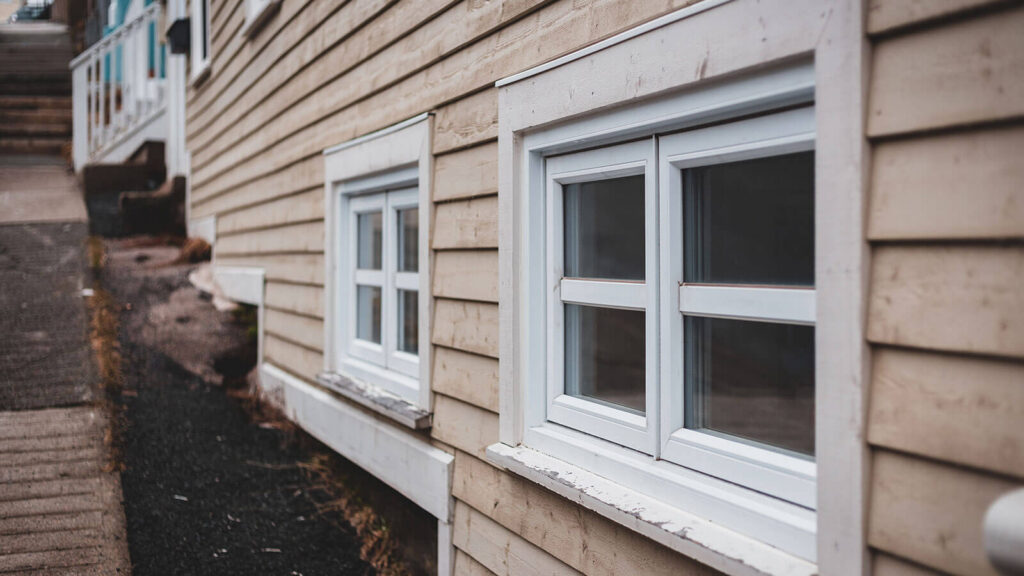
Basement windows have a way of turning a manageable spring storm into a much bigger conversation. A little dampness on the sill seems harmless at first, until it starts showing up after every heavy rain, followed by peeling paint, musty air, rusted window wells, or that familiar basement smell that never quite goes away. In older Hudson Valley homes, especially the ones with stone foundations, shallow window wells, and grading that’s changed over the years, water around basement windows is often less about the window itself and more about where the water is being pushed.
That’s why this issue gets misread so often. A homeowner sees a leak around a basement window and assumes the window needs to be “sealed better.” Sometimes it does. But contractors usually look farther out first: gutters, downspouts, grading, window wells, masonry joints, and whether the soil next to the foundation is funneling runoff right where the house is weakest. If the drainage story is wrong, a new caulk bead rarely solves much for long.
Why Basement Window Leaks Are So Common After Heavy Rain
Basement windows sit in one of the most vulnerable parts of the house. They’re below grade, exposed to splashback, and often surrounded by soil that has settled over decades. When spring rain arrives or snowmelt has nowhere to go, water collects around the foundation and presses into every weak spot it can find. That includes the frame, the sill, the masonry opening, and any cracked or clogged window well.
In the Hudson Valley, the problem gets amplified by freeze-thaw cycles and mature landscaping. Roots shift soil. Downspouts discharge too close to the house. Window wells fill with leaves. Stone foundations and older block walls can move slightly over time, which opens hairline paths for water that were never obvious when the home was built. The leak you see at the window may actually be the last place water is being forced out after it has already traveled through the surrounding soil or wall cavity.
That’s why a stain on the basement wall isn’t always a reliable clue. The stain often isn’t directly below the actual entry point. Water can run along framing, behind finished walls, or across uneven masonry before it shows up where you can see it. Contractors know that, which is why a repair estimate that starts with the visible wet spot and stops there usually misses the real issue.
The First Things Contractors Usually Check
Before anyone talks about replacement windows or waterproof coatings, experienced contractors tend to inspect the drainage path. That means looking at the whole system, not just the window unit.
- Are the gutters overflowing or dumping near the foundation?
- Are the downspouts extended far enough away from the house?
- Is the grading sloping toward the foundation instead of away from it?
- Is the window well full of debris, soil, or standing water?
- Are there cracks in the masonry around the opening?
- Is the basement wall showing signs of broader moisture intrusion?
If the answer to more than one of those questions is yes, the window is probably part of a larger water-management problem. That’s where a broader look at foundation and waterproofing help becomes relevant, because basement water rarely respects the boundary between “window issue” and “foundation issue.”
One counterintuitive thing homeowners often miss: the window itself may be in decent condition. The surrounding drainage may be the real failure. Replacing the unit without correcting runoff can make the new window look good for a season, then the same problem returns after the next heavy rain.
What Usually Goes Wrong Around Old Basement Windows
Some basement leaks are tied to the window frame, but plenty are caused by older construction details that were never designed for today’s weather patterns. Many of the homes around Dutchess, Putnam, and Westchester counties were built before modern drainage practices were standard. Back then, a shallow window well and a small splash of water were easier to get away with. Not anymore.
Common failure points homeowners overlook
Cracked caulk is the obvious one, but it’s rarely the whole story. The more common culprits include failed mortar around the opening, rusted or bent window wells, clogged drains in the well, deteriorated sill plates, and exterior grade that has slowly crept upward over time. Sometimes mulch, stone, or landscaping beds have been built up so high that they trap moisture against the wall.
In a lot of cases, the problem is compounded by work that looked fine when it was done. A quick sealant job around the inside trim can hide the symptoms long enough to delay the real repair. That’s not a fix; it’s a pause button.
Homeowners also underestimate how much gutter performance matters here. If roof runoff is not being carried away properly, basement windows are often the first low point to suffer. That’s why gutter services for heavy spring runoff can end up being a smarter first step than touching the window at all.
When a Simple Repair Is Enough, and When It Isn’t
If the leak is clearly tied to a small failure, a targeted repair may be enough: resealing the exterior perimeter, cleaning out the window well, correcting a downspout, or replacing a damaged well liner. Those repairs make sense when the wall itself is sound and the water issue is isolated.
But if the basement window is part of a system-wide moisture problem, treating it like an isolated defect is where homeowners get into trouble. A window replacement may improve the appearance and tighten the opening, but it won’t stop hydrostatic pressure from pushing water through the wall. It won’t fix a poorly graded yard. It won’t solve a clogged footing drain. And it won’t stop runoff from a neighboring slope or long driveway from loading up the same part of the foundation every storm.
That’s why it can help to compare the right contractor trade rather than assuming every water problem belongs to the same scope. In some cases, a window specialist is the right place to start. In others, the issue is really in the foundation, drainage, or exterior grading. A resource like compare the right contractor trade can help homeowners sort that out without guessing.
The Repairs That Often Fail Too Soon
There’s a reason some basement window repairs seem to “work” and then fail again within a year or two. The most common short-term fix is interior caulking or patching around the trim, which does little when water is coming from outside under pressure. Another weak repair is a window well cover installed over a badly draining well. It keeps debris out, but if the well already collects water, the cover can actually trap the problem longer.
Cheap fixes are especially shaky in older homes where the masonry has aged unevenly. Basement openings aren’t always square, the surrounding materials may be porous, and one section of wall can behave differently from another. That’s why a repair that works on a newer foundation can disappoint on a stone or block wall from an earlier era.
If the area around the window is soft, stained, efflorescing, or repeatedly damp after rain, there’s a decent chance the real issue is not the trim. It’s the moisture path behind it.
Why Timing Matters More Than Homeowners Think
Water around basement windows rarely stays a small annoyance for long. Once moisture is entering regularly, it starts affecting everything nearby: framing, insulation, drywall, stored belongings, and indoor air quality. Mold doesn’t need a dramatic flood to become a problem. Repeated dampness is enough.
There’s also a resale angle that homeowners sometimes underestimate. Buyers in the Hudson Valley are familiar with basement moisture. They know what signs to look for. A stained sill, a rusty well, or a persistent smell can raise questions fast, especially if the home already has older infrastructure or a history of patchwork maintenance. Solving the problem thoroughly tends to be cheaper than explaining it later.
Delayed repairs also tend to get more expensive because water rarely isolates itself. What begins as a leaking window can eventually affect insulation, wall finishes, and even nearby electrical components if the basement is partially finished. Once that happens, the conversation shifts from a drainage fix to demolition and restoration.
What Hudson Valley Homeowners Can Do Before the Next Storm
There are a few practical steps worth taking before the next round of heavy rain:
- Clean gutters and confirm downspouts discharge well away from the foundation.
- Check that the soil slopes away from the house, not toward it.
- Remove leaves, mulch, and debris from window wells.
- Look for cracked mortar, peeling sealant, or rust around the opening.
- Make sure window well drains are not clogged or buried.
- Watch for seepage after rain, not just during it.
If the yard around the basement wall seems to be contributing to the problem, landscaping drainage fixes near basement walls may be part of the solution, especially where soil has settled or runoff is pooling against the house. If the issue is broader than one window, it is worth reviewing spring drainage problems around the foundation before the next storm exposes the same weak spot again.
When It Makes Sense to Bring in a Professional
If water is entering during rain, if the basement smells damp after storms, or if the window well repeatedly fills with water, it’s worth having the area assessed by someone who understands both the window and the drainage side of the problem. That matters because the right fix depends on what is actually driving the water, not just where it shows up.
For some homes, the answer is new basement windows with better sealing and a properly drained well. For others, the fix is exterior grading, gutter correction, or below-grade waterproofing. And in older homes with persistent seepage, the best solution may be a combination of improvements rather than one big replacement project. That’s the part homeowners don’t always hear from a quick sales pitch, but it’s usually the truth.
If you’re not sure whether the issue belongs with windows, drainage, or foundation work, start by evaluating the whole system and then narrow it down. That approach saves time, avoids repeat repairs, and usually leads to a better long-term result. If needed, basement window and door contractors can help assess whether the opening itself is failing, while a broader moisture review may point toward more appropriate repairs.
Frequently Asked Questions
Why does my basement window leak only after heavy rain?
Heavy rain can overwhelm gutters, downspouts, grading, or the window well drain. The leak may not be from the window frame alone; it’s often a drainage issue around the foundation.
Can I just caulk around the inside of the window?
That may hide the symptom for a while, but it rarely solves the cause. If water is coming from outside or through the wall, interior caulk is usually only a temporary bandage.
Do window well covers stop leaks?
They help keep debris out, but they won’t fix a window well that already collects water. In some cases, a cover can trap water longer if drainage is poor.
How do I know if the problem is the window or the foundation?
If the leak happens with several storms, shows up alongside wall staining, or comes with dampness in other basement areas, the problem may extend beyond the window. A contractor usually checks the drainage path first.
Is this something I should fix before winter?
Yes, if possible. Freeze-thaw cycles can widen cracks, worsen seepage, and make small moisture issues more expensive to address later.
What’s the biggest mistake homeowners make with basement window leaks?
Assuming the visible wet spot is the actual source. Water often travels before it appears, so the real fix may be outside the window opening entirely.
Basement window leaks are annoying, but they’re also useful warnings. They tell you where water is finding the weakest point in the house. The sooner that signal is taken seriously, the easier it is to protect the basement, avoid repeat repairs, and make a smarter decision about which contractor trade should handle the problem.