

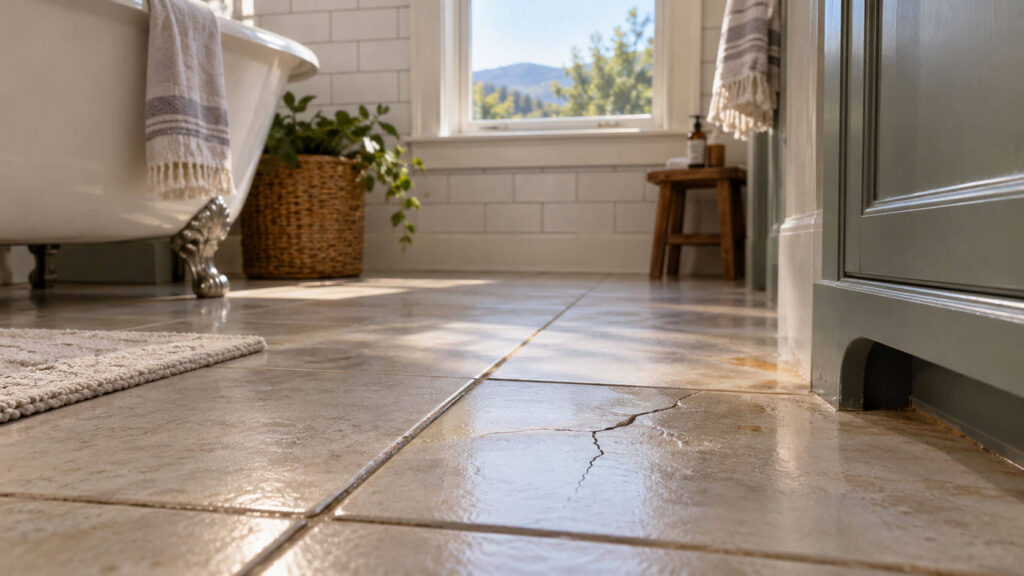
Why Bathroom Tile Cracks Deserve More Attention Than Most Homeowners Give Them
A hairline crack in bathroom tile is easy to dismiss. It does not leak, the grout still looks mostly fine, and the floor is not giving way underfoot. That is exactly why these cracks get ignored longer than they should. In a lot of older Hudson Valley homes, a cracked tile is less about the tile itself and more about what the floor, subfloor, or framing has been doing underneath it.
Contractors tend to take bathroom tile cracks seriously for a reason: they often sit at the intersection of moisture, movement, and aging materials. Sometimes the fix is straightforward. Other times the crack is the first visible sign of a bigger issue that can turn a small repair into a much larger scope, similar to the kinds of surprises covered in hidden bathroom remodel costs.
The mistake many homeowners make is assuming a cracked tile means a bad tile job and nothing else. That is occasionally true, but not always. In older homes, especially ones with stone foundations, seasonal moisture, or previous patchwork repairs, tile failure can be the result of subtle movement long before anyone notices a soft spot or visible water stain.
What a cracked bathroom tile is really telling you
Tile does not usually crack in isolation. It cracks because something beneath it has shifted, flexed, expanded, or deteriorated. That can be a bad installation, sure, but it can also be an underlayment issue, an uneven subfloor, missing backer board, or moisture intrusion from a tub, shower, or nearby wall.
One counterintuitive thing contractors often point out: the visible crack is not always located above the actual problem. A tile near the vanity might crack because the subfloor along the tub line has been slowly weakening, or because the floor structure is flexing in a different area entirely. The tile is often just the first weak point to show it.
This is where homeowner guesswork can get expensive. A tube of caulk or a quick grout patch might make the surface look better for a while, but it does nothing if the floor is moving underneath. That kind of temporary fix can also hide the pattern of damage long enough for moisture to keep spreading.
What contractors usually check first
When a contractor looks at cracked bathroom tile, the first questions are practical ones: Is this one isolated tile or several? Is the crack running straight or branching? Is there any hollow sound when tapped? Is the grout separating nearby? Are there signs of soft subfloor, loose trim, or moisture around the tub or toilet?
Those details matter because they help separate cosmetic damage from structural movement. A single cracked tile in the middle of a well-built floor may be a localized problem. Multiple cracks, especially if they follow a line or appear near an exterior wall, usually deserve a closer look. If there is broader movement or moisture-related deterioration, homeowners may need a contractor for a larger bathroom repair scope rather than a simple tile swap.
In a Hudson Valley house, contractors also pay attention to the age of the home and what kind of bathroom construction they are dealing with. Older bathrooms may have layers of old flooring under newer tile. Some were renovated in stages by different trades over the years. That patchwork history is one reason repair estimates can change once the floor is opened up.
Common causes homeowners overlook
Cracked bathroom tile often starts with something less obvious than a dramatic leak. A few of the usual suspects include:
- flex in the subfloor from long-term wear or undersized framing
- water intrusion around the tub, shower curb, or toilet flange
- poor thinset coverage during installation
- missing or inadequate underlayment
- movement from seasonal humidity and temperature swings
- previous repairs layered over an already unstable floor
In this region, humidity and freeze/thaw cycles can make small issues behave worse than homeowners expect. A bathroom over an unconditioned space, or one near a cold exterior wall, can see more movement than a newer suburban bathroom with better insulation and ventilation. That is one reason older homes sometimes show recurring tile problems even after a repair that looked fine at first.
It is also worth remembering that water does not need to create a dramatic flood to cause damage. Slow seepage around the toilet base or shower edge can weaken the floor long before anyone sees staining. Once moisture gets into the assembly, it often works quietly behind the tile and grout lines. If that moisture is part of a larger pattern, it can connect to drainage problems that lead to indoor moisture elsewhere in the house.
When a crack is just a crack, and when it is a warning sign
A single hairline crack in one tile is not automatically an emergency. But it should not be treated like harmless cosmetic wear either. The bigger question is whether the crack is stable or active.
Stable cracks are usually narrow, isolated, and unchanged over time. Active cracks tend to get longer, widen, or appear alongside grout separation, loose tiles, or nearby floor squeaks. If the crack is near the shower, toilet, or tub and there is any evidence of moisture, the situation deserves more urgency.
Homeowners often wait for a leak before acting. That is a mistake. By the time moisture is visible through a ceiling below or along trim, the hidden damage has usually already progressed. The repair then stops being about tile and starts involving framing, insulation, waterproofing, and sometimes drywall or finished flooring in adjacent rooms.
That is why a smart first step is not guessing. It is getting the right trade category involved early, even if only to confirm the scope. If you are unsure whether this is a tile issue, a waterproofing issue, or something bigger, it helps to compare the right contractor category before the problem spreads.
Why quick fixes often fail
The internet is full of fast solutions for cracked tile: epoxy filler, caulk, color-matched grout, or simply replacing the visible broken piece. Those fixes can help in very narrow situations, but they often fail when the real issue is movement. If the floor flexes, the tile will crack again. If water is getting in, cosmetic repair only delays the next round of damage.
Another problem is that a patch can give a false sense of security. The surface looks improved, so homeowners stop watching the area closely. Meanwhile, moisture intrusion or subfloor deterioration keeps going. This is especially risky in bathrooms with older fan systems, poor ventilation, or repeated condensation problems, because humidity can quietly sustain the damage.
That is also why tile repairs sometimes tie into broader flooring decisions. If the tile bed, underlayment, or adjacent floor transition has failed, a contractor may recommend work that goes beyond a single tile replacement. In that case, it is worth speaking with tile and flooring installation contractors who can evaluate whether a repair will actually hold up.
What makes Hudson Valley bathrooms more vulnerable
Older Hudson Valley homes often combine several risk factors at once: aging framing, historic settling, bathrooms tucked into small additions, and years of repair layers built on top of one another. Add in mature trees, drainage challenges, and winter moisture swings, and bathroom assemblies can be under more stress than homeowners realize.
Some homes also have stone foundations or basements that stay damp longer than people expect. That moisture does not always show up directly in the bathroom, but it can affect the structure below the floor. When contractors see repeated floor cracking, they often look for clues in surrounding areas too, including crawl spaces, basement walls, and exterior grading.
In other words, bathroom tile problems are sometimes part of a broader moisture story. If the home has recurring dampness, a poorly vented bath fan, or drainage that sends water toward the foundation, the bathroom may be absorbing stress from the rest of the property. In those cases, the issue may connect back to moisture or structural movement behind the crack rather than a simple surface defect.
How to think about repair timing
Timing matters more than many homeowners think. Waiting a few weeks to see if a crack worsens is reasonable. Waiting a season is not, especially if the bathroom sees regular use and the crack is near a wet area.
The real cost problem is not the cracked tile itself. It is the secondary damage that develops while the issue is left alone: weakened subfloor, damaged insulation, mold-friendly moisture, loose trim, and larger areas of tile that have to be removed once the repair begins. What looks like a small job can become a partial bathroom rebuild if the underlying materials are compromised.
That is why a careful inspection early on is usually cheaper than a rushed repair later. Even if the solution ends up being simple, knowing that early keeps the homeowner from repeatedly paying for the same problem in different forms.
Practical next steps before you hire anyone
If you notice a cracked bathroom tile, take a few minutes to document it before doing anything else. A close photo, a wider shot showing the room, and a note about whether the crack has changed can be surprisingly useful later. Contractors diagnose patterns, and good notes help them tell whether the issue is stable or actively moving.
Then look for the signs that matter most:
- loose or hollow-sounding tiles nearby
- grout separation along the same line
- softness or bounce in the floor
- staining at the base of the tub or toilet
- musty odor, especially after showers
- cracks that reappear after a prior repair
If any of those are present, do not assume it is just a cosmetic issue. The goal is not to panic. It is to avoid paying twice for the same floor. When the scope is unclear, an experienced local contractor can help you decide whether the next step is a simple tile repair, a waterproofing assessment, or a larger bath renovation.
Frequently Asked Questions
Can I just seal a cracked bathroom tile?
Sometimes, but only if the crack is truly cosmetic and the tile is stable. If the floor is moving or moisture is getting in, sealing the crack will not solve the underlying issue.
Does one cracked tile mean the whole bathroom floor is failing?
Not necessarily. But it does mean something deserves a closer look. One tile can fail from a localized issue, while repeated cracking usually points to a broader problem.
Should I replace the tile myself?
DIY replacement is risky if you do not know why the tile cracked. If the substrate is damaged or the floor has movement, a new tile may crack again quickly.
What if the crack is near the tub but there is no visible leak?
That is still worth checking. Slow moisture intrusion often shows up before obvious leaking, especially around tub edges, toilet bases, or shower transitions.
How urgent is a cracked bathroom tile?
If it is isolated and unchanged, it may not be an emergency. If it is spreading, paired with loose grout, or located near water, it should be addressed sooner rather than later.
Who should I contact first?
If the issue seems limited to tile, start with flooring or tile professionals. If you see signs of water damage, movement, or broader bathroom issues, a general contractor or waterproofing specialist may be the better first call.
A cracked bathroom tile is often a small surface clue to a larger story. The smartest homeowners treat it that way: calmly, early, and with the right eyes on the problem before it turns into a bigger repair than it needed to be. If you are unsure what category your issue falls into, HV Trades can help you find a trusted local professional and avoid the kind of expensive guesswork that tends to happen when bathroom problems are handled too late.
