

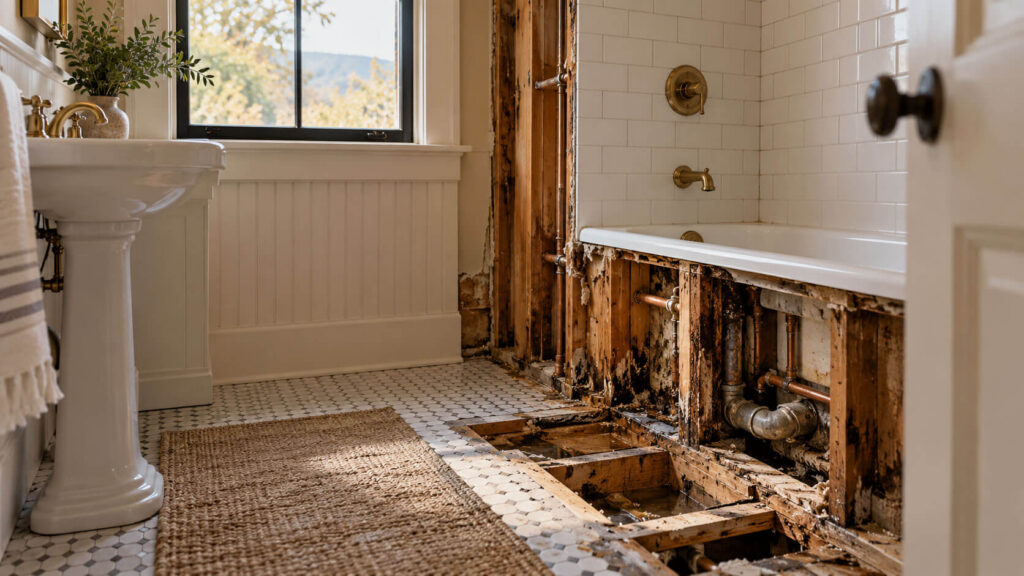
Small bathroom updates have a way of growing teeth. What looks like a simple tub swap or vanity refresh can turn into plumbing tweaks, subfloor repairs, ventilation questions, and electrical updates once the walls and flooring start coming apart. That’s especially true in older Hudson Valley homes, where nothing is quite as square, dry, or up to date as it first appears.
The expensive part of a bathroom project is often not the visible finish work. It’s the hidden stuff behind the tile, under the tub, and inside the walls. That’s why homeowners who plan carefully usually spend less than the ones who rush into a “quick refresh” and discover rot, outdated wiring, or a tub that never should have been left in place this long. If you’re weighing a small update, it helps to think like a contractor from the start, especially when the project may need general contracting help in Putnam County to keep the work coordinated.
Why small bathroom updates are rarely just cosmetic
On paper, a bathroom refresh sounds straightforward. Replace the old tub, install new flooring, update the vanity, maybe change the light fixture. In real homes, those items are connected. Once one layer is removed, contractors often find water damage around the tub flange, loose or uneven subflooring, mold-resistant drywall where it was never installed, or shutoff valves that no longer shut off cleanly.
That’s why small bathrooms can be deceptively expensive. There isn’t much square footage, but the labor is dense. Every square foot tends to involve plumbing, waterproofing, finish carpentry, and careful sequencing. A delay in one trade pushes the whole schedule. In older homes, it’s even more common to find one repair exposing another, which is why homeowners sometimes end up comparing their scope to whether to replace an old tub before they finalize the rest of the plan.
Contractors usually look first at the condition of the subfloor, the tub or shower surround, the venting, and the electrical layout. Those four items tend to tell the real story. If the room has chronic moisture, poor airflow, or outdated wiring, the cosmetic choices matter less than they seem at the beginning.
The hidden costs homeowners usually miss
The obvious costs are easy to budget for: tile, fixtures, paint, flooring. The missed costs are what cause frustration. In Putnam County and across the Hudson Valley, small bath projects often uncover one or more of these issues:
- rotted plywood or soft subfloor near the tub
- water-stained framing behind old surrounds
- undersized or improperly vented exhaust fans
- GFCI or outlet placement that no longer meets code expectations
- failing shutoff valves at the sink or toilet
- tile removal damage that makes the floor impossible to reuse
What surprises people most is that the visible damage is not always the worst damage. A stained baseboard may be a small clue, while the actual issue is hidden behind the tub apron or under the toilet flange. That’s one reason experienced contractors often want to open the room in a controlled way rather than “save time” by working around old materials.
If electrical work is part of the update, it’s smart to understand the scope early. Bathroom lighting changes, fan wiring, and outlet upgrades can alter the budget quickly, which is why homeowners often end up needing Putnam County electrical services as part of what seemed like a basic remodel.
Why older Hudson Valley bathrooms behave differently
Older homes in the region have their own patterns. Some have plaster walls that crack when disturbed. Some have outdated cast iron tubs set into framing that was never intended for today’s waterproofing standards. Others have bathrooms added onto older homes in ways that create odd vent runs, limited insulation, or floor slopes that don’t show themselves until tile comes up.
Moisture is the recurring theme. A bathroom that feels “just a little damp” often has a bigger air movement or insulation problem than the homeowner realizes. Detached garages, long private driveways, and rural properties can also mean repairs get delayed because the house still seems livable. But bathrooms don’t forgive delay. Water in a small enclosed room tends to spread quietly, and then the repair jumps from cosmetic to structural.
One counterintuitive thing contractors see all the time: the stain on the ceiling or the soft spot on the floor is often not directly below the actual leak. Water follows framing members, pipe paths, and tile backer edges before it shows up somewhere obvious. That’s why a guess-and-patch approach usually wastes money.
When the floor becomes the real project
Bathroom floors are where many “small” projects change shape. Once old tile or vinyl is removed, homeowners may learn the subfloor is uneven, weakened, or patched from a previous repair. That matters because new finishes only perform as well as the surface below them. A beautiful floor over compromised plywood is a short-lived upgrade.
This is also where material choice matters more than marketing. Waterproof flooring, tile, and underlayment all have different installation requirements. If the room needs leveling, patching, or transition work at the doorway, the scope expands. That’s one reason it helps to talk to flooring installation contractors in Putnam County before committing to a finish that assumes the subfloor is already perfect.
Contractors usually inspect for bounce, rot, previous patchwork, and signs of recurring moisture before recommending a finish. If the floor is already compromised, the smartest move is usually to repair the structure first and decide on finishes second.
Choosing between repair, replacement, and “one more year”
Homeowners often try to stretch an older tub, tile surround, or vanity a little longer. Sometimes that’s reasonable. But there’s a difference between delaying an upgrade and delaying a known failure point. If the tub cracks, the caulking never holds, or the enclosure has already leaked behind the walls, the room is telling you something.
The same goes for aging tubs with stained surfaces, brittle surrounds, or poor drainage. Sometimes a simple repair is enough. Other times, the materials are past the point where patching makes sense. If you’re unsure how to evaluate that tradeoff, it can help to read more about whether to replace an old tub before deciding whether to repair, refinish, or start fresh.
A good contractor won’t push replacement just because it’s easier. But they also won’t pretend a failing component is worth preserving if it’s likely to create another call-back next year. That judgment matters.
Why timing matters more than homeowners expect
Bathroom projects tend to get more expensive when they’re done under pressure. A leak that starts in winter, a toilet that fails right before family visits, or a shower that suddenly smells musty all create urgency. And urgency usually shortens the decision-making window, which is when homeowners get talked into shortcuts.
Shortcuts often fail in predictable ways. New tile over a bad floor moves and cracks. A fan that’s just “good enough” leaves humidity trapped in the room. A patch over old water damage hides the problem until the next storm or freeze-thaw cycle. In the Hudson Valley, where winters are hard on materials and spring moisture can be relentless, that kind of delay often means paying twice.
That’s why many homeowners do better when they start by gathering information instead of rushing into demolition. The homeowner resources for planning repairs and remodels can help make the early planning phase less guesswork-heavy, especially when comparing scope, materials, and likely trade involvement.
What experienced contractors inspect first
Before anyone starts pricing tile or fixtures, good contractors usually check the details that predict trouble:
- how the tub or shower is flashed and sealed
- whether the subfloor feels solid and level
- if the exhaust fan is actually vented outdoors
- how the outlets and lighting are wired
- whether shutoff valves are functional and accessible
- if there are signs of past leaks around the toilet or tub
That sequence matters because it reveals whether the project is mainly finish work or whether it needs correction work first. Homeowners sometimes think a contractor is “finding problems” to increase the price. More often, the contractor is identifying the part of the job that would otherwise fail after the new finishes are in place.
If the project is in Putnam County and you want a broader view of local contractor options, it can also help to review trusted contractors in Putnam County before you move too far into selection mode.
How to keep a small bathroom project from snowballing
The best protection is a realistic scope. That means deciding early whether the job is truly cosmetic or whether it should include structural, plumbing, or electrical updates while the room is open. It also means allowing a contingency for hidden conditions, because hidden conditions are not rare in older homes; they are normal.
Homeowners who keep the project under control usually do three things well:
- they ask what the contractor expects to find once surfaces are removed
- they budget for at least one likely repair, not just the pretty parts
- they avoid locking in finish choices before the room is inspected
That last point matters more than people think. The order of operations should protect the structure first, then the waterproofing, then the finishes. Reversing that order is how projects get expensive and disappointing.
Frequently Asked Questions
Is a small bathroom update usually cheaper than a full remodel?
Usually, yes, but not always by much. If the room has water damage, old wiring, or floor issues, the hidden work can narrow the gap fast.
What is the most common surprise in an older bathroom?
Subfloor damage near the tub or toilet. Contractors also find poorly vented fans and old plumbing shutoffs more often than homeowners expect.
Should I replace flooring before or after the tub work?
Usually after the tub or shower plan is finalized. The floor and tub details need to work together so the finished room doesn’t trap moisture or create awkward transitions.
Can I just patch the problem and remodel later?
Sometimes. But if the issue involves recurring leaks, soft flooring, or failing waterproofing, patching often just delays a larger repair.
Do bathroom remodels in older Hudson Valley homes need more planning?
They usually do. Aging materials, uneven framing, moisture history, and outdated electrical or plumbing setups tend to make the scope less predictable.
When should I bring in a contractor instead of trying DIY?
If the project involves plumbing behind walls, damaged flooring, waterproofing, or electrical changes, it’s usually worth getting professional guidance before you start tearing into it.
Small bathroom projects are where good planning pays off most. If you’re trying to decide what’s worth repairing, what should be replaced, and what can safely wait, it’s smart to get advice from local pros who understand older homes and real project sequencing. That’s usually the difference between a clean upgrade and a repair that keeps coming back.
