

Crawl Space Smells Worse After Rain? What Hudson Valley Homeowners Should Know Before It Turns Into a Bigger Moisture Problem
That musty, damp smell that shows up after a heavy rain is easy to ignore at first. It fades. The basement seems fine. The crawl space is “mostly dry.” Then the next storm rolls through, and the odor comes back stronger than before.
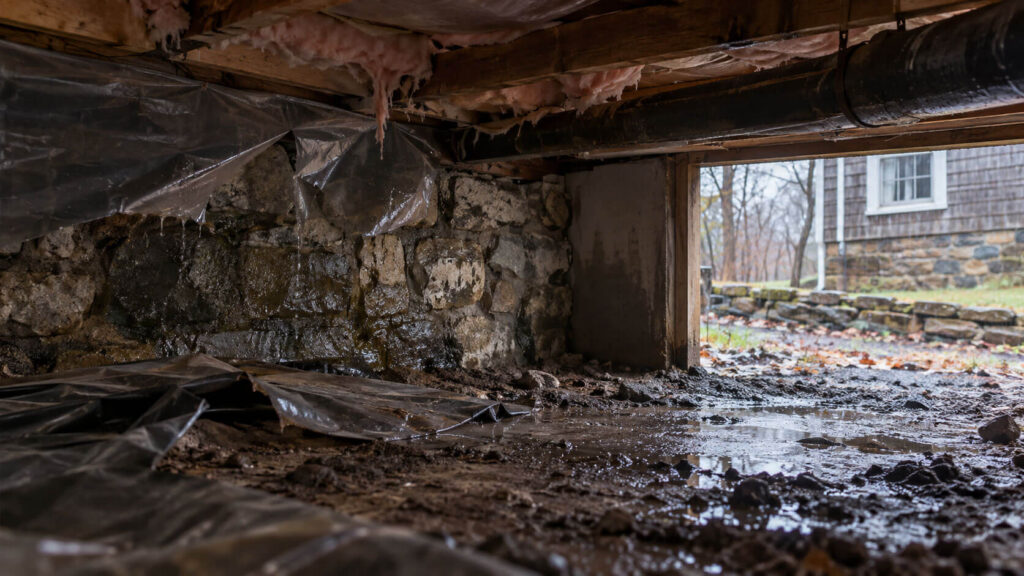
That pattern is worth paying attention to. In a lot of Hudson Valley homes, a rainy-day smell is less about the odor itself and more about what moisture is doing under the house: softening insulation, feeding mold growth, soaking vapor barriers, or exposing drainage problems that have been building for years. When homeowners wait too long, what started as a smell turns into damaged insulation, wood rot, pest activity, and higher repair costs.
If you’re trying to figure out whether the issue is minor or something more serious, it helps to understand how crawl spaces actually behave in older homes across Dutchess, Putnam, Westchester, and nearby towns. Moisture doesn’t always enter in the obvious place, and the strongest smell is often not the most damaged area.
Why crawl space odors get worse after rain
A crawl space smell that shows up after rainfall usually points to water moving somewhere it shouldn’t. That might be surface water running back toward the foundation, gutters dumping too close to the house, groundwater pressing in through the soil, or humidity being trapped under the floor system. In older homes, especially those with stone foundations or minimal vapor control, the crawl space can act like a moisture reservoir every time the weather turns wet.
Here’s the part homeowners often miss: the odor is usually a symptom, not the problem. The smell is caused by damp materials, stagnant air, or microbial growth, but the real issue is why those materials got wet in the first place. That’s why contractors usually start by looking outside the home before they focus on the crawl space itself.
It is also common for the smell to appear after rain even when the crawl space does not have standing water. High humidity, wet soil, a leaking downspout, or a failed vapor barrier can be enough to create a strong musty odor. In that case, the home may never look “flooded,” but the moisture load is still there.
If you’ve already noticed drainage trouble around the property, it may be worth reviewing spring drainage problems around Hudson Valley homes before the next storm hits.
What contractors usually inspect first
When a crawl space smells worse after rain, experienced contractors usually do not start with the odor itself. They start with the water path. That means checking grading, roof runoff, gutter discharge, downspout extensions, exterior foundation exposure, and whether the soil around the house is staying saturated.
After that, the crawl space inspection typically moves to the conditions that hold moisture in place:
- wet or compressed insulation
- torn or missing vapor barriers
- mold growth on joists or subflooring
- pest intrusion around openings or vents
- efflorescence or damp staining on foundation walls
- condensation from poor airflow or temperature swings
In the Hudson Valley, contractors also keep an eye on how water behaves after freeze-thaw cycles. A yard that seems manageable in dry weather can push water toward the foundation once the ground softens in spring or after repeated storms. That is one reason some crawl space problems seem seasonal even though the real cause is structural or drainage-related.
Another thing professionals pay attention to is whether the insulation itself has become part of the problem. Wet or sagging insulation can trap odor, hold moisture against framing, and reduce the energy performance of the home. At that point, homeowners are no longer dealing with a smell; they’re dealing with a building-envelope issue. That’s where crawl space insulation contractors become relevant, especially if the insulation has been exposed to repeated dampness or air leakage.
The mistake most homeowners make: treating the smell instead of the source
Sprays, deodorizers, fans, and scented products may reduce the odor for a few days. They rarely solve the underlying problem. In fact, masking the smell can delay a useful inspection, which is how a relatively manageable moisture issue becomes expensive.
This is one of the most common homeowner traps. If the odor eases up after a dry spell, people assume the problem is gone. It isn’t. The crawl space may simply be drying out enough for the smell to fade, while the underlying conditions remain the same.
A counterintuitive but important point: the strongest smell is not always coming from the wettest spot. Sometimes the worst odor comes from an area where air is trapped, like behind old insulation, near rim joists, or around disconnected ductwork. That’s why surface cleanup alone often disappoints. A contractor is usually looking for moisture plus airflow patterns, not just visible water.
Where the water is often coming from
Rain-related crawl space odors usually trace back to one of a few patterns. The challenge is that the obvious culprit is not always the real one.
Roof runoff
Clogged or undersized gutters can dump a lot of water right at the foundation line. On a house with steep grading or limited drainage, that water can soak into the soil and migrate under the home. If you suspect runoff is part of the issue, gutter services that help control roof runoff may be part of the long-term fix rather than a cosmetic improvement.
Poor grading
Many older properties in the region were never graded with modern drainage standards in mind. Add mature trees, settled soil, or a long driveway that redirects water, and the runoff starts pooling where it shouldn’t. Even a slope that looks harmless can funnel water toward a foundation over time.
Foundation seepage
Stone foundations, aging block walls, and marginal exterior waterproofing can allow moisture to enter during storms or when the groundwater rises. The crawl space may not flood, but the walls and floor joists can stay damp long enough to produce a recurring smell. In those cases, foundation and waterproofing services are often the more important conversation than odor control.
Missing or failed vapor control
Vapor barriers are one of the most overlooked parts of a crawl space. When they are torn, poorly installed, or missing altogether, moisture from the soil rises into the space. That creates musty conditions even without a direct leak. Homeowners are often surprised by how much difference a compromised barrier can make.
Why Hudson Valley homes are especially prone to this problem
The Hudson Valley has a lot of homes with characteristics that make crawl space moisture harder to manage: older foundations, wooded lots, shade that slows drying, weather swings, and soil that holds moisture after heavy rain. Add detached garages, additions, and older utility layouts, and you get a lot of places where water and humidity can linger.
Homes with oil heat, older duct runs, or partial insulation upgrades can also create uneven temperatures in the crawl space. That temperature difference often leads to condensation on framing or ductwork, which makes the odor problem worse even when the source started outside.
Another regional issue is that homeowners sometimes focus on the interior symptom because the exterior fix looks less urgent. But if the yard drainage is wrong, or the downspouts are discharging too close to the house, the crawl space will keep reacting to every storm. In many cases, the right first step is not a dehumidifier; it is a drainage correction. If you’re comparing exterior fixes, yard drainage fixes that move water away from the foundation can be a practical place to start.
That is also why a seasonal walk-around matters. A good post-storm exterior damage checks routine can catch loose downspouts, clogged gutters, grading issues, and foundation splashback before they turn into indoor air quality problems.
When the smell is more than a nuisance
There is a difference between a mild earthy odor and a crawl space that is signaling active damage. If the smell is getting stronger after each storm, that usually means the moisture cycle is repeating faster than the space can dry out. At that point, the risk is no longer just discomfort.
Watch for these escalation signs:
- insulation that hangs down or feels damp
- soft or stained wood near the sill or rim joist
- mold growth that returns after cleaning
- increased pest activity or nesting
- musty air entering living areas
- higher utility bills from reduced insulation performance
If you see multiple signs together, the problem is probably not isolated. It may involve a combination of water intrusion, air leakage, and poor crawl space conditioning. That is the point where piecemeal fixes tend to waste money.
Why quick fixes often fail
Homeowners understandably want the fastest, least disruptive solution. The problem is that the fastest fix is often the one that fails first.
A dehumidifier can help, but only if the space is reasonably sealed and the moisture source is controlled. Fresh insulation can improve comfort, but not if water is still getting in from the outside. New plastic on the ground can help, but not if it is installed over wet materials or left unsealed at the edges. Each shortcut treats one layer of the problem while ignoring the others.
That is why contractors tend to think in systems. A crawl space odor after rain may need a combination of drainage correction, vapor barrier repair, insulation replacement, and in some cases waterproofing work. The right order matters. Fixing the interior before the water entry point is controlled often means doing the same work twice.
Practical next steps if your crawl space smells after rain
Before you spend money on cleanup products or guess at the cause, start with a simple check:
- Look at where the downspouts discharge.
- Check whether gutters are overflowing during storms.
- Walk the perimeter and see if soil slopes toward the foundation.
- Notice whether the smell is strongest right after rainfall or after humid weather in general.
- Inspect accessible crawl space areas for wet insulation, standing water, or visible staining.
If the odor is mild and the problem seems tied to one recent storm, you may be dealing with a drainage setback. If it returns regularly, or if the insulation and framing already show signs of dampness, the issue deserves a more complete evaluation. That is especially true in older homes where one repair can expose another hidden weakness.
For homeowners trying to decide whether to tackle the issue now or wait, the safest assumption is usually this: if moisture is reaching the crawl space more than once, it is already affecting something expensive. The longer that cycle continues, the more likely it is that insulation, wood, and indoor air quality will all be involved.
Frequently Asked Questions
Why does my crawl space smell worse after rain but not all the time?
Rain usually raises soil moisture, runoff, and humidity around the foundation. The smell may fade between storms, but the underlying damp conditions are still present.
Is a musty crawl space smell always a mold problem?
Not always, but mold is common when moisture lingers. The smell can also come from wet insulation, stagnant air, or damp organic materials.
Can a dehumidifier fix the problem on its own?
Only sometimes. If water is entering the crawl space or the vapor barrier is failing, a dehumidifier is just managing symptoms.
What should I check first after heavy rain?
Start with gutters, downspouts, grading, and any visible water near the foundation. Those issues often explain recurring crawl space odor.
When should I bring in a professional?
If the smell keeps coming back, if insulation is wet or sagging, or if you see stains or mold on wood members, it is time for a more detailed inspection.
Can crawl space moisture affect the rest of the house?
Yes. Odors can move upward, humidity can affect comfort, and long-term moisture can reduce insulation performance and stress the home’s structure.
If the smell keeps returning after rain, it is worth getting a qualified local opinion before the issue spreads to insulation, framing, or indoor air quality. A careful inspection now is usually a lot cheaper than repeating repairs later.