

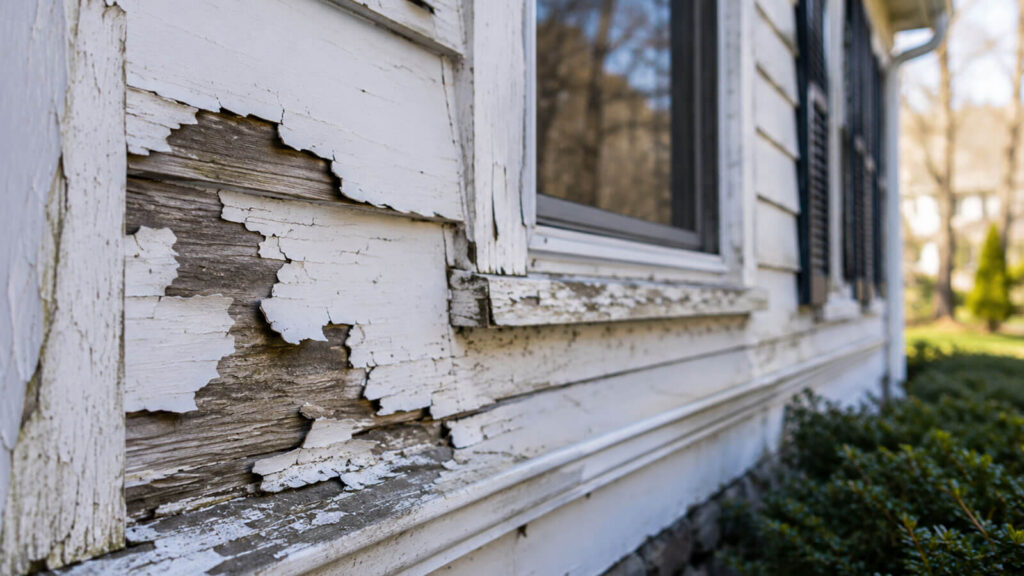
When exterior paint starts peeling in sheets, or trim begins to bubble after a wet spring, it is usually not “just paint.” That’s the part homeowners often miss. Paint failure is often the first visible sign that something underneath is holding moisture, moving, or was never prepared correctly in the first place. In the Hudson Valley, where older homes, freeze-thaw cycles, and heavy seasonal rain all put extra stress on siding and trim, those early warning signs matter more than people think.
If you are trying to figure out whether you are looking at a simple repaint or a larger repair, it helps to understand what contractors actually look for first. That usually starts with the source of the failure, not the peeling itself. A decent painter can often tell quickly whether the issue is a prep problem, a ventilation issue, or water intrusion from flashing, gutters, or roof edges. In some cases, the real fix is tied to drainage problems that keep exterior surfaces wet, which is why spot-patching usually fails sooner than homeowners expect.
Why Exterior Paint Fails Before Homeowners Expect It To
Paint does not usually fail at random. It breaks down when the surface beneath it is no longer stable enough to hold a coating. On older Hudson Valley homes, that often means wood trim that has absorbed moisture over time, joints that have opened up, or caulk that has dried out and stopped doing its job. On homes with exposed south- and west-facing walls, UV exposure can be just as punishing as rain.
One counterintuitive thing many homeowners do not expect: the peeling section is often not the real problem. It is the symptom. Contractors will often find failing caulk lines, soft wood, clogged gutters, or small roof-edge leaks long before they conclude the paint itself was the issue. That is why a fresh coat over failing substrate usually looks good for a season or two, then starts breaking down again.
In this region, detached garages, porches, dormers, and older fascia boards are frequent trouble spots. They tend to show the earliest failure because they get hit by more weather and are often maintained later than the main house.
The Warning Signs Worth Taking Seriously
Not every blemish means a repaint is urgent, but certain signs are worth paying attention to:
- peeling or flaking that keeps returning in the same area
- bubbling or blistering paint, especially near trim seams
- soft spots in wood when pressed gently
- open caulk joints around windows, doors, and fascia
- discoloration that appears after rain, then fades
- chalky siding or powder coming off when touched
- bare wood exposed for more than one season
The last item matters more than most people realize. Once bare wood is exposed through a Hudson Valley winter, the repair can escalate quickly. Moisture gets in, temperatures swing, and the failure spreads beyond the original spot. That is where a small paint issue starts turning into carpentry work.
What Contractors Usually Check First
A good exterior painter does not start with color samples. They start with the substrate. That means checking whether the siding or trim is dry enough to coat, whether old paint is still bonded, and whether there is any sign of hidden moisture behind the visible failure. On older homes, they will also pay close attention to window trim, soffits, fascia, corner boards, and any place where two materials meet.
In many cases, the inspection reveals that the problem is not “paint failure” in isolation but a combination of issues: failed caulk, poor surface prep, trapped moisture, and sometimes air movement from unsealed attic areas or neglected ventilation. That is why homeowners who only ask for a repaint sometimes get frustrated with the scope. The honest answer is that a durable job often requires more prep than a quick touch-up.
If you are comparing options, it can help to look at professional painting contractors who explain prep work clearly rather than leading with price alone. The cheapest bid is often the one that skips the repairs that actually make the paint last.
The Most Common Homeowner Mistakes
The biggest mistake is assuming peeling paint is cosmetic. Once homeowners treat it that way, they tend to delay, patch over it, or try a quick product fix that only masks the issue. The second mistake is painting too soon after a wet stretch. Exterior surfaces can look dry on the surface while still holding moisture underneath, especially on shaded sides of the house or on older clapboard.
Another common problem is sealing everything too aggressively without understanding where the moisture is coming from. Homeowners sometimes expect caulk to solve every gap, but over-caulking can trap water in trim assemblies that need to breathe or drain. That is especially risky around older wood windows, porch details, and mixed-material transitions.
It is also worth saying plainly: internet advice can be misleading on older homes. A newer tract home and a 100-year-old Colonial with stone foundation movement, old trim repairs, and decades of patchwork do not behave the same way. The repair strategy should not be the same either.
When a Repaint Is Enough — and When It Is Not
If the failure is limited to surface wear, the paint is chalking, and the underlying wood is sound, a proper prep-and-repaint may be enough. That means washing, scraping, sanding, spot-priming, re-caulking where appropriate, and using the right coating for the surface and exposure level. On many houses, that is the difference between a job lasting a few years and one lasting much longer.
But if the wood is soft, the trim is rotting, or the failure keeps coming back in the same place, repainting alone is usually a short-term fix. That is when a contractor may recommend carpentry repairs before paint goes on. Homeowners sometimes resist that recommendation because it changes the budget, but it is usually the cheaper path over time. Painting over decayed trim just postpones a more expensive repair.
For homeowners trying to estimate scope, this is often where reading about what exterior repainting may involve in Putnam County helps frame the difference between a cosmetic refresh and a more involved restoration.
Why Moisture Problems Often Show Up as Paint Problems
Exterior paint is one of the first places moisture reveals itself because it is the skin of the house. If water gets behind siding, through a failed roof edge, or around a leaking window, the coating above it often blisters or peels before anything dramatic is visible indoors. That is why paint failure can be an early warning system, not just a finishing issue.
In the Hudson Valley, that matters because so many homes deal with runoff, mature trees, long shaded exposures, and winter weather that tests every seam. A paint issue near a gutter line may actually be connected to overflow or an ice-damaged section above it. A failing lower trim board may trace back to splashback from grading or a walkway that sheds water toward the house.
This is also why a repaint should never be considered in isolation when the home has recurring wet spots, especially around eaves and foundation-adjacent trim. Sometimes the paint is telling you exactly where the water management problem is.
What a Proper Repair Process Usually Looks Like
The best exterior painting jobs usually follow a predictable sequence, even if the details vary by house. First comes inspection and moisture awareness. Then comes scraping, sanding, and removal of anything loose or failing. After that, damaged wood gets repaired or replaced, surfaces are primed correctly, and only then does painting begin.
Where homeowners get into trouble is assuming a contractor can skip straight to paint if the color match is right. That shortcut almost never lasts. If the old coating is failing because it was applied over dirty, damp, or unprepped surfaces, the new paint inherits the same problem.
That is one reason it can be useful to compare local exterior painting guidance before you commit to a project. If you are in Westchester and dealing with aging trim, exterior painting services for aging paint and trim can provide a better sense of how much prep is typical when the surfaces have already started to fail. Homeowners in Dutchess County often need the same kind of realistic scope check, which is why Dutchess County painting services remain relevant when the issue is bigger than a touch-up.
Timing Matters More Than Most People Think
Exterior paint repairs are often more successful when they are done before the damage spreads through another season. Waiting through another winter can turn a manageable repair into a larger carpentry job. Waiting through another wet spring can mean hidden rot has time to extend behind the visible failure.
That said, not every issue is an emergency. The trick is knowing the difference between cosmetic aging and active deterioration. If the coating is worn but still bonded, you have some planning room. If wood is exposed, soft, or repeatedly wet, the timeline shortens fast.
On some properties, especially those with heavy tree cover or persistent shade, the problem area may need more attention than the rest of the house even if the overall paint is not ready for full replacement. That kind of selective judgment is exactly where experienced painters earn their keep.
Frequently Asked Questions
How do I know if peeling paint is just old paint or a bigger problem?
If the peeling is isolated and the wood beneath it is still hard, it may be normal aging. If the area is soft, keeps peeling after repairs, or is near windows, gutters, or roof edges, there is usually a deeper moisture issue.
Can I paint over peeling exterior paint?
Not if you want the repair to last. Loose paint has to be removed first, and the surface needs to be primed and prepared correctly. Painting over failing coatings usually means the new finish will fail early too.
Why does the same trim board keep failing every few years?
Repeated failure often points to an unresolved source of moisture, poor drainage, failed flashing, or wood that was never properly repaired. It is rarely just bad luck.
Is exterior paint failure common on older Hudson Valley homes?
Yes. Older homes often have more layered repairs, older trim profiles, and more moisture exposure from shade, snow, and seasonal storms. They need more careful prep than newer construction.
Do I need a painter or a carpenter first?
If the wood is solid and the issue is surface-level, a painter may be enough. If there is rot, softness, or structural trim damage, carpentry usually needs to happen before painting.
What should I ask before hiring someone to fix exterior paint problems?
Ask what prep is included, whether they check for soft wood and moisture issues, how they handle failed caulk, and whether repairs are being priced separately from painting. The answers tell you a lot about how thorough the job will be.
When exterior paint starts telling the truth about what is happening underneath, it pays to listen early. A careful inspection, a realistic repair scope, and the right local contractor can save a lot of money and frustration later. If you are weighing your options, it is worth speaking with local painters in Putnam County or reviewing the broader professional painting contractors available through HV Trades before the next season makes the damage harder to ignore.