

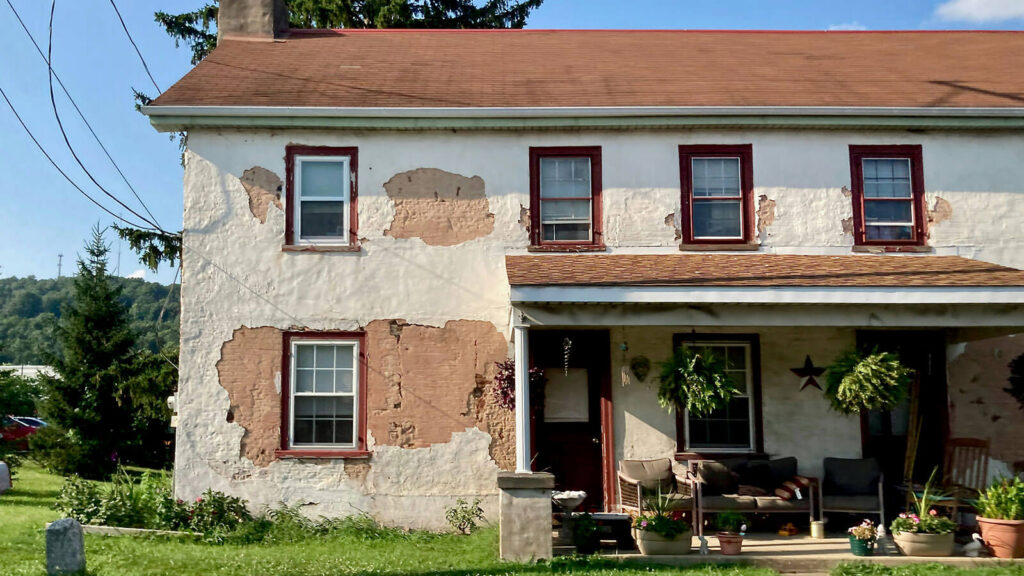
Peeling paint on a house is usually trying to tell you something. Sometimes it starts small, like a few curls on a window trim or a thin strip lifting near a gutter. Other times it shows up after one wet season and suddenly the front of the house looks tired, exposed, and harder to protect. In Westchester County, where older homes, heavy rain, tree cover, and freeze-thaw cycles all work against exterior finishes, paint failure is rarely just a cosmetic issue.
Homeowners often assume the fix is simple: scrape, prime, repaint. Sometimes that’s true. But when paint starts failing repeatedly, there’s usually a reason underneath it, and that reason matters more than the color on top. The difference between a lasting exterior paint job and one that bubbles back up in a year often comes down to moisture, surface prep, wood condition, and whether the home was evaluated the right way before the first coat went on.
What peeling paint is usually telling you
Paint does not usually fail for one single reason. On a Westchester home, the most common causes tend to stack together: water intrusion, age, poor surface prep, sun exposure, and wood that has already begun to soften or rot. If the house has old clapboard, cedar trim, fascia boards, porch rails, or window casings, those areas take the brunt of the weather first.
When paint peels in broad sheets, moisture is often trapped behind it. When it flakes in small patches, the surface may be too chalky, dirty, or weak for new paint to bond properly. If you see blistering near rooflines, it may point to flashing problems or overflowing gutters. If the problem is concentrated around windows, doors, or joints, failed caulk or minor leaks are often part of the story.
That’s why experienced painters usually inspect more than the obvious surface. They look at the condition of the substrate, the exposure, the gutters, the trim details, and any signs that water has been reaching the wood over time. If you want a deeper local look at exterior work, Westchester County painting services can be a useful starting point for homeowners comparing what a real prep-and-repair process should include.
The mistakes that make peeling paint come back fast
One of the biggest homeowner mistakes is treating peeling paint like a weekend scraping project. Scraping loose material is only one step. If the surface is still damp, if mildew is present, if the wood is failing, or if the primer choice is wrong, the new finish won’t last. The house may look better for a season, then start failing again in the same places.
Another common issue is painting too soon after rain, snowmelt, or pressure washing. Exterior surfaces can hold moisture longer than people realize, especially on shaded sides of the house or behind shrubs. In wooded parts of the Hudson Valley, north-facing walls and trim under deep eaves can stay damp long after the weather clears.
Homeowners also underestimate how often peeling paint starts with water management. If gutters overflow, downspouts dump water too close to the foundation, or grading slopes the wrong way, the lower edges of siding and trim can take repeated moisture exposure. That’s why paint work and drainage work often overlap. If runoff is part of the picture, it may be worth reviewing spring drainage issues around the home before investing in another exterior repaint.
What contractors usually inspect first
A good contractor does not start by asking what color you want. They start by figuring out why the current coating failed. That usually means checking the worst areas first: window trim, sill joints, fascia, soffits, porch columns, and the bottom edges of siding where splashback collects.
Typical inspection points
- Soft or rotted wood beneath peeling paint
- Open seams in caulk or failed joint sealant
- Water staining near gutters, roof edges, or flashing
- Signs of mildew, mold, or persistent dampness
- Chalking paint that won’t hold a new coat
- Previous paint layers that were applied over dirty or glossy surfaces
On older homes, especially those with original trim details, contractors also check whether the wood has dried out unevenly or started to split. That matters because even good paint can’t save wood that is already moving, swelling, or breaking down from the inside.
Homeowners should also pay attention to the condition of nearby systems. Gutters, roof edges, attic ventilation, and siding joints all affect how long exterior paint lasts. If your roof runoff has been sloppy, a gutter cleaning and inspection before heavy rain can help prevent the same moisture pattern from ruining a new finish.
When peeling paint is more than a paint problem
There’s a point where repainting over the issue becomes a short-term patch instead of a real repair. If wood is soft enough to flake under light pressure, if trim has started to cup or separate, or if stain and moisture keep returning after repainting, something deeper is happening.
That deeper issue might be a hidden leak around a window, a flashing problem at the roofline, ice dam damage, or persistent water intrusion from poor drainage. In some cases, the paint failure is your first visible warning that a repair should have happened months earlier. That’s one reason peeling paint deserves attention sooner rather than later. Left alone, the wood underneath can deteriorate to the point where repair turns into replacement.
This is where homeowners can save money by slowing down and getting the diagnosis right. Replacing a few boards and repainting correctly costs far less than letting moisture travel into framing, sheathing, or interior walls.
Why Hudson Valley homes are especially vulnerable
Westchester homes deal with a mix of weather and property conditions that are tough on exterior finishes. Freeze-thaw cycles can open small cracks and let water in. Summer humidity can keep surfaces from drying properly. Mature trees add shade, debris, and slower drying times. In neighborhoods with older housing stock, the paint may already be working over decades of patchwork repairs.
Stone foundations, older window frames, oil heat, and uneven attic insulation can also create subtle moisture or temperature differences that affect paint life. A wall that looks fine from the street may be dealing with internal condensation or recurring wet spots behind the scenes. That’s one reason local experience matters. A painter who understands the region will look at the whole exposure pattern, not just the failed spot.
It also helps to work with professional painting contractors who understand when prep, repair, and moisture control need to happen before the first finish coat is applied. A strong paint job starts long before the color goes on.
What you can safely do yourself, and where DIY gets risky
Some homeowners can handle light maintenance without much trouble. Cleaning mildew, removing loose dirt, and checking obvious caulk failures are reasonable jobs if the area is easy to reach and the wood is still in good condition. Small touch-ups on stable surfaces can also buy time between major repaints.
But DIY gets risky when peeling paint is happening above a second story, near rooflines, around electrical fixtures, or on wood that may already be compromised. Scraping lead paint is another major concern in older homes, and many properties in this region fall into that category. In those cases, the job becomes more than painting. It becomes a safety issue, a containment issue, and a disposal issue.
Another trap is covering up symptoms instead of correcting the cause. Caulk alone will not fix rotted trim. Primer alone will not stop ongoing water intrusion. And paint over damp wood is a fast way to trap the problem in place.
What a proper repair and repaint process should include
A quality exterior repaint is usually built around preparation, not speed. Before new paint goes on, the failing sections should be scraped back to sound material, cleaned, dried, and repaired where necessary. Any rotted boards need replacement. Open joints should be re-caulked with the right product. Bare wood should be primed correctly, and the finish coats should match the surface and exposure conditions.
On homes with repeated peeling, contractors may also recommend selective carpentry, not just painting. That might mean replacing fascia, trim, or other exterior components that are too far gone to hold paint properly. It can feel like an extra step, but it often prevents repeat failure and protects the structure underneath.
If you are comparing options, it is worth asking how a painter handles moisture testing, surface prep, primer selection, and minor carpentry. Those details are usually what separate a short-lived cosmetic fix from work that actually holds up through Hudson Valley weather.
How to avoid expensive surprises
The easiest way to keep a peeling paint problem from turning into a bigger repair is to act while the damage is still localized. A few small sections of failure are manageable. Whole-wall peeling, soft trim, and water staining spreading in multiple directions are signs the problem has been active for a while.
Before agreeing to a repaint, ask what the contractor sees under the failed areas, whether any boards need replacement, and whether there are signs of drainage or roof-related moisture. That conversation usually tells you a lot about whether you are getting a true repair plan or just a fresh coat over a larger issue.
Homeowners who pay attention early tend to spend less overall. They also avoid the frustration of seeing the same peeling spots come back every season.
Frequently Asked Questions
Why does exterior paint peel faster on some sides of the house?
Sides that get more sun, more rain, or less airflow usually fail first. North-facing walls and shaded trim often stay damp longer, which shortens paint life.
Can I just scrape the peeling paint and repaint it?
Sometimes, but only if the wood underneath is still sound and dry. If moisture, rot, or failed caulk is part of the problem, scraping alone will not solve it.
How do I know if peeling paint is caused by water damage?
Look for staining, soft wood, bubbling near joints, and recurring failure in the same areas. Paint that peels after rain or snowmelt often points to moisture issues.
Is peeling paint a sign of rot?
Not always, but it can be. If the wood underneath feels soft, crumbles easily, or looks dark and warped, rot may already be present.
Should I repaint before or after roof and gutter repairs?
After, if runoff or flashing issues are involved. There is little sense in repainting a surface that will keep getting wet.
When should I bring in a professional?
As soon as the peeling becomes widespread, reaches high areas, or appears tied to moisture, rot, or lead paint. A good contractor can identify the real cause before more damage spreads.
When exterior paint starts failing, the smartest move is usually to slow down and understand why. A careful inspection, a realistic repair plan, and the right local contractor can protect the house, save money, and keep a small problem from becoming a much larger one. If you want help evaluating the condition of your exterior, start with a trusted local professional who knows how Hudson Valley homes actually age and weather over time, including trusted contractors in Westchester County.