

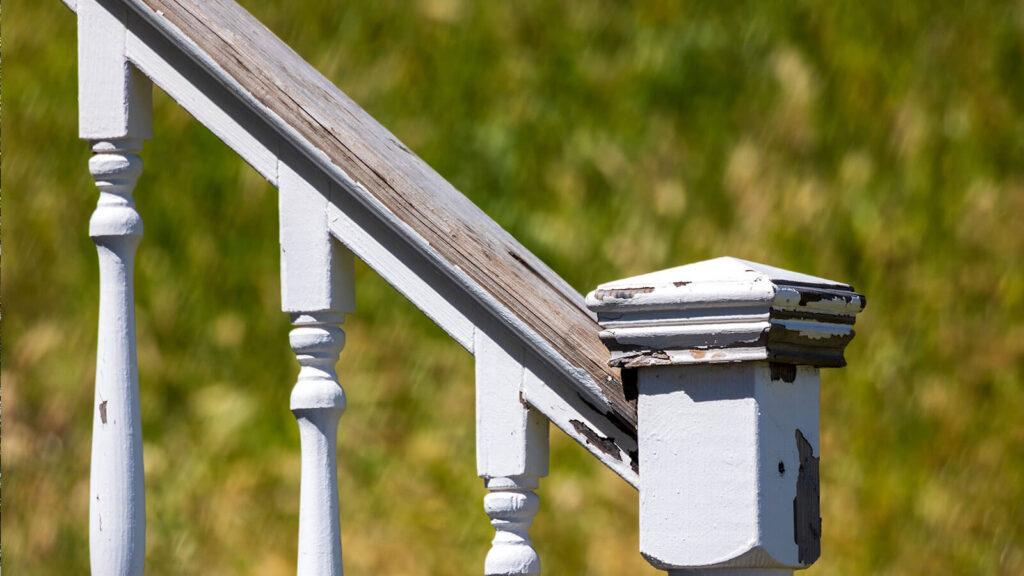
When exterior paint starts peeling in a few stubborn spots, it is easy to treat it like a cosmetic nuisance. But on older Hudson Valley homes, paint failure is often the first visible sign that water, wood movement, or poor prep has been working underneath for a while. By the time trim is flaking, railings are blistering, or siding looks chalky and thin, the real issue is usually less about color and more about what the surface has been dealing with through winter, spring rain, and summer humidity.
That is why experienced painters do not look at peeling paint as just a repainting job. They look at caulk lines, flashing details, gutter performance, soffit condition, sun exposure, and whether the wood has been getting wet again and again. If you are already seeing recurring failure, it may be worth reading about exterior painting repair and prep before you assume a fresh coat alone will fix it.
Why exterior paint fails faster than most homeowners expect
Paint does not usually fail all at once. It breaks down in patterns. Lower trim that gets splashback from the ground goes first. South- and west-facing elevations often fail sooner because the sun cooks the coating. Window trim can peel where old caulk cracked. Porch railings tend to show wear early because they get both weather exposure and repeated hand contact. In the Hudson Valley, freeze-thaw cycles add another layer of stress: small cracks open, moisture gets in, then the next cold snap makes the problem worse.
A lot of homeowners assume the paint was just low quality. Sometimes it was. But just as often, the coating failed because the surface underneath was not dry enough, was not cleaned well enough, or was painted over failing caulk and soft wood. Cheap repairs tend to mask that for a season or two, then the same peeling comes back in almost the same spot.
That repeat pattern is usually the clue contractors pay attention to first. A paint issue that keeps showing up in the same place is rarely random.
The clues that point to more than surface wear
Some paint problems are straightforward. Others are telling you to look deeper. These are the warning signs that often mean the issue is not just cosmetic:
- Blistering or bubbling paint, especially on trim near windows or doors
- Soft or spongy wood when pressed with a finger or screwdriver tip
- Cracked caulk around joints, seams, or trim transitions
- Peeling paint concentrated at the bottom of boards or railings
- Staining, dark spotting, or mildew on exterior surfaces
- Paint failure that keeps returning after recent touch-ups
One counterintuitive detail that catches homeowners off guard: the stain on a wall or ceiling is not always directly below the source of the leak, and the same logic applies outdoors. The place where the paint is failing is not always the place where the moisture is entering. Water can track behind trim, travel along framing, or work its way in from a failed joint several feet away.
What contractors usually inspect first
Before recommending a repaint, a good contractor will usually look for the reasons the last coating failed. That often starts with wood condition and surface prep, then moves to moisture entry points. Around Hudson Valley homes, that means checking:
Trim, fascia, and soffits
These areas take a beating from roof runoff and attic moisture. If gutters overflow or drip at the corners, fascia and trim may absorb water for years before the paint finally gives up.
Caulk joints and flashing
Failing caulk is one of the most common reasons exterior paint breaks down early. Around windows, doors, and roof intersections, paint often peels because water is getting behind the surface. If flashing is missing, bent, or poorly integrated, paint becomes the last weak layer before the wood starts to move or rot.
Ground clearance and splashback
Low trim near soil, mulch, or stone paths often fails faster than the rest of the house. That is especially true where grading sends runoff toward the foundation or where downspouts discharge too close to the wall. If wet lower siding is part of the pattern, addressing drainage problems that keep exterior wood wet can matter more than choosing a better paint brand.
Why quick fixes often fail
Homeowners usually want the least disruptive repair that will buy time. That is understandable. But exterior paint has a way of punishing shortcuts.
Painting over peeling areas without removing loose material is the classic example. The new coat bonds to failing paint, not to stable wood, so the repair does not last. The same thing happens when caulk gets smoothed over cracks without cutting out the old failed material. It looks fixed until temperature swings open the seam again.
Another common mistake is assuming primer solves everything. Primer helps, but it is not a substitute for dry wood, sound caulking, or proper surface cleaning. On older homes, especially those with layered repairs from different eras, contractors often discover that the real problem is a history of patchwork fixes stacked on top of each other.
That is one reason a repaint on an older property can cost more than a homeowner expects. The visible labor is only part of it. The hidden labor is in prep, scraping, sanding, minor carpentry, and making sure the next coating actually has a stable base.
Hudson Valley conditions make this worse
Regional weather matters. The Hudson Valley sees enough freeze-thaw movement, heavy rain, snow load, and summer humidity to expose weaknesses quickly. Wood expands and contracts. Caulk opens up. Moisture lingers on shaded elevations where mature trees block sun. Detached garages, porches, and workshops often age even faster because they are less insulated and more exposed.
Older homes in Dutchess, Putnam, and Westchester counties can also have mixed building materials and decades of layered repairs. That is not a bad thing by itself, but it means one area of failed paint can signal different underlying issues depending on the era of the home. A stone foundation, for example, may not behave like a newer framed wall. And a porch railing that loses paint repeatedly may be dealing with wood movement, not just finish failure. In those cases, porch and railing repair concerns can be part of the conversation, not just painting.
When peeling paint becomes a bigger repair project
There is a line between routine maintenance and a repair that starts to affect the structure. Once wood softens, splits, or begins to rot, painting is no longer the main fix. The damaged material has to be assessed and sometimes replaced before the finish work can happen.
That is where homeowners can save money by moving early. A small section of failed trim is manageable. Waiting until water intrusion spreads behind nearby boards or into framing turns a painting job into a carpentry problem. That is also when a contractor may recommend repairs that sit alongside the repaint, such as trim replacement, minor fascia work, or targeted patching.
If you are comparing options, it can help to talk with professional painting services that understand prep, repair sequencing, and what should actually be replaced instead of merely covered up. The cheapest bid is not always the cheapest outcome when the underlying wood is already compromised.
What homeowners should do before hiring
Exterior paint work gets a lot easier when the homeowner knows how to evaluate the problem in plain terms. You do not need to diagnose everything yourself, but it helps to know what to ask.
- Ask whether the contractor is evaluating moisture sources, not just surface condition.
- Ask what prep is included: scraping, sanding, caulking, spot-priming, and wood repair.
- Ask whether they will inspect gutters, flashing, and runoff patterns near the damaged area.
- Ask how they handle soft wood or hidden rot once peeling areas are opened up.
- Ask whether the repair plan changes if the same area has failed before.
Those questions tend to separate careful tradespeople from painters who are simply trying to cover the wall and move on.
If the home is in a county-specific service area and the issue is affecting trim, railings, siding, or porch components, local guidance can be useful too. Homeowners dealing with recurring exterior failure often need more than a color update, which is why resources like painting contractors in Westchester County or Dutchess County exterior painting help can be a practical next step when you want work matched to the conditions of the property.
How to keep the problem from coming back
The best prevention is unglamorous, but it works: keep water away from the wood, keep joints sealed, and address small failures before they spread. That means cleaning gutters, extending downspouts properly, watching for clogged leaders, and staying ahead of cracked caulk around trim and windows.
It also means paying attention after storms and after winter. If one area always peels first, there is usually a reason tied to exposure or drainage. Fixing that cause can make the next paint cycle last significantly longer. In other words, exterior paint longevity is often more about managing moisture than choosing a premium finish.
Frequently Asked Questions
Is peeling paint always a sign of rot?
No. Sometimes it is just failed prep, old caulk, or weather exposure. But if the wood feels soft, dark, or swollen, rot may already be present and should be checked before repainting.
Can I just scrape the loose paint and repaint the area?
Sometimes, but only if the underlying wood is sound and dry. If moisture is still getting in, the same spot will usually fail again.
Why does my trim peel every few years in the same place?
That usually points to an underlying issue like gutter overflow, failed flashing, sun exposure, or a seam that keeps opening up with temperature changes.
Is exterior paint failure worse on older homes?
Often, yes. Older homes may have more layered repairs, older caulk, mixed materials, or wood that has already been exposed to repeated wet-dry cycles.
Do I need carpentry repairs before painting?
If the wood is soft, split, or rotted, yes. Paint will not stabilize damaged material, and covering it up usually leads to a faster failure.
What is the best time of year for exterior painting?
Dry, mild weather is best. Contractors usually want stable temperatures, low humidity, and enough dry time for prep and coatings to cure properly.
If your exterior paint is peeling in a way that keeps coming back, it is worth getting a local opinion before the damage spreads. A careful contractor will look beyond the finish and help you understand whether you are dealing with a paint issue, a moisture problem, or a repair that needs to be addressed first.