

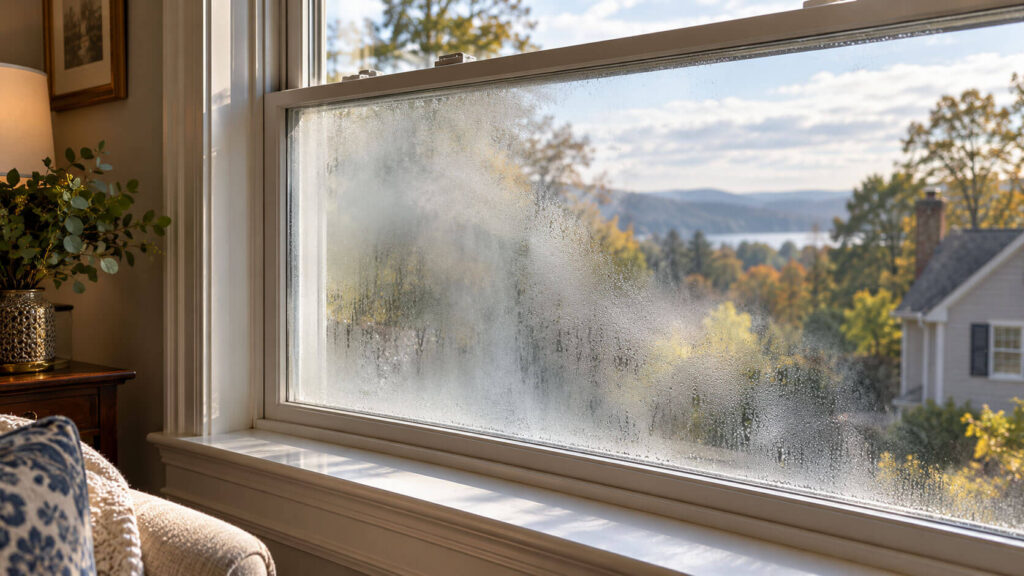
Foggy Windows in the Hudson Valley: When It’s Condensation, When It’s a Failed Seal, and What to Do Next
A cloudy window doesn’t always mean the glass is “bad,” and that’s where a lot of homeowners waste money. In older Hudson Valley homes especially, what looks like a window failure can turn out to be humidity, air leakage, or a drainage issue around the opening. The trick is knowing when you’re looking at a cosmetic annoyance and when the window unit itself has actually reached the end of the road.
This matters more than it seems. Foggy panes can drag down curb appeal, hint at bigger moisture problems, and make a house feel older than it is. And if you wait too long, the problem can spread beyond the glass to sash damage, trim rot, or stained drywall around the opening. If you’re trying to figure out whether you need repair, replacement, or just better moisture control, it helps to understand what contractors usually check first — and what homeowners often misread.
Why windows fog up in the first place
The most common mistake is assuming every fogged window means a broken window. Sometimes it does. Sometimes it doesn’t.
There are really three different situations that homeowners lump together:
- Surface condensation: Moisture forms on the inside or outside of the glass because of temperature difference and humidity.
- Failed insulated glass seal: Fog or haze develops between panes, which usually means the sealed unit has lost its insulating gas and moisture barrier.
- Moisture intrusion around the frame: Water is getting in through flashing, caulking, trim, or the wall assembly, then showing up near the window.
That last one causes more confusion than people expect. The stain or dampness you notice by the window is not always coming through the glass. In fact, one of the more counterintuitive things contractors see is that the visible symptom is often not the real source. A fogged pane may be a seal failure, but a wet sill or peeling trim can point to flashing problems, clogged weep paths, or exterior water hitting the opening during wind-driven rain.
Before you assume the window itself is the problem, it’s worth comparing what’s happening indoors and outdoors. For broader homeowner guidance on related home issues, the homeowner resources for comparing repair options can help you think through whether you’re dealing with a window issue, an air-sealing issue, or something more structural.
How Hudson Valley weather makes the problem harder to read
Our weather doesn’t make window diagnosis easier. Freeze-thaw cycles, humid summers, and long stretches of cold weather can all produce fogging that looks more dramatic than it really is. Homes with older single-pane or early double-pane windows tend to show these symptoms earlier, especially if the house also has inconsistent insulation or older storm windows.
Wooded lots and shaded elevations add another wrinkle. Windows on the north side or under heavy tree cover often stay colder longer, which makes condensation more likely. In homes with oil heat or uneven airflow, certain rooms can also run cooler and dampier than the rest of the house, especially near basements, additions, or less-insulated exterior walls.
If the fogging is seasonal and appears mostly during big temperature swings, that leans toward condensation. If the haze sits between panes year-round, especially after cleaning the interior and exterior surfaces, that points more strongly to a seal failure.
What contractors usually check first
Good contractors don’t start by quoting replacement. They start by figuring out whether the problem is the glass, the frame, the wall opening, or the house conditions around it. That order matters because it prevents homeowners from paying for a full replacement when the real issue is simpler — or missing a bigger water problem that replacement alone won’t solve.
Usually, the first checks include:
- Where the fog is showing up: inside the panes, on the room side, or on the exterior
- Whether the sash and frame are still square, solid, and dry
- Condition of caulking, flashing, and exterior trim
- Signs of rot, swelling, or paint failure at the sill
- Humidity levels inside the home, especially in basements and upper floors
- Whether nearby gutters, downspouts, or roof runoff are dumping water near the opening
If the problem is only the insulated glass unit, sometimes just the sash or glass pack can be addressed depending on the window style and age. But if the frame is failing or water has been creeping in behind the trim, the more practical route is often replacement. That’s especially true when the home already has multiple windows showing age, drafts, or broken seals.
Why “just clean it” almost never solves real fogging
This is where homeowners get frustrated. They wipe, scrape, and try dehumidifiers, only to see the same cloudy pane come back. That happens because the moisture is often trapped where cleaning can’t reach it — between two sealed panes of glass. Even worse, some DIY fixes mask the problem long enough for water to continue working into wood trim or sill assemblies.
Another common misstep is over-caulking. People try to seal every edge they can see, but if the issue is trapped moisture or a failed frame detail, more caulk doesn’t solve the root cause. In some cases, it even makes it harder for a contractor to identify where water is actually entering.
Humidity control can help with surface condensation, and it’s worth addressing. If your home feels damp in summer or the windows sweat mostly when weather shifts, pairing window work with summer humidity and indoor comfort checks can make a noticeable difference. But if the fog is between panes, indoor humidity alone is not the fix.
When foggy windows are more than a glass problem
Some window issues are really exterior envelope issues wearing a window-shaped disguise. That’s especially true after heavy rain, storm-driven wind, or a winter freeze that stresses old seals and trim.
If fogging appears after a major storm, or if the window area also shows paint bubbling, soft trim, or water at the wall line, it’s smart to look beyond the glass. Homes that already have roof edge problems, loose siding, or compromised flashing may need a bigger inspection. It’s often worth comparing the window symptoms with signs of exterior damage after a Hudson Valley storm, especially if the issue showed up after a bad weather event rather than gradually over time.
That kind of broad inspection is how contractors avoid expensive guesswork. A foggy unit may be the visible failure, but the cause could be in the wall assembly or on the roof side of the house. If water is entering around the opening, replacing only the glass doesn’t really solve anything.
Replacement, repair, or wait and monitor?
Not every foggy window is an emergency. If the problem is mild surface condensation in one season, you may be able to control it with better ventilation, humidity management, and air sealing. But if the fog is persistent between panes, the energy performance of that window is already compromised.
At that point, the decision usually comes down to the age and condition of the window system. A newer window with a failed seal might justify a sash or glass-unit repair. An older window with multiple issues — drafts, warped operation, broken hardware, peeling trim, or visible rot — usually makes more sense to replace. That’s especially true in homes where several windows are aging together. One replacement can quickly become a larger scope if the contractor finds the same failure pattern across multiple openings.
And that’s not necessarily bad news. It’s just reality. Coordinating window work as part of larger exterior renovation projects can sometimes save money if there’s trim repair, siding work, or opening prep involved. When the surrounding materials are failing, a new window alone may not be the most efficient solution.
What makes older Hudson Valley homes trickier
Older homes bring a different set of variables. You may have non-standard window sizes, settled openings, outdated flashing details, or additions built at different times with different materials. That patchwork history matters. A foggy pane in a newer replacement window may not be the only issue if the surrounding wall was never properly sealed in the first place.
Stone foundations, damp basements, and aging insulation can also influence window performance. Moisture rises, cold surfaces collect condensation, and rooms near the perimeter of the house tend to show symptoms first. In houses with detached garages, workshops, or older mudroom additions, window failures can seem random when they’re actually tied to temperature swings and poor air movement.
That’s why experienced contractors tend to think in systems, not isolated parts. Windows, siding, roof runoff, insulation, ventilation, and humidity all interact. When one of those systems gets out of balance, the first thing homeowners notice is often a foggy pane.
How to avoid paying for the same problem twice
The expensive mistake is replacing windows without correcting the conditions that caused the failure in the first place. That can mean ignoring bad drainage, skipping trim repair, leaving failed caulk in place, or assuming all fogging comes from the same cause.
If you’re scheduling an inspection, ask for a careful look at:
- Window seal condition and sash integrity
- Exterior flashing and trim
- Signs of hidden rot beneath the sill
- Nearby gutter/downspout discharge
- Indoor humidity and ventilation patterns
- Whether multiple windows are failing in the same exposure
That kind of review helps separate a repairable issue from a replacement job, and it protects you from a quick fix that only lasts through one season. If you’re unsure where your issue falls, it can help to work with window and door contractors who can evaluate whether the glass, frame, or surrounding opening is the real problem.
What to do before the next cold snap or humid stretch
If your windows are already showing light fogging, don’t wait until the weather turns more extreme. Cold snaps make condensation more obvious, and summer humidity can turn a minor issue into a daily annoyance. Small maintenance steps now can keep a simple problem from becoming a repair you need to rush.
Start with the basics: check indoor humidity, make sure bathroom and kitchen exhaust fans are actually venting properly, inspect caulk at suspect windows, and confirm that gutters and downspouts are moving water away from the house. If a window area always feels damp or cold, treat that as a clue rather than an isolated annoyance.
And if you’re looking at more than one problem at once — foggy glass, peeling exterior trim, or a drafty opening that seems to be getting worse — it may be time to find the right contractor category before the repairs spread into multiple trades.
Frequently Asked Questions
Does fog between window panes always mean the window has failed?
Usually, yes. Fog trapped between panes is the classic sign of a failed insulated glass seal. Surface condensation on the inside of the window is a different issue and may be related to humidity or airflow instead.
Can a foggy window be repaired without replacing the whole window?
Sometimes. If the frame is still sound and only the glass unit failed, a sash or glass replacement may be possible. If the frame is rotted, warped, or leaking, full replacement is usually the better long-term fix.
Why do some windows fog up only in winter?
Cold weather makes warm indoor air condense on cooler surfaces. If the fog is on the inside glass, it may be a humidity problem. If it’s between panes, winter simply makes the seal failure more noticeable.
Should I worry if only one window is foggy?
One window may just have a failed seal, but it’s still worth checking nearby windows for the same age or exposure pattern. When one unit fails, others of the same vintage often aren’t far behind.
Can bad gutters or roof runoff cause window fogging?
Indirectly, yes. Water issues above or around a window can damage flashing, trim, and wall materials. That doesn’t always create fog between panes, but it can cause moisture problems that homeowners first notice at the window.
Is it worth replacing foggy windows in an older home?
It can be, especially if the windows are drafty, hard to operate, or showing rot and repeated seal failure. In older homes, the value is often in fixing the whole opening properly, not just the glass itself.
If you’re trying to sort out what kind of window issue you’re dealing with, the safest move is usually a proper inspection rather than a quick guess. A careful local contractor can tell you whether you’re looking at a simple seal failure, a moisture problem, or the start of a larger exterior repair — and that’s what keeps a small annoyance from becoming a much bigger expense later.
