

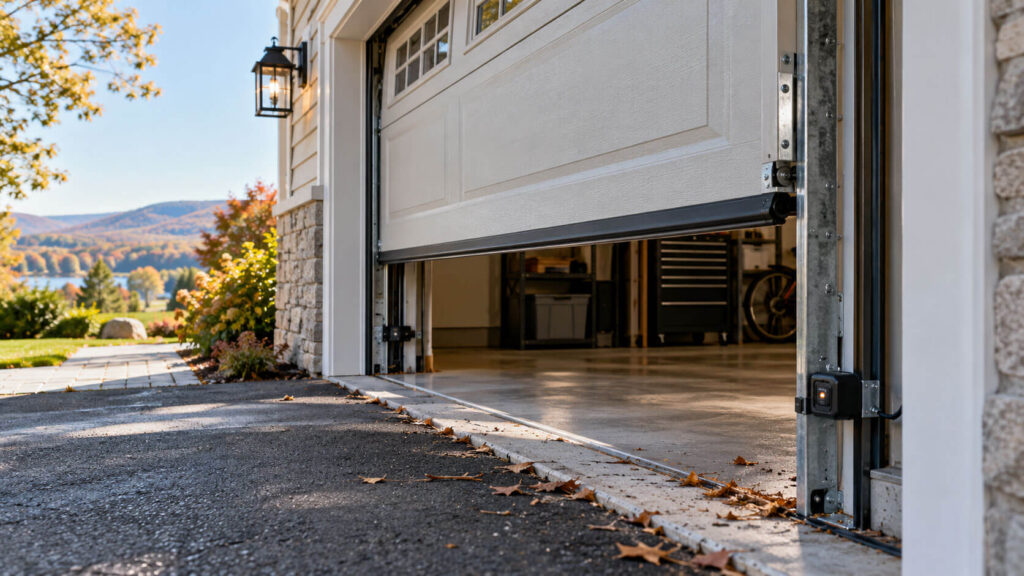
If a garage door starts reversing or sticking, the first things to check are the safety sensors, the door’s balance, and anything physically blocking the tracks or rollers. Those three areas account for many common problems, and they help you tell the difference between a simple adjustment and a repair that needs a garage door contractors professional.
A door that reverses on the way down often points to a sensor issue, an obstruction, or opener settings that are reacting to resistance. A door that sticks, shudders, or only moves partway can be dealing with worn rollers, bent tracks, loose hardware, a damaged panel, or a door that is out of balance. The symptom matters, because the right fix depends on whether the problem is electronic, mechanical, or structural.
Start with the simplest checks
Before assuming the opener is failing, look at the parts you can see safely from the outside.
- Check the photo-eye sensors. These are the small devices near the bottom of the door opening. If one is dirty, misaligned, blocked, or loosely mounted, the door may reverse.
- Look for objects in the path. A broom, bucket, leaf pile, snow, or even a small stone can interrupt travel or make the opener sense resistance.
- Watch the tracks. Dents, gaps, debris, or loose brackets can cause the door to bind and feel like it is sticking.
- Listen and observe. Grinding, popping, or one side rising before the other can point to hardware wear or a door that is no longer moving evenly.
If the door reverses immediately and the sensors look dirty or knocked out of alignment, that is a strong clue the issue may be limited to the sensor system. If the door starts to move and then hesitates, catches, or gets heavier partway through, the problem is more likely mechanical.
What reversing usually means
A garage door opener is designed to stop or reverse if it senses an obstruction or too much resistance. That safety feature is helpful, but it also means a door can reverse even when nothing is actually in the way.
Common causes behind reversal
- Misaligned sensors: The opener may think the beam is broken when the eyes are not lined up correctly.
- Dirty lenses or blocked beam path: Dust, spider webs, or stored items can interfere with the signal.
- Track friction or binding: If the door is hard to lift, the opener may reverse to protect itself.
- Spring or balance problems: A door that is too heavy for the opener can trigger reversal behavior.
- Opener settings or worn opener parts: Limit settings, force settings, or internal wear can also play a role.
Because a reversing door may be responding to resistance, not just a sensor issue, it is worth checking whether the door is balanced before spending time on the opener. A door that is out of balance can strain the opener and create repeated reversal symptoms.
What sticking usually means
Sticking is the broad symptom homeowners notice when the door hesitates, jerks, drags, or stops partway through travel. It is not a diagnosis by itself.
Sometimes the cause is simple, such as dirt in the track or a roller that is no longer rolling smoothly. Other times the door itself is the problem. A sagging garage door panel can shift the door out of alignment and make it rub, bind, or sit unevenly in the opening.
Sticking can also happen when the opening itself has changed. If the garage floor, framing, or trim has shifted, the door may no longer have the clearance it once did. In that situation, the door hardware may be fine, but the structure around it is affecting movement. If you also notice cracks, uneven floors, or trim that no longer lines up, foundation settling signs may be worth a closer look.
What a garage door professional may check
A garage door service visit is usually focused on diagnosis first, then repair options based on what the inspection finds. Depending on the provider’s scope and access, that may include:
- testing sensor alignment and wiring
- checking door balance and spring tension
- inspecting rollers, hinges, cables, and brackets
- looking for track damage or obstructions
- examining panels for warping, cracking, or sagging
- reviewing opener settings and overall operation
That distinction matters. An inspection or adjustment may solve a sensor problem, but it will not fix a bent panel, a failing spring, or a track that has shifted. Likewise, replacing the opener alone will not help if the door is binding mechanically.
What you can note before you call for help
A few observations can make the diagnosis faster and help you compare service options.
- When the problem happens: on closing, on opening, or both
- Where the door stops: at the floor, midway, or near the top
- Whether the door is noisy: squealing, grinding, popping, or scraping
- Whether the issue is intermittent: only in cold weather, after rain, or after manual use
- Whether one side looks lower or slower: a clue that the door is uneven
If the door only fails when it is cold or damp, weather-related expansion, stiff hardware, or marginal alignment may be contributing. In the Hudson Valley, freeze-thaw cycles and moisture can make small alignment issues more noticeable, especially on older doors or in garages with settled floors.
When the problem is beyond a quick fix
Some symptoms are best treated as a cue to stop troubleshooting and request professional diagnosis.
- The door reverses even after the sensors are cleared and aligned.
- The door is heavy, uneven, or difficult to lift by hand.
- You see a bent track, cracked panel, frayed cable, or broken hardware.
- The opener strains, hums, or stops repeatedly.
- The door appears to bind against the frame or floor.
These issues can involve parts that store tension or support significant weight, so the safest next step is usually a qualified garage door evaluation rather than trial-and-error adjustments.
Questions to ask when you request a quote
A narrow quote may only cover a very specific fix, while a broader service call may include diagnosis plus several adjustment options. Clarifying scope upfront helps you compare apples to apples.
- Does the visit include inspection, diagnosis, or only a specific repair?
- Will you check the door balance, springs, tracks, rollers, and sensors?
- If the issue is caused by the opening or framing, what would that change?
- Are replacement parts included, or billed separately?
- If the opener is not the real problem, what findings would you report?
Those questions are especially useful if the door seems to have more than one issue. A reversing door might also have a sagging panel or worn rollers, and a sticking door might be affected by both hardware wear and a shifted opening.
What to do after the inspection
Once the garage door has been evaluated, use the results to decide whether you need a simple adjustment, a part replacement, or a different specialist. If the garage door itself is damaged or out of balance, a garage door service provider is the right next step. If the opening appears distorted or the door has started rubbing after other signs of movement, a structural evaluation may be more appropriate than another round of door parts replacement.
If you are still sorting out who should look at it next, HV Trades for homeowners can help you move from symptoms to the right local service category.
Frequently Asked Questions
Why does my garage door reverse before it closes all the way?
The most common reasons are misaligned or blocked sensors, an obstruction in the door path, or excess resistance caused by balance or track problems. The symptom does not point to one single part by itself.
Can dirty sensors really cause the door to reverse?
Yes. Dust, cobwebs, snow residue, or a sensor that has been bumped out of alignment can interrupt the signal and make the door reverse. Cleaning and realigning them is often one of the first checks.
Is a sticking garage door always an opener problem?
No. Sticking can come from rollers, hinges, tracks, panels, springs, or even the garage opening itself. The opener may be reacting to the resistance rather than causing it.
Should I keep using the door if it reverses sometimes?
If the door is behaving unpredictably, especially if it feels heavy, noisy, or uneven, it is safer to stop repeated use and get it checked. Intermittent problems often get worse before they get better.
What if the door works manually but not with the opener?
That often points toward the opener, sensors, or settings rather than the door structure alone. A technician can test whether the opener is sensing too much force or reacting to another issue.
Could settling in the garage affect how the door moves?
Yes. If the opening has shifted, the door may start rubbing, binding, or dragging even when the door hardware is in decent shape. That is why visible movement in the floor, trim, or framing can matter.
If your garage door is reversing or sticking and the basic checks do not solve it, the next step is to compare local garage door professionals by the type of diagnosis they provide, not just by the lowest service call price. A clear scope is usually the fastest way to get the right repair path.
