

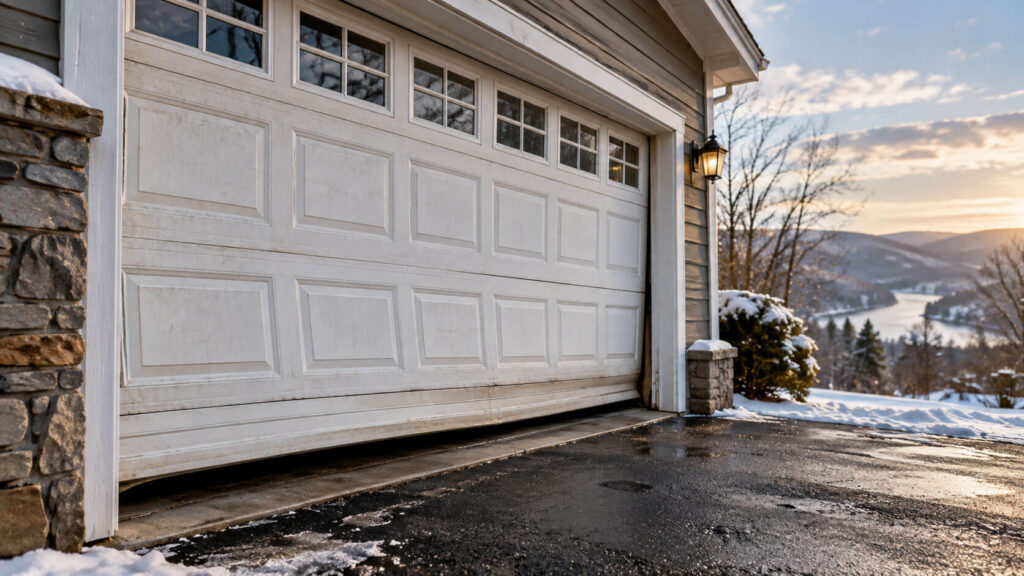
Sagging Garage Door Panel: What Hudson Valley Homeowners Should Check Before It Gets Worse
A garage door panel does not usually sag for no reason. When a homeowner notices a dip, bow, or uneven section, it is often the first visible sign that something deeper is happening with the door, the tracks, the hardware, or the opening itself. That matters because garage doors rarely fail all at once. They usually get worse in stages, and the early stage is when the repair is still manageable.
In the Hudson Valley, that progression can move faster than people expect. Freeze-thaw cycles, damp garages, wood movement, rusted hardware, and older framing all make a sagging panel more likely to spread into a bigger problem. Sometimes the panel is the real issue. Other times it is only showing the effect of worn springs, bent track, water damage, or a distorted opening. That is why the first inspection matters more than the cosmetic flaw.
Why a Sagging Panel Should Not Be Written Off as Cosmetic
It is easy to assume the door is just “old” and still usable. That assumption is where homeowners get caught. A sagging panel changes how the whole door moves. It can throw off alignment, put extra strain on rollers and hinges, and make the opener work harder than it should. Once that happens, the door can start binding, scraping, or pulling unevenly on one side.
Contractors usually look first at whether the sag is isolated or part of a bigger structural problem. A single damaged panel is one thing. A door that sags because the frame opening is racked, the tracks are out of plane, or the bottom section has water damage is a different repair altogether. That distinction affects cost, timeline, and whether replacement is smarter than piecemeal fixes.
Homeowners often focus on the visible bend in the panel. What experienced technicians pay attention to is the load path: springs, cables, hinges, top fixtures, track brackets, and the jambs around the opening. If one of those support points is failing, the panel may be the first thing to show it.
What Usually Causes a Garage Door Panel to Sag
There is no single culprit, and that is why quick guesses often lead to wrong repairs. A sagging panel may come from moisture exposure, impact damage, fatigue in the hinges, missing reinforcement, or a long-term balance problem that has slowly distorted the door.
Common causes contractors see first
- Loose or worn hinges that no longer support the section evenly
- Water intrusion at the bottom panel, especially in damp garages or sloped driveways
- Rust on steel panels or fasteners
- Wood swelling, rot, or delamination on older wood doors
- Track misalignment that forces the door to twist as it opens
- Spring imbalance, which makes the opener carry more weight than it should
- Impact from a vehicle, snowblower, yard equipment, or storm debris
One counterintuitive thing homeowners miss: the sagging section is not always the damaged section. A door can appear to bend in the middle because the top or bottom hardware is failing, or because the opening itself has shifted slightly. That is especially common in older Hudson Valley homes with settling foundations, stone basement walls, or framing that has seen years of seasonal movement.
If there has been a recent storm, it is also worth taking a broader look at the home exterior. A door panel can take a hit from wind-driven debris, but the same storm may have also loosened trim, shifted gutters, or exposed other weak spots. It can help to check for exterior damage after a Hudson Valley storm before assuming the garage door problem is isolated.
Why DIY Fixes Often Fail on Sagging Doors
Garage doors look simple from a distance. In practice, they are a balanced system under tension. That is exactly why some DIY fixes seem to work for a week and then fail again. Tightening a hinge, adding a brace, or adjusting the opener may hide the symptom without addressing the cause.
The risky part is that a sagging door often comes with hidden stress elsewhere. If the springs are already tired, the opener may be compensating. If the track is slightly bent, the rollers may be forcing the panel into a curve every time the door moves. If water has swollen the bottom section, the hardware can loosen repeatedly because the material itself is no longer stable.
Homeowners are usually trying to avoid a major repair, which makes sense. But garage doors are one of those systems where a small, incomplete fix can create a bigger bill later. A panel brace may buy time on a sound door. It will not rescue a deteriorated section, and it will not solve a framing or balance problem.
What a Good Contractor Looks at First
A proper inspection starts with the obvious panel, but it should not stop there. Good garage door contractors usually check the balance of the door, the condition of the hinges and rollers, the spring system, the tracks, and the opening around the frame. They also look for signs that the door is dragging, twisting, or rubbing at one point in the travel.
That matters because the cheapest-looking fix is not always the best one. Replacing a panel might make sense if the rest of the door is in good shape and the section damage is isolated. But if the door is older, the hardware is corroded, or the opening is out of square, the better answer may be broader repair work or full replacement through garage door contractors.
In some cases, the problem extends beyond the door itself. If the header, jambs, or surrounding framing are compromised, then the issue starts to overlap with structural or carpentry work. That is where general contracting services may be the more practical route, especially if the garage has settled, the opening has warped, or the damage is tied to moisture and rot rather than simple wear.
The Hudson Valley Factors That Make This Worse
This region has a few property realities that can turn a small garage door issue into a recurring one. Long driveways, heavy rain, snowy winters, and mature trees all add wear. So do older detached garages, damp slab floors, and homes with drainage that was never designed for today’s runoff patterns.
Moisture is a big one. A garage that takes in ground water, snow melt, or splashback from a bad grade can slowly damage the bottom panel and hardware. Even if the door looks fine from the street, the lower edge may be absorbing enough moisture to weaken fasteners, swell wood, or rust steel components. If you are already seeing puddling near the garage, it is smart to look at drainage problems around the home before the next storm makes the issue worse.
Freeze-thaw cycles add another layer. A panel that flexes slightly in October may sag more noticeably by late winter once material movement, rust, and hardware fatigue all stack up. That is why homeowners sometimes notice “sudden” deterioration that was actually building for months.
When the Repair Is Still Reasonable and When It Is Not
If the door is otherwise sound, a panel replacement, hinge repair, spring adjustment, or reinforcement can be a reasonable fix. But the age of the door matters. Once multiple parts are worn, it stops being a simple panel issue and starts becoming a money-management decision.
Here is the practical rule: if the door is sagging because of one damaged section and the rest of the system is healthy, repair it. If the door is sagging because the hardware is tired, the track is stressed, the opener is straining, and the opening is shifting, the repair is likely to become a chain reaction of follow-up costs.
Homeowners often underestimate how much strain a weak door puts on the opener. The noisy opener is rarely the expensive part of the problem. The expensive part is the stress being transferred into springs, cables, track brackets, and the surrounding structure every time the door cycles.
That is why a sagging panel should be treated as a diagnosis prompt, not just a cosmetic annoyance. If you are unsure where the problem really sits, it can be helpful to find the right local contractor before spending money on a repair that does not hold.
What Not to Ignore While You Wait
If the door is still operating, people tend to delay. That delay is understandable, but a few signs mean it is not wise to wait too long:
- The door opens unevenly or jerks partway through the cycle
- One side looks lower than the other
- The opener strains or reverses unexpectedly
- You hear grinding, popping, or scraping at the track
- The bottom section shows rot, rust, or water staining
- There is visible separation around the panel joints or hinges
If any of those are present, the risk is not just inconvenience. A worsening door can fail in a way that damages the opener, bends the track, or creates a safety issue for anyone using the garage. In older homes, it can also reveal that the opening itself is no longer square, which is a bigger conversation than a single replacement panel.
How to Think About Cost Without Getting Talked Into the Wrong Fix
Garage door repairs can range widely because the real question is not “what is sagging?” but “why is it sagging?” A homeowner can get a low estimate for a quick patch and still end up paying more later if the underlying imbalance was never corrected.
Good contractors usually separate the repair into categories: hardware, panel condition, balance, alignment, and structural influence. That breakdown helps you avoid the two most common mistakes: replacing too little and replacing too much. The goal is not to overbuild a simple repair. It is to avoid treating a system problem like a cosmetic blemish.
If the door is old enough that parts are obsolete, or if several sections show wear, replacement may actually be the more predictable long-term move. That is especially true when the door is no longer sealing properly, the insulation value is poor, or the opening has already been patched more than once.
Frequently Asked Questions
Can a sagging garage door panel be repaired, or does it need replacement?
It depends on the cause. A single damaged panel or loose hinge can sometimes be repaired or replaced. If the sag is tied to rust, rot, spring imbalance, or a warped opening, replacement or broader work may make more sense.
Is it safe to keep using a garage door that sags a little?
Sometimes it still operates, but “a little” sag can get worse quickly. If the door is binding, noisy, or uneven, it is better to have it inspected before the opener or track takes additional damage.
Why does my garage door sag more in cold weather?
Cold weather can make existing problems more noticeable. Metal contracts, wood moves, and old hardware becomes less forgiving. In the Hudson Valley, freeze-thaw cycles often expose weaknesses that were already there.
Could drainage issues affect my garage door?
Yes. Poor grading, runoff, and standing water can damage the bottom section, rust hardware, and weaken materials over time. If the garage area stays damp, the door problems often return unless the moisture issue is addressed too.
What should a contractor inspect first?
They usually start with the springs, hinges, rollers, track alignment, and the condition of the panel itself. A good inspection also checks the opening around the door for framing movement or water damage.
When is it better to replace the whole door?
If multiple parts are worn, the door is old, the opening is out of square, or the repair cost is close to replacement, a full door replacement may be the smarter long-term choice.
A sagging garage door panel is one of those problems that looks small until it starts affecting the rest of the system. The safest move is usually to get a clear diagnosis early, before a manageable repair turns into a bigger structural or safety issue. For homeowners who want to make a confident decision, the best next step is to work with a trusted local pro who can separate a simple panel problem from a larger door or framing issue.