

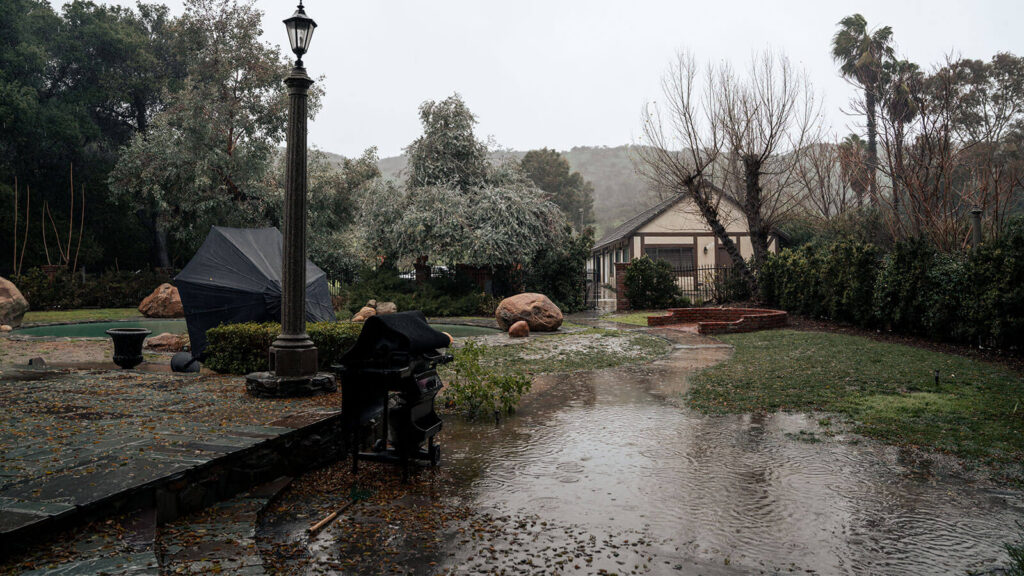
Why does the same patch of lawn stay soggy long after the rest of the yard has dried out? Usually, it is not “just a wet spot.” It is often a drainage problem that has been building slowly for years, made worse by grading, compacted soil, clogged downspouts, or runoff that has nowhere sensible to go. In the Hudson Valley, those issues tend to show up fast after a heavy rain, then linger through spring thaw and summer storms.
When a wet lawn is more than an inconvenience
A soft, muddy yard can seem like a landscaping annoyance at first. But once water starts pooling repeatedly in the same area, the problem can spread beyond the turf. Saturated soil can stress foundation walls, invite basement moisture, undermine walkways, and turn parts of a property into a constant cleanup project. The longer homeowners wait, the more likely the fix turns from a surface-level yard issue into a broader drainage repair.
That is why experienced contractors do not look at the grass first. They look at where water enters the property, where it collects, and where it is supposed to exit. On older homes, especially those with stone foundations, long driveways, or sloped lots, the answer is rarely simple. It may involve roof runoff, failed swales, compacted fill, or a low spot that was never properly graded in the first place. If the problem is tied to the way the yard handles runoff, it often makes sense to speak with landscaping contractors who handle drainage problems before the damage starts showing up indoors.
What usually causes a lawn to stay wet
There are a handful of culprits that show up again and again. The tricky part is that they often work together.
- Poor grading: If the yard slopes toward the house or settles unevenly over time, water naturally lingers where it should be moving away.
- Downspout discharge in the wrong place: A gutter system can look fine from the street while dumping gallons near the foundation.
- Compacted soil: Heavy equipment, foot traffic, and years of settling can make it hard for water to soak in or move through properly.
- Clay-heavy or dense subsoil: Some Hudson Valley properties simply do not drain well, especially after rain followed by cool, slow-drying weather.
- Blocked drainage paths: Swales, culverts, and catch basins get ignored until they stop working.
- Root systems and mature trees: Beautiful mature trees can change how water moves and can make regrading more complicated than homeowners expect.
A lot of homeowners assume the wet patch is caused by “too much rain.” That is usually not the real problem. Rain only reveals a drainage system that was already weak.
Why the obvious fix is often the wrong one
One of the most common mistakes is trying to solve a recurring drainage problem with a quick cosmetic fix. Seeding over the area, adding a few bags of topsoil, or installing decorative stone can make the yard look better for a while, but it does not change how water behaves. In some cases, it even makes matters worse by sealing in low spots or diverting runoff toward the house.
This is where homeowner assumptions can be misleading. The wettest point in the yard is not always the source of the problem. In fact, one of the more counterintuitive things contractors run into is that the lowest visible spot is often just the place where the water finally gives up and collects. The real issue may be ten or twenty feet away—uphill, beside a downspout, or along a buried runoff path that has failed quietly over time.
What contractors usually inspect first
Good drainage work starts with observation, not equipment. A contractor will usually trace where roof water goes during a storm, check slope away from the house, inspect the condition of gutters and extensions, and look for settlement patterns in the lawn. On properties with more serious saturation, they will also look at foundation moisture, walkout areas, retaining walls, and any signs that water is getting trapped by hardscape.
For Hudson Valley homes, that inspection often includes details people overlook: old asphalt that redirects runoff, detached garages with poor grading, driveway edges that funnel water downhill, and basement window wells that sit too low. When the yard has been altered a few times over the years, the original drainage pattern is usually gone.
The hidden cost of waiting through another season
A soggy lawn is not just a landscaping problem if it survives through spring and into summer. Standing water and repeated saturation can kill grass roots, invite mosquito issues, weaken soil structure, and create muddy access points that become more expensive to restore later. More importantly, repeated water pressure near the foundation can create long-term moisture concerns that show up in basements, crawl spaces, and utility rooms.
That is why postponing the work rarely saves money. It usually just moves the repair from one category to another. A drainage issue that could have been handled with grading, downspout control, or targeted exterior improvements can eventually require foundation-related repairs or interior water mitigation.
Why older Hudson Valley properties need a different approach
Older homes in Dutchess, Putnam, and Westchester counties often have drainage quirks that do not show up in newer subdivisions. Stone foundations breathe differently than poured concrete. Long private drives collect runoff in ways a short suburban lot never would. Heavy tree cover changes how fast the ground dries. And in many rural areas, the combination of well water, septic systems, and uneven terrain leaves little margin for error when stormwater starts moving.
That is also why one-size-fits-all advice from the internet can backfire. A French drain may be part of the solution in one yard and the wrong move in another if the site does not have a reliable discharge point. Regrading may help a lot, but only if water has somewhere to go. This is where experienced contractors think in systems, not single fixes.
Drainage solutions that actually hold up
The best long-term fix depends on what the property is doing, not what looks easiest to install. For some homes, the answer is as simple as extending downspouts and reshaping the grade near the foundation. For others, the issue calls for a more involved approach such as a swale, catch basin, or subsurface drainage. The right solution should move water away without creating a new problem downhill.
That is why homeowners benefit from reading up on landscaping drainage fixes for spring runoff before making a decision. Once you understand how runoff, soil, and grading interact, it becomes easier to tell the difference between a real repair and a temporary patch.
For broader seasonal context, it also helps to review spring drainage issues around Hudson Valley homes, especially if your yard starts showing trouble after thaw cycles or heavy rainstorms.
When DIY is fine, and when it gets risky
Some drainage work is absolutely reasonable for a capable homeowner. Extending a downspout, clearing a clogged gutter, or improving a shallow low spot can make a noticeable difference. But once water is consistently pooling near the foundation, crossing a driveway, or entering basement-adjacent soil, the project gets more serious.
That is the point where a quick DIY fix can create false confidence. Water is patient. If it cannot move across the surface, it will find the easiest route through saturated soil, around footings, under slabs, or behind retaining walls. A patch that seems to work during a dry week may fail completely after the next storm.
What to watch for before the problem grows
Homeowners usually notice the lawn before they notice the broader drainage pattern. But a few warning signs should move the issue higher on the list:
- Water lingering for more than a day or two after rain
- Muddy strips along walkways, driveways, or fence lines
- Downspouts that dump water too close to the house
- Soft or sinking soil near the foundation
- Basement dampness that seems worse after storms
- Moss, algae, or unusually thin turf in one recurring area
If more than one of these is happening, the yard is probably telling you the drainage problem is larger than it first appears.
How to think about hiring the right help
The best drainage contractor is not the one who promises the fastest fix. It is the one who asks where the water starts, how far it travels, and where it is allowed to go. That kind of thinking matters in the Hudson Valley, where a solution on one side of the property can create a new complaint on the other.
Homeowners in Dutchess County who are comparing local options can start with Dutchess County landscaping services if the issue appears tied to grading or runoff. In Putnam County, it may be worth reviewing landscaping contractors in Putnam County who understand sloped lots and wet-yard troubleshooting. And if the drainage concern is part of a larger property refresh, Westchester County landscaping pros can be a practical place to begin if the yard needs both appearance and function improved together.
Frequently Asked Questions
Why does my lawn stay wet even when it has not rained recently?
Usually because the soil is holding water or the yard is graded poorly. In some cases, a hidden runoff issue keeps feeding the area long after the storm is over.
Is a soggy lawn always a sign of a foundation problem?
No, but it can become one if water keeps collecting near the house. The real concern is repeated saturation close to the foundation, not the wet grass itself.
Can gutter problems really cause lawn flooding?
Yes. Downspouts that discharge too close to the home can dump a surprising amount of water into one spot, especially during heavy rain.
Will adding topsoil fix a low area in the yard?
Sometimes temporarily, but only if the drainage pattern is already correct. If water has nowhere to go, adding soil usually just changes where the puddle forms.
What is the first thing a contractor checks on a wet lawn issue?
They usually start with slope, downspouts, and runoff paths. Those three items reveal a lot about why the yard is holding water.
When should I stop treating this as a yard issue?
If water is affecting the foundation, basement, walkways, or retaining walls, it is no longer just a lawn problem. At that point, it is a site drainage issue that needs a more careful look.
A wet lawn is one of those problems that looks small right up until it is not. If you want to avoid repeat repairs and understand what is really happening on the property, the smartest move is to get guidance from local professionals who know how Hudson Valley drainage behaves in real weather, on real lots, with real older homes.