

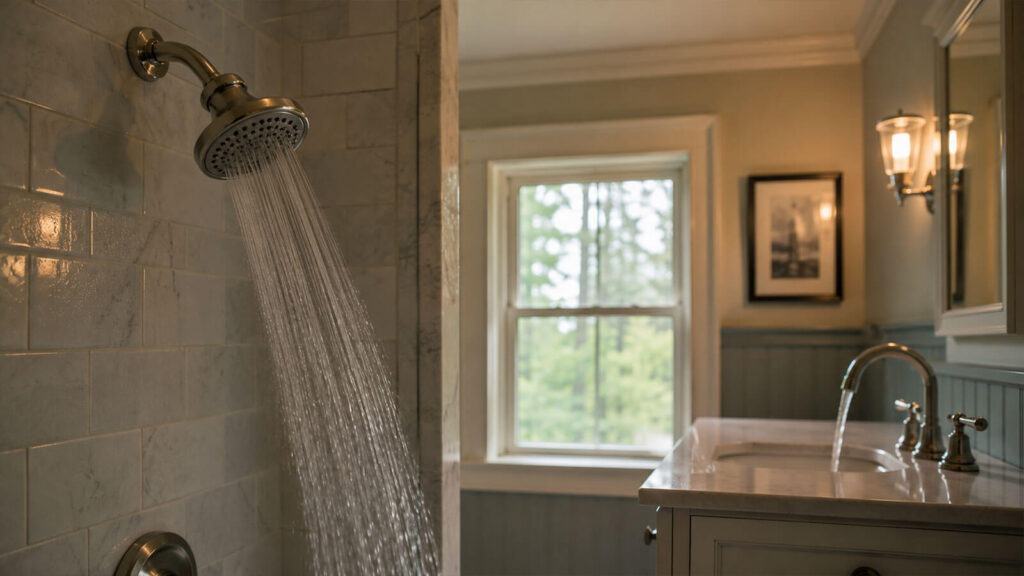
Why does the water pressure suddenly dip only when the shower is running and the washing machine kicks on? For a lot of Hudson Valley homes, that isn’t just an annoyance. It’s often the first clue that something in the plumbing system is aging, undersized, partially blocked, or no longer behaving the way it used to. And because pressure problems tend to come and go, homeowners often wait too long, assuming it’s “just one of those things.” That’s usually when a small fix turns into a bigger bill.
What low water pressure is really telling you
Low water pressure is a symptom, not a diagnosis. That matters because the obvious culprit is not always the real one. A weak shower stream may point to a clogged aerator, but it can also be the result of a failing pressure-reducing valve, corroded galvanized piping, mineral buildup in older lines, or a supply issue affecting the whole house.
In older homes across Dutchess, Putnam, and Westchester counties, contractors often start by asking a simple question: is the pressure low everywhere, or only at one fixture? That distinction tells them a lot. If only one faucet is affected, the problem may be local. If multiple fixtures are struggling, the issue may be in the main supply, the well system, or the house’s internal piping. That’s why a quick DIY guess often misses the real cause.
For homeowners trying to separate a nuisance from a real repair issue, it helps to compare symptoms across the house. If the kitchen sink is fine but upstairs shower flow is poor, that suggests a different path than if the entire property feels weak. When the issue is broader, it may be worth reviewing Dutchess County plumbing services or similar local options before the problem turns into repeated patchwork repairs.
The most common causes contractors look for first
Experienced plumbers usually do not start with the most expensive theory. They start with the most likely and easiest things to verify.
Fixture-level restrictions
Soap buildup, sediment, rust flakes, and hard water scale can choke off a faucet or shower head gradually. This is especially common in homes with older water heaters, aging shutoff valves, or long periods of deferred maintenance. A homeowner may notice the pressure problem only in one bathroom, but the actual restriction can be hidden in a small part at the fixture.
Partially closed valves
It happens more often than people think. A main shutoff valve or fixture valve that was never fully reopened after a repair can create a pressure problem that feels much bigger than it is. Contractors check this early because it can save a homeowner from unnecessary work.
Pipe corrosion and scale
Homes with older galvanized piping can lose flow as the inside diameter narrows over time. This is not always dramatic at first. The pressure drops slowly, then suddenly feels unlivable during peak demand. Once corrosion reaches a certain point, a cleaning or minor repair often won’t solve it for long. The system is simply worn out.
Pressure-regulating problems
If a home has a pressure-reducing valve, a failing unit can cause pressure to swing too low or too high. That can create a frustrating pattern where one day everything seems okay, and the next day the shower feels weak. In practice, homeowners often misread this as a municipal supply issue, when the real problem is inside the property.
Well system issues
For rural and semi-rural properties, especially in parts of the Hudson Valley with wells, pressure problems may point to the pump, pressure tank, switch, or sediment in the system. A pump is not always the villain. In many cases, the tank is waterlogged, the pressure switch is misbehaving, or the discharge side has an issue that only shows up under demand.
Why pressure problems get worse during Hudson Valley weather swings
Freeze/thaw cycles, heavy rain, and older water infrastructure can all expose weak points in a plumbing system. During cold months, pipes that are already partially restricted can become more noticeable because the house is using more hot water and the system is under more stress. In spring, shifting ground and wet conditions can reveal leaks or buried line issues that were quiet all winter.
In homes with basements, stone foundations, or long runs from a well pump to the house, contractors also pay attention to temperature exposure and pipe routing. A line that is slightly undersized or poorly insulated may not fail outright, but it can still create performance complaints that feel random to the homeowner. They’re not random. They’re load-related.
One counterintuitive thing homeowners often miss: the loud plumbing problem is not always the expensive one. A noisy fixture may be easy to fix, while the quieter pressure loss in the background can be the sign of a larger system issue that keeps getting worse. That’s why waiting for a “real” failure often costs more than addressing the warning signs early.
What not to do when pressure drops
There are a few common reactions that usually make things messier.
First, replacing fixtures one by one rarely solves a whole-house pressure issue. If the issue is in the supply line, valve, pressure regulator, or distribution piping, new fixtures won’t change much. They may make the house look updated while the real problem remains buried.
Second, aggressive DIY cleaning products and improvised fixes can damage fittings, aerators, and older finishes without restoring real flow. If a valve is failing, forcing it open can make it leak. If a pipe is already compromised, shaking loose debris can create new blockages downstream.
Third, don’t assume the utility line is the culprit before someone checks the home’s own plumbing. Contractors see this a lot: homeowners blame the town, the well, or the municipal main because that seems easier to imagine. But the first inspection often finds a house-side issue that’s been developing for years.
Where the cost starts to climb
Pressure issues become expensive when they stay unresolved long enough to affect multiple parts of the system. A single clogged shower head is cheap. A failing pressure tank, corroded branch line, or partial repipe is not. The cost jump usually happens when a small symptom has quietly been stressing the rest of the plumbing.
That’s why a careful diagnostic visit matters. A good plumber is not just listening to complaints; they’re comparing fixture performance, checking shutoffs, reviewing pressure readings, looking for corrosion, and deciding whether the problem is isolated or systemic. If you’re comparing service options, it can also help to understand related plumbing inspection costs so the first visit feels less like a guess and more like a planned next step.
For homeowners in more built-out areas, especially where older homes have been renovated in stages, the smartest move is often to work with professional plumbing services that can evaluate the whole system instead of chasing one fixture at a time.
Signs the issue is more than a simple nuisance
Some pressure problems are just inconvenient. Others are the plumbing equivalent of a warning light on the dashboard.
- Pressure drops suddenly throughout the house
- Hot water flow is noticeably worse than cold water flow
- Fixtures sputter, bang, or surge
- Water pressure changes when another appliance turns on
- You see rust-colored water or sediment
- The problem gets worse during peak usage
- Shutoff valves are hard to operate or partially seized
If several of those show up together, it is usually not just a fixture issue. It may indicate system wear, failing components, or hidden pipe deterioration. In homes with older plumbing, that is the stage where delay tends to cost more than diagnosis.
What a contractor usually checks before recommending repair
A practical plumber does not jump straight to repiping unless the evidence points there. The usual order of operations is more methodical:
- Confirm whether the pressure issue is isolated or whole-house
- Check fixture screens, shower heads, and aerators
- Inspect shutoff valves and accessible supply lines
- Measure pressure at key points in the system
- Evaluate the pressure-reducing valve, if one is present
- Look for signs of corrosion, mineral buildup, or pipe narrowing
- Assess well equipment or main supply conditions when relevant
That process matters because it prevents the common homeowner mistake of replacing the wrong part first. A pressure tank is not always bad because the shower feels weak. A faucet is not always “old” because it runs slowly. Good diagnostics save money by avoiding guesswork.
Homeowners in neighboring areas such as Putnam and Westchester often face similar aging-system issues, but the repair path can differ depending on whether the home is on a well, tied to municipal water, or has been remodeled over several decades. If the problem feels system-wide, looking at plumbing contractors in Putnam County or Westchester County plumbing services can help narrow the field to local pros familiar with those housing patterns.
When a repair is enough and when replacement makes more sense
Not every pressure issue requires major work. If the problem is a clogged aerator, a worn cartridge, or a bad valve, repair is straightforward. But once corrosion or chronic scaling has narrowed older piping, piecemeal fixes tend to have limited value. The pressure may improve briefly, then fade again because the system itself is the problem.
That is often the point where homeowners feel frustrated. They’ve already spent money on a few small repairs, and none of them solved the underlying issue. This is where a contractor’s judgment matters. A good recommendation should explain whether the house can reasonably be patched, whether there’s a short-term fix that buys time, or whether a larger replacement is the more honest long-term decision.
In older Hudson Valley homes, especially those with mixed plumbing materials or renovations done in phases, “repair versus replace” is rarely a simple yes-or-no call. It depends on access, pipe condition, water quality, and how much of the system is already compromised.
Frequently Asked Questions
Is low water pressure always a plumbing problem?
Not always. Sometimes it’s a local fixture restriction or a partially closed valve. But if several fixtures are affected, the issue is usually deeper in the system.
Why is the shower pressure worse than the kitchen sink?
Showers often reveal flow issues sooner because they need more volume. A slightly restricted line can still look fine at a sink but feel weak at the shower.
Can hard water cause pressure loss?
Yes. Mineral scale can narrow pipes, clog cartridges, and reduce flow over time, especially in older plumbing systems.
Should I replace fixtures before calling a plumber?
Usually no, unless the issue is clearly isolated to one fixture. If the whole house feels weak, it is better to diagnose the system first.
Does low water pressure mean I need new pipes?
Not automatically. Some homes only need valve repairs, cleaning, or pressure-regulator work. But corroded galvanized piping often does point toward replacement.
What is the biggest mistake homeowners make with pressure problems?
Waiting too long while trying small fixes in the wrong order. That’s how a manageable issue turns into repeated service calls and bigger repair costs.
If water pressure has started changing in your home, it’s worth treating it as more than a nuisance. A careful diagnosis early on can prevent unnecessary repairs, protect the plumbing system, and help you make a smarter long-term decision about the house. When you’re ready to compare local options, choose a contractor who looks at the whole system, not just the symptom you can see at the faucet.