

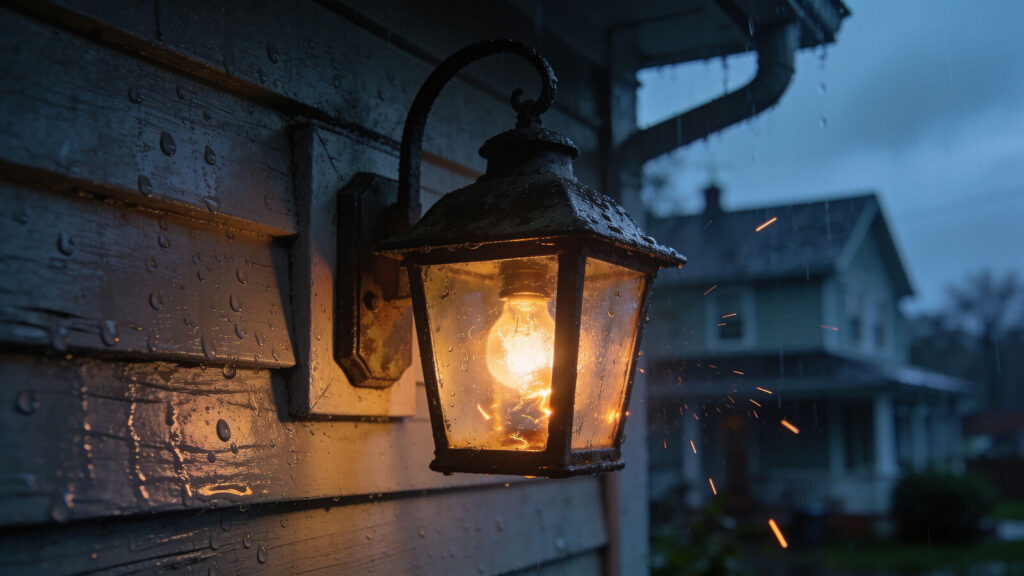
Why exterior lights start flickering in the Hudson Valley is often not the reason homeowners assume. A loose bulb, sure. But just as often the real problem is moisture in a fixture, a failing photocell, a tired switch leg, a GFCI issue, or wiring that has been slowly breaking down after years of freeze-thaw cycles, wind-driven rain, and seasonal temperature swings. The trouble is that exterior lighting problems usually show up in the same places as bigger electrical concerns, which is why a quick fix can miss the part that actually matters.
That’s especially true in older homes, where porch lights, garage lights, driveway fixtures, and landscape lighting may all be tied into circuits that have been altered more than once over the years. What looks like a simple flicker can be the first warning that a circuit is getting overloaded, a connection is corroding, or an outdoor box is no longer weather-tight. If you’re dealing with that kind of issue, it helps to understand when the problem is cosmetic and when it points to a repair that needs outdoor electrical safety issues addressed before it turns into a bigger headache.
Why exterior lights flicker more often than people expect
Outdoor lighting lives a harder life than most interior electrical fixtures. It gets wet, cold, hot, windy, and often exposed to vibration from doors, garages, and nearby traffic. In the Hudson Valley, that matters. A fixture that works fine in July may start acting up after a few hard freezes or a long stretch of damp weather.
Contractors usually start by looking at the simplest failure points first: the bulb, the socket, the fixture housing, the switch, and any sensor or photocell controlling the light. That sounds basic, but it’s the right approach because a surprising number of “electrical” problems are really just outdoor components at the end of their useful life.
The problem is that flickering is not always coming from the light itself. Sometimes the issue is upstream in the circuit, which is why a homeowner can replace a fixture and still have the same symptom. That’s when the repair stops being a household maintenance item and starts looking more like a diagnosis by professional electrical services.
The warning signs that deserve attention
A light that occasionally blinks when the wind blows is different from a fixture that dims every time another appliance turns on. The second pattern often suggests a loose connection, a weak circuit, or a voltage drop that shouldn’t be ignored.
Watch for these signs:
- Lights that flicker only during rain, snow, or high humidity
- Outdoor fixtures that work at night but fail after a cold snap
- Buzzing, sizzling, or heat coming from a fixture or switch
- GFCI outlets that trip repeatedly when the weather changes
- Landscape lights that brighten and dim in a pattern
- Corrosion around the socket, mounting box, or cover plate
One counterintuitive thing homeowners often miss: the fixture you see flickering is not always where the fault is. The loose splice may be inside a wall, in an attic junction box, or at an exterior connection hidden behind siding or trim. That is why patching the visible symptom can leave the actual hazard untouched.
What contractors usually inspect first
A good electrician is not guessing. They are narrowing down where the problem lives. Outdoor lighting issues often start with a visual inspection of the fixture, then move to the box, the wiring connections, and the circuit protection. If there is moisture inside the fixture or evidence of corrosion, that changes the diagnosis quickly.
In practical terms, contractors often check:
- Whether the bulb type matches the fixture and control method
- If the fixture is properly sealed against water intrusion
- Whether the switch, photocell, or motion sensor is failing
- How the wiring is spliced and whether the connections are secure
- If the circuit is overloaded or sharing power with other outdoor loads
- Whether the panel, breaker, or GFCI protection is part of the issue
That last point matters more than people realize. A flickering porch light might be the visible symptom of a larger load problem elsewhere in the house. In older Hudson Valley properties, especially homes with additions, detached garages, or workshop spaces, it is common to find outdoor circuits that were extended in a hurry and never fully cleaned up.
Why quick DIY fixes often fail
Replacing a bulb is harmless. Replacing a fixture is often reasonable. But once a homeowner starts opening boxes, replacing switches, or trying to dry out a fixture without knowing why it got wet in the first place, the repair can get messy fast.
The common mistake is assuming the visible part of the problem is the whole problem. A cracked lens, a rusted socket, or a dead LED module may be obvious. The hidden issue is usually the thing that makes the same failure come back again: poor sealing, a bad connection, incorrect bulb wattage, or water traveling into the box from above.
That is why outdoor lighting problems in wet or shaded areas around the home can be stubborn. Mature trees, north-facing walls, and poorly drained landscaping can keep exterior fixtures damp long after a storm passes. If the area around the light stays wet, the repair has to account for that environment, not just the fixture.
The Hudson Valley factors that make this worse
Local housing conditions matter here. Many homes in Dutchess, Putnam, and Westchester counties have a mix of older wiring, newer fixtures, and outdoor additions that were added over time. That mix creates a lot of small failures.
Older homes often have:
- Exterior boxes that were not designed for modern LED fixtures
- Aluminum or aging copper connections that have loosened over time
- Porch and garage circuits tied into older panels with limited capacity
- Detached garages or sheds with their own exposure to moisture and pests
- Outdoor outlets and lights near stone foundations, splash zones, or poor grading
Add snow load, meltwater, ice dams, and wind-driven rain, and you get the kind of intermittent electrical behavior that frustrates homeowners. The light works, then it doesn’t. It flickers, then stabilizes. It seems random, which is exactly why people delay it. But intermittent electrical issues are often the ones that should be taken seriously first.
When the problem is bigger than the light fixture
If a fixture has been replaced and the flickering continues, the repair usually shifts to the wiring path, the switch leg, or the circuit itself. That is the point where many homeowners realize the issue is not a lighting problem at all; it is a system problem.
Examples include:
- A loose neutral causing lights to behave erratically
- Corroded wire connectors inside an exterior box
- Water intrusion along siding or trim into a junction point
- Overloaded circuits running too many outdoor loads at once
- Failing photocells or motion sensors that misread dusk, rain, or cold weather
For homeowners in denser suburban neighborhoods, especially across parts of Westchester, these issues can be complicated by tightly packed service paths, older additions, and outdoor spaces that were never wired with today’s lighting expectations in mind. That is one reason many residents look for licensed electricians serving Westchester County when the problem keeps coming back.
Why moisture is often the real culprit
Outdoor electrical problems tend to get blamed on age, but moisture is often the real trigger. Even a fixture that is technically “rated for outdoor use” can fail if the installation lets water travel into the box or if the gasket, caulk line, or cover has started to break down.
What makes moisture tricky is that it does not always create an immediate failure. Sometimes it slowly corrodes terminals and weakens connections until the light begins flickering only during damp weather. By the time the problem becomes obvious, the repair may involve more than just a fixture swap.
This is where homeowners sometimes underestimate the cost of waiting. Water intrusion rarely improves on its own. It tends to spread damage, especially around wood trim, soffits, fascia, and nearby siding. If the light is mounted near a roofline or porch roof, the problem may also overlap with flashing or gutter issues that are feeding water into the same area.
What to do before you call in a pro
There are a few safe checks homeowners can do without opening anything up. Make sure the bulb is seated properly. If the fixture uses a bulb that was recently replaced, confirm the wattage and type are appropriate for the fixture. Check whether the issue happens only during wet weather or only when another appliance turns on. If the light is tied to a GFCI, see whether that outlet has tripped.
Those observations help narrow the problem quickly. They also help an electrician avoid spending time on the obvious things and get to the real source faster.
What you should not do is keep resetting a tripping breaker or repeatedly swapping components if the fixture shows signs of moisture, scorch marks, or corrosion. At that point, the risk is no longer just inconvenience. It can become a fire hazard or a broader wiring issue that needs proper troubleshooting.
How to avoid repeat repairs
The cheapest repair is not always the one that lasts. That is especially true outdoors. If a fixture failed because it was exposed to weather from above, replacing the light without correcting the seal, box, or mounting detail usually means the same problem comes back within a season or two.
Long-term fixes often involve more than the fixture itself:
- Upgrading to a properly rated wet-location fixture
- Replacing brittle or corroded connections
- Improving the weather seal around the box and mounting surface
- Checking GFCI protection and circuit load
- Reworking old sensor or photocell setups that no longer perform reliably
Homeowners often want the simplest possible solution, which is understandable. But with outdoor electrical work, shortcuts are where repeat service calls come from. A fixture that looks fine in the showroom may still fail quickly if the installation environment is not corrected.
Choosing the right help matters more than the fixture
When exterior lights keep flickering, the real value is not in finding someone who can change a bulb quickly. It is in finding someone who can diagnose the circuit, spot moisture intrusion, and decide whether the problem is isolated or part of a larger electrical issue.
That is especially important if the home has older wiring, a partially updated panel, or outdoor systems tied into multiple additions. In those cases, reliable troubleshooting matters more than a fast cosmetic fix. Homeowners in the region who want a broader local resource often start with Putnam County electrical services or explore electrical contractors in Dutchess County when the issue may involve more than just one light.
Frequently Asked Questions
Why does my outdoor light flicker only when it rains?
That usually points to moisture getting into the fixture, box, or connection path. Rain can expose a weak seal or corroded connection that stays hidden in dry weather.
Can I just replace the bulb if the light is flickering?
Sometimes, yes. But if the flickering returns, the issue is likely in the fixture, wiring, switch, or sensor rather than the bulb itself.
Is a flickering exterior light dangerous?
It can be. If the fixture is hot, buzzing, discoloring, or tripping a breaker or GFCI, the safest move is to have it checked.
Why do LED outdoor lights flicker more than old bulbs?
LEDs are more sensitive to poor connections, incompatible dimmers, failing sensors, and unstable voltage. They can reveal wiring issues older bulbs tolerated.
Should I replace an old outdoor fixture even if it still works?
If it is rusted, loose, or repeatedly getting wet, replacement is often smarter than waiting for a bigger failure. The cost of a new fixture is usually less than repeated troubleshooting.
What should I ask before hiring an electrician for this?
Ask whether they will inspect the fixture, box, circuit, GFCI protection, and any sensor or switch control. A good diagnosis should go beyond the visible light.
Outdoor lighting problems rarely stay small if the underlying cause is ignored. If something is flickering, tripping, or acting up after wet weather, it is worth getting a knowledgeable local opinion before the issue turns into a larger electrical repair. For homeowners who want to make a careful, informed decision, HV Trades is a practical place to start.