

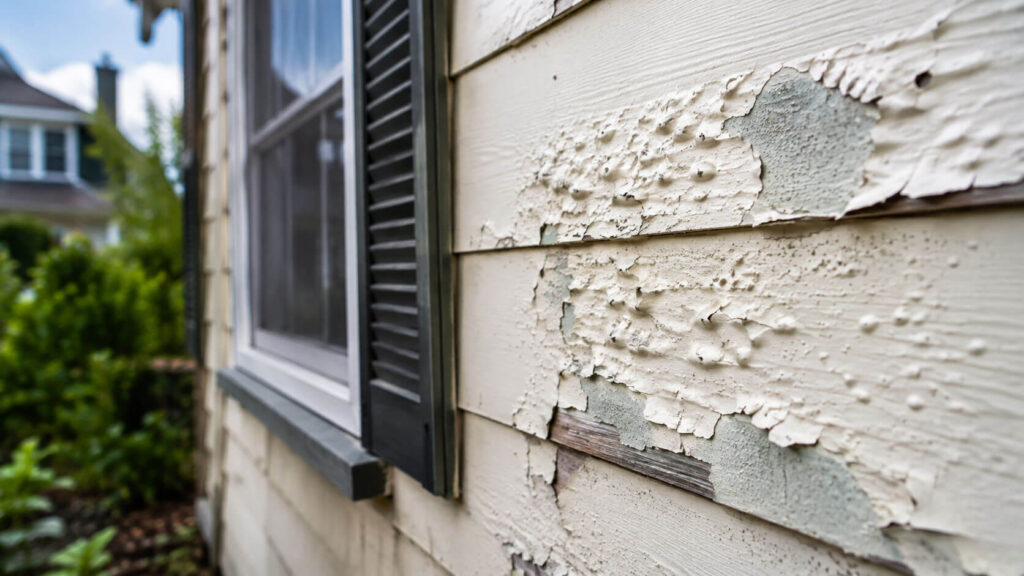
Bubbling paint is one of those problems that looks minor until it isn’t. A small raised patch on a ceiling or exterior wall can be the first visible sign of moisture, failed prep, hidden wood rot, or a repair that was done too quickly the last time around. In older Hudson Valley homes especially, paint rarely fails for just one reason.
That is why the smartest response is usually not “scrape and repaint.” It is figuring out why the coating lost adhesion in the first place. If the cause is still active, even a beautiful new finish can blister again in a season or two. And when bubbling shows up on exterior trim, around windows, or near a bathroom ceiling, it often points to a bigger system issue than the paint itself.
Homeowners who are already seeing peeling or repeated blistering should also look at broader signs of moisture intrusion and surface failure, including recurring exterior paint failure. When the same areas keep bubbling, the problem is usually buried deeper than the finish coat.
What bubbling paint is really telling you
Bubbling happens when something breaks the bond between the paint film and the surface underneath. That “something” might be trapped moisture, heat, poor surface prep, incompatible coatings, or contamination from dust, soap residue, chalking, or oil. On older homes, it is often a combination.
Contractors usually start by asking a simple question: is this a surface problem or a symptom of something moving through the wall, ceiling, or trim? That distinction matters because a paint issue can be cosmetic, but it can also be the warning light for a leak, failing caulk, condensation, or deteriorated substrate.
One counterintuitive detail homeowners often miss: the bubbling paint is not always directly above the actual source. A stain on the ceiling may show up several feet away from the leak path, especially after water follows framing, drywall seams, or insulation before finally surfacing.
The most common causes homeowners overlook
In the Hudson Valley, the usual suspects are familiar. Freeze-thaw cycles stress exterior caulk and flashing. Heavy rain exposes weak spots around windows, dormers, and roof penetrations. High humidity makes bathrooms and laundry areas more punishing on interior finishes. And on older properties, previous paint jobs may have been applied over surfaces that were never properly cleaned, sanded, primed, or fully dry.
Some of the most common causes include:
- Moisture coming through roof lines, siding, trim, or masonry
- Condensation in poorly ventilated rooms
- Painting over damp wood or drywall
- Dirty or glossy surfaces that were not prepped well
- Latex paint applied over oil-based coatings without proper bonding prep
- Failing caulk around windows, doors, and trim joints
- Heat buildup on sun-exposed siding or trim
In homes with older materials, contractors often find more than one issue at once. For example, a bubbling exterior fascia board may involve failed paint, loose caulk, and minor rot all at the same time. That is why quick patch jobs often fail. They treat the symptom, not the cause.
Why a fast scrape-and-paint fix often disappoints
It is tempting to feather the edges, roll on a new coat, and move on. Sometimes that works for a small, isolated failure. But when bubbling is caused by moisture or poor adhesion, the repair only lasts as long as the hidden problem stays quiet.
Experienced painters usually inspect the surface before they estimate the repaint. They are looking for soft wood, staining, chalking, hairline cracks, failed caulk, and any sign that water is getting behind the finish. On the interior, they may check the attic above the affected area, the bathroom ventilation setup, or whether the wall has been patched with incompatible materials. On the exterior, they will look at flashing, gutters, end caps, and the condition of the surrounding trim.
If a contractor skips those steps, that is usually a red flag. A repaint should not be treated like makeup on top of a moving problem.
Where Hudson Valley homes tend to get caught off guard
Regional housing patterns matter here. Older Dutchess and Westchester homes, for example, often have layered repairs from different eras. That means one section may have old oil paint, another may have newer latex, and a third may have been patched after a leak years ago. Putnam County homes with wooded lots can have persistent dampness on shaded elevations where paint dries slowly and mildew builds faster. And rural properties with long driveways or detached garages often have trim and siding that take more weather abuse than homeowners realize.
Exterior bubbling is especially common where water and sun work together. South- and west-facing walls take a beating. So do window heads, porch ceilings, and lower trim near grade if splashback is a problem. When grading slopes toward the house or gutters overflow during a storm, the paint on the outside may be the first thing to complain.
If storm damage is part of the picture, it is worth considering whether a past weather event may have started the problem. A wall that looks “dry enough” today can still be tied to roof leaks after a Hudson Valley storm that were never fully addressed.
What contractors usually inspect first
When bubbling paint shows up, a good contractor tends to work from the source outward. That means checking the obvious finish failure, then tracing the path of the problem back to where it started.
On exterior paint failures
- Flashing around windows, doors, dormers, and roof intersections
- Gutter performance and overflow staining
- Condition of caulk joints and seams
- Soft trim, fascia, soffits, or siding boards
- Areas with heavy sun exposure or repeated runoff
On interior bubbling
- Bathroom and laundry ventilation
- Signs of roof or plumbing leaks above the affected area
- Previous patch work or stain-blocking primer failure
- Condensation on exterior walls or around windows
- Moisture behind drywall near basements or slab edges
That inspection order matters because it keeps the work from becoming decorative guesswork. If the underlying issue is active, the nicest paint in the world will not hold up.
When bubbling paint means you should stop and investigate
Some paint failures are cosmetic and some are not. The dividing line is usually moisture, softness, or movement. If the surface feels spongy, if the blistering keeps returning, or if the area is near plumbing, a roofline, or an exterior opening, it deserves more than a casual patch.
These are the situations where delay usually costs more:
- Paint bubbling near ceilings after a storm or heavy wind-driven rain
- Repeated blistering on the same wall or trim board
- Soft wood under peeling exterior paint
- Interior bubbling accompanied by musty smell or staining
- Paint failure around windows with visible caulk gaps
A small repair can turn into a trim replacement, drywall patch, insulation issue, or water-damage cleanup if the source keeps working unnoticed. That is especially true in homes where the original failure started months earlier and simply never got traced back far enough.
What a proper repair usually involves
A real fix is rarely just “paint over it.” The repair process usually includes removing all loose material, drying the area fully, identifying the cause, repairing damaged substrate, priming with the right product, and then repainting with a coating suited to the surface and exposure.
That last part matters more than people think. Exterior trim, for example, often needs a different approach than interior drywall. Masonry, wood siding, and previously painted metal each behave differently. If the wrong primer or finish is used, adhesion can fail again even after careful prep.
For homeowners comparing bids, it helps to look for contractors who talk about prep details instead of only color and coverage. Reliable qualified painting contractors usually spend more time discussing the condition of the surface than the brand of paint. That is usually a good sign.
In some cases, especially for older homes with repeated failures, local expertise matters. Homeowners in one county may be dealing with different exposure, siding types, or housing stock than those in another. That is why it can be useful to compare options such as Dutchess County painting services, painters serving Putnam County homes, or painting contractors in Westchester County depending on where the property is located and what kind of problem is showing up.
DIY fixes that often make bubbling worse
Some homeowner repairs create a false sense of progress. The bubble disappears for a while, but the failure returns because the root cause was never addressed.
The biggest missteps are usually:
- Painting over damp surfaces
- Skipping sanding on glossy or chalky areas
- Using caulk to hide an active leak
- Spot-priming without cleaning the contamination first
- Covering over soft wood or water-damaged drywall
There is also the problem of timing. A wall may look dry on the surface while the framing or insulation behind it is still holding moisture. That is one reason experienced contractors are cautious after a leak or storm. Rushing the repaint can seal in problems and make future repairs harder.
How to protect the repair from failing again
Once the source is corrected, the best long-term protection is careful prep and realistic maintenance. That usually means keeping gutters clear, maintaining caulk lines, watching attic and bath ventilation, and touching up early signs of wear before they turn into full-scale peeling.
On the exterior, annual inspection is worth it for homes with mature trees, heavy shade, or exposed elevations. On the interior, pay attention to rooms that trap humidity or show recurring staining. If the same area bubbles every year, there is a reason, and it is usually cheaper to find it early than to keep repainting the symptom.
This is where a lot of homeowners underestimate the value of a methodical contractor. The right crew is not just repainting; they are trying to keep the failure from coming back in six months.
Frequently Asked Questions
Is bubbling paint always caused by water?
No. Moisture is common, but bubbling can also come from poor prep, contamination, heat, or incompatible coatings. Still, moisture is the first thing worth ruling out because it is the one most likely to turn expensive.
Can I just scrape off the bubbles and repaint?
Sometimes, but only if the cause is resolved and the surface underneath is sound. If the area is damp, soft, or stained, scraping alone will not hold up.
How do I know if the problem is coming from a leak?
Look for staining, soft drywall, recurring bubbling, or paint failure near roofs, windows, plumbing, or bathrooms. If the issue returns after drying out, a leak or condensation problem is likely still active.
Why does paint bubble more on some exterior walls than others?
Exposure matters. Sun, wind, runoff, poor drainage, and shading all affect how long paint lasts. South- and west-facing surfaces often fail faster, especially on older trim or siding.
Should I replace the damaged section or repaint it?
If the substrate is soft, rotted, or repeatedly failing, replacement may be the better long-term move. Repainting is usually fine when the damage is limited to the coating and the material underneath is still solid.
When should I bring in a professional?
Bring in a pro if the bubbling keeps returning, if there is any sign of water intrusion, or if you are dealing with older materials and multiple layers of past repairs. A good inspection can save a lot of trial and error.
If bubbling paint is starting to raise more questions than answers, the safest move is to get the surface looked at before the repair turns into a bigger project. A careful local contractor can tell you whether you are dealing with a simple repaint, a prep issue, or a moisture problem that needs to be fixed first. That kind of judgment usually saves money, stress, and a second round of repairs later.