

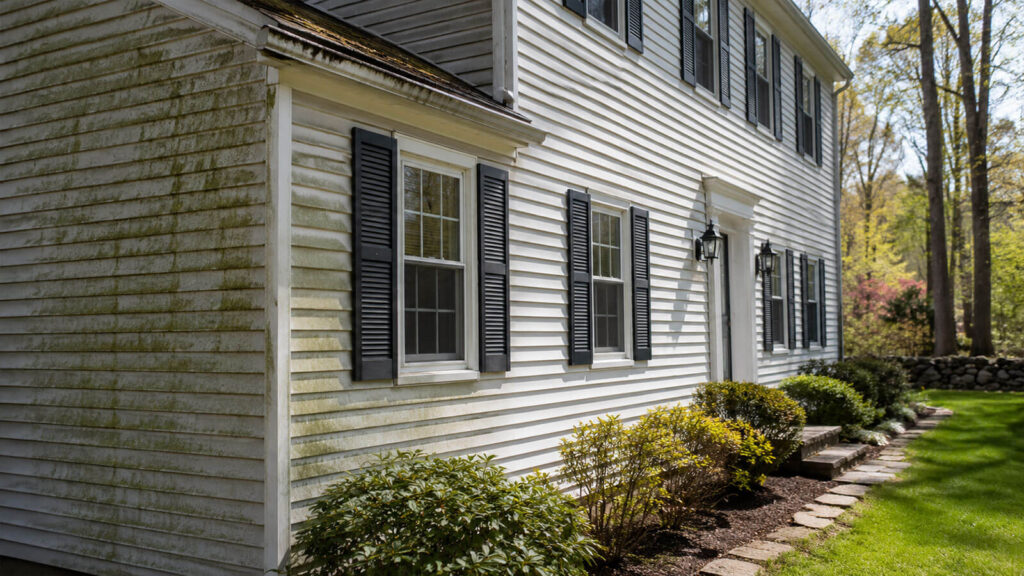
When to Wash Vinyl Siding in the Hudson Valley: Timing, Risks, and the Mistakes That Cost Homeowners
Vinyl siding can look deceptively simple. A little grime, some pollen, maybe a green film near the north side of the house, and it is tempting to treat the whole job like a quick afternoon cleanup. But once homeowners start spraying, a lot more can surface than dirt. Loose trim, cracked panels, tired caulk lines, clogged gutters, and water intrusion issues often show up right after a wash, not before it.
That is why the question is not just whether to clean vinyl siding, but when it makes sense to do it, how aggressively to do it, and what else should be checked before water hits the wall. In the Hudson Valley, where freeze/thaw cycles, tree cover, windblown debris, and heavy spring rain all take a toll, timing matters more than most people realize.
Why timing matters more than the cleaning itself
Vinyl siding does not usually need constant washing. It needs the right kind of washing at the right time. Too early in the season and you are cleaning around lingering moisture, cold caulk, and brittle trim. Too late, and stains from pollen, algae, road dust, and roof runoff can settle in enough that homeowners start reaching for stronger pressure than the siding can tolerate.
Spring is usually the best window, but not because of the calendar alone. What matters is a stretch of mild weather, dry enough conditions, and enough daylight to inspect what the cleaning uncovers. If a house sits under mature trees or has a shaded side that never fully dries, the growth pattern often tells you more than the date on the calendar.
Before washing, it helps to think beyond appearance. Exterior cleaning often overlaps with roofline drainage, splashback from gutters, and hidden damage around trim. That is why a lot of homeowners end up needing more than just a wash, especially when staining keeps returning in the same areas. If you are already looking at the roof edge and runoff patterns, it is worth reviewing drainage problems around the home exterior before starting a cleaning job that may reveal a bigger issue.
The best season for vinyl siding cleaning in the Hudson Valley
For most homes in the region, late spring through early summer is the safest and most practical time. The temperature is usually warm enough for detergents to work properly, caulk is less likely to be brittle, and the risk of freezing water in seams or around trim is mostly gone. That said, there is a difference between a good weather window and a good cleaning window.
Here is what matters most:
- Dry conditions for a few days before and after the wash
- Mild temperatures so cleaners work without flash-drying
- Low wind to control overspray
- Enough time to inspect siding, flashing, and trim after the job
Early spring can still be fine if the weather cooperates, but it is also the season when a lot of homeowners discover that what looked like dirt is actually algae, mildew, or drainage staining from gutters above. If the siding is heavily streaked near roof edges, cleaning alone may not solve the root cause. A good crew will notice whether gutter overflow is feeding the problem, which is one reason homeowners who spot roofline staining should pay attention to gutter service contractors as well, not just cleaning.
What contractors usually check before washing starts
A careful contractor does not start by blasting the house. They start by looking for the places where water can get trapped, forced behind the siding, or driven into weak spots. That usually means checking:
- loose or warped vinyl panels
- open caulk joints around windows and doors
- cracked corner posts
- spidering or failing sealant around trim
- gaps near soffits and fascia
- staining below gutters and roof valleys
- soft or damaged areas near deck ledgers, porches, and utility penetrations
This is where homeowners sometimes misread the problem. A dirty wall is visible. A failed seal or a lifted piece of siding is easy to miss until water gets behind it. And once water is behind vinyl, the issue is no longer cosmetic. It can affect sheathing, insulation, and in older homes, even parts of the framing if the exposure goes unnoticed long enough.
That is also why aggressive washing can backfire. The stain may disappear, but the pressure can drive water into places that were already marginal. In older Hudson Valley homes, especially those with original trim or patchwork repairs, the risk is not just cosmetic damage. It is forcing moisture into a wall assembly that may already be tired.
The biggest homeowner mistake: using pressure to fix a staining problem
One of the most common assumptions is that if a little water is good, more water is better. It is not. Vinyl siding is made to shed water, not to absorb a high-pressure blast aimed at seams, laps, and edges. Strong pressure can force water behind panels, loosen aging caulk, and create new pathways for leaks.
The counterintuitive part is this: the dirtiest-looking area is not always the most damaged one. Sometimes the real problem is the cleaner-looking section nearby, where water has been traveling behind the siding and drying unevenly. Contractors often notice this first around windows, utility penetrations, and roof intersections, not in the middle of the wall where homeowners expect the issue to be.
That is why the right approach is usually low-pressure rinsing with the correct detergent, not brute force. A house wash should remove buildup without trying to strip the siding. If the only way to “clean” a section is to spray hard enough to make the vinyl flex, the method is wrong for the house.
When siding cleaning turns into a repair discussion
Some homes can be washed and moved on from without much more than a fresh appearance. Others reveal rot, loose trim, or drainage issues that need attention before the next storm. In the Hudson Valley, older homes with stone foundations, deep roof overhangs, detached garages, and long-run runoff lines often have multiple small weaknesses working together. Cleaning can expose them quickly.
That is where homeowners need a practical mindset. If the siding is cracked, the trim is separating, or you see water intrusion after a wash, do not treat it like a cleaning failure. It is often a signal that the house has been managing moisture imperfectly for a while. At that point, broader general contracting services for exterior repairs may be the smarter next step than repeating the wash and hoping the stain stays gone.
A lot of costly exterior problems start as “just grime.” Then the first strong rain arrives, the staining returns, and the homeowner realizes the cleaning was revealing a drainage or envelope issue all along.
Why Hudson Valley homes need a little more caution
The local housing stock matters here. Homes with older siding, patch repairs, or multiple renovation phases do not always behave like newer builds. Add in freeze/thaw cycles, shaded elevations, and mature trees holding moisture against the siding, and the margin for error gets smaller.
In this region, contractors pay close attention to:
- north-facing walls that stay damp longer
- areas under heavy tree cover where algae comes back quickly
- roof runoff that hits the siding near corners
- basement moisture that hints at grading or drainage problems outside
- older caulk and trim that may not survive aggressive cleaning
The homes that age best are usually the ones where exterior maintenance happens before the damage becomes visible from the curb. That includes looking beyond the siding and checking the details around gutters, flashing, and drainage. If spring cleaning is revealing new streaks or staining near roof edges, it may be worth comparing those signs with checking siding for exterior damage after storm season.
What a good siding cleaning should actually accomplish
A proper vinyl siding wash should do more than improve curb appeal. It should help you see the house clearly. That means the surface should be clean enough to reveal cracks, loose seams, missing caulk, water stains, and drainage patterns without damaging the siding in the process.
If the cleaning is done well, you learn something useful. You may discover that the real issue is overflowing gutters on one side, splashback from a downspout, or an area where the landscaping now holds moisture against the wall. That is valuable information, not just a cosmetic result.
If the job also ties into broader exterior prep, it may overlap with spring deck and patio maintenance, especially where patio runoff or deck drainage affects the siding below. Exterior systems rarely fail in isolation. Water has a way of moving from one problem to the next.
Signs it is time to clean sooner rather than later
Waiting too long usually makes the job harder. The signs are not subtle once you know what to look for.
- green or black algae on shaded walls
- streaking below gutters
- dull, chalky film that does not rinse off with rain
- pollen and dust clinging to textured siding
- mildew smell near damp corners or shaded entries
- new stains after storms, especially under rooflines
The key distinction is between buildup and a recurring moisture source. If the same mark comes back after every storm, that is not really a cleaning issue anymore. It is a water-management issue dressed up like a stain.
What not to do if you are tempted to DIY
DIY siding washing is not automatically a bad idea, but it becomes risky when homeowners treat it like driveway cleaning. A pressure washer that is fine for concrete can be too aggressive for siding, trim, and window edges.
A few common mistakes cause most of the trouble:
- spraying upward into laps and seams
- using too much pressure instead of the right cleaner
- ignoring loose siding before starting
- cleaning in direct sun, which causes streaking and uneven results
- forgetting to rinse around fixtures, vents, and openings
There is also the matter of access. A lot of Hudson Valley homes sit on slopes, have uneven grading, or have additions and dormers that make safe ladder work more complicated than it looks from the ground. If the house has steep terrain, detached structures, or awkward roofline transitions, the “simple wash” can get complicated quickly.
How to think about cost and value
Exterior cleaning is one of those maintenance jobs that feels optional until it suddenly does not. Letting buildup sit for another season can mean deeper staining, more difficult cleaning, and more wear on caulk and trim. More important, it can hide damage that would be cheaper to catch early.
That is why the value is not just in the washed siding. It is in what you prevent: premature repainting on adjacent materials, hidden moisture damage, and repair work that starts small but spreads once runoff or seams are involved. In some neighborhoods, especially where resale value matters and exterior presentation carries weight, a clean and well-maintained facade can also support the home’s long-term appeal.
If the process uncovers bigger exterior concerns, homeowners are usually better off addressing them in the same season rather than waiting for the next round of weather to make them worse. That is where trusted local guidance matters most. A careful contractor will tell you when the problem is cosmetic, when it is structural, and when it is somewhere in between.
Frequently Asked Questions
How often should vinyl siding be washed?
Most homes only need it every one to three years, depending on tree cover, humidity, and how much road dust or pollen the property collects. Shaded sides often need attention sooner than sunny sides.
Is pressure washing safe for vinyl siding?
It can be, but only with the right pressure and technique. Too much force can drive water behind the siding, loosen caulk, or damage older trim.
What is the best time of year to clean siding in the Hudson Valley?
Late spring through early summer is usually ideal because temperatures are milder and the risk of freezing water in seams is gone. A dry stretch is more important than the exact month.
Why does the same stain keep coming back after cleaning?
Recurring stains usually point to gutter overflow, poor drainage, splashback, or moisture trapped in a shaded area. Cleaning removes the mark, but it does not solve the source.
Should I inspect anything before washing the house?
Yes. Check for loose siding, cracked caulk, damaged trim, and staining near gutters or rooflines. If you see water-related marks, it is smart to look at the drainage patterns first.
When should I bring in a contractor instead of doing it myself?
If the siding is older, the house has hard-to-reach areas, or you suspect damage behind the surface, it is worth getting a professional opinion. The cost of a careful inspection is usually less than fixing avoidable water damage later.
A clean exterior is nice. A clean exterior that also tells you the house is healthy is better. If you are unsure whether your siding needs routine washing, drainage attention, or a closer repair look, working with experienced local professionals can help you avoid the kind of small mistake that turns into a much bigger project later.