

Why Sidewalk Cracks in the Hudson Valley Deserve More Attention Than Most Homeowners Give Them
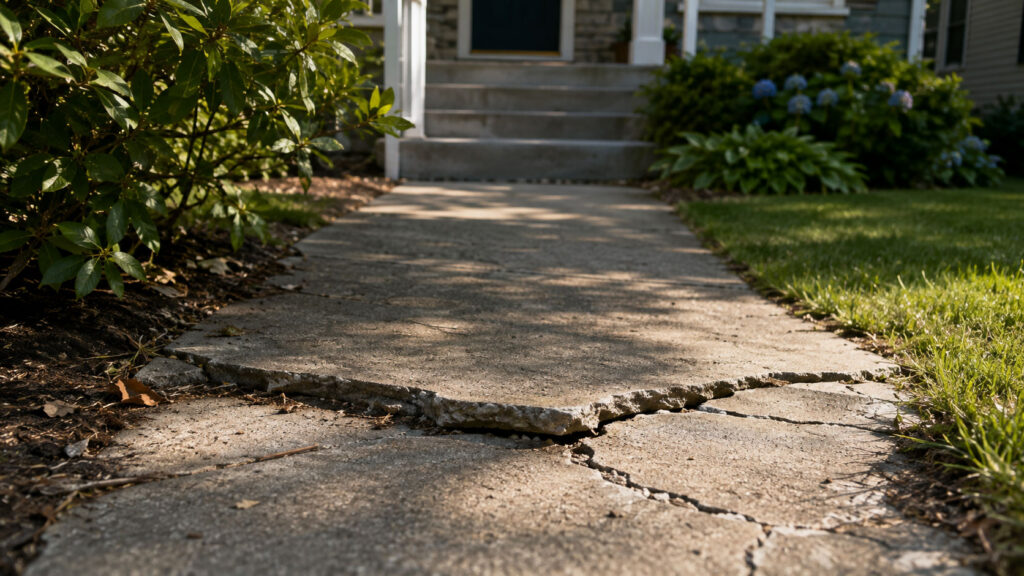
A cracked sidewalk looks simple enough at first glance. Maybe it is a little uneven near the front walk. Maybe a slab has shifted after a wet spring. Maybe one corner keeps lifting every winter and settling again by June. It is tempting to treat that as cosmetic, or worse, as a problem you can ignore until “someday.” That is usually when the repair gets more expensive.
In the Hudson Valley, sidewalk cracks rarely happen in isolation. They tend to show up alongside drainage issues, root pressure from mature trees, freeze-thaw movement, or soil that has slowly lost support. The break in the concrete is often the symptom, not the cause. That is why contractors usually look beyond the surface first, especially when the walk is near a driveway, foundation wall, or a slope that sends water toward the house. For homeowners trying to compare options, it can help to understand how paving contractors for uneven walkways think about trip hazards, drainage, and long-term repair value.
What sidewalk cracks are really telling you
A hairline crack is one thing. A section that has dropped, heaved, or started to separate at the joints tells a different story. The concrete itself may not be the main failure. More often, the base below it has shifted, washed out, or softened after repeated moisture exposure.
That matters in the Hudson Valley because we get a frustrating mix of conditions that are rough on exterior hardscapes: wet springs, hot summers, fall leaf buildup that traps moisture, and winter freeze-thaw cycles that pry at weak spots. Add mature trees, older grading, and long stretches of shaded walkway, and you have a setup where a small defect can keep growing from season to season.
One counterintuitive thing many homeowners miss: the crack you can see is not always the problem that started it. Sometimes the real issue is runoff coming off the roof, pooling near the slab, then saturating the base beneath the walk. That is why a walk can keep failing even after it has been patched on top.
The common mistakes homeowners make
The first mistake is assuming every crack needs the same fix. It does not. A narrow surface crack may be a maintenance item. A sunken section near a front entry may be a safety issue. A broken joint next to a garage apron may be tied to larger settlement or poor drainage.
The second mistake is patching visible damage without asking why the slab moved in the first place. Caulk, crack filler, and cosmetic patch products can buy time, but they do not restore support. If water is still getting under the walkway, the repair is on borrowed time.
The third mistake is waiting until the walkway becomes a liability. People often adapt to the hazard without realizing it. They step over the cracked area. They warn guests. They avoid using the side entrance. That is usually the point where the defect has already crossed from inconvenience into a real trip hazard.
What contractors usually inspect first
Experienced contractors do not start by staring at the crack alone. They look at the surrounding conditions. Is the slab pitched wrong? Is water running toward it from a downspout? Is soil eroding along the edge? Are nearby trees creating root pressure? Is the break close to a foundation wall or stair landing where movement matters more?
If the problem is near the house, they may also look for signs that the same water pattern is affecting the basement or crawl space. That is where sidewalk and foundation issues begin to overlap. In some cases, the best fix is not concrete work first, but better water management and soil stabilization. Homeowners who want to understand that connection should also look at drainage problems around sidewalks and foundations before making assumptions about the cause.
Contractors also pay attention to whether the damage is isolated or part of a broader pattern. If one walk slab is sinking, the neighboring slab may not be far behind. If cracks line up with a driveway edge or a sloping side yard, the issue may be tied to runoff and grading rather than a single bad pour.
Why quick fixes often fail
A lot of repair shortcuts fail because they treat the symptom without addressing movement. Concrete sealer does not reestablish support. Overlay patches do not stop settlement. Grinding down a lifted edge may reduce the trip hazard for a while, but it does nothing about the underlying shift that caused the rise in the first place.
That is why the cheapest-looking repair is not always the cheapest repair. If the base is unstable, a temporary patch can mask the problem until the next freeze-thaw cycle opens it up again. Then you are paying twice: once for the quick fix, and again for the real repair.
When the issue is tied to water, contractors often recommend looking at the bigger exterior system. That can mean redirecting roof runoff with gutter services that help control roof runoff, reshaping the grade near the walk, or correcting drainage paths that have been sending water into the same weak area for years. In other cases, it makes more sense to bring in foundation and waterproofing contractors if moisture near the house is part of the same failure pattern.
When a sidewalk crack becomes a bigger structural concern
Not every crack is urgent, but some signs should get your attention quickly:
- One slab has risen or dropped enough to create a clear trip hazard
- Cracks widen after heavy rain or a thaw
- Water pools along the walk instead of draining away
- The break runs in multiple directions, not just a single line
- There is erosion along the edge or underneath the slab
- The walk is near a porch, stair landing, or foundation wall
If the concrete is moving, it is worth asking what changed around it. New gutters? A clogged downspout? A nearby tree root? A soft spot in the subgrade? A lot of homeowners focus on the visible crack and overlook the ground conditions that created it.
That is especially true on properties with mature landscaping or older drainage patterns. Water tends to follow the same low route over and over, and once the soil along a sidewalk starts washing out, the slab loses support in slow motion.
How to think about repair options without overpaying
There is a big difference between a walk that needs minor surface attention and one that needs structural correction. The right response depends on movement, drainage, and whether the slab is stable enough to keep. In some cases, leveling or targeted replacement is enough. In others, the surrounding grade, runoff path, or foundation moisture problem needs attention first.
For homeowners, the goal is not to chase the cheapest quote. It is to avoid paying for the wrong scope. A contractor who rushes straight to concrete replacement without looking at water management may be solving the visible problem and leaving the cause untouched. On the other hand, a contractor who only talks about drainage but ignores a dangerous trip edge is not giving you the full picture either.
That is why it often helps to think in layers: safety first, then cause, then repair method. If you are not sure which trade should handle the issue, it is reasonable to find the right local contractor trade before committing to a fix.
Regional details that matter in the Hudson Valley
Older homes here often have sidewalks that were installed long before current drainage expectations. Add stone foundations, sloped lots, detached garages, and aging downspout layouts, and you get a lot of hardscape movement that looks random but usually is not. Snowmelt can be just as hard on these surfaces as summer storms, especially when meltwater freezes again overnight in shaded areas.
Tree roots also complicate the picture. In wooded neighborhoods and on mature suburban lots, roots can lift slabs slowly over time. That does not mean the tree is always the villain. Sometimes the root growth is only taking advantage of already-soft soil or a poorly compacted base. The distinction matters because removing the tree without fixing the drainage or base support can leave the repair half-finished.
And if roof runoff is hitting the same area year after year, the sidewalk may keep cracking even after it is replaced. That is where landscaping drainage fixes that redirect runoff can be a more practical investment than repeatedly patching concrete that never had a chance to stay stable.
What to do before the next heavy rain or freeze
If you already see movement, do not wait for a major storm to test the area. Walk the perimeter after a rain and look for where water is collecting. Check whether downspouts are dumping near the slab. Look for soil that has washed away at the edges. If the crack is near the house, make a note of whether the basement or lower level also feels damper after storms.
Small observations matter. A walkway that shifts only after saturated weather is telling you something about the soil beneath it. A slab that stays stable through dry weather but drops after thaw cycles is likely reacting to moisture and soil expansion. That kind of pattern helps a contractor narrow the cause much faster.
And if the walk is part of a broader runoff problem, it may be worth reviewing drainage problems around sidewalks and foundations and the available paving contractors for uneven walkways who can evaluate whether repair, replacement, or correction of the base makes the most sense.
Frequently Asked Questions
Can a cracked sidewalk be repaired without replacing the whole thing?
Sometimes. If the slab is stable and the crack is minor, targeted repair may be enough. If the section has settled, lifted, or lost support, replacement or leveling is often the better long-term answer.
Is a sidewalk crack usually caused by bad concrete?
Not usually. In many cases, the concrete is fine and the problem is what happened underneath it: soil washout, poor compaction, drainage issues, tree roots, or freeze-thaw movement.
How do I know if it is a safety issue?
If the height difference is enough to catch a foot, twist an ankle, or make the walk awkward for guests, it should be treated as a safety issue. Cracks near stairs or entries deserve faster attention.
Will sealing the crack stop it from getting worse?
Sealing helps keep water out of a small opening, but it will not fix settlement or stop movement. It is useful for maintenance, not as a cure for a shifting slab.
Should I fix drainage before repairing the sidewalk?
If runoff is clearly contributing to the damage, yes. Otherwise the same water problem can keep undermining the repair. Fixing the visible crack first often leads to repeat work later.
Who should I call if I am not sure what is causing the crack?
Start with a contractor who can assess the full exterior condition, not just the surface damage. In some cases that means concrete or paving help; in others it may involve drainage or foundation-related work.
Sidewalk cracks are one of those problems that seem small until they are not. The good news is that a careful inspection usually reveals whether you are looking at a simple repair, a water-management issue, or a broader exterior failure pattern. Getting that diagnosis right early is what saves money and keeps the home safer long term. If you want a practical next step, start by connecting with a trusted local pro who understands how these pieces fit together.